Key Takeaways
- In TCM, winter is the season of storage and preservation — the time to conserve energy, nourish the kidneys, and build reserves for the year ahead.
- The kidneys are the organ system associated with winter; warming, dark-colored foods like black beans, walnuts, and chestnuts are traditionally used to support them.
- Winter calls for warm, cooked foods — soups, stews, and porridge — and avoidance of raw, cold foods that chill the digestive system.
- Ginger jujube tea and cinnamon tea are simple daily winter drinks that warm the body from within.
- Early to bed, late to rise, keeping key body areas warm, and gentle exercise are the cornerstones of TCM winter lifestyle advice.
This article is for wellness education only and is not medical advice. The foods, drinks, and practices described here are traditional seasonal wellness habits, not treatments for any disease. If you have a chronic condition, take medications, or are pregnant, consult your healthcare provider before making significant dietary or lifestyle changes. Some herbs may interact with medications.
Winter is a season that demands adaptation. The days shorten, the temperature drops, and the natural world retreats into stillness. For thousands of years, Traditional Chinese Medicine (TCM) has viewed winter not as a season to endure, but as a season to harness — a time of deep restoration that sets the foundation for health throughout the rest of the year.
The classical TCM text Huangdi Neijing (Yellow Emperor's Inner Canon) offers specific guidance for each season, and its winter advice is remarkably clear: go to bed early, wake late, conserve your energy, and nourish the kidneys. This ancient wisdom, combined with the right foods, drinks, and daily habits, creates a practical framework for winter wellness that is as relevant today as it was two thousand years ago.
How TCM Understands Winter
In TCM's five-element theory, each season corresponds to an element, an organ system, a color, a flavor, and an emotion. Winter corresponds to:
- Element: Water
- Organ system: Kidney (and bladder)
- Color: Black
- Flavor: Salty
- Emotion: Fear (which, when balanced, manifests as healthy caution and wisdom)
- Climate: Cold
- Direction: North
The overarching theme of winter in TCM is "closed storage" — the idea that energy should be conserved, gathered, and stored deep within the body, just as nature stores its vitality in roots beneath the frozen ground. This is the opposite of summer, when energy expands outward. The Huangdi Neijing describes winter as the time when "all things are hidden" and advises people to follow this natural pattern by resting more, staying warm, and avoiding unnecessary exertion.
For a deeper understanding of the five-element system, see our five elements guide. To understand the organ systems, see our zang-fu organs guide.
The Kidney: The Organ of Winter
In TCM, the kidneys are considered the most important organ system for long-term health. They store essence ( jing) — the body's deepest, most fundamental energy reserve, which governs growth, reproduction, aging, and constitutional strength. Essence is finite; it is gradually depleted throughout life and cannot be easily replenished once lost. However, it can be nourished and protected through proper diet, lifestyle, and seasonal care.
Because winter is the kidney's season, it is the optimal time to nourish and support this vital organ system. Warming foods, adequate rest, and stress reduction during winter directly benefit the kidneys and help maintain the body's essence reserves. This is why TCM places such emphasis on winter dietary therapy — it is an investment in health for the entire year.
Signs that the kidneys may need nourishment include: lower back soreness, knee weakness, frequent urination (especially at night), cold hands and feet, fatigue, and a feeling of deep exhaustion. For more on kidney-related conditions, see our TCM for tinnitus guide and our TCM for night urination guide.
Winter Warming Foods
The most important dietary principle in winter is to eat warming, deeply nourishing foods that support kidney yang and provide sustained energy. In TCM, foods are classified by their thermal nature (warm, hot, neutral, cool, cold), and winter is the time to emphasize warm and hot foods while minimizing cool and cold ones.
1. Mutton (Yang Rou)
TCM nature: Sweet, warm. Enters: Spleen and Kidney channels.
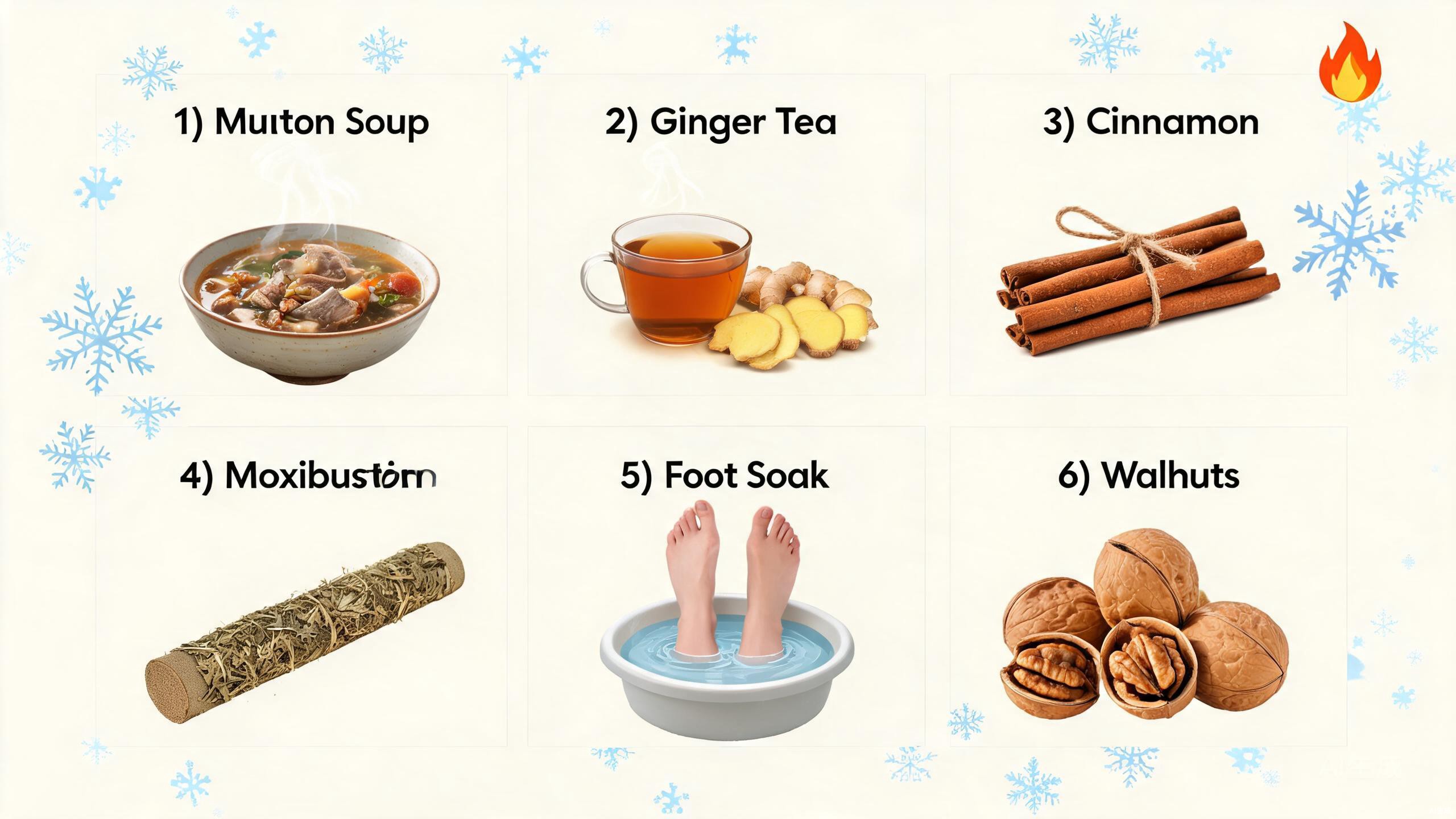
Mutton is the quintessential winter meat in TCM. Its warming nature directly tonifies kidney yang and strengthens the spleen, making it ideal for people who feel cold, fatigued, or depleted during winter. The classic winter dish is mutton soup with ginger and angelica, which warms the body from the inside out.
Preparation: Slow-cook mutton with ginger, angelica root (dong quai), and red dates for 2 hours. Drink the broth and eat the meat. Mutton is available at halal butchers and some supermarkets; lamb is a close substitute.
2. Beef (Niu Rou)
TCM nature: Sweet, warm. Enters: Spleen and Stomach channels.
Beef is a gentle warming meat that tonifies spleen qi and stomach qi, supporting digestion and energy production. It is less intensely warming than mutton, making it suitable for daily winter consumption. Beef is also rich in iron and protein, supporting blood building.
Preparation: Slow-cook beef with radish, ginger, and tangerine peel for a nourishing winter stew. The radish helps digest the richness of the meat.
3. Chicken (Ji Rou)
TCM nature: Sweet, warm. Enters: Spleen and Stomach channels.
Chicken is the most accessible warming meat and is widely used in TCM food therapy for tonifying qi and blood. A simple chicken soup with ginger and red dates is one of the most nourishing winter dishes — and one that cultures around the world intuitively reach for during cold months.
Preparation: Simmer a whole chicken with ginger, red dates, and goji berries for 1.5 hours. See our astragalus chicken soup guide for a powerful immune-supporting version.
4. Walnuts (Hei Tao Ren)
TCM nature: Sweet, warm. Enters: Kidney, Lung, and Large Intestine channels.
Walnuts are one of the most important kidney-tonifying foods in TCM. They warm the kidneys, strengthen the lower back, benefit the brain, and moisten the intestines (helping with winter constipation). A handful of walnuts daily is a simple, powerful winter habit.
Preparation: Eat 5 to 8 walnuts daily as a snack, or add them to porridge. For a warming drink, blend toasted walnuts with hot water and a little honey.
5. Chestnuts (Li Zi)
TCM nature: Sweet, warm. Enters: Spleen, Stomach, and Kidney channels.
Chestnuts are unique among nuts for their ability to tonify both the spleen (digestion) and the kidneys simultaneously. They are traditionally used in winter to strengthen the lower back and legs, support digestion, and provide sustained warming energy. Roasted chestnuts are a beloved winter street food in China and Europe alike.
Preparation: Roast chestnuts in the oven at 200°C for 25 minutes, or add peeled chestnuts to chicken or beef stew. Available fresh in winter at supermarkets, or year-round as peeled frozen chestnuts on Amazon.
All five warming foods are available at Western supermarkets. Mutton/lamb is at halal butchers and many grocery stores. Walnuts and chestnuts are in the baking or produce sections. For more on TCM warming ingredients, see our TCM warming spices guide.
Winter Porridge Recipes
Porridge ( zhou) holds a special place in TCM food therapy, particularly in winter. It is warm, easily digestible, and acts as a gentle carrier for the therapeutic properties of added ingredients. The classical text Qian Jin Yao Fang lists porridge as a primary form of dietary therapy. Here are two traditional winter porridge recipes:
Black Rice Porridge (Hei Mi Zhou)
Focus: Nourish kidney essence, enrich blood, strengthen the body.
Ingredients: 1/2 cup black rice, 1/4 cup white rice, 6 dried red dates (pitted), 1 tablespoon goji berries, 5 cups water.
Method: Rinse the black rice and white rice. Black rice benefits from soaking for 2 hours before cooking. Combine all ingredients in a pot with water. Bring to a boil, then simmer for 40 to 50 minutes until thick and creamy. The deep purple-black color is striking and the flavor is nutty and slightly sweet. Eat 1 bowl for breakfast daily.
Why it works: In TCM, black-colored foods are associated with the kidneys. Black rice nourishes kidney yin, enriches blood, and supports overall vitality. Combined with red dates (blood building) and goji berries (liver and kidney nourishment), this porridge is a complete winter tonic. Black rice is available at most supermarkets and on Amazon.
Red Date Millet Porridge (Hong Zao Xiao Mi Zhou)
Focus: Warm the spleen and stomach, nourish blood, support digestion.
Ingredients: 1/2 cup millet, 8 dried red dates (pitted), 5 cups water, optional: 1 tablespoon brown sugar.
Method: Rinse the millet. Combine with red dates and water in a pot. Bring to a boil, then simmer for 25 to 30 minutes until the millet is soft and the porridge is creamy. Add brown sugar if desired. Eat 1 bowl warm, ideally for breakfast.
Why it works: Millet ( xiao mi) is sweet and slightly cool in TCM, but when cooked into warm porridge, it becomes one of the most spleen-supportive foods available. It is traditionally used to nourish the stomach, calm the mind, and support sleep. Red dates add blood-building warmth. This porridge is gentle enough for children, the elderly, and those recovering from illness. Millet is available in the gluten-free or baking aisle of most supermarkets.
For more porridge recipes, see our complete congee guide and our red date congee guide.
Winter Drinks: Teas and Tonics
Warm drinks are an essential part of winter wellness in TCM. They warm the body from within, support digestion, and provide a comforting ritual during the dark months. Here are three traditional winter drinks:
Ginger Jujube Tea (Jiang Zao Cha)
TCM function: Warm the middle, dispel cold, support digestion, boost defensive qi.
Ingredients: 5 slices fresh ginger, 6 dried red dates (pitted), 3 cups water, optional: 1 tablespoon brown sugar.
Method: Slice the ginger thinly. Combine with red dates and water in a pot. Bring to a boil, then simmer for 10 to 15 minutes. Add brown sugar to taste. Drink 1 to 2 cups daily, ideally in the morning. The warming, spicy-sweet flavor is deeply comforting on cold mornings.
Why it works: Ginger warms the spleen and stomach, dispels cold, and supports the body's defensive qi (the immune-protective energy). Red dates tonify qi and blood. Together, they create a simple but powerful winter morning drink that warms from the inside out. For more, see our ginger tea guide and our ginger date tea guide.
Cinnamon Tea (Rou Gui Cha)
TCM function: Warm the kidneys, dispel cold, support circulation, relieve cold limbs.
Ingredients: 1 cinnamon stick (about 5 cm), 2 cups hot water, optional: 1 teaspoon honey.
Method: Break the cinnamon stick into pieces. Steep in hot water for 10 minutes, or simmer for 5 minutes for a stronger brew. Add honey if desired. Drink 1 cup daily, preferably in the morning or early afternoon.
Why it works: Cinnamon ( rou gui) is acrid, sweet, and hot. It enters the kidney, spleen, heart, and liver channels. It is one of the most warming spices in TCM, traditionally used to warm the kidneys, dispel deep cold, and support circulation to the extremities. If your hands and feet are perpetually cold in winter, cinnamon tea is a traditional remedy. Cinnamon sticks are available at every supermarket.
Goji Wine (Gou Qi Jiu)
TCM function: Nourish liver and kidney, enrich blood, support vitality (for adults only).
Ingredients: 1 cup dried goji berries, 1 bottle (750ml) rice wine or vodka.
Method: Place the goji berries in a clean glass jar. Pour the wine over them. Seal and store in a cool, dark place for 2 to 3 weeks, shaking gently every few days. Strain before serving. Drink a small amount (about 1 tablespoon, or 15ml) diluted in warm water, once daily. This is a traditional winter tonic.
Why it works: In TCM, medicinal wines are a classic delivery method, as alcohol extracts and carries the therapeutic compounds of herbs. Goji wine nourishes the liver and kidneys, enriches blood, and warms the body. It should be consumed in very small amounts — it is a tonic, not a beverage for drinking freely. Avoid if you do not consume alcohol, are pregnant, or have liver disease.
Winter Lifestyle: Rest, Warmth, and Movement
Diet is only one pillar of winter wellness. The Huangdi Neijing provides specific lifestyle guidance for winter that remains remarkably practical today:
Early to Bed, Late to Rise
The classical text advises: "In winter, go to bed early and rise late, waiting for the sun." This means going to sleep earlier than in other seasons (ideally by 10 PM) and waking after sunrise when possible. The principle is to align with winter's contracting energy — the natural world is resting, and so should you. The hours before midnight are considered especially restorative in TCM, as they support the body's yin and essence. If your schedule allows, waking with the sunlight rather than in the dark helps the body stay in harmony with the season.
Keep Key Areas Warm
TCM identifies several body areas as especially vulnerable to cold invasion in winter:
- The neck and upper back: This is where "wind-cold" is said to enter the body. Wear a scarf outdoors, even if the temperature seems mild.
- The lower back: The kidneys are located here; cold directly affects them. Tuck in shirts, wear longer layers, and consider a warm foot soak before bed to draw warmth downward.
- The feet: "Cold rises from the feet" is a TCM saying. Keep feet warm with thick socks and warm slippers. Soaking feet in hot water for 15 minutes before bed is a traditional winter practice that warms the entire body and promotes sleep.
- The abdomen: The digestive organs are sensitive to cold. Avoid exposing the midriff, and use a hot water bottle on the abdomen if you feel cold or have digestive discomfort.
Moderate Exercise
TCM advises exercise in winter, but with a key modification: avoid heavy sweating. In TCM theory, excessive sweating depletes yang qi at a time when it should be conserved. The ideal winter exercises are gentle and internal:
- Tai chi and qigong — slow, flowing movements that build internal energy without exhausting it
- Walking — ideally outdoors in daylight to get sun exposure, which supports mood and vitamin D
- Stretching — keeps the joints supple in cold weather, when muscles and tendons tend to tighten
- Indoor exercise on very cold, windy days — avoid exercising outdoors in harsh weather
For guided practices, see our tai chi basics guide and our eight brocades qigong guide.
Winter Emotional Wellness
Winter's emotion in TCM is fear, which in a balanced state manifests as wisdom, healthy caution, and the ability to reflect deeply. However, the dark, cold months can also bring melancholy, anxiety, and a sense of isolation. TCM offers specific guidance for winter emotional wellness:
- Embrace stillness. Winter is a time for introspection, not relentless activity. Just as nature pauses, allow yourself periods of quiet reflection. Journaling, reading, and meditation are ideal winter practices. See our meditation guide for getting started.
- Conserve your energy. Avoid overcommitting socially or professionally during winter. TCM views excessive stimulation and activity as depleting to the kidneys. Choose quality over quantity in your engagements.
- Address seasonal affective patterns. If winter brings low mood, increased sleep needs, and carbohydrate cravings, these may be signs of seasonal affective patterns. Maximize daylight exposure, maintain social connections, and consider a light therapy lamp. If low mood persists or deepens, consult a mental health professional.
- Practice gratitude and warmth. TCM recognizes that emotions affect the body's energy. Cultivating warmth — through warm food, warm relationships, and warm thoughts — is a winter wellness practice. Surround yourself with comforting rituals: a cup of ginger tea, a warm bath, a good book by the fire.
- Award fear its proper place. In TCM, the kidneys are associated with the emotion of fear. Chronic fear and anxiety deplete kidney energy. Practices that build a sense of safety — stable routines, supportive relationships, and gentle grounding exercises — protect the kidneys during winter.
Each season in TCM has its own wellness practices. If you're interested in year-round seasonal eating, see our spring liver foods guide, our summer heat clearing foods guide, and our autumn food therapy guide. For the theory behind seasonal living, see our five elements guide.
Comparison of Winter Wellness Practices
| Practice | TCM Function | Best Time | Frequency |
|---|---|---|---|
| Mutton soup with ginger & angelica | Tonify kidney yang, warm the body | Lunch or dinner | 1-2 times per week |
| Black rice porridge | Nourish kidney essence, enrich blood | Breakfast | Daily |
| Ginger jujube tea | Warm middle, dispel cold, support immunity | Morning | Daily |
| Cinnamon tea | Warm kidneys, improve circulation | Morning/afternoon | Daily |
| Foot soak with hot water | Draw warmth downward, promote sleep | Before bed | Daily |
| Tai chi or qigong | Build internal energy without depletion | Morning | Daily |
| Early sleep (by 10 PM) | Support yin and essence restoration | Night | Daily |
Common Winter Wellness Mistakes
Even with the best intentions, certain habits can undermine winter wellness according to TCM:
- Eating raw foods and salads. Raw foods require more digestive energy and chill the spleen. In winter, choose cooked vegetables, soups, and stews instead.
- Drinking ice water. Ice-cold beverages shock the digestive system and waste internal warmth. Drink warm or room-temperature water year-round, but especially in winter.
- Over-exercising. Intense workouts that produce heavy sweating deplete winter's conserved energy. Save high-intensity training for spring and summer; in winter, choose gentle, internal practices.
- Staying up late. The late-night hours are when the body should be restoring its deepest reserves. Consistently staying up past midnight is particularly depleting in winter.
- Ignoring the neck and feet. These are the primary entry points for cold in TCM. A scarf and warm socks are simple but powerful winter wellness tools.
- Overindulging in heating foods. While warming foods are appropriate in winter, excessive consumption of very hot, spicy foods (like heavy chili) can cause internal heat to accumulate. Balance is always key in TCM.
Precautions and When to Seek Help
While these winter wellness practices are gentle and traditionally safe for most adults, the following precautions apply:
- Colds and flu. Winter is cold and flu season. If you develop a fever, sore throat, or productive cough, stop warming tonics (like cinnamon tea and mutton soup) and switch to lighter, clearing foods. See our TCM for cold and flu guide for pattern-specific remedies.
- High blood pressure. Cinnamon in large amounts may raise blood pressure. Licorice root (sometimes added to winter formulas) can also raise blood pressure. Consult your healthcare provider if you have hypertension.
- Pregnancy. Angelica (dong quai) should be avoided during pregnancy. Cinnamon in large medicinal doses is also traditionally avoided. Consult your healthcare provider.
- Medication interactions. Goji berries may interact with blood thinners. Ginger may interact with blood-thinning medications. Always inform your doctor about herbs and supplements.
- Not a substitute. These practices are complementary wellness habits, not a replacement for medical care. If you experience persistent symptoms or have a chronic condition, work with your healthcare provider.
Frequently Asked Questions
What is the best TCM food for winter?
In TCM, the best winter foods are warming and deeply nourishing. Mutton, beef, chicken, walnuts, and chestnuts are the most valued winter foods because they tonify kidney yang and warm the body from within. Black rice porridge and ginger jujube tea are also excellent daily winter staples. The key is to choose warm, cooked foods and avoid raw or cold foods during winter.
Why does TCM emphasize the kidneys in winter?
In TCM five-element theory, winter corresponds to the water element, which is associated with the kidneys. The kidneys store the body's deepest energy reserves (essence) and are considered the root of life. Winter is the season of storage and preservation, making it the ideal time to nourish and protect the kidneys through warming foods, adequate rest, and gentle practices. This supports energy for the entire year ahead.
Should I exercise in winter according to TCM?
Yes, but TCM advises moderate exercise in winter. The classical text Huangdi Neijing recommends avoiding heavy sweating, as excessive perspiration depletes the body's yang energy at a time when it should be conserved. Gentle practices like tai chi, qigong, walking, and light stretching are ideal. Exercise indoors on very cold days, and always warm up properly to protect the joints.
Can I eat raw foods or salads in winter?
TCM generally discourages raw and cold foods during winter. Raw foods require more digestive energy to process, and cold foods chill the spleen and stomach. In winter, when the body's energy should be conserved, warm cooked foods like soups, stews, and porridge are preferred. If you enjoy salads, let them come to room temperature and add warming elements like ginger dressing or roasted nuts.
The Bottom Line
Winter wellness in TCM is not about fighting the cold — it is about aligning with the season's natural rhythm of rest, storage, and deep nourishment. By eating warming foods like mutton, walnuts, and chestnuts; starting the day with ginger jujube tea or black rice porridge; going to bed early; keeping the neck and feet warm; and exercising gently without overexertion, you support the kidneys — the body's root — during their most important season.
The beauty of these practices is their simplicity. You do not need rare herbs or complex formulas. Most of these foods and drinks use ingredients from Western supermarkets, and the lifestyle adjustments cost nothing. What they require is consistency and a willingness to slow down — to let winter be what it is: a season of restoration. By the time spring arrives, you may find yourself emerging with more energy, better immunity, and a deeper sense of balance than you thought possible.
As always, these are traditional wellness practices, not medical treatments. If you have a health condition, take medications, or are pregnant, consult your healthcare provider before making significant changes. Use these seasonal practices as complementary habits, with your doctor's knowledge and guidance.
This article is for educational and informational purposes only and is not a substitute for professional medical advice, diagnosis, or treatment. These statements have not been evaluated by the FDA. Always consult a qualified healthcare provider before beginning any new wellness practice, especially if you are pregnant, nursing, taking medication, or have a medical condition. Read our full disclaimer →