Key Takeaways
- In TCM, summer corresponds to the Heart organ system and the Fire element — the season of maximum yang, when the body is most vulnerable to summer heat (暑热, shu re).
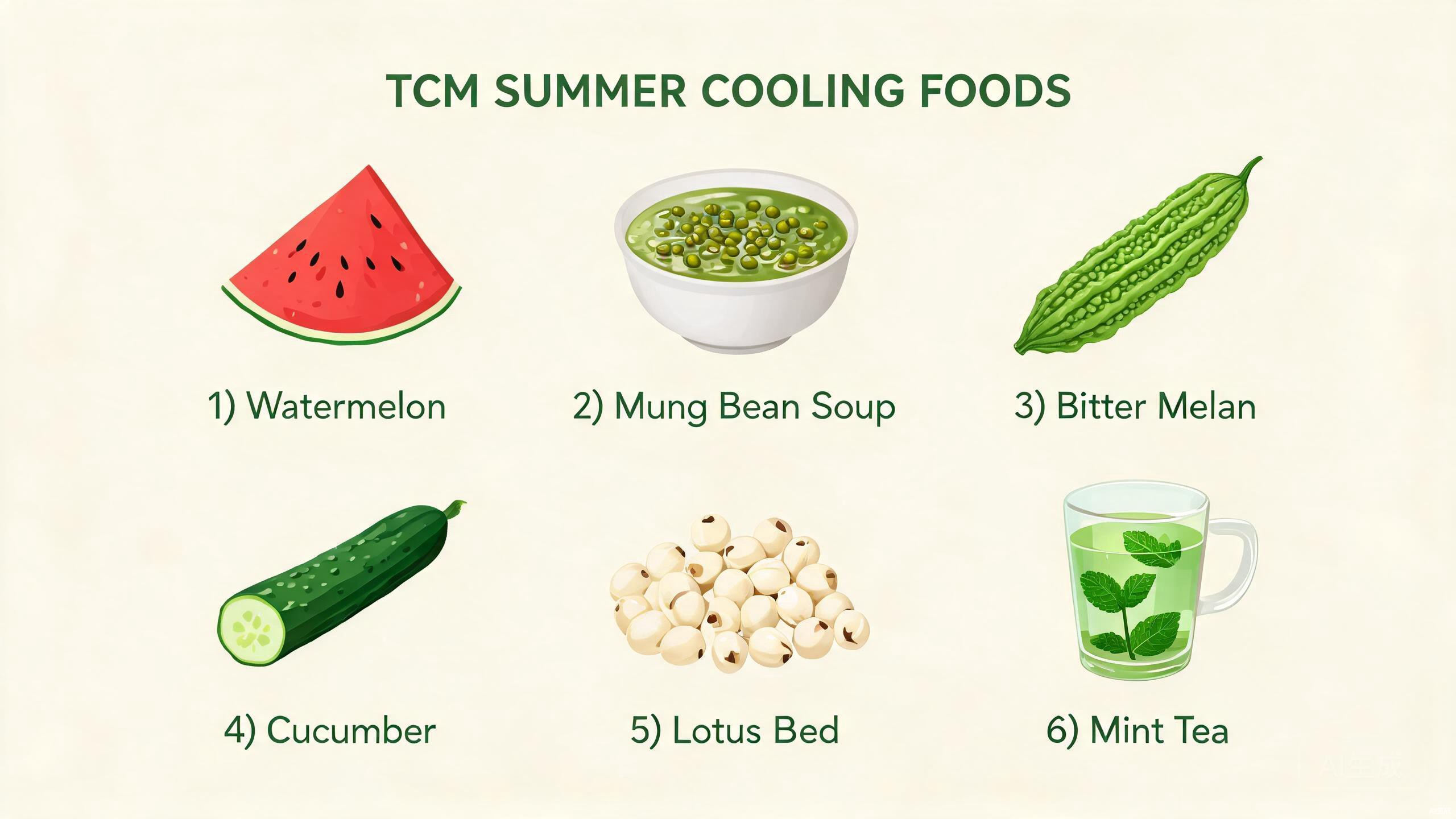
- Five everyday foods — mung beans, watermelon, lotus seeds, bitter melon, and mint — are traditionally used to clear heat, generate fluids, and restore balance during hot weather.
- TCM distinguishes between summer heat (dry, hot, dehydrating) and summer heat-damp (heavy, humid, sluggish) — different patterns call for different food choices.
- TCM cautions against overconsumption of ice-cold foods and drinks, which can damage the Spleen and Stomach even in summer.
- These are traditional wellness practices, not medical treatments. Always consult your healthcare provider before making dietary changes, especially if you take medication.
This article is for educational purposes only and is not medical advice. The foods and practices described here are traditional wellness practices rooted in Chinese culture. They are not a substitute for professional medical care, diagnosis, or treatment. Never stop, adjust, or replace prescribed medication based on information in this article. If you are pregnant, nursing, have a pre-existing condition, or take medication, consult your healthcare provider before making dietary changes. Some foods and herbs may interact with medications — always inform your doctor about everything you consume. These statements have not been evaluated by the FDA and are not intended to diagnose, treat, cure, or prevent any disease.
When the summer sun beats down and the air turns thick and humid, kitchens across East Asia shift in a familiar rhythm. Pots of mung bean soup simmer on stoves. Slices of watermelon are passed around. A glass of mint tea, still warm, sits on the table. These are not random choices — they are part of a sophisticated seasonal eating tradition that has guided Chinese households for centuries, rooted in the principles of Traditional Chinese Medicine.
Understanding why these specific foods appear in summer requires a brief look at how TCM views the season. If you are new to TCM concepts, our introduction to Traditional Chinese Medicine is a good place to start.
How TCM Views Summer Heat
In the Five Elements framework that underpins TCM, summer belongs to the Fire element and is associated with the Heart organ system (心, Xin). But the Heart in TCM is broader than the Western concept of the heart as a blood pump. It also governs the mind and spirit (神, Shen), and is responsible for mental clarity, emotional calm, and restful sleep. When summer heat is excessive, it is the Heart that is said to be most disturbed — leading to the irritability, restlessness, insomnia, and vivid dreams that many people experience during heat waves.
TCM identifies summer as the season when a specific external factor called Summer Heat (暑, Shu) is most active. Summer Heat is considered a "yang" pathogen — it rises upward, depletes the body's fluids, and can disturb the mind. But TCM further distinguishes between two sub-patterns that often occur together:
- Summer Heat (暑热, Shu Re): The classic hot, dry pattern. Symptoms include profuse sweating, intense thirst, dry mouth, dark urine, flushed face, and fatigue. The body is literally drying out and overheating.
- Summer Heat-Damp (暑湿, Shu Shi): When summer heat combines with high humidity, a heavy, sluggish quality sets in. Symptoms include a feeling of heaviness in the body and limbs, chest oppression, nausea, poor appetite, sticky sweat, and digestive sluggishness. This pattern is especially common in humid climates and during the late-summer transition period.
Understanding these patterns matters because different foods address different aspects of summer distress. Some clear pure heat. Some generate fluids. Some resolve dampness. Some calm the mind. To learn more about how the body's vital substances interact with seasonal forces, see our guide on qi, blood, and body fluids, and for the broader seasonal framework, our Five Elements guide.
Five Summer Heat-Clearing Foods in TCM
The following five foods are summer staples in East Asian kitchens. Each has a specific role in TCM — clearing heat, generating fluids, calming the mind, or resolving dampness. Together, they represent a balanced approach to eating well in hot weather. They are not medicines, and they are not a replacement for any prescribed treatment.
1. Mung Bean (绿豆, Lu Dou)
TCM nature: Sweet, cold. Enters: Heart and Stomach channels.
Mung beans are the single most iconic summer food in TCM. They are traditionally used to "clear summer heat," "resolve toxicity," and "relieve thirst." Mung bean soup (绿豆汤) is a staple in nearly every Chinese household during the hottest months — often kept in a thermos or pitcher in the refrigerator for easy access. In TCM theory, the sweet flavor nourishes, while the cold nature clears heat. The beans are also said to have a mild detoxifying quality, which is why they are traditionally served after sun exposure or after eating questionable street food in summer.
How to prepare: Rinse 1 cup of dried mung beans and soak for 1 to 2 hours. Combine with 6 cups of water in a pot, bring to a boil, then reduce heat and simmer for 30 to 45 minutes until the beans split open and the liquid turns a pale green. Add a small amount of rock sugar to taste. Drink the broth warm or at room temperature. For a simpler version, simmer for just 15 minutes and drink the thin green liquid — this is the most cooling form. Enjoy 1 to 2 bowls per day during hot weather.
Caution: Because mung beans are cold in nature, they should be consumed in moderation by people with cold, weak digestion or those experiencing diarrhea. Do not consume ice-cold mung bean soup in large quantities. If you take medication, consult your healthcare provider, as mung beans may interact with certain drugs. See our herbal tea safety guide for general guidance.
2. Watermelon (西瓜, Xi Gua)
TCM nature: Sweet, cold. Enters: Heart, Stomach, and Bladder channels.
Watermelon is so perfectly suited to summer that TCM calls it the "natural white tiger soup" — a reference to a classical cooling herbal formula. It is traditionally used to "clear summer heat," "generate fluids," and "promote urination." The high water content makes it an excellent food for rehydration, while its cold nature directly counters the Fire element's intensity. TCM also values the rind — the white part between the red flesh and the green skin — which is even more cooling than the flesh and is traditionally used in soups and stir-fries.
How to prepare: Eat fresh watermelon slices as a snack or dessert. For a traditional cooling tea, cut the white rind (with a small amount of red flesh attached) into strips, simmer in water for 15 minutes, and drink the liquid. Watermelon juice is also refreshing, though TCM recommends consuming it at room temperature rather than ice-cold. The rind can also be stir-fried with garlic for a light vegetable dish.
Caution: Watermelon is very cold in nature and high in sugar. People with diabetes should consume it in moderation and consult their healthcare provider. Those with weak, cold digestion should avoid eating large quantities. Watermelon is otherwise safe as a common fruit for most people.
3. Lotus Seed (莲子, Lian Zi)
TCM nature: Sweet, astringent, neutral. Enters: Heart, Spleen, and Kidney channels.
Lotus seeds are unique on this list because they are not primarily cooling — they are calming. In TCM, they are traditionally used to "clear heart heat," "calm the mind (Shen)," and "stop diarrhea." For the summer pattern where heat disturbs the Heart and causes irritability, restlessness, and insomnia, lotus seeds are the food of choice. Their slightly astringent quality also helps the body hold onto fluids, which is valuable when summer heat is causing excessive sweating and fluid loss. Lotus seed porridge is a traditional bedtime remedy for summer sleeplessness.
How to prepare: Soak 30 grams of dried lotus seeds (with the bitter green core removed) for 1 hour, then simmer in water for 30 minutes until tender. Add to rice porridge (congee) with a few rock sugar crystals for a calming evening dish. Alternatively, combine lotus seeds with dried lily bulb and rock sugar for a traditional sweet soup. Lotus seeds can also be added to savory soups with pork ribs.
Caution: Lotus seeds are generally safe and gentle. The bitter green core (莲子心, lian zi xin) is even more effective for clearing heart heat but is quite bitter and should be used in small amounts. If you are constipated, consume lotus seeds in moderation due to their astringent nature. Consult your healthcare provider if you take medication.
4. Bitter Melon (苦瓜, Ku Gua)
TCM nature: Bitter, cold. Enters: Heart, Spleen, and Stomach channels.
Bitter melon is the vegetable embodiment of summer medicine in TCM. Its intense bitterness is not a flaw — it is the point. In TCM, the bitter flavor is associated with a downward-clearing, heat-draining action. Bitter melon is traditionally used to "clear heat," "brighten the eyes," and "resolve toxicity." It is particularly valued for the summer heat-damp pattern, where its bitterness helps cut through sluggishness and heaviness. Many Chinese families stir-fry bitter melon with eggs or stuff it with pork during the hottest weeks of the year.
How to prepare: Cut bitter melon in half lengthwise, remove the seeds and pith with a spoon, and slice into thin half-moons. To reduce bitterness, salt the slices lightly and let them sit for 10 minutes, then squeeze out the liquid and rinse. Stir-fry with eggs: scramble 2 eggs, set aside, then stir-fry the bitter melon slices with garlic for 2 to 3 minutes, return the eggs, and season with salt and a splash of soy sauce. Alternatively, slice into thin rounds and stuff with seasoned ground pork, then steam.
Caution: Bitter melon is strongly cold in nature and should be avoided by people with cold, weak digestion, or those with diarrhea. It may lower blood sugar — if you take diabetes medication, consult your healthcare provider before consuming it regularly. Pregnant women should avoid consuming bitter melon in large amounts.
5. Mint (薄荷, Bo He)
TCM nature: Acrid, cool. Enters: Lung and Liver channels.
Mint is the lightest, most refreshing of the five foods on this list. In TCM, it is traditionally used to "disperse wind-heat," "cool the head and eyes," and "soothe the throat." While it does not have the deep heat-clearing power of mung beans or bitter melon, mint excels at providing immediate, aromatic relief from the discomfort of summer heat — the headache, the stuffy feeling, the irritability. A cup of warm mint tea on a hot afternoon is one of the simplest, most accessible summer remedies in all of TCM. The warmth of the tea encourages a light sweat, which is TCM's traditional way of releasing heat through the skin.
How to prepare: For fresh mint tea, rinse a handful of fresh mint leaves and place in a teapot. Pour 8 oz of hot water (90°C) over the leaves and steep for 3 to 5 minutes. The tea should be pale green with a bright, aromatic flavor. Drink warm — not iced. For a traditional combination, add a few dried chrysanthemum flowers or a small piece of rock sugar. Fresh mint can also be added to cold noodle dishes, salads, or summer rolls for a cooling lift.
Caution: Mint is generally safe in food amounts. Avoid large quantities during pregnancy. If you take medication, especially blood thinners, consult your healthcare provider. Mint may worsen acid reflux in some individuals.
Comparison of the Five Summer Foods
| Food | TCM Nature | Traditional Use | Preparation | Typical Frequency |
|---|---|---|---|---|
| Mung Bean (Lu Dou) | Sweet, cold | Clear summer heat, detoxify | Simmer as soup | 1–2 bowls daily in heat |
| Watermelon (Xi Gua) | Sweet, cold | Clear heat, generate fluids | Eat fresh, or simmer rind as tea | Daily in season, in moderation |
| Lotus Seed (Lian Zi) | Sweet, astringent, neutral | Clear heart heat, calm mind | Simmer in porridge or sweet soup | Several times weekly |
| Bitter Melon (Ku Gua) | Bitter, cold | Clear heat, resolve dampness | Stir-fry with eggs, or stuff and steam | 2–3 times weekly |
| Mint (Bo He) | Acrid, cool | Disperse wind-heat, cool head and eyes | Steep fresh leaves as tea | 1–2 cups daily |
The TCM View on Ice Cold Drinks — A Surprising Warning
One of the most counterintuitive pieces of TCM summer advice is this: avoid ice-cold drinks and foods. At first glance, this seems to contradict the entire principle of cooling the body. But TCM logic reveals a deeper understanding of how the body regulates temperature.
In TCM, the Spleen and Stomach are the organs responsible for digestion, and they thrive on warmth. When you pour ice water into a warm stomach, the digestive system must generate extra heat to warm it back up — essentially working harder, not less. Over time, this is said to "injure spleen yang," leading to bloating, poor appetite, loose stools, and fatigue. The irony is that excessive cold consumption can actually make you feel worse in summer, not better.
Instead, TCM recommends:
- Drink warm or room-temperature fluids. Warm mint tea, mung bean soup served at room temperature, and lotus seed porridge are all traditionally consumed warm — not iced.
- Sweat gently. TCM encourages light sweating to release heat through the skin, rather than suppressing it with extreme cold. A warm drink on a hot day may seem odd, but it is the traditional approach.
- Eat cooling foods, not cold foods. Watermelon, mung beans, and bitter melon are "cooling" in TCM nature — their thermal property is inherent, not dependent on being served at a low temperature.
If you are craving something cold, try mung bean soup at room temperature rather than iced. It provides the deep cooling effect without shocking the digestive system. For a refreshing but gentle treat, add a few fresh mint leaves to the bowl.
Summer Lifestyle Tips From a TCM Perspective
Food is one pillar of summer wellness, but TCM emphasizes a whole-person approach. The following habits are traditionally recommended for the summer season:
- Rest during midday heat. TCM advises avoiding strenuous activity during the hottest hours (11 AM to 3 PM). A short midday rest or nap is traditional in many East Asian cultures during summer — it protects the Heart from being overtaxed by heat.
- Stay hydrated with warm fluids. Carry a thermos of warm mint tea or lotus seed water rather than relying on iced drinks. Sip throughout the day rather than gulping large amounts at once.
- Keep the mind calm. Because summer heat disturbs the Heart and Shen (spirit), emotional calm is especially important. Practices like gentle breathing, reading, and our meditation guide can help settle an overstimulated mind. Avoid excessive stimulation and anger during the hottest months.
- Move gently, not intensely. TCM cautions against heavy exercise during peak heat. Early morning or evening walks, swimming, and gentle qigong are ideal. The goal is to encourage a light sweat without exhausting the body's fluids.
- Eat lighter, smaller meals. Summer heat naturally suppresses appetite — listen to that signal. Smaller, lighter meals with cooling vegetables and easy-to-digest grains (like congee) are easier on the Spleen and Stomach. For more on TCM kitchen wisdom, see our guide to everyday TCM kitchen remedies.
- Protect against dampness. In humid climates, the summer heat-damp pattern is common. Avoid sitting in damp environments, do not sleep with wet hair, and change out of sweaty clothes promptly. Bitter melon and mung beans help resolve dampness from within.
When to See a Doctor
The foods and practices in this article are complementary wellness traditions, not medical treatments. Summer heat can be dangerous. You should seek medical attention immediately if you experience any of the following:
- Signs of heat exhaustion or heatstroke: confusion, fainting, rapid pulse, body temperature above 40°C (104°F), hot dry skin with no sweating
- Severe dehydration: dizziness, dark or no urine, extreme thirst, rapid heartbeat
- Nausea, vomiting, or diarrhea that persists for more than 24 hours
- Chest pain, difficulty breathing, or irregular heartbeat
- Any new, persistent, or worsening symptoms
If you are currently taking medication — especially diabetes medication, blood pressure medication, or diuretics — speak with your doctor before adding any new foods or herbs to your routine. Bitter melon, mung beans, and other cooling foods may interact with certain medications.
The Bottom Line
Summer in TCM is the season of Fire and the Heart — a time of maximum energy, but also maximum vulnerability to heat. By incorporating simple, cooling foods like mung beans, watermelon, lotus seeds, bitter melon, and mint into your daily meals, you are following a tradition that has helped generations of East Asian families navigate the hottest months with comfort and balance. These foods clear heat, generate fluids, calm the mind, and resolve dampness — each addressing a different facet of summer's challenges.
But they are traditions — not treatments, and not a replacement for medical care. Paired with adequate hydration, midday rest, gentle movement, and emotional calm, these summer foods form a whole-person approach to seasonal wellness. To deepen your understanding of the principles behind seasonal eating, explore our guides on yin and yang, the Five Elements, and the organ systems that TCM uses to map the body's relationship with nature.
This article shares traditional wellness practices for educational purposes only. It is not a substitute for medical advice, diagnosis, or treatment. The foods described here are not intended to treat, cure, or prevent any disease. If you are pregnant, nursing, have a pre-existing condition, or take medication, consult your healthcare provider before making dietary changes. Summer heat can be medically dangerous — seek immediate medical attention for signs of heat exhaustion or heatstroke. These statements have not been evaluated by the FDA. Never stop or adjust prescribed medication without your doctor's explicit guidance.