Key Takeaways
- TCM rests on yao shi tong yuan — "food and medicine share the same source." Your pantry is already stocked with gentle remedies.
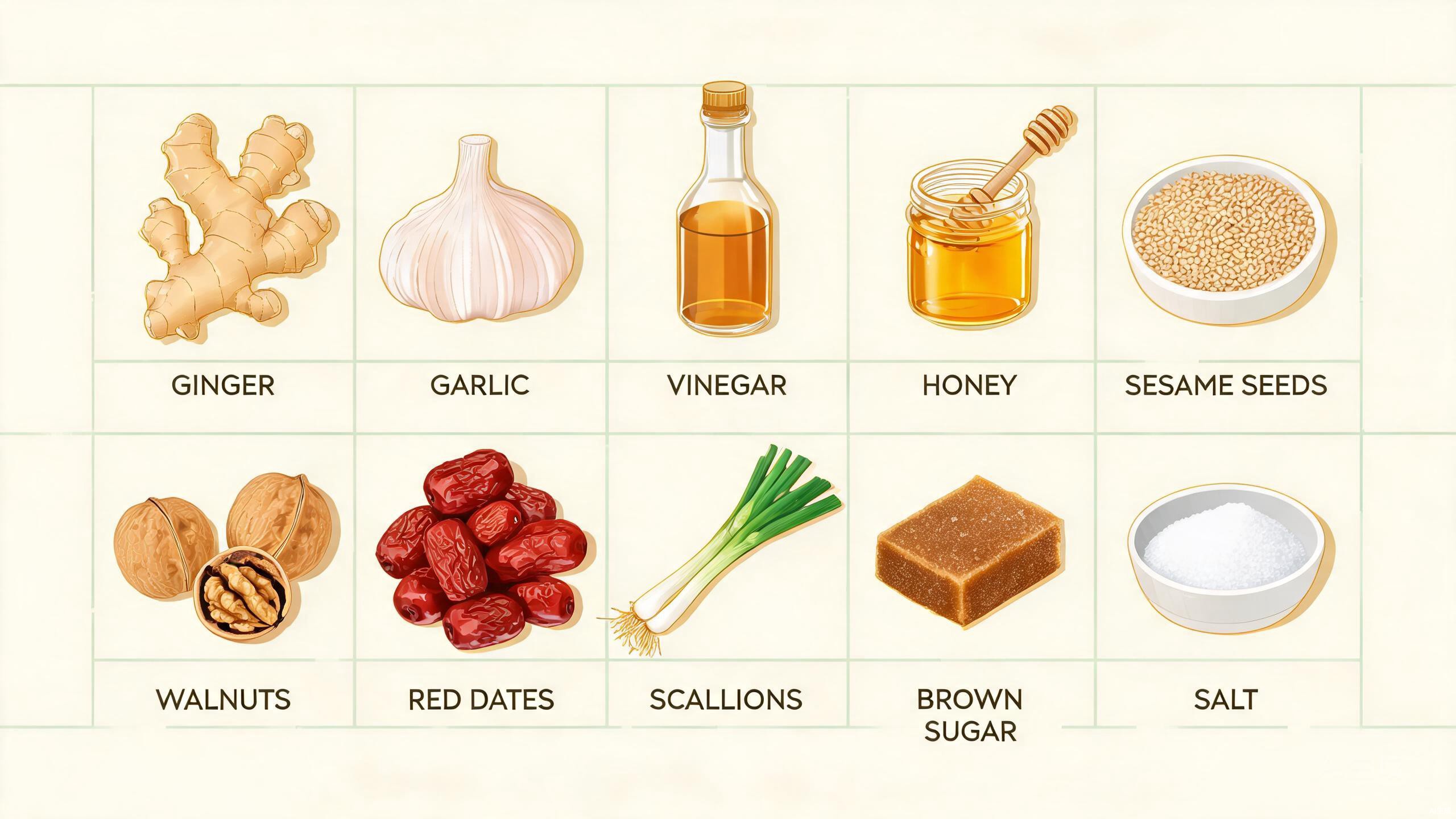
- Ten everyday ingredients — ginger, garlic, vinegar, honey, sesame, walnut, red date, scallion, brown sugar, and salt — each carry a traditional nature, flavor, and channel affinity.
- A food's nature (warm, neutral, cold) and flavor (sweet, pungent, sour, bitter, salty) predict how it acts on the body.
- Five simple recipes — from ginger brown sugar tea to walnut red date porridge — turn staples into practical home remedies.
- Kitchen remedies are complementary wellness practices, not a substitute for medical care; consult your healthcare provider for persistent or serious concerns.
This article is for wellness education only and is not medical advice. The kitchen remedies described here are traditional Chinese food therapy practices for everyday comfort and balance. They are not a treatment for any medical condition and must not replace professional medical care or prescribed medication. Some foods (such as garlic, ginger, and vinegar) may interact with medications including blood thinners and blood pressure or blood sugar drugs. If you are pregnant, nursing, managing a chronic condition, or take prescription medication, consult your qualified healthcare provider before using these foods in concentrated or medicinal amounts. Statements have not been evaluated by the U.S. Food and Drug Administration (FDA). This information is not intended to diagnose, treat, cure, or prevent any disease.
Long before pharmacies lined every corner, healers in China turned to the most reliable source of medicine available: the kitchen. This idea is captured in one of TCM's most enduring principles — yao shi tong yuan (药食同源), "food and medicine share the same source." Many valued remedies in Chinese households are not rare herbs, but ordinary ingredients in your cupboard.
What turns a food into a remedy is not novelty but intention. Each ingredient is understood by its nature (warm, hot, neutral, cool, cold) and flavor (sweet, pungent, sour, bitter, salty). Warming ginger suits cold and damp; cooling mung bean suits heat and dry. Once you grasp this logic, your kitchen becomes a practical pharmacy. If you're new to these ideas, our introduction to TCM is a good place to start.
10 Everyday TCM Kitchen Remedies
1. Ginger (Sheng Jiang 生姨)
TCM nature & flavor: Warm; pungent. Enters the Lung, Spleen, and Stomach channels.
Main effects: Warms the middle and stops vomiting, disperses wind-cold, warms the lungs and transforms phlegm. The first thing many Chinese households reach for at the first sign of a chill.
Simple use: Slice 3 to 5 thin pieces of fresh ginger and steep in hot water for 5 minutes. Add to soups and stir-fries daily. See our ginger tea guide.
Precautions: Avoid large amounts with heat signs (sore throat, dry mouth) or in the evening. Use modestly during pregnancy.
2. Garlic (Da Suan 大蒜)
TCM nature & flavor: Warm; pungent. Enters the Spleen, Stomach, and Lung channels.
Main effects: Warms the middle and strengthens digestion, resolves toxicity. Modern interest focuses on garlic's allicin content.
Simple use: Crush or mince a clove, let it rest 10 minutes, then use raw in dressings or add to cooked dishes. Crushing activates its active compounds.
Precautions: Raw garlic can irritate the stomach in sensitive people; enjoy with food. Avoid concentrated amounts with blood-thinning medication.
3. Vinegar (Cu 醋)
TCM nature & flavor: Warm; sour, bitter. Enters the Liver and Stomach channels.
Main effects: Invigorates blood and disperses stasis, supports digestion by transforming stagnation, and "gathers" the actions of other herbs.
Simple use: Add a splash to dressings and braises. Try vinegar-pickled garlic (recipe below) as a traditional condiment.
Precautions: Excess vinegar may weaken the stomach in those with weak digestion. Avoid on an empty stomach if prone to heartburn.
4. Honey (Feng Mi 蜂蜜)
TCM nature & flavor: Neutral; sweet. Enters the Spleen, Stomach, Lung, and Large Intestine channels.
Main effects: Moistens the lungs and soothes cough, tonifies the spleen, moistens the intestines, and harmonizes other herbs.
Simple use: Stir 1 teaspoon into warm (not hot) water or tea. See our calming foods guide for more.
Precautions: Never give honey to infants under 12 months (botulism risk). Diabetics should use sparingly. Add to warm, not boiling, water to preserve its properties.
5. Sesame (Zhi Ma 芝麻)
TCM nature & flavor: Neutral; sweet. Enters the Liver and Kidney channels. Black sesame is most commonly used in TCM.
Main effects: Tonifies the liver and kidney, benefits essence and blood, and moistens the intestines. Especially valued for the hair, skin, and joints.
Simple use: Toast black sesame lightly and sprinkle on rice, congee, or salads. Or grind into powder and stir into warm milk or porridge.
Precautions: Gentle and well tolerated. Those with sesame allergy must avoid it. Its oily nature may loosen stools in large amounts.
6. Walnut (He Tao 核桃)
TCM nature & flavor: Warm; sweet. Enters the Kidney, Lung, and Large Intestine channels.
Main effects: Tonifies the kidney and secures essence, warms the lungs and calms wheezing, and moistens the intestines. Traditionally linked to supporting the kidneys and brain.
Simple use: Eat 2 to 3 walnuts per day, or chop into porridge. See our walnut red date porridge recipe below.
Precautions: Because walnuts are warm and oily, avoid excess with heat patterns or loose stools. Limit to a few per day.
7. Red Date / Jujube (Hong Zao 红枣)
TCM nature & flavor: Warm; sweet. Enters the Spleen and Stomach channels.
Main effects: Tonifies the spleen and replenishes qi, nourishes blood and calms the spirit, and harmonizes other herbs. The most widely used tonic food in Chinese kitchens.
Simple use: Add 3 to 5 pitted red dates to tea, congee, or soup. They pair well with ginger (see our ginger date tea) and rice porridge (see red date congee). For blood-nourishing combinations, browse our blood-nourishing foods guide.
Precautions: Red dates are warm and sweet; avoid excess with damp-heat signs (bloated, sticky feeling). Diabetics should use in moderation.
8. Scallion / Green Onion (Cong Bai 葱白)
TCM nature & flavor: Warm; pungent. Enters the Lung and Stomach channels.
Main effects: Induces sweating to release the exterior (early stage of wind-cold), unblocks and warms yang, and disperses cold. The white lower stalk — cong bai — is the part most valued in TCM.
Simple use: Simmer the white parts of 2 to 3 scallions with a few ginger slices in water for 5 minutes at the first sign of a chill. See our recipe below and our TCM for cold and flu guide.
Precautions: Warming and dispersing; avoid with profuse sweating or heat patterns. Use in small culinary amounts.
9. Brown Sugar (Hong Tang 红糖)
TCM nature & flavor: Warm; sweet. Enters the Liver, Spleen, and Stomach channels.
Main effects: Warms the middle and disperses cold, invigorates blood and resolves stasis, and soothes menstrual discomfort. Brown sugar is unrefined cane sugar that retains minerals.
Simple use: Dissolve 1 to 2 small pieces (10 to 15 grams) in hot water, or simmer with ginger (recipe below).
Precautions: Still sugar. Use sparingly and avoid excess with heat signs or blood sugar concerns. Diabetics should avoid or consult their healthcare provider.
10. Salt (Yan 盐)
TCM nature & flavor: Cold; salty. Enters the Kidney, Stomach, and Large Intestine channels.
Main effects: Clears heat and cools the blood, and "guides" herbs downward to the kidneys. In kitchen practice, salt's main TCM role is as a flavor that directs action to the kidney channel.
Simple use: A pinch is enough. Use it to season and to "lead" warming foods — a tiny pinch in ginger tea directs warmth to the kidneys. A warm saltwater gargle soothes a sore throat.
Precautions: Modern nutrition links excess sodium to high blood pressure. TCM agrees salt should be used sparingly. Those with hypertension or kidney disease should follow their healthcare provider's guidance.
Kitchen Remedy Overview Table
| Ingredient | Nature & Flavor | Main Effect | Simplest Use | Best For |
|---|---|---|---|---|
| Ginger (Sheng Jiang) | Warm, pungent | Warms middle, releases cold | Sliced in hot tea | Cold onset, chilliness |
| Garlic (Da Suan) | Warm, pungent | Warms digestion, detoxifies | Crushed, raw or cooked | Sluggish digestion |
| Vinegar (Cu) | Warm, sour/bitter | Moves blood, aids digestion | Splash in dressings | Stagnation, bloating |
| Honey (Feng Mi) | Neutral, sweet | Moistens lungs, bowels | 1 tsp in warm water | Dry cough, dryness |
| Sesame (Zhi Ma) | Neutral, sweet | Tonifies liver, kidney | Toasted, ground | Dryness, fatigue |
| Walnut (He Tao) | Warm, sweet | Tonifies kidney, warms lung | 2–3 per day | Cold-type cough, fatigue |
| Red Date (Hong Zao) | Warm, sweet | Tonifies qi, nourishes blood | 3–5 in tea/porridge | Tiredness, pale look |
| Scallion (Cong Bai) | Warm, pungent | Releases cold, unblocks yang | Simmered with ginger | Early wind-cold |
| Brown Sugar (Hong Tang) | Warm, sweet | Warms middle, moves blood | Dissolved in hot water | Cold-type cramps |
| Salt (Yan) | Cold, salty | Clears heat, guides to kidney | A pinch to season | General balance (sparingly) |
Notice how the ten ingredients span warm, neutral, and cold natures. TCM kitchen medicine is about matching the food to the situation — warming ginger for a cold, cooling salt for heat, moistening honey for dryness. For more on this principle, see our qi-boosting foods guide.
5 Quick Kitchen Remedy Recipes
These five recipes use only common kitchen ingredients and take minutes to prepare. Each is matched to an everyday situation, not a medical condition.
1. Ginger Brown Sugar Tea
Traditionally for: Wind-cold onset — chills, runny nose with clear discharge, body ache.
Ingredients: 5 thin slices fresh ginger; 15 grams brown sugar; 2 cups water.
Method: Simmer the ginger in water for 5 to 8 minutes. Strain, stir in the brown sugar, and drink warm. Best at the first sign of a chill. See our ginger date tea guide for variations.
2. Honey Lemon Water
Traditionally for: Dry throat, dry cough, general dryness.
Ingredients: 1 teaspoon honey; juice of half a lemon; 1 cup warm water.
Method: Stir honey and lemon juice into warm water. Sip slowly. Avoid giving honey to infants under 12 months.
3. Vinegar-Soaked Garlic
Traditionally for: A pungent-sour condiment for digestion and circulation.
Ingredients: 1 head garlic, peeled; rice vinegar to cover; a clean glass jar.
Method: Place cloves in the jar, cover with vinegar, seal, and store in a cool, dark place for 7 to 10 days. The garlic turns pale green and mellows. Eat 1 to 2 cloves per day with meals. Avoid with blood-thinning medication.
4. Walnut Red Date Porridge
Traditionally for: Nourishing blood and calming the spirit — gentle support for tiredness and restless sleep.
Ingredients: 1/2 cup white rice; 5 red dates, pitted; 3 walnuts, broken into pieces; 4 cups water.
Method: Combine rice, dates, walnuts, and water in a pot. Bring to a boil, then simmer on low for 30 to 40 minutes until creamy. Eat warm for breakfast. Our congee guide covers basic technique, and yam congee makes a soothing alternative.
5. Scallion Ginger Soup
Traditionally for: Releasing the exterior at the start of a wind-cold pattern — chills, mild headache, stiff neck.
Ingredients: White parts of 3 scallions; 4 thin slices fresh ginger; 2 cups water.
Method: Simmer scallion whites and ginger in water for 5 minutes. Strain and drink hot, then rest. A gentle, short-term remedy for the first day of feeling chilled; if symptoms persist, seek medical care. Pair with our herbal tea index for complementary teas.
Kitchen Remedy Safety Guidelines
Used sensibly, these ten ingredients are safe for most healthy adults. Keep the following in mind:
- Culinary amounts first. Most kitchen remedies work best in ordinary food amounts. Concentrated preparations carry more risk and should be used short-term.
- Match the food to the pattern. Warming foods (ginger, brown sugar, walnut) suit cold patterns; cooling or neutral foods (honey, sesame, salt) suit heat or dryness. A warming food for a heat pattern can worsen discomfort.
- Watch medication interactions. Garlic, ginger, and vinegar may interact with blood thinners, blood pressure, and blood sugar medications. Honey and brown sugar affect blood sugar. Tell your healthcare provider about all foods and herbs you use in concentrated form.
- Special populations. Pregnant and nursing women, young children, the elderly, and those with chronic conditions should use these remedies cautiously. Some warming and blood-moving foods are traditionally avoided in pregnancy.
- Allergy awareness. Sesame and nuts are common allergens. Always check for allergies before regular use.
- Know when to seek care. Kitchen remedies are for everyday, minor discomforts. If symptoms are severe, persistent, or worsening — especially high fever, chest pain, or difficulty breathing — seek medical attention promptly.
For safe use of teas and infusions made from these ingredients, our herbal tea safety guide offers detailed guidance.
The Bottom Line
The Chinese saying yao shi tong yuan — "food and medicine share the same source" — is an invitation to see your kitchen differently. The ten ingredients gathered here are not exotic; they are the everyday staples that have quietly supported Chinese households for centuries. Ginger warms a chill, honey moistens a dry cough, vinegar enlivens sluggish digestion, red dates and walnuts nourish and steady, and a pinch of salt reminds us that even ordinary seasoning has a place in the body's balance.
You do not need to memorize complex theory to begin. Start with one ingredient that matches how you feel today — ginger tea when you're cold, honey in warm water when your throat is dry — and notice the response. That is the heart of TCM food therapy: small, attentive choices, made daily, that add up to genuine wellness — always alongside, and never in place of, professional medical care.