Key Takeaways
- In TCM, fresh ginger (Sheng Jiang) is warm, pungent, and enters the Lung, Spleen, and Stomach meridians — its core actions are to release the exterior and disperse cold, warm the middle and stop vomiting, warm the Lungs and stop cough, and resolve toxicity.
- It is the go-to tea for the first sign of a cold, cold hands and feet, stomach cold and nausea, and cold-type menstrual cramps.
- The best time to drink it is in the morning, between 7 and 9 a.m., when the Stomach meridian is most active — a TCM proverb says "ginger in the morning is like ginseng."
- All you need is 3 to 5 slices of fresh ginger (15 to 20 g) and 500 ml of water; optional additions include brown sugar, honey, lemon, red dates, and goji berries.
- Avoid ginger tea if you have yin deficiency with fire, a wind-heat cold, or a dry mouth with bitter taste, and do not drink it late in the evening.
1. What Is Ginger Tea?
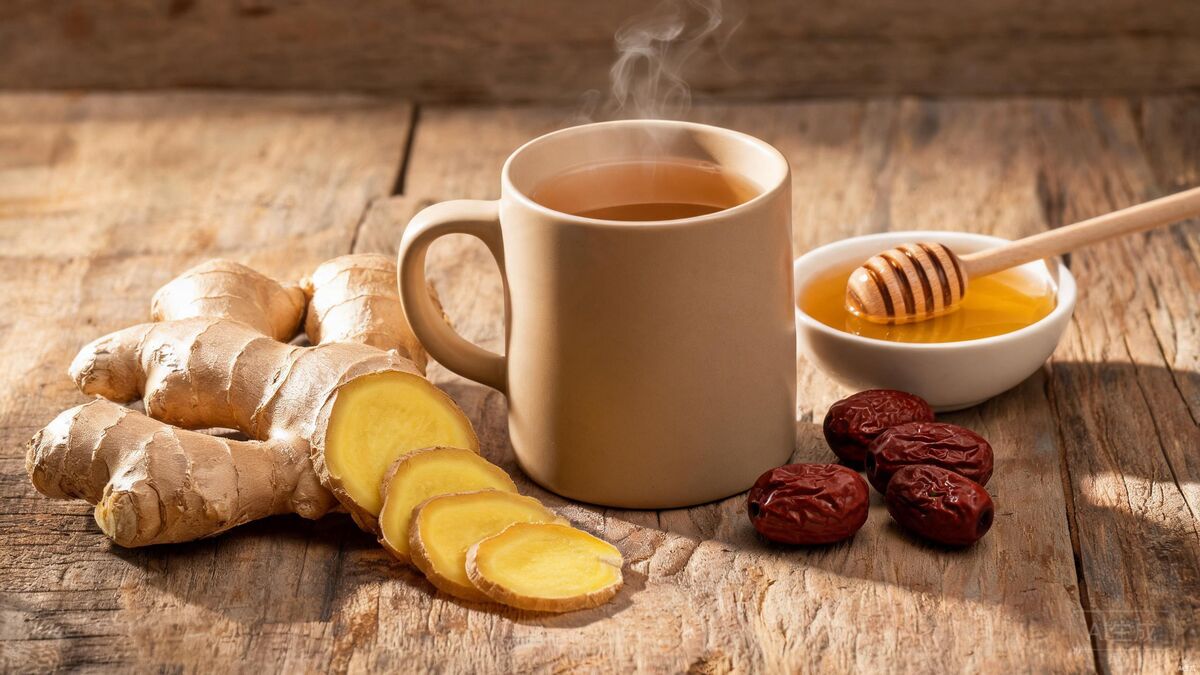
Ginger tea (生姜茶, shēngjiāng chá) is one of the simplest and most universally loved herbal teas in Chinese medicine. Made from nothing more than fresh ginger root sliced and steeped or simmered in water, it produces a clear, pale-yellow drink with a warm, spicy aroma and a clean, gently biting heat. Unlike most other herbal teas, the main ingredient is not a specialty herb bought from an apothecary — it is a common root sitting in nearly every kitchen, available in any supermarket year-round.
This accessibility is exactly what makes ginger tea so important in TCM self-care. It is the first remedy most Chinese families reach for when someone comes home cold and shivering, when a child has a stomachache after eating ice cream, or when morning sickness or motion nausea strikes. The Shennong Ben Cao Jing, the foundational herbal text of Chinese medicine, classified ginger as a middle-grade herb — safe for regular use, effective for everyday complaints, and gentle enough for children and the elderly when used sensibly.
What sets ginger apart from other warming herbs is its versatility. It works at the body's surface to push out an invading cold, in the middle to warm and settle the stomach, and in the Lungs to calm a cold-type cough. A single cup, brewed differently, can address a cold, a stomachache, or a chilled body — which is why it has earned a place in nearly every Chinese household.
2. TCM Properties: Nature, Flavor, and Meridians
Understanding ginger's traditional properties tells you exactly when it will help and when it will not.
Nature (Temperature): Warm
Fresh ginger is warm (温, wēn). This is a gentle, comfortable warmth rather than a fierce heat — strong enough to dispel cold and warm the middle, but mild enough for daily use by most people. The warmth is what makes it effective against cold-type conditions: the chills and body aches of a wind-cold attack, cold pain in the stomach, cold hands and feet, and cramps that ease with warmth. It is also why ginger is traditionally favored in cold weather and discouraged in heat-pattern illness.
Flavor: Pungent
Ginger is pungent (辛, xīn). In TCM, the pungent flavor disperses, moves, and opens. It pushes outward to release pathogens at the body's surface, and it moves inward to unblock stagnant Qi and warm the interior. The pungency is what gives ginger its characteristic bite and its ability to "sweat out" an early cold. It also explains why ginger is paired with sweet ingredients like dates, honey, or brown sugar in most recipes — the sweetness tempers the pungency and protects the stomach.
Meridian Affinity: Lung, Spleen, and Stomach
Fresh ginger enters the Lung, Spleen, and Stomach meridians (归肺、脾、胃经). The Lung entry lets it release the exterior and disperse wind-cold at the surface, and warm the Lungs to stop a cold-type cough. The Spleen and Stomach entries are its most clinically important: ginger warms the digestive middle, settles nausea and vomiting, and supports the transformation of food. This triple meridian affinity is the reason one root can treat a cold, a stomachache, and a cough.
Core Actions
- Releases the exterior and disperses cold (解表散寒) — for the first sign of a wind-cold cold with chills and body aches.
- Warms the middle and stops vomiting (温中止呕) — the "holy herb of vomiting," for nausea, morning sickness, motion sickness, and stomach cold.
- Warms the Lungs and stops cough (温肺止咳) — for a cough with clear, watery phlegm triggered by cold.
- Resolves toxicity (解毒) — for mild food poisoning, fish and crab toxicity, and to moderate the side effects of other herbs.
3. Ingredients List
Ginger tea uses only a handful of everyday ingredients, all of which are available at any Western supermarket or online. Here is the complete ingredient list with amounts and notes.
| Ingredient | Amount | Notes |
|---|---|---|
| Fresh ginger root (新鲜生姜) | 3 to 5 slices (15 to 20 g) | Available in any supermarket produce section. Use organic if possible. Do not peel — just rinse well and slice. Each slice should be about the thickness of a coin. |
| Water (水) | 500 ml (about 2 cups) | Filtered or spring water gives the cleanest flavor. This makes one large mug or two small cups. |
| Brown sugar (红糖) — optional | 1 to 2 teaspoons | Found in Asian grocery stores and on Amazon. Warming and blood-nourishing; the classic pairing for colds and menstrual cramps. Regular dark brown sugar is an acceptable substitute. |
| Honey (蜂蜜) — optional | 1 teaspoon | Any supermarket. Soothes the throat and moistens dryness. Always add AFTER the tea has cooled below 60°C (140°F) — never into boiling water. |
| Lemon (柠檬) — optional | 1 to 2 slices or a squeeze | Any supermarket. Adds vitamin C and a bright flavor; good for cold recovery. |
| Red dates (红枣) — optional | 3 to 5 pieces | Dried jujube dates from Asian grocery stores or Amazon. Nourish Blood and Spleen, sweeten the tea. Pitting them first releases more flavor. |
| Goji berries (枸杞) — optional | 8 to 10 berries | Available on Amazon, iHerb, and at Asian grocery stores. Nourish Liver and Kidney Yin; a balanced addition for daily drinking. |
4. How to Make Ginger Tea
There are four classic ways to prepare ginger tea, each suited to a slightly different situation. Start with the basic steeping method for everyday use, and use the simmered or blended versions when you need a stronger effect.
Ingredients: 3 to 5 slices fresh ginger (15 to 20 g), 500 ml water just off the boil.
Instructions:
- Rinse the ginger root thoroughly under running water. Do not peel — the skin balances the warm flesh with a slight cooling, harmonizing effect.
- Cut 3 to 5 thin slices, each about the thickness of a coin. For a stronger tea, lightly crush the slices with the flat of a knife to release more of the active oils.
- Place the slices in a mug or teapot. Pour 500 ml of water just off the boil (about 90°C / 195°F) over them.
- Cover and let steep for 5 to 8 minutes. The tea will turn pale yellow and release a warm, spicy aroma.
- Drink warm. You can re-steep the same slices once more for a second, lighter cup.
Best for: Everyday warming, mild cold prevention, and a gentle morning digestive tonic.
Ingredients: 3 to 5 slices fresh ginger (15 to 20 g), 500 ml water.
Instructions:
- Place the ginger slices in a small saucepan. Add 500 ml of cold water.
- Bring to a boil over high heat, then reduce the heat to low and simmer gently for 10 minutes with the lid on.
- Remove from the heat and let it rest for 2 minutes. Strain into a mug.
- Drink warm. This method extracts more of the warming compounds and produces a stronger, more medicinal tea than steeping.
Best for: The first sign of a wind-cold cold, cold hands and feet, and stomach cold with nausea — when you need real warming power.
Ingredients: 3 to 5 slices fresh ginger, 3 to 5 pitted red dates, 500 ml water, optional 1 to 2 tsp brown sugar.
Instructions:
- Rinse the red dates and pit them. Lightly score or tear them open so they release more flavor.
- Place the ginger slices and dates in a small saucepan with 500 ml of water.
- Bring to a boil over high heat, then reduce to low and simmer for 10 to 15 minutes.
- If using brown sugar, stir it in after removing from the heat, until dissolved.
- Strain and drink warm.
Best for: Cold-type menstrual cramps, postnatal warming, chronic cold hands and feet, and as a nourishing daily winter tea. The dates sweeten and strengthen the Spleen while the ginger warms — a classic TCM pairing.
Ingredients: 3 to 5 slices fresh ginger, 500 ml water, 1 tsp honey.
Instructions:
- Prepare the tea using either the steeping (Method 1) or simmering (Method 2) method above.
- Let the tea cool until it is comfortably warm to the touch — below 60°C (140°F). This step is essential.
- Stir in 1 teaspoon of honey until dissolved. Drink warm.
Best for: A dry, scratchy throat from a cold, a lingering cold-type cough, or when you want the soothing, moistening benefit of honey alongside the warmth of ginger. Never add honey to boiling or very hot water — high heat destroys its beneficial enzymes and, in TCM, turns its nature from nourishing to heating.
5. Health Benefits and Who It Helps
Ginger tea's benefits all stem from its warming, dispersing, and settling nature. If you recognize yourself in any of the patterns below, ginger tea is likely a good match.
- First sign of a wind-cold cold — chills, mild body aches, clear runny nose, no sore throat. A strong cup taken immediately, followed by rest and warmth, can often stop the cold from taking hold.
- Cold hands and feet — especially in cold weather or for people with a naturally cold constitution. A morning cup warms the body from the inside out.
- Stomach cold and nausea — including morning sickness, motion sickness, nausea after eating cold or raw food, and the "sick" feeling after too much air conditioning. Ginger is known as the "holy herb of vomiting" in TCM.
- Cold-type menstrual cramps — cramps that ease with warmth, with dark or clotted flow, often accompanied by cold hands. The ginger and date version (Method 3) is the traditional choice.
- Cold-type cough — a cough with clear, watery phlegm, triggered or worsened by cold air. Ginger warms the Lungs and helps resolve the cold.
- Air-conditioning chill — the stiff, cold, "caught a draft" feeling after sitting under a strong air conditioner. A warm cup restores circulation and comfort quickly.
6. Contraindications and Precautions
Ginger is food-grade and safe for most people in culinary amounts, but as a medicinal tea it is not for everyone. Pay attention to the following cautions.
- Yin deficiency with internal fire (阴虚火旺). If you have a dry mouth and throat, night sweats, a red tongue with little coating, or feel hot and restless, ginger's warmth will add fuel to the fire. Avoid regular use.
- Dry mouth with bitter taste (口干口苦). These are heat signs — ginger will worsen them.
- Wind-heat cold. If your cold starts with a sore throat, fever, yellow mucus, and thirst, ginger is the wrong choice. It will intensify the heat. Use a cooling tea like chrysanthemum or peppermint instead.
- Late evening. Do not drink ginger tea in the evening or at night. A TCM proverb warns: "eat ginger in the morning like ginseng, eat ginger at night like arsenic." Its warming, activating nature can disturb sleep.
- Excessive sweating or bleeding tendencies. Ginger promotes sweating and has a mild blood-moving effect; use caution with heavy menstrual flow or if you take blood-thinning medication.
- Pregnancy. Small culinary amounts are generally considered safe, and ginger is widely used for morning sickness. However, high medicinal doses are not advised. Consult your doctor before regular use.
- Gallstones or reflux. Large amounts of ginger can worsen gallstone symptoms and heartburn in some people. Keep portions moderate.
7. The Best Time to Drink Ginger Tea
Timing matters in TCM, and ginger tea is the clearest example. The ideal time is in the morning, between 7 and 9 a.m., when the Stomach meridian is at its peak activity (胃经当令). At this hour, the body's Yang energy is rising, and ginger's warmth supports digestion, boosts energy for the day, and aligns with the natural rhythm of the body.
By contrast, the evening is when the body's Yang energy should be settling inward and downward in preparation for sleep. Ginger, being warm and outward-dispersing, works against that settling — which is the basis of the traditional advice against evening ginger. If you are chilled in the evening, a very weak, small cup is usually fine, but reserve your stronger ginger tea for the morning or early afternoon.
Seasonally, ginger tea is best suited to autumn, winter, and early spring, and to the transitions into and out of cold weather. In the heat of midsummer, switch to cooling teas like chrysanthemum — unless you have overdone air conditioning, in which case a warming cup of ginger tea is exactly the remedy.
8. Where to Buy Ginger
Ginger is one of the easiest TCM ingredients to source in the West. Here is what to look for and where.
Fresh Ginger Root
Any supermarket produce section carries fresh ginger. Choose roots that are firm, smooth, and heavy for their size, with taut, unblemished skin. Avoid roots that are wrinkled, soft, moldy, or sprouting. Organic ginger is preferable, especially since you will be brewing the unpeeled root — look for it at Whole Foods, Trader Joe's, Sprouts, or in the organic section of any large grocery store.
Dried Ginger Slices (干姜片)
For convenience and a stronger, more medicinal brew, dried ginger slices are available on Amazon and at Asian grocery stores. Search for "dried ginger slices" or "gan jiang pian." Dried ginger is warmer and more internally directed than fresh — it is the form used in TCM formulas for deep interior cold, while fresh ginger is better for releasing an exterior cold. Store dried slices in a sealed jar in a cool, dark place; they keep for up to a year.
Brown Sugar and Red Dates
Both are easily found on Amazon and at any Asian grocery store. For brown sugar, look for Chinese block brown sugar (红糖块) or use a good-quality dark muscovado sugar. For red dates, choose plump, pitted, unsulfured dried jujubes — sold under "red dates," "jujube," or "hong zao."
Frequently Asked Questions
Is it good to drink ginger tea every day?
For most healthy adults, one cup of ginger tea in the morning is safe and beneficial, especially during cold weather or if you tend to run cold. The traditional TCM advice is to drink ginger in the morning and not in the evening, because its warming, energizing nature can interfere with sleep. If you have signs of yin deficiency — such as a dry mouth, night sweats, or a red tongue with little coating — limit ginger tea to occasional use rather than daily. Otherwise, a morning cup is an excellent daily warming ritual.
Should I peel ginger before making tea?
In TCM, it is generally recommended not to peel fresh ginger for tea. The ginger skin has a slightly cooling and harmonizing nature that balances the warm, pungent flesh, making the tea gentler on the stomach. Simply rinse the root well under running water, brush off any dirt, and slice it with the skin on. Only peel the ginger if you specifically want a stronger, hotter tea, or if the skin is bruised, sprouting, or heavily soiled.
Can I drink ginger tea at night?
It is best to avoid ginger tea in the evening. A well-known TCM saying advises "eat ginger in the morning like ginseng, eat ginger at night like arsenic." Ginger is warm and pungent, which activates the body's Yang energy and can make it harder to wind down for sleep. For most people, the cut-off is late afternoon. If you feel genuinely chilled in the evening — for example, after sitting under air conditioning — a very weak, small cup is usually fine, but reserve strong ginger tea for the morning.
Is ginger tea good for a cold?
Ginger tea is excellent for a wind-cold type cold, which begins with chills, a clear runny nose, body aches, and no sore throat or only a mild one. In this case, drink a strong, warm cup at the very first sign, ideally with a little brown sugar, then wrap up warm and rest to encourage a light sweat. It is not suitable for a wind-heat cold, which starts with a sore throat, fever, yellow mucus, and thirst — for that, choose a cooling tea like chrysanthemum or peppermint instead. Getting the type right is the key to using ginger effectively.
This article is for educational and informational purposes only and is not a substitute for professional medical advice, diagnosis, or treatment. The herbal teas and practices described here are traditional self-care methods and are not intended to treat, cure, or prevent any disease. Always consult a qualified healthcare provider before beginning any new herbal practice, especially if you are pregnant, nursing, taking medication, or have a medical condition. Never disregard professional medical advice or delay seeking it because of something you have read on this site. Read our full disclaimer →