Key Takeaways
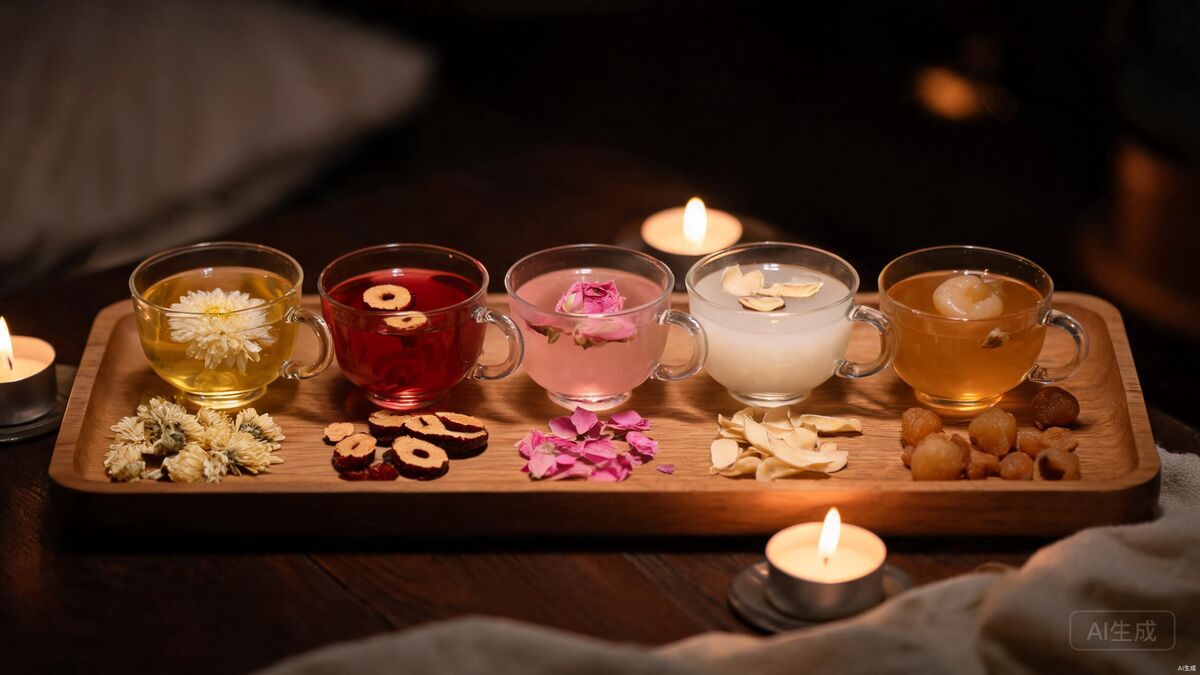
- In TCM, insomnia is usually a problem of disturbed Shen (the spirit-mind) and depleted Heart Blood or Yin — the five teas here nourish those systems from different angles.
- Sour Jujube Seed Tea is the strongest single-herb insomnia remedy; Longan & Red Date Tea is best for the tired, pale, anxious sleeper.
- Chamomile & Date Tea bridges East and West; Lily Bulb Tea clears heat and dryness; Schisandra Berry Tea anchors energy for staying asleep.
- Drink your chosen tea 30–60 minutes before bed, warm and slowly, in a dim, quiet room — the ritual matters as much as the herbs.
- All ingredients are available on Amazon, iHerb, and at Asian grocery stores; chamomile and honey are at every supermarket.
1. How TCM Understands Sleep — and Why Tea Helps
Before we look at the individual teas, it helps to understand the TCM view of sleep, because that view is what tells you which tea to choose. In Traditional Chinese Medicine, sleep happens when Yang energy descends and Yin energy takes over — the active, outward, mental energy of the day retreats downward into the body, and the quiet, restorative, cooling energy of night prevails. When you cannot sleep, it is almost always because Yang refuses to descend: energy and heat stay trapped in the upper body, feeding the mind with restless thoughts while the body lies awake.
The "seat" of this process is the Shen (神), usually translated as "spirit" or "heart-mind." The Shen is housed by the Heart, and it rests properly only when the Heart is nourished — by adequate Blood and Yin — and when it is not disturbed by excess heat, rising Liver fire, or undigested emotion. When the Heart Blood or Yin is depleted (from overwork, worry, poor diet, or chronic stress), the Shen has no anchor. It "floats upward," producing the classic insomniac experience: a racing mind, a hot head, a tight chest, and a body that feels wired but exhausted.
This is exactly why tea is the ideal delivery method for sleep herbs in TCM. A warm, caffeine-free brew taken 30 to 60 minutes before bed does several things at once: it delivers the active compounds of the herbs, the warmth relaxes the Stomach and eases the downward flow of energy, the liquid form is rapidly absorbed, and the slow ritual of sipping signals the nervous system that the day is ending. Below are five teas that address the most common patterns behind poor sleep.
2. The Five Teas at a Glance
Use this comparison table to find the tea that matches your type of insomnia. Each is explained in full detail in the sections that follow.
| Tea | Best For | Main TCM Action | Taste |
|---|---|---|---|
| 1. Sour Jujube Seed | Racing mind, trouble falling asleep | Nourishes Heart Yin, calms the Shen | Slightly sour, mild |
| 2. Longan & Red Date | Tired but anxious, pale, waking unrefreshed | Nourishes Heart Blood & Spleen Qi | Sweet, warming |
| 3. Chamomile & Date | Gentle, family-friendly wind-down | Calms the mind, nourishes Spleen | Floral, sweet |
| 4. Lily Bulb | Dry, restless, irritable insomnia with dry cough | Clears heat, moistens, calms | Mild, slightly sweet |
| 5. Schisandra Berry | Waking 2–4 a.m., cannot stay asleep | Anchors Qi, astringes, calms | Sour, five-flavor |
3. Tea #1: Sour Jujube Seed Tea (Suanzaoren)
Sour jujube seed (酸枣仁, suānzǎorén) is the single most prized insomnia herb in all of Chinese medicine. It is the dried, ripe seed of the wild jujube tree, and it has been used to treat sleeplessness for over two thousand years — the famous physician Zhang Zhongjing included it in his classic formula Suanzaoren Tang (Sour Jujube Seed Decoction) in the second century CE, a formula still prescribed today.
TCM Principle
Sour jujube seed nourishes Heart Yin and Blood and calms the Shen. It is classified as sweet, sour, and neutral in nature, entering the Heart, Liver, and Gallbladder meridians. By replenishing the Yin and Blood that anchor the spirit, it directly treats the "floating Shen" that keeps the mind spinning at night. It is the strongest single-herb choice for sleep-onset insomnia — the kind where you lie awake for an hour or more before finally drifting off, your thoughts racing.
Recipe and Brewing
- 10–15 g crushed sour jujube seeds (about 1 tablespoon)
- 300 ml water
- Optional: 5–6 red dates, 1 tsp honey
Because the active compounds are inside the hard seed, crush or lightly grind the seeds before brewing. Simmer gently in a small pot for 10–15 minutes on low heat, then strain and drink warm. A simple steep in hot water will extract less. Add red dates for sweetness and added nourishing effect, or honey after the tea has cooled below 60°C (140°F).
Best Constitution
Best for the person whose mind "won't switch off," who feels anxious and restless at night, and who may also experience palpitations, vivid dreams, or night sweats — the classic Heart-Blood and Yin deficiency pattern. Also helpful after illness or prolonged stress has depleted the reserves.
4. Tea #2: Longan & Red Date Tea
Dried longan fruit (桂圆, guìyuán) and red dates (红枣, hóngzǎo, the dried jujube fruit) together make the most popular nourishing sleep tea in everyday Chinese households. Both are sweet, warming food-grade herbs that replenish the very systems sleep depends on.
TCM Principle
Longan nourishes Heart Blood and Spleen Qi and calms the Shen; it is warm and sweet, entering the Heart and Spleen meridians. Red dates tonify Spleen Qi, nourish Blood, and calm the mind. Together they address the pattern TCM calls Heart and Spleen deficiency — the person who is tired, pale, prone to worry and overthinking, sleeps lightly, and wakes unrefreshed. This is the "deficient" type of insomnia, where the body lacks the substance (Blood and Qi) to properly anchor the spirit, rather than having excess heat driving it away.
Recipe and Brewing
- 10–15 g dried longan (about 1 tablespoon)
- 5–8 red dates (pitted, lightly crushed)
- 400 ml water
- Optional: a small slice of fresh ginger
Simmer all ingredients in a small pot for 10–15 minutes on low heat. The tea will turn a warm amber color and taste naturally sweet. Drink warm. You can eat the softened longan and dates after drinking for extra nourishment. Re-simmer the same ingredients once more.
Best Constitution
Ideal for the tired-but-anxious sleeper — pale complexion, poor appetite, tendency to overthink, light and unrefreshing sleep, perhaps dizziness or palpitations on standing. Not ideal for people with strong heat signs (red face, irritability, thirst, constipation), as the warming nature may aggravate them. Pair with chrysanthemum for a more balanced formula in that case.
5. Tea #3: Chamomile & Date Blend
This is a bridge between Western and Chinese herbal traditions. Chamomile is the West's most familiar calming herb, and in TCM terms it clears heat and calms the Shen. Red dates add the Blood-nourishing, Spleen-strengthening dimension that plain chamomile lacks, making the blend more complete from a TCM perspective.
TCM Principle
Chamomile (洋甘菊) is cooling and bitter-sweet, clearing heat and calming the mind — it eases nervous tension and gently sedates. Red dates tonify Spleen Qi and nourish Blood, supporting the digestive foundation that anchors the Shen. The combination is gentle, caffeine-free, and suitable for nearly everyone, including older children and the caffeine-sensitive.
Recipe and Brewing
- 1 tbsp dried chamomile flowers (or 1 tea bag)
- 4–5 red dates (pitted, lightly crushed)
- 250 ml water
- Optional: 1 tsp honey
Place the chamomile and dates in a mug or teapot. Pour water just off the boil (90–95°C / 195–205°F) over them. Cover and steep for 6–8 minutes. Strain and drink warm. Add honey after the tea has cooled below 60°C.
Best Constitution
The most versatile and family-friendly of the five. Good for mild sleep-onset difficulty, nervous tension, and anyone who wants a gentle nightly ritual without strong medicinal effects. See our dedicated chamomile & date tea guide for the full breakdown.
6. Tea #4: Lily Bulb Tea
Lily bulb (百合, bǎihé) is the fleshy, scaled bulb of the lily plant, dried for use as both food and medicine. It is a beloved ingredient in southern Chinese cooking and a key sleep herb.
TCM Principle
Lily bulb is sweet, slightly bitter, and slightly cold, entering the Heart and Lung meridians. It clears Heart heat, moistens Lung dryness, and calms the mind. This makes it uniquely suited to a specific insomnia pattern: the person who feels internally hot and dry — dry mouth and throat, a restless, slightly irritable mind, sometimes a dry cough or low-grade anxiety — and cannot settle because the heat keeps the Shen agitated. It is often combined with lotus seeds in traditional sleep porridge.
Recipe and Brewing
- 10 g dried lily bulb scales (about 1 tablespoon)
- 300 ml water
- Optional: 6–8 goji berries, 1 tsp rock sugar or honey
Rinse the dried lily bulb, then simmer in a small pot for 10–15 minutes on low heat until the scales soften and the water turns slightly cloudy. Add goji berries in the last 2 minutes. Strain and drink warm. The softened lily scales are edible and nutritious — eat them if you like.
Best Constitution
Best for the dry, hot, restless sleeper — especially during autumn and winter when heating dries the air, or for those with a naturally Yin-deficient constitution (dry mouth, low feverish feeling in the afternoon, scant sleep with restless dreams).
7. Tea #5: Schisandra Berry Tea
Schisandra (五味子, wǔwèizǐ) literally means "five-flavor seed," because the berry uniquely contains all five TCM flavors — sour, bitter, sweet, pungent, and salty. It is one of the most important adaptogenic herbs in Chinese medicine.
TCM Principle
Schisandra is sour, warm, and astringent, entering the Kidney, Heart, and Lung meridians. Its core action for sleep is to anchor and hold the Qi and Shen — it "astringes," meaning it gathers scattered energy and keeps it from floating upward. This makes it especially useful for sleep-maintenance insomnia: the person who falls asleep fine but wakes at 2 or 3 a.m. and cannot get back to sleep. It also calms the Heart and supports the Kidney, the root of Yin and Yang, which governs the body's deep resting state.
Recipe and Brewing
- 3–5 g dried schisandra berries (about 1 teaspoon)
- 250 ml water
- Optional: 1 tsp honey
Lightly crush the berries to release their compounds. Simmer in a small pot for 8–10 minutes on low heat, or steep covered in just-boiled water for 10 minutes. The tea will be tart and complex in flavor. Drink warm, sweetened lightly with honey if desired. Re-steep the berries once or twice.
Best Constitution
Best for the person who wakes in the small hours and lies awake, who may also have night sweats, frequent urination at night, or a feeling of energy leaking away. Its astringent, gathering quality helps hold the Shen down through the night.
8. Comparison: Which Tea Should You Choose?
If you are unsure which tea to start with, match your main complaint to the descriptions below.
| Your Main Problem | Recommended Tea |
|---|---|
| Racing thoughts, can't fall asleep for an hour or more | Sour Jujube Seed Tea |
| Tired and pale, light sleep, wake unrefreshed, worry a lot | Longan & Red Date Tea |
| Mild, general restlessness; want a gentle, family-friendly tea | Chamomile & Date Tea |
| Feel hot and dry inside, restless, dry mouth, maybe dry cough | Lily Bulb Tea |
| Fall asleep fine but wake 2–4 a.m. and can't return to sleep | Schisandra Berry Tea |
9. The Best Time to Drink Sleep Tea
Timing matters. Drink your sleep tea 30 to 60 minutes before you intend to sleep. This window gives the body time to absorb the active compounds and to begin the cooling, calming, downward-flowing process that sleep requires. Drinking the tea right as you climb into bed can cause night-time waking to use the bathroom, which defeats the purpose.
Sip slowly and mindfully. Sit in a dim, quiet room. Do not look at your phone while drinking — the whole point is to let the nervous system downshift. Many people find that the ritual of preparing and sipping the tea becomes as important as the herbs themselves, because over weeks it builds a powerful conditioned relaxation response: kettle, aroma, warmth, calm.
Consistency matters more than strength. A mild cup every night for two weeks will do more than one strong cup occasionally. TCM works cumulatively — the herbs gently rebuild the substances and patterns that sleep depends on, and that rebuilding takes time.
10. Where to Buy the Ingredients
Every ingredient in these five teas is available in the West. Here is where to find them.
Amazon
Amazon is the most convenient source. Search for each ingredient by name: "dried sour jujube seed" (or "suan zao ren"), "dried longan fruit," "dried red dates jujube," "dried lily bulb for tea," and "dried schisandra berries." Several reputable brands package these specifically for tea and herbal use. Look for resealable bags, sulfur-free labeling, and good reviews. Chamomile and honey are available at every supermarket and on Amazon.
iHerb
iHerb carries schisandra, lily bulb, and red dates from brands such as FUSIO or Plum Flower, often in extract or tea-bag form for convenience. iHerb ships internationally and is useful if you want organic or lab-tested options, or if there is no Asian grocery in your area.
Asian Grocery Stores
Any Chinese, Korean, or pan-Asian supermarket will carry all five dried ingredients in the herbal or dried-goods aisle, usually at the best price and freshness. Dried longan, red dates, and lily bulb are common pantry items in Asian cooking, so they are reliably stocked. This is often the most affordable way to buy them.
What to Look For
- Sulfur-free or "no sulfur added" labeling — sulfur is sometimes used to make dried herbs look brighter but gives a harsh smell and taste.
- Sealed, opaque packaging — light and air degrade the herbs' active compounds.
- Whole, intact pieces — avoid dusty, crushed, or faded stock.
- A clean, natural aroma — trust your nose. If it smells chemical, dusty, or off, do not buy it.
11. Combining Teas Safely
You can combine two of these teas for a more complete effect. Safe, traditional combinations include:
- Sour jujube seed + lily bulb — for racing mind with internal heat and dryness.
- Longan + lily bulb — nourishes Blood while clearing heat, a balanced formula.
- Schisandra + longan — anchors energy while nourishing Blood, for waking in the night with depletion.
- Pregnancy: Several of these herbs — especially schisandra and sour jujube seed — are not routinely recommended during pregnancy. If you are pregnant, consult your doctor or a qualified TCM practitioner before using any of these teas.
- Medication: If you take prescription sedatives, blood thinners, or blood pressure medication, consult your doctor before regular use of any herbal sleep tea, as interactions are possible.
- Never combine sleep teas with stimulating herbs like ginseng, astragalus, or coffee — they will counteract the calming effect.
- Avoid combining more than three herbs at once unless following a specific recipe. When in doubt, start with a single herb, see how your body responds over a week, and adjust from there.
Frequently Asked Questions
Which tea is best for falling asleep versus staying asleep?
For trouble falling asleep — a racing mind that will not switch off — sour jujube seed tea (Suanzaoren) is the strongest choice because it directly calms the Shen and nourishes the Heart Yin that anchors it. For trouble staying asleep — waking at 2 or 3 a.m. and being unable to return to sleep — schisandra berry tea or longan and red date tea is better, because they anchor and gather the scattered energy and nourish the Blood that keeps the spirit settled through the night. If you wake feeling hot and dry, lily bulb tea is the right addition.
Can I combine different TCM sleep teas?
Yes — many traditional formulas combine two or three of these herbs. A safe approach for home use is to combine two herbs rather than five. Popular and gentle combinations include chamomile with red dates, longan with lily bulb, or sour jujube seed with lily bulb. Avoid mixing more than three herbs at once unless you are following a specific recipe, and never combine stimulating herbs like ginseng or astragalus with sleep teas, as they will counteract the calming effect.
When should I drink sleep tea before bed?
Drink your sleep tea 30 to 60 minutes before you intend to sleep. This gives the body time to absorb the herbs and to begin the calming, cooling, downward-flowing process. Drinking it right as you get into bed can cause night-time waking to use the bathroom, so leave a buffer. Sip slowly in a dim, quiet room, and avoid screens during the ritual — the downshifting of your nervous system is the goal.
Where can I buy the ingredients for these sleep teas?
All the ingredients are available on Amazon and iHerb, and most are found at any Asian grocery store. Chamomile and honey are available at every supermarket. Search Amazon for "dried sour jujube seed," "dried longan fruit," "dried red dates," "dried lily bulb," and "dried schisandra berries." Look for sulfur-free, sealed packaging with whole, intact pieces, and store them in a cool, dark place once opened.
This article is for educational and informational purposes only and is not a substitute for professional medical advice, diagnosis, or treatment. The herbal teas described here are traditional self-care practices and are not intended to treat, cure, or prevent any disease. If you are pregnant, nursing, taking medication (especially sedatives or blood thinners), or have a medical condition, consult a qualified healthcare provider before using any herbal tea. Never stop prescribed sleep medication without your doctor's guidance. Read our full disclaimer →