Key Takeaways
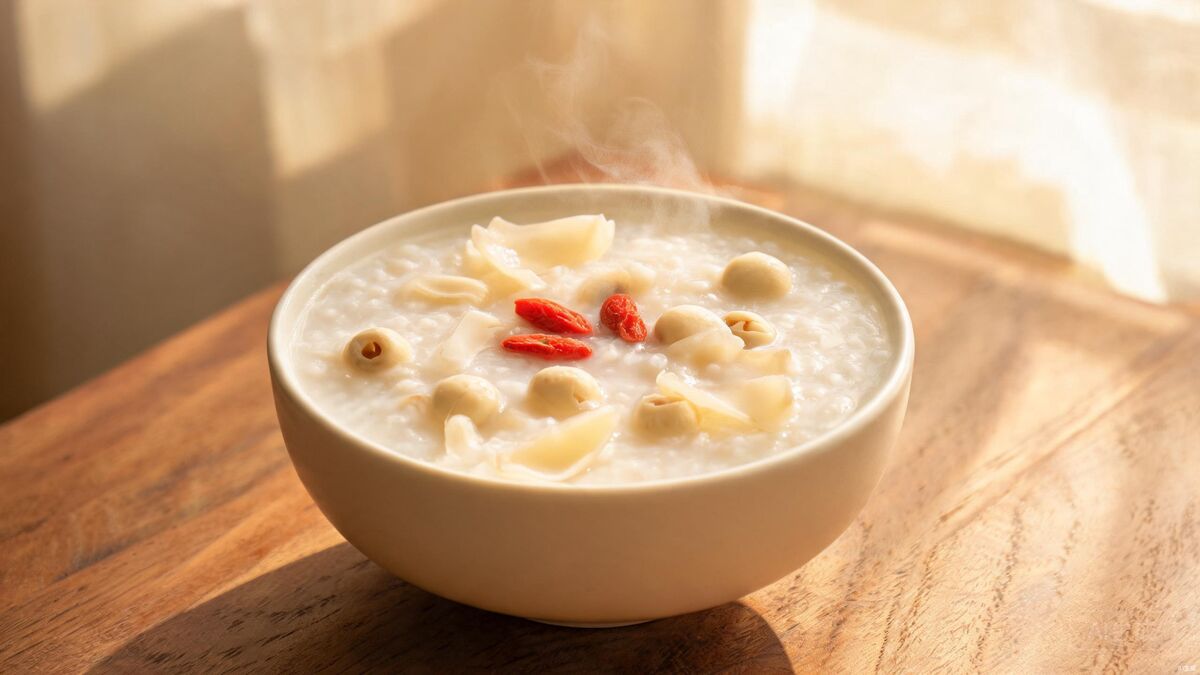
- Lotus seed and lily porridge (莲子百合粥) is a classic TCM food therapy recipe for insomnia, anxiety, and a restless mind.
- Lotus seeds nourish the Heart and calm the Shen (spirit-mind), while lily bulb moistens the Lungs and clears Heart heat — together they address the root of sleeplessness.
- It is best for Heart-Spleen deficiency insomnia: difficulty falling asleep, vivid dreams, fatigue, and worry.
- Eat a small bowl at dinner or about 2 hours before bed, 3 to 4 times per week for best results.
- Ingredients are available at Asian grocery stores and on Amazon — dried lotus seeds, dried lily bulb, and white rice or millet.
1. A Traditional Bedtime Bowl for Sleep
If you have ever lain in bed exhausted but unable to switch off your mind — thoughts looping, heart slightly racing, body tired but brain wired — you are experiencing exactly the kind of insomnia that Traditional Chinese Medicine has been treating with food for over a thousand years. The remedy is not a pill or a potion. It is a bowl of soft, warm porridge: lotus seed and lily bulb congee, known in Chinese as 莲子百合粥 (liánzǐ bǎihé zhōu).
This dish is a cornerstone of TCM food therapy for sleep. It is gentle enough to eat every day, nourishing rather than sedating, and it works by addressing the root of the problem rather than forcing the body into unconsciousness. Unlike sleeping pills, which depress the nervous system and can leave you groggy, this porridge feeds the organs and substances that sleep depends on — the Heart, the Spleen, and the calming, anchoring energy known as Yin. Over days and weeks of regular use, it helps your body remember how to settle into sleep on its own.
The combination is also remarkably well-matched from a flavor perspective. Lotus seeds have a mild, slightly sweet, chestnut-like taste. Lily bulb adds a delicate floral sweetness and a silky texture when cooked. Simmered with rice into a soft congee, the result is a comforting, subtly sweet bowl that feels like a warm hug for an overactive nervous system. It is the kind of food your grandmother might have made you — and indeed, in many Chinese households, that is exactly what it is.
2. The TCM Theory: How It Calms the Mind
In Traditional Chinese Medicine, sleep is governed by the Shen (神), often translated as "spirit" or "heart-mind." The Shen is housed by the Heart, and when it is calm and well-nourished, you fall asleep easily and sleep deeply. When the Shen is disturbed — by stress, overthinking, poor diet, or emotional strain — it "floats upward," producing the classic experience of insomnia: a racing mind, a sense of internal restlessness, and a body that cannot let go.
Two organ systems are most commonly involved in this type of sleep trouble. The Heart houses the Shen and needs adequate Blood and Yin to keep it anchored. The Spleen produces Blood from the food you eat and keeps your thoughts orderly. When the Spleen is weak — from worry, overwork, or irregular eating — it cannot produce enough Blood to nourish the Heart. The Heart then lacks the substance it needs to hold the Shen steady, and sleep suffers. This pattern is called Heart-Spleen deficiency, and it is one of the most common causes of chronic insomnia seen in TCM clinics today.
Lotus Seeds (莲子, Lian Zi)
Lotus seeds are classified in TCM as neutral to slightly warm in nature and sweet and astringent in flavor. Their primary action is to nourish the Heart and calm the Shen, making them one of the most important food-therapy ingredients for sleep. They also strengthen the Spleen and stop diarrhea, and their astringent quality helps "hold in" energy and fluids that tend to leak when the body is depleted — which is why lotus seeds are also used for chronic diarrhea and frequent urination. For sleep, the key action is the calming of the mind: lotus seeds give the Heart the nourishment it needs to anchor the Shen and prevent it from floating upward at night.
A traditional detail: lotus seeds are sold either with or without the green embryo (the small green sprout) in the center, called the lotus plumule (lian xin). The plumule is quite bitter and is itself a separate herb used to clear Heart heat. For this porridge, use lotus seeds without the plumule (sold as "pitted" or "cored" lotus seeds) unless you specifically want the extra heat-clearing effect — the bitterness will otherwise dominate the flavor.
Lily Bulb (百合, Bai He)
Dried lily bulb — the fleshy scales of the lily flower's bulb — is classified as slightly cool in nature and sweet in flavor. It has two main actions relevant to sleep: it moistens the Lungs and clears heat, and it clears Heart heat and calms the mind. In TCM, the Heart and Lungs sit together in the upper body, and heat in the Heart often dries out the Lungs — producing the restless, slightly anxious, dry-feeling insomnia that many people recognize. Lily bulb addresses both organs at once: it cools the heat that agitates the Shen while moistening the dryness that accompanies it.
Lily bulb is also valued for its effect on restless sleep with vivid dreams — the kind where you sleep but wake feeling unrefreshed, as if you were dreaming all night. This is a sign of Heart heat disturbing the Shen even during sleep, and lily bulb is one of the best food-therapy ingredients to quiet it.
Rice or Millet (大米或小米)
The base grain of the congee matters too. White rice is neutral and easy to digest, making a gentle, smooth porridge that lets the other ingredients shine. Millet (小米), however, is the traditional and superior choice for sleep. In TCM, millet is classified as slightly cooling and is said to nourish the Kidney, benefit the Spleen and Stomach, and — most importantly — calm the mind and promote sleep. Millet congee is itself a traditional nighttime food in northern China. If you can find millet, use it; if not, white rice works perfectly well.
3. Who Is This Porridge For?
This porridge is specifically designed for the following type of insomnia and related symptoms. If your experience matches, this food therapy is likely to help you.
Best Suited For:
- Difficulty falling asleep — you lie awake with your mind turning over thoughts, unable to switch off.
- Restless, light sleep with vivid dreams — you may sleep but wake frequently or feel unrefreshed.
- Heart-Spleen deficiency signs — fatigue, poor appetite, worry, overthinking, palpitations, pale complexion, and a tendency to feel mentally and physically depleted.
- Mild anxiety and nervous tension — a sense of internal restlessness, especially in the chest.
- Dryness with slight heat — dry mouth, dry cough, or a feeling of warmth that is not a full fever.
If your insomnia comes with a strong feeling of agitation, a red face, chest tightness, a thick tongue coating, or a sense of internal fullness, you may have a pattern of excess heat or phlegm rather than deficiency. This nourishing, slightly sweet porridge could feel too heavy in that case. If you are unsure which pattern you have, start with a small portion and see how you feel, or consult a qualified TCM practitioner for a proper diagnosis.
4. The Recipe: Lotus Seed & Lily Porridge
This recipe makes 2 servings. The total cooking time is about 40 to 45 minutes, most of which is unattended simmering. A medium saucepan or a small slow cooker both work well.
Ingredients
| Ingredient | Amount | Notes |
|---|---|---|
| Dried lotus seeds (cored/pitted) | 30g (about 20 pieces) | Must be dried, not canned. Buy the ones with the green core already removed for a sweeter taste. |
| Dried lily bulb | 20g (about a small handful) | Sold as small, pale, flaky dried scales. Look for "dried lily bulb" or "bai he" at Asian markets or online. |
| White rice or millet | 50g (about ¼ cup) | Millet is traditional for sleep; white rice is a fine substitute. Rinse before use. |
| Water | 4 cups (about 950ml) | Use more for a thinner congee, less for a thicker one. |
| Rock sugar or honey (optional) | 1–2 teaspoons | Only if you want extra sweetness. Add honey after the porridge cools to drinking temperature. |
Step-by-Step Instructions
- Soak the lotus seeds. Place the dried lotus seeds in a bowl and cover with warm water. Let them soak for 1 to 2 hours (or overnight in the refrigerator). Soaking softens them so they cook through fully and releases any bitterness. If you are short on time, soak in hot water for 30 minutes. Drain before using.
- Soak the lily bulb. Place the dried lily bulb in a separate small bowl and cover with warm water for 20 to 30 minutes until the scales soften and turn pale white. Drain and set aside. Do not over-soak — the lily bulb is delicate and will disintegrate if left too long.
- Rinse the grain. Rinse the rice or millet under cold water in a fine mesh strainer until the water runs clear. This removes surface starch and prevents the congee from being gummy.
- Combine and bring to a boil. In a medium saucepan, combine the soaked lotus seeds, soaked lily bulb, rinsed grain, and 4 cups of water. Bring to a boil over medium-high heat, stirring occasionally to prevent sticking.
- Simmer. Once boiling, reduce the heat to low. Cover with a lid leaving a small gap for steam to escape. Simmer gently for 25 to 30 minutes, stirring every 5 to 10 minutes to prevent the grain from sticking to the bottom. The congee is ready when the grain has broken down into a soft, porridge-like consistency and the lotus seeds are tender when bitten.
- Adjust consistency. If the porridge is too thick, add a little hot water and stir. If it is too thin, simmer uncovered for a few more minutes. The ideal texture is soft and flowing — like a thin oatmeal.
- Sweeten (optional) and serve. If using rock sugar, stir it in during the last 2 minutes of cooking until dissolved. If using honey, wait until the porridge has cooled to a comfortable drinking temperature, then stir in. Serve warm.
One serving is about 1 to 1½ cups. Eat a small bowl at dinner or about 2 hours before bed — close enough to bedtime that the calming effect is active when you lie down, but not so close that a full stomach interferes with sleep. Eat it 3 to 4 times per week for 2 to 3 weeks to feel the full benefit.
Optional Additions
- Red dates (jujubes): Add 4 to 6 pitted red dates at the start. They nourish the Spleen and build Blood, making this an even stronger remedy for Heart-Spleen deficiency.
- Longan aril (gui yuan): Add 8 to 10 pieces for extra Heart-nourishing and calming power, especially if you also feel fatigued or have a pale complexion.
- Goji berries: Stir in 1 tablespoon during the last 5 minutes for a boost of Liver and Kidney Yin nourishment.
5. When and How to Eat It
Food therapy works best when practiced consistently and timed correctly. Here is how to incorporate this porridge into your routine:
- Eat it 2 hours before bed. This gives your body time to begin digesting so you are not lying down on a full stomach, while the calming properties are still active. Eating it as part of a light dinner also works well.
- Keep the portion modest. A small bowl (1 to 1½ cups) is enough. A large portion will demand too much digestive energy at night and can paradoxically keep you awake.
- Eat it 3 to 4 times per week. Consistency matters more than quantity. Eating it every single night is fine too, but 3 to 4 times per week for 2 to 3 weeks is enough to notice a difference for most people.
- Make it part of a wind-down routine. Eat the porridge slowly, in dim light, without screens. The ritual itself signals to your nervous system that it is time to slow down.
- Combine with other sleep practices. This porridge pairs beautifully with bedtime acupressure and a calming herbal tea for a multi-layered approach to sleep.
6. Where to Buy Ingredients
The ingredients for this porridge are not found in a typical Western supermarket, but they are easy to source from Asian grocery stores and online. Once you have them, they keep for months in a dry pantry.
| Ingredient | Where to Buy | What to Look For |
|---|---|---|
| Dried lotus seeds (pitted) | Asian grocery stores, Amazon, online herb shops | Look for white or cream-colored dried seeds, sold in bags. Make sure they are "cored" or "pitted" — no green center. Brands like Erawan and Patricia Kuo are reliable. |
| Dried lily bulb (bai he) | Asian grocery stores (Chinese/Vietnamese), Amazon, online TCM shops | Pale, flaky, dried scales in a bag. They should look like small dried petals, cream-white in color. Avoid any that are dark or smell stale. |
| Millet | Health food stores, Whole Foods, Amazon, most large supermarkets | Yellow hulled millet, sometimes labeled "proso millet." Bob's Red Mill and other brands sell it in bags or bulk bins. |
| White rice | Any grocery store | Short-grain or medium-grain white rice makes the best congee texture. Jasmine rice also works well. |
| Optional: red dates, longan, goji berries | Asian grocery stores, Amazon | All are common pantry items in Chinese cooking and keep for months. Buy small amounts to start. |
Amazon search tips: Search "dried lotus seeds pitted" and "dried lily bulb bai he" — both are readily available. If you want to stock up, many sellers offer bundles of lotus seeds, lily bulb, red dates, and goji berries together as a "TCM soup kit" or "congee ingredient set," which is a convenient way to get everything at once.
7. Precautions
This porridge is a gentle food remedy suitable for most people, but a few precautions are worth noting:
- Not for excess-heat or phlegm patterns. If you have a thick tongue coating, a feeling of heaviness or fullness in the chest, agitation with a red face, or insomnia that feels "loud" and intense rather than depleted, this sweet, nourishing porridge may not be appropriate. A TCM practitioner can help you identify the right approach.
- Watch portion size if you have weak digestion. Congee is generally easy to digest, but eating too much of any food right before bed can cause bloating. Start with a small bowl and adjust.
- Diabetes and blood sugar. This porridge is grain-based and will raise blood sugar. If you have diabetes, use millet instead of white rice, skip the added sugar, keep the portion small, and monitor your levels. Consult your doctor or dietitian.
- Allergies. Lotus seeds and lily bulb are in the same broad botanical family. While allergies are rare, if you have known allergies to lily flowers or related plants, introduce these ingredients cautiously.
- Pregnancy. This porridge is generally considered safe during pregnancy, as the ingredients are common foods. However, if you are pregnant and dealing with insomnia, it is always wise to mention any dietary changes to your obstetrician.
Frequently Asked Questions
Can I use canned lotus seeds instead of dried ones?
Yes, canned lotus seeds work in a pinch, but they are softer and less medicinally potent than dried ones. If using canned, drain and rinse them well to remove the canning liquid, reduce the amount to about 20 pieces (they are already cooked and plump), and add them only in the last 10 minutes of cooking so they do not turn to mush. For the full therapeutic benefit — the Heart-calming and Spleen-strengthening effects — dried lotus seeds are strongly preferred. Canned seeds are fine for flavor and convenience, but the medicinal difference is real.
How long does lotus seed lily porridge keep?
The porridge is best eaten fresh on the day it is made, when the texture is soft and the calming effect is strongest. If you must store it, keep it in an airtight container in the refrigerator for up to 24 hours and reheat it gently on the stove with a splash of water, stirring until loosened. The texture will thicken as it sits — simply add water to reach the consistency you want. Do not freeze it, as the lily bulb's delicate texture does not survive freezing well. For the best results, make a fresh small batch each time.
Can I add red dates to the porridge?
Yes — adding 4 to 6 pitted red dates (jujubes) is an excellent and traditional addition. Red dates nourish the Spleen and build Blood, which complements the lotus seed's Heart-calming action perfectly. This three-ingredient combination (lotus seed, lily bulb, red dates) is actually a well-known classic TCM sleep formula. It is especially good for people whose insomnia comes with fatigue, pale complexion, or a wandering, overthinking mind — the classic Heart-Spleen deficiency pattern. Pit the dates and add them at the beginning with the other ingredients so their sweetness infuses the entire porridge.
Which type of insomnia is this porridge best for?
This porridge is best for Heart-Spleen deficiency and Heart-Yin deficiency insomnia. The telltale signs are: difficulty falling asleep, a restless and overactive mind, vivid or anxious dreams, palpitations, fatigue, worry, and a general sense of being mentally and physically depleted. It is the perfect remedy for the person who is "tired but wired." It is not the best choice for insomnia caused by excess heat or phlegm — where the body feels agitated, the tongue has a thick yellow coating, there is a sense of internal fullness or heaviness, and sleep is disturbed by restlessness rather than depletion. In those cases, this nourishing porridge may feel too heavy, and a cooling or phlegm-clearing approach would be more appropriate.
This article is for educational and informational purposes only and is not a substitute for professional medical advice, diagnosis, or treatment. The food therapy recipe described here is a traditional wellness practice and is not intended to treat, cure, or prevent any disease. If you have chronic insomnia, are pregnant, nursing, taking medication (especially sedatives or blood sugar medications), or have a medical condition, consult a qualified healthcare provider before making dietary changes. Seek medical attention for severe or persistent sleep problems. Read our full disclaimer →