Key Takeaways
- In TCM, anxiety and stress are primarily a problem of disturbed Shen (the spirit-mind) and Liver Qi stagnation — calming foods work by nourishing the Heart and soothing the Liver.
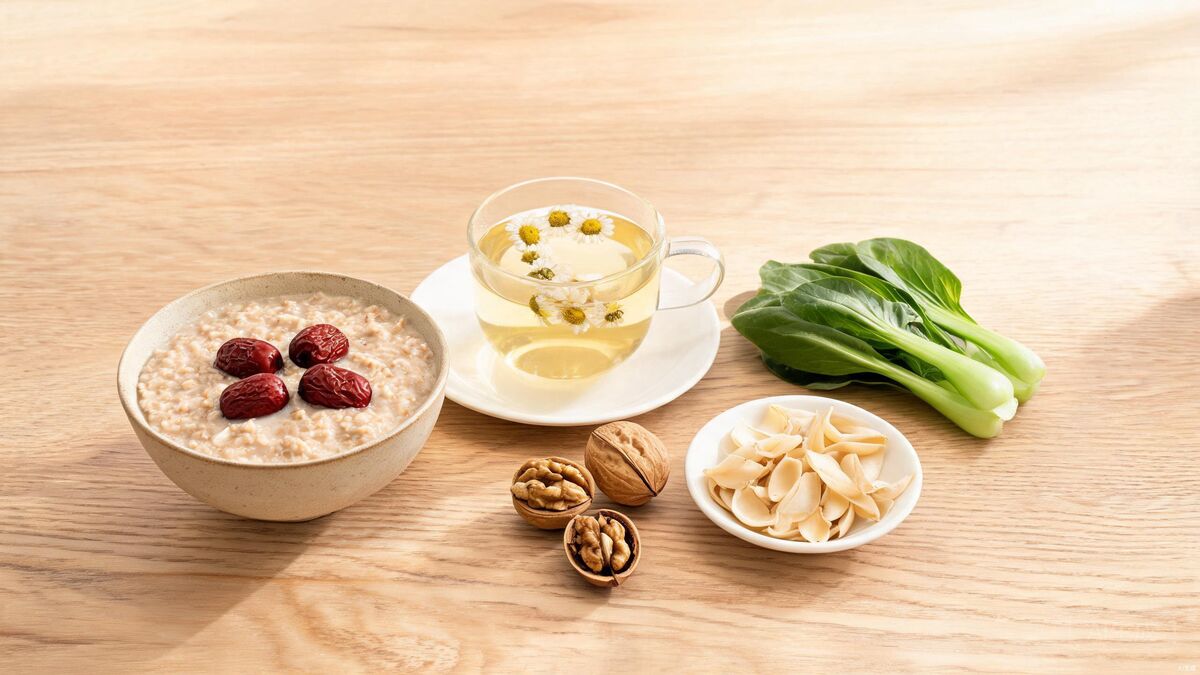
- The five categories of calming foods are whole grains (millet, oats), nuts and seeds (walnuts, lotus seeds), vegetables (lily bulb, Chinese yam), fruits (longan, red dates), and teas (chamomile, rose).
- Foods to avoid when stressed include caffeine, alcohol, spicy foods, greasy foods, and excessive raw/cold foods — they stir up heat, weaken digestion, and amplify agitation.
- Calming foods work gradually — expect noticeable improvement in 2 to 4 weeks of consistent dietary change.
- Diet is foundational but not a standalone cure; combine it with acupressure, qigong, and professional support for best results.
1. How TCM Understands Anxiety and Stress
Modern life is stressful, and your body feels it whether you recognize it or not. In Traditional Chinese Medicine, anxiety and chronic stress are not seen as purely psychological problems — they are understood as energetic and organ imbalances that manifest in both mind and body. Two organ systems are almost always at the center of the picture: the Heart and the Liver.
The Heart, in TCM, is the emperor of the organ system and the home of the Shen (神), the spirit-mind. When the Heart is well-nourished with adequate Qi, Blood, and Yin, the Shen is calm and anchored — you feel emotionally steady, sleep well, and think clearly. When the Heart is depleted or overheated by stress, the Shen becomes disturbed. It "floats upward," producing the classic experience of anxiety: a racing mind, palpitations, restlessness, insomnia, and a sense of internal unease that you cannot reason away.
The Liver is the body's primary organ for managing the smooth flow of Qi and emotions. In TCM, the Liver is responsible for the free circulation of energy throughout the body and for emotional regulation. When you are stressed, frustrated, or suppressing emotions, the Liver's Qi becomes stagnant — it stops flowing smoothly. This stagnation manifests as irritability, tension (especially in the neck, shoulders, and ribs), sighing, chest tightness, mood swings, and a feeling of being "wound up." Over time, stagnant Liver Qi can generate heat — "Liver Fire" — which rises to disturb the Heart and Shen, creating a vicious cycle of stress, agitation, and anxiety.
Food therapy addresses both organs. Calming, nourishing foods build the Blood and Yin that anchor the Heart and settle the Shen. Soothing, gently moving foods help the Liver's Qi flow freely again, releasing the tension and frustration that fuel anxiety. The beauty of this approach is that you are not sedating the nervous system — you are feeding it what it needs to regulate itself. Below is a complete guide to the foods that do this best, organized by category.
2. Whole Grains: The Foundation of Calm
Whole grains are the cornerstone of a calming diet in TCM. They are classified as sweet and neutral, they strengthen the Spleen (which produces the Blood that nourishes the Heart), and they provide the steady, grounded energy that a stressed nervous system needs.
Millet (小米, Xiao Mi)
Millet is the single most important grain for calming the mind in TCM. It is classified as slightly cool and sweet, and it is specifically said to nourish the Kidney, benefit the Spleen and Stomach, and calm the spirit. Millet congee is a traditional nighttime food in northern China, eaten precisely for its sleep-promoting and anxiety-reducing properties. Its cooling nature also helps balance the internal heat that stress generates. Use millet in place of rice in congees, or cook it as a side dish. It cooks quickly — about 20 minutes — and has a mild, slightly sweet, corn-like flavor.
Oats (燕麦, Yan Mai)
Oats are classified in TCM as warm and sweet, and they nourish the Spleen, benefit the Heart, and calm the mind. They are also rich in complex carbohydrates and B vitamins, which modern nutrition links to stable mood and steady serotonin production. A bowl of warm oatmeal in the morning provides sustained energy without the crash that refined carbohydrates cause, helping to keep blood sugar — and therefore mood — stable through the day. Choose whole or steel-cut oats over instant packets, which are loaded with sugar.
3. Nuts and Seeds: Brain and Heart Tonics
In TCM, nuts and seeds are concentrated sources of nourishment — they are the "essence" of the plant, and they correspondingly nourish the body's deepest substances: Jing (essence), Blood, and Yin.
Walnuts (核桃, He Tao)
Walnuts are classified as warm and sweet, and they nourish the Kidneys, strengthen the brain, warm the Lungs, and calm the spirit. In TCM, the Kidneys are the root of the body's deepest energy, and the brain is considered a "sea of marrow" that depends on Kidney essence for its function. By nourishing the Kidneys, walnuts support mental clarity, memory, and emotional stability — making them an excellent food for stress-related brain fog and mental exhaustion. Eat 5 to 8 walnuts per day as a snack, or add them to oatmeal and congee. Their brain-like shape is, in TCM's signature style, seen as a sign of their brain-nourishing purpose.
Lotus Seeds (莲子, Lian Zi)
Lotus seeds are neutral to slightly warm and sweet, and they are one of the premier Heart-calming foods in TCM. They nourish the Heart, calm the Shen, and strengthen the Spleen — making them ideal for anxiety that comes with poor digestion and fatigue. Lotus seeds are a key ingredient in the classic lotus seed and lily porridge for insomnia. Buy them dried (pitted) from Asian grocery stores and add them to congees, soups, or sweet desserts. A small handful cooked into your evening meal helps settle the mind for sleep.
4. Vegetables: Cooling and Strengthening
Vegetables provide the cooling, moistening, and strengthening qualities that a stressed, overheated body craves. Two stand out in TCM for their calming properties.
Lily Bulb (百合, Bai He)
Dried lily bulb is classified as slightly cool and sweet. It clears Heart heat, calms the mind, and moistens the Lungs. This makes it perfect for the type of anxiety that feels hot and restless — a racing heart, a flushed face, dry mouth, and an inability to settle. Lily bulb is particularly effective for restless sleep with vivid, anxious dreams, the kind where you technically sleep but wake exhausted. Buy it dried from Asian markets and simmer it in congees or sweet soups. It has a delicate, slightly floral sweetness and a silky texture when cooked.
Chinese Yam (山药, Shan Yao)
Chinese yam — not to be confused with the sweet potato — is classified as neutral and sweet. It strengthens the Spleen, nourishes the Lung and Kidney Yin, and gently calms. Because chronic stress depletes the Spleen (worry is the emotion of the Spleen in TCM) and dries out the body's Yin, Chinese yam addresses both problems at once. It is a staple food-therapy ingredient for people under long-term stress who feel fatigued, have weak digestion, and are running on empty. Fresh Chinese yam can be found at Asian grocery stores — it is a long, light-brown root with a sticky, slippery texture when cut. Peel and slice it into soups, stews, or stir-fries. Dried slices (available online) can be added directly to congee.
5. Fruits: Building Blood, Calming the Spirit
Two fruits are especially prized in TCM for their calming, spirit-settling effects. Both are typically eaten dried and are available at Asian grocery stores and online.
Longan (龙眼肉, Long Yan Rou)
Longan — sometimes called "dragon's eye" — is the dried aril (flesh) of a tropical fruit. It is classified as warm and sweet, and it is one of the most powerful food-therapy ingredients for nourishing the Heart and Spleen, replenishing Blood, and calming the Shen. Longan is specifically indicated for the type of anxiety and insomnia that comes with palpitations, fatigue, pale complexion, and a wandering, overactive mind — the classic picture of Heart-Blood deficiency. It is warmer than lily bulb, so it is best for people who feel depleted and cold rather than hot and restless. Eat 8 to 10 pieces per day as a snack, steep them in hot water as tea, or add them to congee and sweet soups.
Red Dates / Jujubes (红枣, Hong Zao)
Red dates are classified as warm and sweet, and they nourish the Spleen, replenish Qi, build Blood, and calm the mind. They are one of the most widely used calming foods in all of Chinese medicine and appear in countless formulas for anxiety, insomnia, and fatigue. Red dates work by strengthening the Spleen — the organ that produces Blood — so that the Heart has enough Blood to anchor the Shen. Eat 4 to 6 pitted dates per day, add them to tea or congee, or simmer them in soup. Their natural sweetness makes them a satisfying, grounding snack that satisfies sugar cravings without the blood-sugar spike of refined sweets.
6. Teas: Calming Cups for the Nervous System
What you drink matters as much as what you eat. Two caffeine-free teas are especially valued in TCM and Western herbalism alike for their calming effects.
Chamomile Tea
Chamomile is a Western herb that aligns beautifully with TCM principles. It is classified as cool and slightly bitter-sweet, and it clears heat, calms the Liver, and settles the Shen. Chamomile's relaxing effect on the nervous system is well documented, and it is one of the gentlest, safest calming teas available. A cup in the evening helps wind down the mind, relaxes tense muscles, and prepares the body for sleep. It pairs well with a teaspoon of honey once cooled.
Rose Tea (玫瑰花, Mei Gui Hua)
In TCM, rose petals are classified as warm and slightly bitter-sweet, and their primary action is to soothe the Liver, move stagnant Qi, and regulate emotions. Rose tea is the quintessential TCM beverage for stress, frustration, and emotional tension — the feeling of being "wound up" or carrying emotional weight. A cup of rose tea helps release that stuck energy, easing irritability, chest tightness, and sighing. Steep a small handful of dried rose buds (available at Asian markets and online) in hot water for 5 minutes. The floral aroma itself is calming, and the tea has a delicate, fragrant taste. Drink it in the afternoon when stress tends to peak.
7. Foods to Avoid When Stressed
Just as important as what to eat is what not to eat. When you are stressed, certain foods amplify the problem by generating heat, weakening digestion, or directly stimulating an already overstimulated nervous system.
| Food / Drink | Why to Avoid |
|---|---|
| Caffeine (coffee, energy drinks, strong black/green tea) | Caffeine stirs up Liver Fire and directly stimulates the Heart, worsening palpitations, racing thoughts, and anxiety. It also depletes Yin over time. |
| Alcohol | Alcohol is heating and damp-forming in TCM. It may feel relaxing in the moment, but it aggravates Liver stagnation, disturbs the Shen, and fragments sleep. |
| Very spicy foods (chili, heavy hot sauce, cayenne) | Spicy foods are pungent and heating — they generate internal heat that rises to the head and Heart, intensifying agitation and restlessness. |
| Fried and greasy foods | These create dampness and phlegm, which cloud the mind and weigh down the spirit, making you feel sluggish and mentally foggy. |
| Excessive raw and cold foods | Large amounts of salads, ice water, and raw foods weaken the Spleen, reducing its ability to produce the Qi and Blood your nervous system needs to stay calm. |
| Refined sugar | Sugar causes blood-sugar spikes and crashes that mimic and amplify anxiety symptoms — the jittery, shaky, irritable feeling of a crash is easily mistaken for anxiety itself. |
If anxiety is a problem for you, coffee is the single most important thing to cut back on. In TCM, caffeine is a powerful Liver-Fire stimulant. Even one or two cups a day can keep the nervous system in a low-grade state of fight-or-flight that amplifies every anxious thought. Try switching to chamomile, rose, or a mild grain coffee substitute for 2 weeks and notice the difference.
8. Daily Diet Recommendations
Turning this information into daily practice is simpler than it might seem. Here are the core principles for a calming diet:
- Eat warm, cooked foods. In TCM, the Spleen thrives on warmth and is burdened by cold. Soups, stews, congees, and stir-fries are far easier to digest than cold salads and raw foods, leaving more energy for your nervous system to stay calm.
- Eat at regular times. Irregular eating weakens the Spleen and destabilizes blood sugar, which directly affects mood. Aim for three meals at consistent times, without skipping.
- Include a calming food at every meal. Add millet or oats at breakfast, walnuts as a snack, lotus seeds or lily bulb at dinner, and a cup of chamomile or rose tea in the evening.
- Do not eat too late. Eating a heavy meal close to bedtime forces the body to digest when it should be winding down, disturbing sleep and the Shen. Finish dinner at least 2 to 3 hours before bed.
- Stay hydrated with warm drinks. Sip warm water or mild herbal tea throughout the day. Ice-cold drinks shock the Spleen and constrict the stomach.
- Chew thoroughly. Digestion begins in the mouth. Thorough chewing eases the burden on the Spleen and helps you absorb the calming nutrients from your food.
9. A One-Week Calming Meal Plan
Here is a simple, repeatable one-week plan that incorporates calming foods into every day. Adjust portions to your needs and swap ingredients based on availability.
| Day | Breakfast | Lunch | Dinner | Evening |
|---|---|---|---|---|
| Mon | Oatmeal with walnuts and 4 red dates | Rice bowl with stir-fried vegetables and tofu | Millet congee with lotus seeds and lily bulb | Chamomile tea |
| Tue | Millet porridge with goji berries | Vegetable soup with Chinese yam and carrots | Steamed fish with rice and greens | Rose tea |
| Wed | Oatmeal with longan and a handful of walnuts | Chicken and vegetable stir-fry with brown rice | Lotus seed and lily porridge | Chamomile tea |
| Thu | Congee with red dates and goji berries | Mushroom soup with millet on the side | Stir-fried vegetables with Chinese yam and rice | Rose tea |
| Fri | Oatmeal with walnuts and honey | Rice bowl with steamed vegetables and egg | Millet congee with lotus seeds and red dates | Chamomile tea |
| Sat | Millet porridge with longan | Healing chicken soup with Chinese yam | Vegetable congee with lily bulb | Rose tea |
| Sun | Oatmeal with red dates and walnuts | Stir-fried greens with tofu and brown rice | Lotus seed and lily porridge with goji berries | Chamomile tea |
Throughout the week, snack on a small handful of walnuts, 4 to 6 red dates, or 8 to 10 longan pieces. Drink warm water and herbal tea freely. Avoid coffee, alcohol, and heavy spicy meals, especially in the evening. After one week, notice whether your baseline anxiety has shifted — most people report feeling calmer, sleeping better, and reacting less to daily stressors.
10. Where to Buy Ingredients
Many calming foods are available at any supermarket, while the more specialized TCM ingredients are easy to find at Asian grocery stores or online.
| Ingredient | Where to Buy |
|---|---|
| Millet, oats, walnuts | Any grocery store or supermarket |
| Goji berries | Health food stores, Whole Foods, Trader Joe's, Amazon |
| Dried red dates (jujubes) | Asian grocery stores, Amazon |
| Dried longan | Asian grocery stores, Amazon, online TCM shops |
| Dried lotus seeds (pitted) | Asian grocery stores, Amazon |
| Dried lily bulb (bai he) | Asian grocery stores (Chinese/Vietnamese), Amazon |
| Fresh or dried Chinese yam (shan yao) | Asian grocery stores (fresh), Amazon (dried slices) |
| Dried rose buds | Asian grocery stores, Amazon, tea shops |
| Chamomile tea | Any grocery store or supermarket |
Getting started tip: If you want to stock up on the TCM-specific ingredients at once, search Amazon for a "TCM congee ingredient set" or "Chinese herbal soup kit" — many sellers bundle lotus seeds, lily bulb, red dates, goji berries, and longan together. Store all dried ingredients in airtight containers in a cool, dry pantry; keep goji berries and longan in the refrigerator for longest freshness.
Frequently Asked Questions
What are the best foods for anxiety in TCM?
The best TCM foods for anxiety are those that nourish the Heart, calm the Shen, and soothe the Liver. The top choices in each category are: millet and oats (whole grains that calm the mind and stabilize energy), walnuts and lotus seeds (nuts and seeds that nourish the brain and anchor the Heart), lily bulb and Chinese yam (vegetables that clear heat and strengthen the Spleen), longan and red dates (fruits that build Blood and settle the spirit), and chamomile and rose tea (caffeine-free beverages that relax the nervous system and move stagnant Liver Qi). Eating a variety of these regularly over 2 to 4 weeks gives your body the raw materials it needs to regulate anxiety from the inside out. No single food is a magic bullet — the effect comes from consistent, supportive eating.
What foods should I avoid when I am stressed?
When stressed, avoid caffeine (coffee, energy drinks, strong tea), alcohol, very spicy foods, deep-fried and greasy foods, excessive raw and cold foods, and refined sugar. In TCM, caffeine and alcohol stir up Liver Fire and aggravate the restless, agitated feeling of stress — caffeine keeps the nervous system in fight-or-flight, while alcohol fragments sleep and worsens emotional volatility. Spicy and greasy foods generate internal heat and dampness, which cloud the mind and weigh down the spirit. Raw and cold foods (large salads, ice water, smoothies) weaken the Spleen, reducing its ability to produce the calming Qi and Blood your nervous system depends on. These foods do not cause stress directly, but they amplify its physical effects and make it harder for your body to return to balance.
How long does it take for calming foods to work?
Calming foods work gradually, not overnight. Most people notice subtle improvements — less emotional reactivity, better sleep, a calmer baseline mood, fewer tension headaches — within 2 to 4 weeks of consistent dietary changes. The effect is cumulative: every calming meal adds to your body's reserves of Qi, Blood, and Yin, which over time give your nervous system a stronger, more stable foundation. A single cup of chamomile tea may relax you immediately, and a bowl of lotus seed porridge may help you sleep better that very night, but the deeper, lasting shift in anxiety levels comes from weeks of supportive eating. Be patient and consistent. If you also reduce stress-amplifying foods like caffeine and alcohol at the same time, you will likely notice the difference sooner.
Can diet alone help anxiety?
Diet is a powerful and foundational tool for managing anxiety, but it is rarely sufficient on its own for moderate to severe cases. Food therapy works best as part of an integrated approach that also includes stress-management practices like acupressure, qigong, regular exercise, adequate sleep, healthy social connection, and — when needed — professional therapy or medication. Think of calming foods as setting the stage: they give your body and nervous system the raw materials to stay balanced, making every other anxiety-management strategy more effective. Many people find that once they clean up their diet, their anxiety becomes more manageable and they need less willpower to cope day to day. But if anxiety is significantly impacting your daily life, your relationships, or your ability to function, please consult a qualified mental health professional — food therapy and professional care work beautifully together.
This article is for educational and informational purposes only and is not a substitute for professional medical or mental health advice, diagnosis, or treatment. The dietary suggestions described here are traditional food therapy practices and are not intended to treat, cure, or prevent any disease, including anxiety disorders. If you experience persistent or severe anxiety, panic attacks, depression, or thoughts of self-harm, seek help from a qualified mental health professional immediately. Always consult your healthcare provider before making significant dietary changes, especially if you have a medical condition or take medication. Read our full disclaimer →