Key Takeaways
- In TCM, chrysanthemum (Ju Hua) is slightly cold, sweet and bitter, and enters the Lung and Liver meridians — its core actions are to disperse wind-heat, pacify the Liver, brighten the eyes, and clear toxicity.
- It is the go-to tea for eye strain, dry red eyes, tension headaches, and Liver-fire irritability — the perfect cup after a long day in front of screens.
- The classic pairing is chrysanthemum + goji berries, which balances the cooling nature and adds blood-nourishing support for the eyes.
- Brew with 5–8 g of dried flowers, water just off the boil, 5–8 minutes steep; you can re-steep the flowers 2–3 times.
- Buy dried flowers on Amazon, iHerb, or at any Asian grocery store — look for whole, pale buds with a clean floral scent and no added sulfur smell.
1. What Is Chrysanthemum Tea?
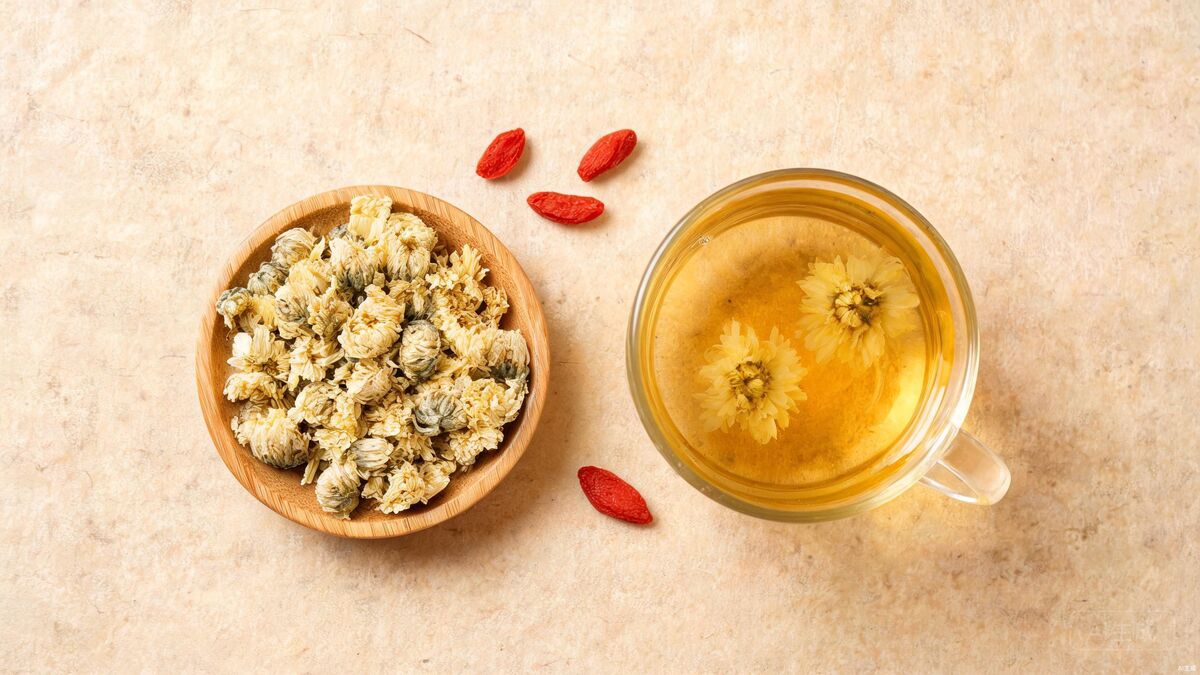
Chrysanthemum tea (菊花茶, júhuā chá) is one of the oldest and most widely consumed herbal teas in China. Made by steeping the dried flowers of Chrysanthemum morifolium in hot water, it produces a pale golden liquor with a gentle, honeyed floral aroma and a mildly sweet, slightly bitter taste. Unlike green or black tea, it contains no caffeine, which makes it suitable for children, the caffeine-sensitive, and anyone drinking it late in the day.
In Traditional Chinese Medicine, chrysanthemum is far more than a pleasant beverage — it is a serious medicinal herb that has been recorded in materia medica for nearly two thousand years. The Shennong Ben Cao Jing, the foundational text of Chinese herbal medicine compiled around the first century CE, classified it as an upper-grade herb suitable for long-term use to "benefit the qi, moisten the body, and lighten the limbs." It has been a staple of both the pharmacy and the teahouse ever since, prized for its ability to clear heat without being harsh, and to soothe the Liver without being sedating.
There are two main varieties you will encounter. White chrysanthemum (Bai Ju Hua, most famously the Hangzhou variety known as Hang Bai Ju) is the sweetest and mildest, with a delicate flavor ideal for daily tea. Yellow chrysanthemum (Huang Ju Hua, often the Bozhou variety) is more strongly scented and slightly more cooling, and is favored when the heat-clearing action is the priority — for example, during the early stage of a wind-heat cold with sore throat. Both are effective; choose white for everyday sipping and eye care, and yellow when you feel genuinely hot and need stronger clearing.
2. TCM Properties: Nature, Flavor, and Meridians
Every herb in Chinese medicine is described by four characteristics that tell a practitioner exactly when and how to use it. Understanding these helps you use chrysanthemum wisely rather than randomly.
Nature (Temperature): Slightly Cold
Chrysanthemum is slightly cold (微寒, wēihán). This means it gently cools the body without the harsh, draining coldness of herbs like raw gypsum or coptis. The slight coldness is what makes it effective against heat conditions — red eyes, dry mouth, irritability, and headaches caused by rising Liver fire — while remaining gentle enough for regular use by most people. The cold nature is also why TCM advises caution for people who already run cold (pale complexion, cold hands and feet, loose stools), who should pair chrysanthemum with warming goji berries or a slice of ginger.
Flavor: Sweet and Bitter
The sweet (甘, gān) flavor in TCM indicates a tonifying, harmonizing quality, while bitter (苦, kǔ) indicates a downward-draining, heat-clearing action. Chrysanthemum combines both, which is why it can clear heat without depleting the body the way a purely bitter herb would. The sweetness also makes it palatable on its own, needing little or no added honey.
Meridian Affinity: Lung and Liver
Chrysanthemum enters the Lung and Liver meridians (归肺、肝经). The Lung connection makes it effective for dispersing wind-heat at the surface — the early stage of a cold with fever, slight chills, and sore throat. The Liver connection is its most clinically important property: in TCM, the Liver opens into the eyes, and Liver fire or Liver wind rising upward is the root cause of most eye problems and many headaches. By entering the Liver channel and clearing that heat, chrysanthemum directly addresses red, dry, painful, or blurry eyes; tension headaches at the temples; and the irritable, short-tempered feeling that accompanies Liver-fire patterns.
Core Actions
- Disperses wind-heat (疏散风热) — for early-stage colds with sore throat and mild fever.
- Pacifies the Liver and brightens the eyes (平肝明目) — the primary daily use, for eye strain, blurry vision, and Liver-fire headaches.
- Clears heat and resolves toxicity (清热解毒) — useful for minor skin eruptions, boils, and inflamed sore throats.
3. Health Benefits and Who It Helps
The clearest picture of what chrysanthemum tea can do comes from looking at the people it helps most. If you recognize yourself in any of the patterns below, this tea is likely a good match for you.
Eye Strain and Dry Eyes
This is the single most popular reason people reach for chrysanthemum tea in China today. Hours of looking at screens, reading in poor light, or driving long distances strain the eyes and deplete the Liver Yin that nourishes them. The result is dry, gritty, red, or aching eyes, sometimes with blurred vision. Because chrysanthemum enters the Liver meridian and the Liver opens into the eyes, the tea delivers its cooling, moistening action directly to the tissue that needs it. Paired with goji berries, which nourish Liver blood, it becomes a near-complete nutritional tea for modern screen workers.
Tension and Liver-Fire Headaches
Headaches that throb at the temples, come with a feeling of pressure behind the eyes, and are triggered by stress, frustration, or lack of sleep are classic Liver-fire headaches in TCM. Chrysanthemum cools the rising fire and eases the tension. A strong cup drunk warm, with the steam gently inhaled, often brings relief within 20 to 30 minutes for mild cases.
Summer Heat and Thirst
In hot weather, chrysanthemum is the traditional cooling drink of choice across southern China. It clears summer heat, relieves thirst, and prevents the lethargy and mild headache that heat exposure can cause. Chilled chrysanthemum tea (allowed to cool, not iced) is a refreshing and healthier alternative to sugary cold drinks in summer.
Early-Stage Wind-Heat Cold
When a cold begins with a sore throat, slight fever, yellowish mucus, and a headache — the wind-heat pattern in TCM — a strong, warm cup of chrysanthemum tea taken at the very first sign can help vent the heat before it deepens. Yellow chrysanthemum is preferred here for its stronger clearing action. Pair it with a little honeysuckle for a classic folk cold remedy.
Mild Hypertension Support
In TCM theory, some forms of elevated blood pressure correspond to Liver-fire or Liver-yang rising. Modern research has found that chrysanthemum contains flavonoids that may help relax blood vessels, and long-term daily consumption is traditionally used as a gentle supportive measure. It is not a replacement for prescribed blood pressure medication, but a complementary, food-grade habit worth discussing with your doctor.
4. How to Brew Chrysanthemum Tea
Brewing chrysanthemum tea is simple, but a few details make a real difference to flavor and effect. Follow these steps for a consistently good cup.
Ingredients:
- 5–8 g dried chrysanthemum flowers (about 1–2 teaspoons of loose flowers, or 1 tea bag)
- 250 ml (1 cup) good-quality water
- Optional: 8–10 goji berries; 1 tsp raw honey (added after the tea has cooled below 60°C / 140°F)
Instructions:
- Rinse the dried flowers briefly under cool water or in a strainer to remove any dust.
- Bring water to a boil, then let it rest for about 30 seconds so it is just off the boil (around 90–95°C / 195–205°F). Boiling water poured directly can scald the delicate petals and make the tea bitter.
- Place the flowers in a teapot, mug, or gaiwan. Pour the hot water over them.
- Cover and steep for 5 to 8 minutes. A shorter steep is lighter and sweeter; a longer steep is stronger and more medicinal.
- The flowers will unfurl and sink. Strain into a cup and drink warm.
- You can re-steep the same flowers 2 to 3 times, adding about 1 minute to each successive steep, until the flavor fades.
For a stronger medicinal brew (for sore throat or headache), use 10–12 g of flowers and steep 10 minutes, or simmer gently in a small pot for 5 minutes.
Water Temperature Matters
The ideal water temperature is 90–95°C (195–205°F) — water that has just boiled and been allowed to rest for half a minute. Water straight off a rolling boil can scorch the petals and pull out excessive bitterness, while water that is too cool will not extract the active flavonoids and volatile oils fully. If you do not have a temperature-control kettle, simply boil, wait 30 seconds, and pour.
5. Classic Pairings
Chrysanthemum blends beautifully with several other accessible herbs. Here are the most useful combinations.
| Blend | Ingredients (per cup) | Best For |
|---|---|---|
| Chrysanthemum + Goji (菊杞茶) | 5 g chrysanthemum + 8–10 goji berries | Daily eye care, screen fatigue, dry eyes. The classic pairing — goji nourishes Liver blood while chrysanthemum clears heat. |
| Chrysanthemum + Honey | 5 g chrysanthemum + 1 tsp honey (added after cooling) | Soothing the throat, cough with dryness, children who dislike the slight bitterness. Never add honey to boiling-hot tea. |
| Chrysanthemum + Honeysuckle | 3 g chrysanthemum + 3 g honeysuckle | Early-stage wind-heat cold with sore throat. A traditional folk cold remedy. |
| Chrysanthemum + Cassia Seed | 5 g chrysanthemum + 3 g roasted cassia seed (jue ming zi) | Stubborn dry eyes and mild constipation with heat. A stronger eye-clearing formula. |
For the everyday drinker, the chrysanthemum and goji blend is the one to master. It is balanced, gentle, and addresses the most common modern complaint — screen-strained eyes — from two directions at once.
6. Where to Buy Chrysanthemum Flowers
Dried chrysanthemum flowers are widely available in the West. Here is where to look and what to look for.
Amazon
Amazon carries several reputable brands of dried chrysanthemum. Search for "dried chrysanthemum flowers for tea" or "ju hua tea." Look for products sold in resealable bags of 100–250 g. Good options include brands packaged for the Asian-American market, often labeled "Hang Bai Ju" (Hangzhou white chrysanthemum). Read reviews for freshness and absence of sulfur smell.
iHerb
iHerb stocks chrysanthemum in both loose-flower and tea-bag form, often from herbal brands such as Triple Leaf Tea or Imperial Elixir. Tea bags are convenient for travel and the office, while loose flowers give you better control over strength and quality. iHerb also ships internationally, which makes it useful if you have no Asian grocery nearby.
Asian Grocery Stores
Any Chinese, Korean, or pan-Asian supermarket will carry dried chrysanthemum in the dried-goods or tea aisle, usually in cellophane bags. This is often the freshest and most affordable option, and you can inspect the flowers before buying. Look for a dedicated TCM or herbal section.
What to Look For
- Whole, intact buds and flowers — avoid crushed powder or mostly broken petals, which indicate age or rough handling.
- Pale cream to light yellow color — bleached-white flowers may have been sulfur-treated; a faintly sulfurous smell is a red flag.
- Clean, sweet floral scent — the flowers should smell like a garden, not like chemicals or dust.
- Stored in a sealed bag away from strong light — chrysanthemum loses its volatile oils quickly when exposed to air and sun.
7. Precautions and Contraindications
Chrysanthemum tea is gentle and food-grade, but it is not for everyone. Keep these cautions in mind.
- Cold-type constitutions. If you tend to feel cold, have a pale complexion, cold hands and feet, or loose stools, chrysanthemum's cold nature may worsen these symptoms. Pair it with goji or ginger, or choose a warming tea like ginger tea instead.
- Pregnancy and breastfeeding. Not routinely recommended. Consult your doctor or a qualified TCM practitioner before regular use.
- Allergies. People allergic to plants in the daisy/aster family (ragweed, marigold, daisies) may react to chrysanthemum. Start with a small amount if you have any daisy-family allergy.
- Blood-thinning medication. Chrysanthemum may have a mild effect on blood clotting. If you take anticoagulants or are scheduled for surgery, consult your doctor before regular use.
- Do not over-drink. Three or more strong cups daily for weeks on end can, in some people, cause mild stomach discomfort or loose stools from the accumulated coldness. Moderate, seasonal use is best.
Seasonal Wisdom
In TCM, the best time to drink chrysanthemum tea is spring and summer, when heat and wind are most active and the body benefits from gentle cooling. In autumn and winter, when the body needs warmth and protection, switch to warming teas like ginger tea or rose tea, and reserve chrysanthemum for times you genuinely feel hot — a heated room, a feverish cold, or a bout of eye strain.
Frequently Asked Questions
Can I drink chrysanthemum tea every day?
For most healthy adults, 1 to 3 cups a day of chrysanthemum tea is safe and is common practice in China. Because it is slightly cold in nature, it suits warm weather and people with heat signs (red eyes, thirst, irritability, headaches). If you tend to feel cold, have a pale complexion, or loose stools, drink it less often and always pair it with warming goji berries or a slice of ginger to offset the coldness. Taking a break for a few days every couple of weeks is a sensible habit for any single herb.
Is chrysanthemum tea good for eye strain?
Yes — it is the most popular TCM herb for the eyes. Chrysanthemum enters the Liver meridian, and in TCM the Liver opens into the eyes. Most screen-related eye strain is a Liver-heat or Liver-blood-deficiency pattern, and chrysanthemum directly cools that heat. For best results, combine it with goji berries, which nourish the Liver blood that the eyes depend on. Many people notice softer, less dry eyes within a week of daily drinking.
Is chrysanthemum tea safe during pregnancy?
Chrysanthemum is not routinely recommended during pregnancy. Although it is a mild, food-grade herb, its cold nature and mild blood-moving tendencies make most practitioners advise caution, especially in the first trimester. If you are pregnant or breastfeeding, talk to your obstetrician or a qualified TCM practitioner before drinking it regularly. An occasional weak cup is unlikely to cause harm, but daily use is best avoided without professional guidance.
How much chrysanthemum should I use per cup?
Use about 5 to 8 grams of dried flowers per cup — roughly 1 to 2 teaspoons of loose flowers, or one standard tea bag. Steep in water just off the boil (90–95°C) for 5 to 8 minutes, covered. The same flowers can be re-steeped 2 to 3 times. If you find the flavor too bitter, reduce the amount slightly or shorten the steep rather than adding more honey, which can overpower the delicate floral notes.
This article is for educational and informational purposes only and is not a substitute for professional medical advice, diagnosis, or treatment. The herbal teas and practices described here are traditional self-care methods and are not intended to treat, cure, or prevent any disease. Always consult a qualified healthcare provider before beginning any new herbal practice, especially if you are pregnant, nursing, taking medication, or have a medical condition. Never disregard professional medical advice or delay seeking it because of something you have read on this site. Read our full disclaimer →