Key Takeaways
- TCM classifies certain spices as warming — they disperse cold, warm the middle burner, and support yang energy.
- Sichuan peppercorn (Hua Jiao) warms the spleen and stomach, disperses cold, and relieves abdominal pain.
- Cinnamon bark (Rou Gui) warms kidney yang deeply, dispels deep cold, and promotes circulation.
- These spices are best used during autumn and winter, or for cold-type constitutions.
- Pregnant women should use cinnamon cautiously; people with heat patterns should avoid warming spices entirely.
This article is for wellness education only and is not medical advice. The spice recipes described here are traditional food therapy practices, not medical treatments. Cinnamon (especially cassia cinnamon) contains coumarin, which may affect the liver in large amounts. Pregnant women should consult their healthcare provider before using cinnamon or Sichuan peppercorn therapeutically. If you take blood sugar medication or blood thinners, consult your doctor before adding warming spices to your daily routine.
When the temperature drops and cold winds blow, your body needs extra warmth — not just from clothing and heating, but from within. In Traditional Chinese Medicine, this is where warming spices come into their own. For centuries, TCM has classified certain kitchen spices not just as flavoring agents but as powerful medicinal foods that dispel cold, warm the digestive system, and support the body's yang energy during the cold months.
Two of the most important warming spices in TCM are Sichuan peppercorn (Hua Jiao) and cinnamon bark (Rou Gui / Gui Pi). Both are pungent and warm, both are readily available in Western supermarkets and online, and both have been used for centuries to keep the body warm and resilient through winter. Let's explore each in depth, with five practical recipes you can make at home.
The TCM Concept of Warming Spices
In TCM's medicine-food homology (Yao Shi Tong Yuan) tradition, many common spices double as healing foods. Warming spices share several characteristics:
- Nature: Warm or hot. These spices carry thermal energy that warms the body from within — the same way a bowl of hot soup warms you, but more targeted.
- Flavor: Pungent (and sometimes sweet). Pungent flavors disperse and move — they push cold outward, move stagnant qi, and open blocked channels.
- Meridians: Most warming spices enter the Spleen and Stomach (the digestive center) and the Kidney (the body's deepest warming organ). Some also enter the Heart or Lung.
- Seasonal use: Warming spices are most appropriate during autumn and winter, when cold dominates and the body is more susceptible to cold-type conditions. For more on seasonal eating, see our autumn food therapy guide and summer heat clearing foods guide.
The key TCM actions of warming spices include: warming the middle burner (digestive system), dispersing cold (from the stomach, intestines, or deeper organs), relieving pain (especially cold-type abdominal and joint pain), and supporting kidney yang (the body's fundamental warming energy). For background, see our guide to yin and yang and zang-fu organ system guide.
Sichuan Peppercorn (Hua Jiao)
Sichuan peppercorn is not actually a pepper at all — it is the dried husk of the prickly ash shrub (Zanthoxylum), a member of the citrus family. In TCM, it is classified as pungent and warm, entering the Spleen, Stomach, and Kidney meridians. Its primary actions are to warm the middle burner, disperse cold, relieve pain (especially abdominal pain and cold-type diarrhea), and kill intestinal parasites. The distinctive numbing, tingling sensation it produces on the tongue is unique among spices — TCM sees this quality as a sign of its penetrating, moving nature.
Sichuan peppercorns are available at Asian markets, many Western supermarkets (in the spice aisle or international section), and online from Amazon. Look for whole, reddish-brown husks — they are more potent than pre-ground powder.
1. Sichuan Peppercorn and Ginger Tea
Best for: Cold stomach pain, cold-type bloating, feeling of cold in the abdomen, early-stage cold with chills
Nature and flavor: Warm, pungent. Enters the Spleen, Stomach, and Lung meridians.
Traditional use: This simple tea combines two of TCM's most important warming spices. Sichuan peppercorn warms the middle burner and disperses cold from the digestive system, while ginger adds its own warming, dispersing action and supports the lungs. Together, they create a potent warming tea that is traditionally used for cold-type stomach pain, bloating from cold, and as a warming drink during cold weather. The numbing quality of the peppercorn also helps relieve cramping and spasmodic pain in the digestive tract.
Ingredients:
- 1 teaspoon whole Sichuan peppercorns (about 3 to 4 grams)
- A thumb-sized piece of fresh ginger, sliced
- 2 cups water
- Optional: 1 teaspoon brown sugar
Preparation: Lightly toast the Sichuan peppercorns in a dry pan over low heat for 1 to 2 minutes until fragrant (this enhances their warming properties). Combine the toasted peppercorns, ginger slices, and water in a small pot. Bring to a boil, then reduce heat and simmer for 8 to 10 minutes. Strain into a cup and add brown sugar if desired. Drink warm. Take 1 cup in the morning or afternoon. Avoid drinking this in the evening, as its warming nature may be too stimulating before sleep.
Sichuan peppercorns are available from Amazon (brands like Spicely, The Spice House, or Sichuan Ting Hua), at Asian markets, and increasingly in the spice aisle of large supermarkets. Store them in an airtight jar in a cool, dark place — they retain potency for about 6 months.
Precautions: This is a strongly warming tea. Do not use if you have a heat pattern (red face, irritability, dry mouth, constipation). Avoid during pregnancy. If you have stomach ulcers, the numbing quality may mask symptoms — consult your doctor first.
2. Sichuan Peppercorn Pork Belly Soup
Best for: Cold-type stomach pain, weak digestion, winter warming, cold-type diarrhea
Nature and flavor: Warm, pungent and sweet. Enters the Spleen, Stomach, and Kidney meridians.
Traditional use: This is a classic warming soup from Sichuan cuisine that doubles as TCM food therapy. Pork belly is considered nourishing and warming in TCM, providing rich energy to strengthen the spleen. Sichuan peppercorn warms the middle burner, relieves pain, and aids the digestion of fatty meats. White pepper adds extra warming power. The result is a deeply warming, restorative soup that is traditionally eaten during cold weather to strengthen digestion, warm the body, and relieve cold-type abdominal discomfort.
Ingredients:
- 1/2 pound pork belly, sliced thinly (substitute with pork shoulder if preferred)
- 1 tablespoon whole Sichuan peppercorns
- 1 teaspoon whole white peppercorns
- 4 slices fresh ginger
- 6 cups water or pork broth
- 1 tablespoon cooking wine (Shaoxing wine or dry sherry)
- Salt to taste
- Optional: 2 scallions, chopped for garnish
Preparation: Blanch the pork belly in boiling water for 2 minutes, then drain and rinse (this removes impurities). In a clean pot, combine the pork, Sichuan peppercorns, white peppercorns, ginger, cooking wine, and water. Bring to a boil, then reduce to low heat and simmer for 60 to 90 minutes until the pork is very tender. Add salt to taste and garnish with scallions. Serve hot. Eat 1 bowl as a main meal during cold weather, 1 to 2 times per week. For more warming soup recipes, see our bone broth TCM guide and TCM duck soup guide.
For a plant-based version, substitute the pork with shiitake mushrooms and firm tofu. Use vegetable broth instead of pork broth. The Sichuan peppercorns and ginger provide the warming action — the mushrooms and tofu add substance and nutrition.
Precautions: Pork belly is high in fat. If you have high cholesterol or gallbladder issues, use lean pork or the vegetarian version. This is a strongly warming dish — avoid if you have heat-type symptoms.
Cinnamon Bark (Rou Gui / Gui Pi)
Cinnamon is one of the most ancient spices in human history, used in both Eastern and Western traditions for thousands of years. In TCM, the bark of the Cinnamomum cassia tree is classified as pungent, sweet, and hot, entering the Kidney, Spleen, and Heart meridians. Its primary actions are to warm kidney yang, dispel deep cold, warm the spleen and stomach, and promote the movement of blood and qi. TCM distinguishes between Rou Gui (cinnamon bark, used medicinally) and Gui Zhi (cinnamon twig, used for exterior colds), but both share a warming, dispersing nature.
The cinnamon you find in Western supermarkets is typically cassia cinnamon (the same species used in TCM), which is hotter and more pungent than the milder Ceylon cinnamon. For TCM purposes, cassia cinnamon is actually more appropriate. Cinnamon sticks (bark) are preferable to ground cinnamon for teas and soups, as they retain their volatile oils longer. Both are available at every supermarket and from Amazon.
3. Cinnamon and Red Date Tea
Best for: Cold hands and feet, cold-type menstrual cramps, lower back coldness, winter warming, pale complexion
Nature and flavor: Hot, pungent and sweet. Enters the Kidney, Spleen, and Heart meridians.
Traditional use: This is one of the most classic winter warming teas in TCM. Cinnamon bark warms kidney yang and dispels deep cold from the body's core, while red dates (jujubes) nourish spleen qi and blood, adding sweetness and nourishment. The combination is deeply warming and restorative — traditionally used for people who feel cold from the inside out, with cold extremities, lower back coldness, or menstrual discomfort caused by cold. This tea is particularly valued during the coldest months.
Ingredients:
- 1 cinnamon stick (about 3 inches / 7 to 8 cm), broken into pieces
- 6 dried red dates (jujubes), pitted — available on Amazon or iHerb
- 3 cups water
- Optional: 1 teaspoon brown sugar or honey
Preparation: Break the cinnamon stick into smaller pieces. Slit the red dates open to release their flavor. Combine cinnamon, red dates, and water in a pot. Bring to a boil, then reduce heat and simmer for 15 to 20 minutes. The tea will become a warm, reddish-brown color with a sweet, spicy aroma. Strain and add sweetener if desired. Drink 1 cup warm in the morning or afternoon during cold weather. For more on red dates, see our red date congee guide.
Most cinnamon in Western supermarkets is cassia cinnamon (the type used in TCM). It is hotter and more medicinally potent than Ceylon cinnamon. However, cassia contains more coumarin, a compound that may stress the liver in very large amounts. For daily therapeutic use (more than 1 teaspoon per day), consider switching to Ceylon cinnamon (labeled "true cinnamon"), which has much lower coumarin levels. Both are available on Amazon.
Precautions: Cinnamon is contraindicated during pregnancy in therapeutic doses — it may stimulate the uterus. Avoid if you have a heat pattern, fever, or bleeding disorders. Cinnamon may interact with blood sugar medication and blood thinners. If you take these medications, consult your doctor.
4. Cinnamon Apple Tea
Best for: Gentle winter warming, supporting digestion, comforting daily drink, mild cold-type digestive discomfort
Nature and flavor: Warm, sweet and slightly pungent. Enters the Spleen and Stomach meridians.
Traditional use: This is a gentler, more accessible warming drink that bridges Eastern and Western traditions. Apples are classified as neutral to cool in TCM, but when simmered with warming cinnamon, they become a comforting, gently warming beverage. This tea is less intense than pure cinnamon tea, making it suitable for daily use during winter. It supports digestion, warms the stomach gently, and provides a comforting ritual during cold weather. It is especially good for people who find pure cinnamon tea too strong.
Ingredients:
- 1 medium apple (any variety), cored and sliced (leave the skin on for extra nutrients)
- 1 cinnamon stick (about 3 inches)
- 3 cups water
- Optional: 1 teaspoon honey, a few cloves, or a slice of fresh ginger
Preparation: Combine the apple slices, cinnamon stick, and water (and cloves or ginger if using) in a pot. Bring to a boil, then reduce heat and simmer for 15 to 20 minutes until the apple is very soft and the water is fragrant. Strain into cups. Add honey if desired. You can also eat the softened apple slices. Drink 1 to 2 cups daily during winter as a warming, comforting beverage. This tea is mild enough for daily use.
Cinnamon apple tea is versatile enough to enjoy beyond winter. In autumn, add a slice of fresh ginger for extra warmth. For a relaxing evening version, add a chamomile tea bag. The apples provide natural sweetness, so you may not need any added sugar at all. All ingredients are available at any supermarket.
Precautions: Very mild and generally safe. If you are pregnant, use a smaller amount of cinnamon (half a stick) or consult your healthcare provider.
5. Cinnamon Coffee
Best for: Morning warmth, combining TCM warming principles with a Western daily ritual, gentle circulatory support
Nature and flavor: Warm, pungent and bitter. Enters the Spleen, Stomach, and Heart meridians.
Traditional use: This is a modern fusion recipe that brings TCM warming principles into a familiar Western ritual. In TCM, coffee is classified as warm and bitter, entering the Heart and Stomach meridians — it stimulates heart yang and awakens the mind. Adding cinnamon amplifies the warming, circulatory-supporting nature of coffee while adding its own kidney-yang-warming properties. The result is a deeply warming, aromatic drink that is perfect for cold mornings. This recipe represents the TCM principle of enhancing everyday foods with medicinal spices.
Ingredients:
- 1 cup freshly brewed coffee (your preferred method)
- 1/4 to 1/2 teaspoon ground cinnamon (cassia or Ceylon)
- Optional: 1 teaspoon honey or maple syrup (avoid refined sugar, which TCM considers to produce dampness)
- Optional: a splash of milk or plant-based milk
Preparation: Brew your coffee as usual. While it is still hot, stir in the ground cinnamon until well dissolved. Add honey or maple syrup and milk if desired. For best results, add the cinnamon to the coffee grounds before brewing — this infuses the flavor more thoroughly. Drink 1 cup in the morning during cold weather. For a more intensely warming version, add a tiny pinch of ground nutmeg or cardamom.
In TCM, adding warming spices to everyday beverages is a core food therapy principle. Cinnamon amplifies coffee's natural warmth, supports circulation, and adds its kidney-yang-warming action. This simple addition turns an ordinary cup of coffee into a TCM-enhanced warming tonic — no specialty ingredients required, just the cinnamon already in your spice cabinet.
Precautions: Coffee can be stimulating and may affect sleep if consumed late in the day. If you are sensitive to caffeine, use decaf. Cinnamon in small culinary amounts (1/4 teaspoon) is generally safe, even for most people on medication. For therapeutic doses, consult your doctor.
Sichuan Peppercorn vs. Cinnamon: Key Differences
While both are warming spices, Sichuan peppercorn and cinnamon have distinct properties and uses in TCM:
| Property | Sichuan Peppercorn (Hua Jiao) | Cinnamon Bark (Rou Gui) |
|---|---|---|
| Nature | Warm | Hot (stronger warming effect) |
| Flavor | Pungent, with numbing quality | Pungent, sweet |
| Primary meridians | Spleen, Stomach, Kidney | Kidney, Spleen, Heart |
| Main action | Warms middle burner, relieves pain, kills parasites | Warms kidney yang, dispels deep cold, promotes circulation |
| Best for | Cold-type digestive pain, bloating, winter warming | Cold extremities, deep cold, lower back coldness, menstrual cold pain |
| Depth of action | More superficial (digestive system) | Deeper (kidneys and core yang) |
| Pregnancy caution | Use cautiously | Strongly contraindicated in therapeutic doses |
Practical guidance: Use Sichuan peppercorn when the cold is primarily in the digestive system (stomach pain, bloating, cold-type diarrhea). Use cinnamon when the cold is deeper and more systemic (cold extremities, lower back coldness, general yang deficiency). For maximum warming effect, they can be combined — as in the Sichuan Peppercorn Pork Belly Soup with added cinnamon.
When to Use Warming Spices (and When to Avoid Them)
Warming spices are not for everyone or every season. Here's how to use them wisely:
- Best seasons: Autumn and winter, when cold dominates. Reduce or stop warming spices during summer heat. For summer, switch to cooling summer foods instead.
- Best constitutions: People with cold-type constitutions (cold hands and feet, pale complexion, preference for warm drinks and foods, loose stools, slow digestion, lower back coldness). For more on body types, see our guide on hot vs. cold constitutions.
- Avoid if: You have a heat pattern — red face, irritability, dry mouth, thirst for cold drinks, constipation, night sweats, or a fever. Warming spices will worsen these symptoms.
- Pregnancy: Cinnamon (especially cassia) should be avoided in therapeutic doses during pregnancy. Small culinary amounts (a sprinkle on oatmeal) are generally considered safe, but medicinal teas should be avoided. Sichuan peppercorn should also be used cautiously. Always consult your obstetrician.
- Medication interactions: Cinnamon may lower blood sugar and interact with diabetes medications. Both cinnamon and Sichuan peppercorn may have mild blood-thinning effects. If you take blood thinners or blood sugar medications, consult your doctor before using these spices therapeutically.
Frequently Asked Questions
What are warming spices in TCM?
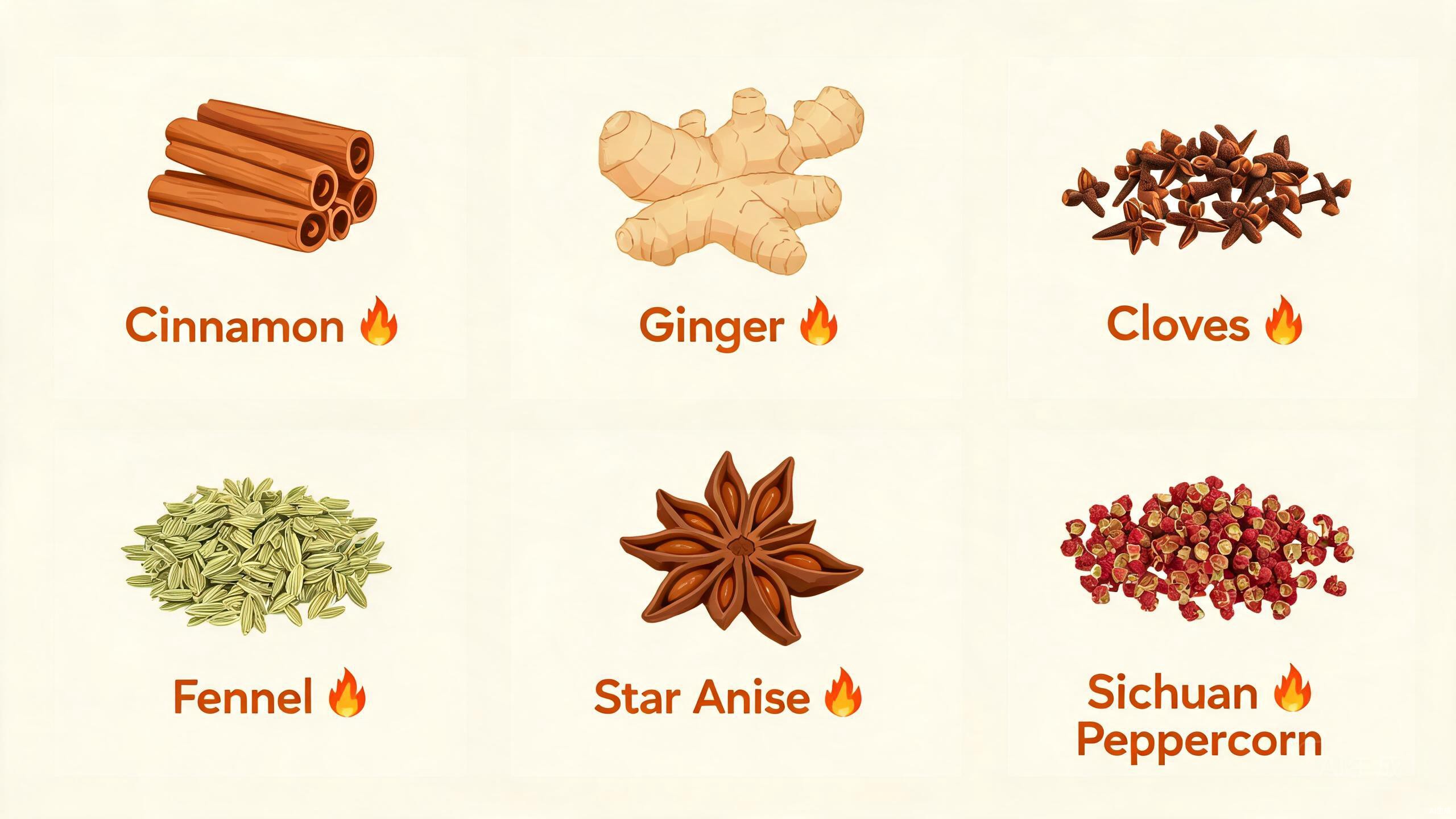
In TCM, warming spices are pungent, warm-natured foods and herbs that disperse cold, warm the middle burner, and support yang energy. The most commonly used warming spices include Sichuan peppercorn (Hua Jiao), cinnamon bark (Rou Gui / Gui Pi), ginger, clove, and fennel. These spices are traditionally used during autumn and winter, or for people with cold-type constitutions, to warm the body, support digestion, and dispel cold-damp patterns.
What is the difference between Sichuan peppercorn and cinnamon in TCM?
In TCM, Sichuan peppercorn (Hua Jiao) is pungent and warm, entering the Spleen, Stomach, and Kidney meridians. It is primarily used to warm the middle burner, disperse cold, relieve pain, and kill parasites. Cinnamon bark (Rou Gui) is pungent, sweet, and hot, entering the Kidney, Spleen, and Heart meridians. It is used to warm kidney yang, disperse deep cold, warm the spleen, and promote circulation. Sichuan peppercorn focuses more on the digestive system, while cinnamon has a deeper warming effect on the kidneys and overall yang energy.
When should I use warming spices in TCM?
Warming spices are most appropriate during autumn and winter, when the body is more susceptible to cold. They are also used for people with cold-type constitutions (cold hands and feet, pale complexion, preference for warm drinks, loose stools, lower back coldness). Avoid using warming spices during summer heat, during fevers, or if you have a heat-type constitution (red face, irritability, dry mouth, constipation). Pregnant women should use cinnamon cautiously, as high doses of cinnamon may stimulate the uterus.
Is cinnamon safe during pregnancy?
Cinnamon, especially cassia cinnamon (the type most common in Western supermarkets), contains coumarin, which may have effects on the uterus. TCM traditionally cautions pregnant women against using cinnamon bark therapeutically. Small amounts of cinnamon in food (like a sprinkle on oatmeal) are generally considered safe, but therapeutic doses (as in medicinal teas) should be avoided during pregnancy. Always consult your obstetrician before using cinnamon or any warming spices therapeutically during pregnancy.
Precautions and When to Seek Help
While these spices are common kitchen ingredients, their medicinal properties mean they should be used with awareness:
- Coumarin in cassia cinnamon: Cassia cinnamon (the standard supermarket variety) contains coumarin, which can stress the liver in large amounts. Limit cassia cinnamon to about 1/2 teaspoon (1 to 2 grams) per day. If you use cinnamon daily, consider switching to Ceylon cinnamon, which has negligible coumarin levels.
- Blood sugar: Cinnamon may lower blood sugar. If you take diabetes medication, monitor your blood sugar and consult your doctor.
- Blood thinning: Both cinnamon and Sichuan peppercorn may have mild blood-thinning effects. If you take anticoagulants, consult your doctor.
- Pregnancy: Avoid therapeutic doses of cinnamon and Sichuan peppercorn during pregnancy. Consult your obstetrician.
- Not a substitute: These recipes are complementary wellness practices. For persistent digestive pain, circulation issues, or other health concerns, seek professional medical care.
For more TCM food therapy and seasonal wellness guides, explore our autumn food therapy guide, everyday TCM kitchen remedies, and our ginger in TCM guide and garlic in TCM guide.
The Bottom Line
Warming spices are one of the most accessible and effective tools in the TCM kitchen pharmacy. Sichuan peppercorn and cinnamon — both available at any supermarket — offer centuries-tested warming, digestive-supporting, and cold-dispelling properties. Used wisely during the cold months, they can help keep your body warm, your digestion strong, and your circulation flowing. The key, as always in TCM, is to match the spice to your pattern: if you run cold, these spices are your winter allies. If you run hot, save them for the depths of winter — or skip them entirely. Either way, a cup of cinnamon apple tea or a bowl of peppercorn pork belly soup on a cold evening is one of the simplest, most comforting ways to bring TCM wisdom into your daily life.
This article is for educational purposes only and is not medical advice. The spice recipes described here are traditional food therapy practices, not medical treatments. Cinnamon (cassia variety) contains coumarin, which may affect the liver in large amounts. Cinnamon and Sichuan peppercorn may interact with blood sugar medications and blood thinners. Pregnant women should avoid therapeutic doses of cinnamon. The TCM Home Editorial Team does not claim that these recipes cure, treat, or diagnose any disease. Always consult a qualified healthcare provider before making dietary changes, especially if you have existing health conditions or take medication.