Key Takeaways
- The core TCM principle for autumn is nourish yin and prevent dryness (养阴防燥) — the season's dry air can deplete the body's fluids and irritate the lungs.
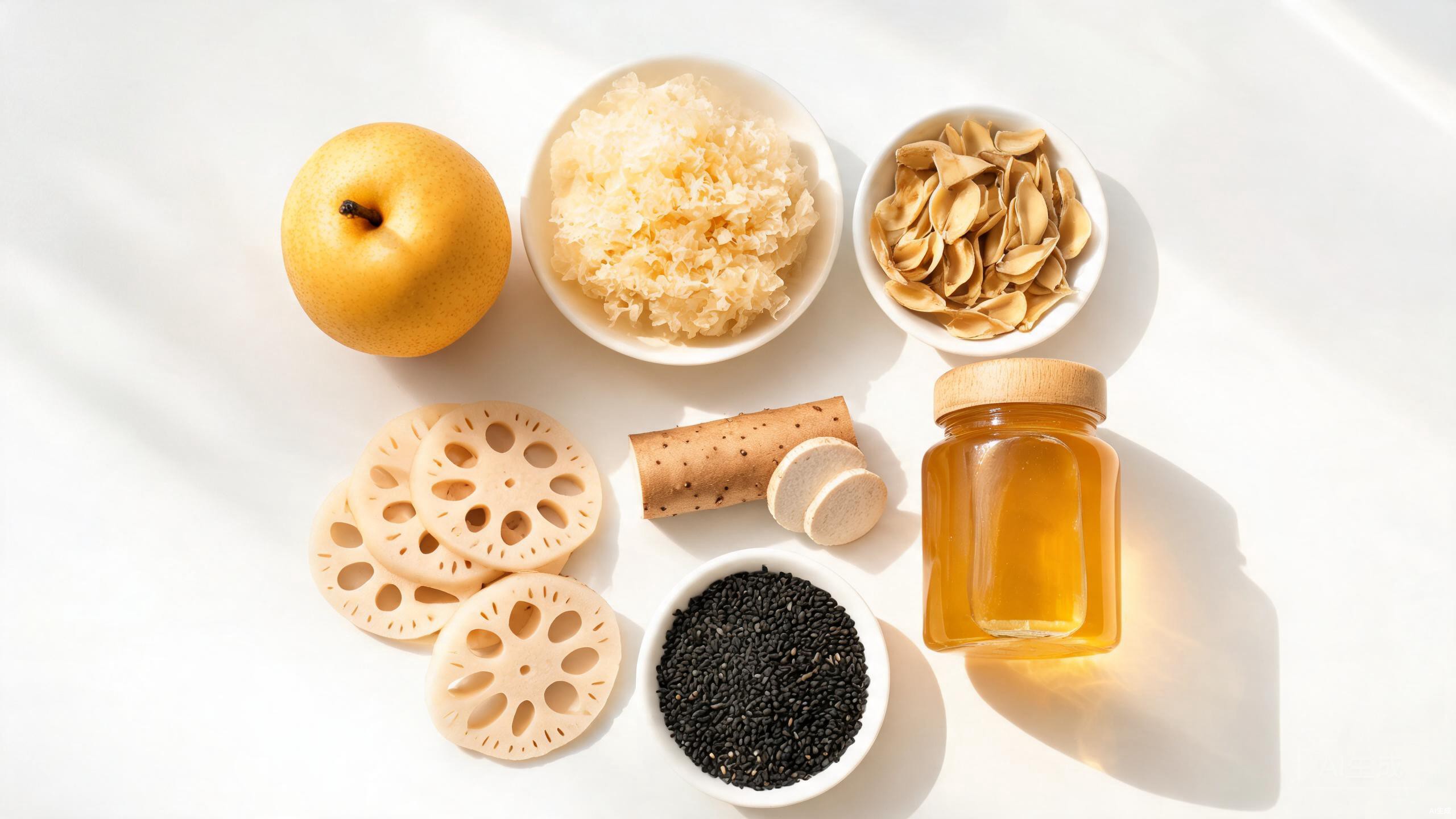
- Seven everyday foods — pear, white fungus, lily bulb, lotus root, Chinese yam, honey, and black sesame — are traditionally used to moisten the lungs, nourish skin, and support overall fall wellness.
- The classical guideline reduce pungent, increase sour (减辛增酸) helps balance the Metal element's effect on the Liver during autumn.
- Classic autumn porridge recipes are simple to prepare and gentle enough for daily use by people of all ages.
- These are traditional dietary wellness practices, not medical treatments. Always consult your healthcare provider before making significant dietary changes.
This article is for educational purposes only and is not medical advice. The foods and recipes described here are traditional dietary wellness practices rooted in Chinese culture. They are not a substitute for professional medical care, diagnosis, or treatment. Never stop, adjust, or replace prescribed medication based on information in this article. If you have a chronic condition such as diabetes, digestive disorders, or food allergies, consult your healthcare provider before making significant dietary changes. Some foods may interact with medications or may not be appropriate for certain conditions. These statements have not been evaluated by the FDA and are not intended to diagnose, treat, cure, or prevent any disease.
Every autumn, as the air turns crisp and the leaves begin to change, families across East Asia reach for a familiar set of foods. Pears appear on the table, white fungus soup simmers on the stove, and a jar of honey sits ready for the morning cup of warm water. This is not random comfort eating. It is a seasonal food therapy tradition (秋季食疗, qiu ji shi liao) that has been refined over thousands of years, rooted in the observation that different seasons place different demands on the body.
If you are new to the seasonal thinking behind TCM, our introduction to Traditional Chinese Medicine and our guide on the five elements provide useful background before diving in.
Why Autumn Needs Special Food Therapy
In TCM, each season corresponds to an organ system and one of the five elements. Autumn belongs to the Metal element (金, jin) and is associated with the Lung (肺, fei). The defining environmental characteristic of autumn is dryness (燥, zao) — the air loses humidity, winds pick up, and the natural world begins to contract and withdraw.
When this external dryness affects the body, it can manifest in several ways that many people recognize without needing any TCM background:
- Dry mouth and throat — a persistent feeling of thirst that water alone does not fully quench.
- Dry, tight, or itchy skin — especially on the face, hands, and lower legs.
- Dry cough — often persistent, with little or no phlegm, sometimes worse at night. See our guide on TCM for cough relief for related approaches.
- Dry nasal passages — occasionally leading to minor nosebleeds.
- Constipation — the intestines, like the skin, lose moisture.
- Dry, brittle hair — lacking its summer luster.
This cluster of signs is what TCM calls autumn dryness (秋燥, qiu zao). The principle for addressing it is simple and memorable: nourish yin and prevent dryness (养阴防燥, yang yin fang zao). In practical terms, this means choosing foods that are moistening, cooling, and fluid-generating — and avoiding foods that are heating and drying.
The second classical principle for autumn eating is nourish yin in autumn and winter (秋冬养阴, qiu dong yang yin). This idea, drawn from the foundational text Huangdi Neijing (Yellow Emperor's Inner Canon), holds that the cooler months are the time to build the body's yin reserves — the cooling, moistening, restorative aspect of the body's energy. To understand this duality more deeply, see our yin and yang guide.
When TCM speaks of the "Lung," it refers not only to the anatomical organ but to an entire functional system that includes the skin, nose, throat, and the body's defensive qi (wei qi). This is why autumn dryness can show up as skin problems and nasal discomfort alongside respiratory signs. Learn more in our Zang-Fu organs guide.
The Principle of "Reduce Pungent, Increase Sour"
Beyond the general goal of moistening, TCM offers a more specific dietary guideline for autumn known as reduce pungent, increase sour (减辛增酸, jian xin zeng suan). This principle comes from the five-element relationships that govern seasonal eating.
Here is the logic in plain terms:
- Autumn belongs to Metal, and Metal corresponds to the Lung. The flavor associated with Metal is pungent (spicy, dispersing).
- In the five-element controlling cycle, Metal controls (acts upon) Wood, which corresponds to the Liver. The flavor associated with Wood is sour.
- During autumn, Metal energy is naturally strong. If it becomes excessive through diet — too many pungent foods — it can over-restrain the Liver, leading to Liver qi stagnation (which can show up as irritability, tightness in the chest or sides, and digestive sluggishness).
- Therefore, the classical guidance is to reduce pungent foods (chili, raw garlic, excess raw ginger, strong spices) and increase sour foods (hawthorn, pomegranate, sour jujube, grapes, citrus) to support and protect the Liver.
This does not mean you must eliminate all spices. It means adjusting the overall balance of your plate toward less heat and more gentle, astringent flavors. Our hawthorn tea guide covers one of the most popular sour autumn beverages.
Seven Nourishing Autumn Foods
The following seven foods are the cornerstones of autumn food therapy in TCM. Each is widely available, affordable, and gentle enough for regular use. They are not medicines, and they are not a replacement for medical care.
1. Pear (梨, Li)
TCM nature: Sweet, sour, cool. Enters: Lung and Stomach channels.
The pear is widely regarded as the number one autumn fruit in TCM. It is classified as cooling and moistening, directly targeting the Lung — the organ most vulnerable in autumn. Pears are traditionally used to clear heat, moisten the lungs, and generate fluids, making them a natural response to the dryness of the season.
An important distinction in TCM: raw pear clears heat more strongly, while cooked pear moistens yin more gently. For people with sensitive digestion or a tendency toward coldness, cooked pear is the better choice. The classic autumn preparation is rock sugar steamed pear (冰糖炖雪梨, bing tang dun xue li) — a whole snow pear hollowed and filled with rock sugar, then steamed until soft. This preparation is traditionally used to soothe a dry throat and a dry cough.
Simple recipe: Cut 1 pear into chunks (core removed). Place in a bowl with 1 tablespoon rock sugar and a small amount of water. Steam for 20 to 30 minutes until the pear is translucent and soft. Eat the pear and drink the liquid.
Caution: Pears are cooling. If you have a cold constitution (cold hands and feet, loose stools), prefer cooked pear over raw, and eat in moderation.
2. White Fungus / Snow Fungus (银耳, Yin Er)
TCM nature: Sweet, neutral. Enters: Lung, Stomach, and Kidney channels.
White fungus is often called the "commoner's bird's nest" (平民燕窝, ping min yan wo) because it offers a similarly gelatinous, nourishing texture at a fraction of the cost. It is rich in plant-based gelatin and is traditionally used to nourish yin, moisten the lungs, and support skin hydration — making it a favorite autumn beauty food as well.
Classic recipe: White fungus and lotus seed soup (银耳莲子羹, yin er lian zi geng). Soak 1 dried white fungus until it expands (about 30 minutes), then tear into small pieces. Combine with a handful of dried lotus seeds, a few red dates (jujubes), and rock sugar in a pot of water. Simmer for 1 to 2 hours until the liquid becomes thick and gelatinous. Serve warm.
Caution: White fungus must be fully cooked. Do not consume soaked white fungus that has been left at room temperature for many hours, as it can develop harmful bacteria.
3. Lily Bulb (百合, Bai He)
TCM nature: Sweet, slightly cold. Enters: Lung and Heart channels.
The lily bulb used in TCM is not the flower but the fleshy, white scales of the bulb of the Lilium plant, which are dried and sold in Chinese herb shops and Asian markets. Lily bulb is traditionally used to nourish lung yin, clear heart heat, and calm the mind — a rare combination that makes it especially valuable in autumn, when dry coughs and restless sleep are common.
Classic recipe: Lily and lotus seed porridge (百合莲子粥, bai he lian zi zhou). Combine 30 grams dried lily bulb, 30 grams dried lotus seeds, and 1/2 cup rice (or glutinous rice) in 4 cups of water. Bring to a boil, then simmer for 30 to 40 minutes until creamy. Add rock sugar to taste. This porridge is gentle enough for children and the elderly.
Caution: Use culinary lily bulbs from reputable sources. Avoid lily bulbs sold as ornamental flowers, which are not food-grade.
4. Lotus Root (莲藕, Lian Ou)
TCM nature: Sweet, cold (raw); sweet, warm (cooked). Enters: Heart, Lung, and Stomach channels.
Lotus root is one of the most versatile autumn foods in TCM, with a fascinating property: raw lotus root clears heat and generates fluids, while cooked lotus root nourishes the spleen and stomach and builds blood. This duality makes it useful throughout the autumn transition — raw slices for the early autumn heat, and slow-cooked preparations for the cooler late autumn.
Classic recipe: Lotus root and pork rib soup (莲藕排骨汤, lian ou pai gu tang). Blanch 1 pound pork ribs to remove impurities. Combine with 1 large lotus root (cut into chunks), a few slices of ginger, and water in a pot. Simmer for 1.5 to 2 hours until the ribs are tender and the broth is rich. Salt to taste. This is one of the most beloved autumn soups in Chinese households.
Caution: Lotus root is generally safe as a food. Choose firm, unblemished roots.
5. Chinese Yam (山药, Shan Yao)
TCM nature: Sweet, neutral. Enters: Spleen, Lung, and Kidney channels.
Chinese yam (also known as shanyao or dioscorea) is one of the gentlest and most balanced foods in all of TCM. It simultaneously tonifies the spleen (digestion), the lung, and the kidney — three of the most important organ systems. Because it is neutral in temperature, it can be eaten daily without causing heat or coldness, making it an ideal tonic for the elderly, children, and those recovering from illness.
Classic recipe: Yam porridge (山药粥, shan yao zhou). Peel and dice 1 small Chinese yam. Combine with 1/2 cup rice and 4 cups water. Simmer for 30 minutes until the yam is soft and the porridge is creamy. This simple porridge is suitable for all ages and is especially comforting on cool autumn mornings.
Caution: Raw Chinese yam can cause skin itching in some people due to enzymes in the skin. Peel under running water or wear gloves. Cooking neutralizes this completely.
6. Honey (蜂蜜, Feng Mi)
TCM nature: Sweet, neutral. Enters: Lung, Spleen, and Large Intestine channels.
Honey is one of the most widely used moistening foods in TCM. It is traditionally used to moisten the lungs, lubricate the bowels (helping with autumn constipation), and detoxify. A cup of warm honey water in the morning is a classic autumn habit that generations of Chinese families have practiced — it gently wakes the digestive system and provides a layer of moisture before the day begins.
Simple habit: Stir 1 teaspoon of raw honey into a cup of warm (not hot) water each morning. Water that is too hot destroys honey's beneficial enzymes. For a lung-moistening twist, add a few drops of lemon juice.
Caution: Never give honey to children under 1 year of age due to the risk of infant botulism. If you have diabetes, consult your healthcare provider about incorporating honey into your routine.
7. Black Sesame (黑芝麻, Hei Zhi Ma)
TCM nature: Sweet, neutral. Enters: Liver and Kidney channels.
Black sesame is the deep-nourishing food of autumn. In TCM, it is traditionally used to nourish liver and kidney yin, moisten the intestines (aiding autumn constipation), and darken the hair — a traditional sign of healthy kidney essence. As the body's yin reserves naturally decline with age and with the drying effects of autumn, black sesame provides a grounding, deeply nourishing food.
Classic recipe: Black sesame paste (黑芝麻糊, hei zhi ma hu). Toast 1 cup black sesame seeds in a dry pan until fragrant (2 to 3 minutes). Blend with a small amount of water and rock sugar until smooth. Heat gently and serve as a warm, thick drink. This is a traditional autumn and winter breakfast or snack.
Caution: Black sesame is rich in oil. If you have loose stools or a sensitive digestive system, start with small amounts.
Comparison of the Seven Foods
| Food | TCM Nature | Primary Traditional Use | Best For | Simplest Preparation |
|---|---|---|---|---|
| Pear (Li) | Sweet, sour, cool | Clear heat, moisten lung, generate fluids | Dry cough, dry throat | Steamed with rock sugar |
| White Fungus (Yin Er) | Sweet, neutral | Nourish yin, moisten lung and skin | Dry skin, general nourishment | Simmered soup with lotus seeds |
| Lily Bulb (Bai He) | Sweet, slightly cold | Nourish lung yin, calm the mind | Dry cough, restless sleep | Porridge with lotus seeds |
| Lotus Root (Lian Ou) | Sweet, cold (raw) / warm (cooked) | Clear heat (raw), nourish spleen (cooked) | Early autumn heat, late autumn nourishment | Pork rib soup |
| Chinese Yam (Shan Yao) | Sweet, neutral | Tonify spleen, lung, and kidney | Daily gentle tonic, all ages | Simple yam porridge |
| Honey (Feng Mi) | Sweet, neutral | Moisten lung, lubricate bowels | Dryness, constipation | Warm morning honey water |
| Black Sesame (Hei Zhi Ma) | Sweet, neutral | Nourish liver and kidney yin, moisten intestines | Deep nourishment, hair health | Toasted sesame paste |
Four Classic Autumn Porridge Recipes
Porridge (粥, zhou) holds a special place in TCM food therapy. It is warm, easy to digest, and acts as a gentle carrier for the properties of the ingredients added to it. The classical TCM text Qian Jin Yao Fang (Thousand Golden Essential Prescriptions) lists porridge as one of the primary forms of dietary therapy. Here are four traditional autumn porridge recipes, each with a slightly different focus.
Lily and Lotus Seed Porridge (百合莲子粥)
Focus: Lung yin nourishment and calming the mind.
Ingredients: 30g dried lily bulb, 30g dried lotus seeds, 1/2 cup white rice, water, rock sugar.
Method: Soak lily bulb and lotus seeds for 1 hour. Combine all ingredients in a pot with 4 cups of water. Bring to a boil, then simmer for 30 to 40 minutes until creamy. Add rock sugar to taste. Best for evening meals, as it supports restful sleep.
White Fungus and Rock Sugar Rice Porridge (银耳冰糖粳米粥)
Focus: Yin nourishment and skin hydration.
Ingredients: 1/4 dried white fungus (soaked and torn), 1/2 cup japonica rice, rock sugar, water.
Method: Soak white fungus until expanded. Tear into small pieces. Combine with rice and 4 cups of water in a pot. Simmer for 40 to 50 minutes until the porridge is thick and the fungus is gelatinous. Add rock sugar. Best for morning meals.
Black Sesame Porridge (黑芝麻粥)
Focus: Liver and kidney yin nourishment, intestinal lubrication.
Ingredients: 2 tablespoons toasted ground black sesame, 1/2 cup white rice, water.
Method: Toast black sesame seeds in a dry pan, then grind. Cook rice with 4 cups of water until it reaches a porridge consistency (about 30 minutes). Stir in ground sesame and cook for 5 more minutes. Best for breakfast, especially for older adults.
Apricot Kernel and Chuanbei Glutinous Rice Porridge (杏仁川贝糯米粥)
Focus: Lung moistening and cough soothing.
Ingredients: 10g sweet apricot kernels (南杏仁, nan xing ren), 5g Chuanbei powder (川贝粉, chuan bei fen), 1/2 cup glutinous rice, water, rock sugar.
Method: Crush apricot kernels lightly. Combine with glutinous rice and 4 cups of water. Simmer for 30 to 40 minutes until creamy. Stir in Chuanbei powder and rock sugar in the last 5 minutes. This porridge is traditionally used when a dry, lingering cough accompanies autumn dryness.
Always use a heavy-bottomed pot and cook over low heat to prevent scorching. Stir occasionally. Porridge can be stored in the refrigerator for up to 2 days and reheated with a little extra water. For a broader collection of simple kitchen remedies, see our everyday TCM kitchen remedies guide.
Autumn Nourishing: "Tie Qiu Biao" and Body Type
A well-known tradition in Chinese culture is tie qiu biao (贴秋膘) — literally "putting on the autumn fat." After a summer of reduced appetite and lighter eating (the heat naturally dampens the desire for heavy food), autumn was traditionally the time to rebuild the body's reserves with nourishing, protein-rich foods before winter. In the past, people would eat a hearty meal of meat on the first day of autumn (liqiu) to mark the beginning of this rebuilding phase.
However, TCM cautions that tie qiu biao is not a license for everyone to eat heavily. The appropriateness of autumn nourishing depends on your body type and current condition:
- Deficiency types (fatigue, pale complexion, cold hands and feet, weak digestion): These individuals benefit most from autumn nourishing. Gentle, warming, protein-rich foods such as slow-cooked stews with lotus root, Chinese yam, or lily bulb are appropriate. Build gradually rather than suddenly.
- Excess or damp-heat types (tendency toward acne, heavy feeling, thick tongue coating, strong body odor): These individuals should be cautious with heavy autumn nourishing. Rich, greasy foods can worsen dampness and heat. Focus instead on the moistening, lighter foods on the list above — pear, white fungus, lotus root.
- Balanced types (good energy, normal digestion, comfortable in most temperatures): A moderate approach is best. Enjoy a variety of autumn foods without overindulging in any single direction.
The key insight is that TCM always individualizes. What is nourishing for one person may be burdensome for another. If you are unsure about your body type, consider consulting a licensed TCM practitioner for a personalized assessment.
Lifestyle Tips for Autumn Wellness
Food therapy is most effective when supported by matching lifestyle habits. TCM offers several specific autumn recommendations:
- Early to bed, early to rise. The Huangdi Neijing advises going to bed earlier in autumn to align with the season's contracting energy, and waking early to take advantage of the crisp morning air. This supports the body's natural gathering and storing process.
- Moderate "autumn freeze" (秋冻, qiu dong). Do not rush to bundle up at the first sign of cool weather. Allow the body to gradually adjust to cooler temperatures through mild, brief exposure. This is said to strengthen the body's defensive qi. However, this applies mainly to healthy individuals — the elderly, children, and those with chronic illness should dress warmly as needed.
- Protect the lungs from cold and dry air. When outdoors on cold, dry, windy days, breathe through your nose (not your mouth) and consider a light scarf around the neck. The back of the neck is considered especially vulnerable to "wind-cold" in TCM.
- Gentle, moderate movement. Avoid heavy sweating in autumn, as excessive perspiration depletes the fluids you are trying to preserve. Tai chi, qigong, and walking are ideal. See our exploration of seasonal exercise for related guidance.
- Emotional balance. Autumn is the season associated with grief and sadness in TCM — the natural response to the withering of the world around us. Gentle outdoor activity, sunlight exposure, and social connection help counterbalance this tendency. Our TCM emotional wellness guide offers more detail.
- Warm the feet before bed. A ginger foot soak in the evening helps draw warmth downward, supports circulation, and promotes restful sleep — particularly helpful as autumn nights grow longer and cooler.
Just as spring is the time to support the Liver with spring liver foods, autumn is the time to support the Lung. The body's needs shift with the seasons, and eating in harmony with these shifts is one of the simplest and most powerful TCM practices. To understand the fluid systems that these foods help maintain, see our guide to qi, blood, and body fluids.
When to See a Doctor
The foods and recipes in this article are traditional dietary wellness practices, not medical treatments. You should consult a healthcare provider if you experience any of the following:
- A persistent cough lasting more than two weeks, or a cough accompanied by fever, chest pain, or discolored phlegm
- Severe or worsening dry skin, especially if it cracks, bleeds, or shows signs of infection
- Chronic constipation that does not respond to dietary changes
- Unexplained weight loss, persistent fatigue, or loss of appetite
- Any new or worsening symptoms that concern you
If you are pregnant, nursing, taking prescription medication, or managing a chronic condition, consult your healthcare provider before adding any new foods, herbs, or supplements to your routine.
The Bottom Line
Autumn food therapy is one of the most accessible and enjoyable traditions in TCM. The seven foods described here — pear, white fungus, lily bulb, lotus root, Chinese yam, honey, and black sesame — are affordable, widely available, and gentle enough for daily use. Paired with the principles of nourishing yin, preventing dryness, and reducing pungent while increasing sour, they form a practical dietary approach to the dry, contracting energy of autumn.
The four porridge recipes offer a simple starting point: choose one that matches your needs and try it for a week. But remember — these are traditions, not treatments. If you have a health concern, your most important step is to work with a qualified healthcare provider. Use these traditional foods only as complementary dietary habits, with your doctor's knowledge and guidance.
This article shares traditional wellness practices for educational purposes only. It is not a substitute for medical advice, diagnosis, or treatment. The foods and recipes described here are not intended to treat, cure, or prevent any disease. If you have a chronic condition, take medication, or are pregnant or nursing, consult your healthcare provider before making significant dietary changes. These statements have not been evaluated by the FDA. Never stop or adjust prescribed medication without your doctor's explicit guidance.