Key Takeaways
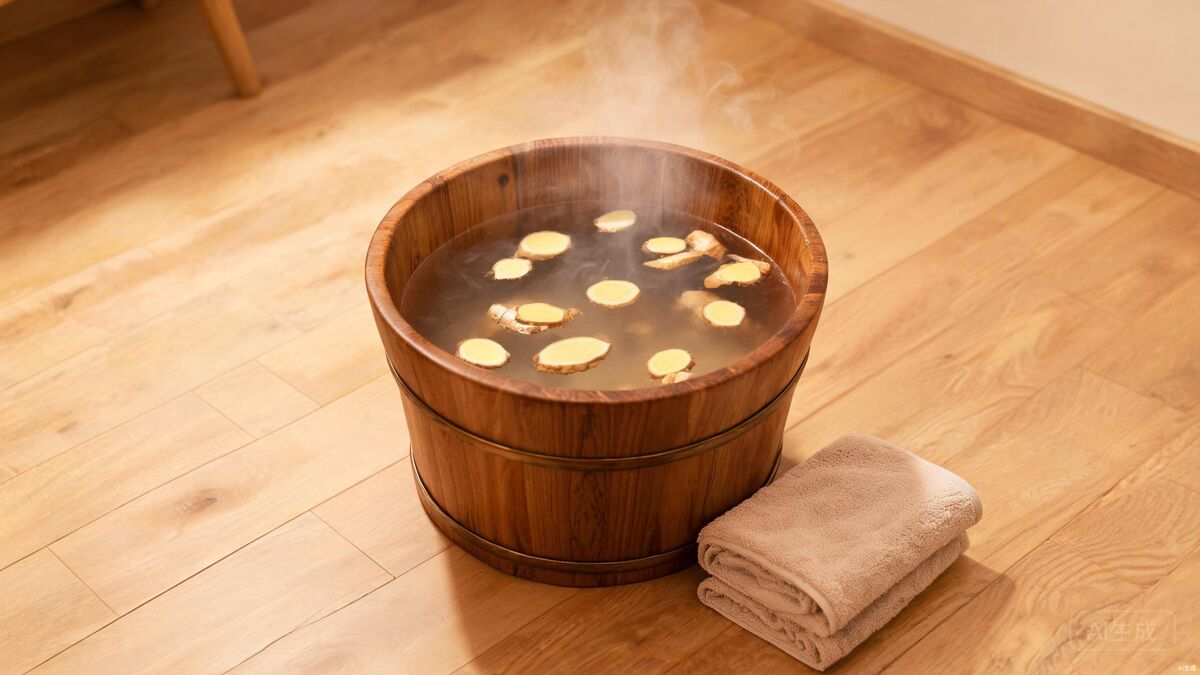
- A ginger foot soak uses fresh ginger boiled in water to create a warming bath for the feet that drives out cold and warms the entire body from the bottom up.
- In TCM, the feet are the starting point of the Kidney meridian and home to key points — warming them warms the whole body and "draws fire downward," settling restless energy.
- The ideal water temperature is 40 to 42°C (104 to 108°F), and the soak should last 15 to 20 minutes, ideally before bed.
- It is most effective for cold hands and feet, Yang-deficiency constitution, and winter wellness.
- Contraindicated for people with diabetic neuropathy, foot wounds, pregnancy, or after alcohol — see the safety section for details.
1. Why a Ginger Foot Soak?
Of all the home therapies in Chinese medicine, the foot soak is perhaps the most beloved — and the easiest to start. It requires no special tools, no training, and nothing more exotic than a piece of ginger and a basin of hot water. Yet its effects are surprisingly powerful, especially for the modern problem of cold extremities.
In Traditional Chinese Medicine, the feet hold a special significance. They are the starting point of the Kidney meridian, the body's reservoir of warming Yang energy, and they are home to dozens of acupoints connected to every major organ. The TCM classic text Yellow Emperor's Inner Canon states that "cold rises from the feet" — meaning that cold invading the feet travels upward and can chill the entire body over time. This is why Chinese households have always insisted on warm socks and why soaking the feet in hot water before bed is a nightly ritual for millions.
Adding ginger to the foot soak transforms a simple warm bath into a therapeutic treatment. Ginger's warming, dispersing nature penetrates the skin and enters the meridians of the feet, driving out cold from the inside. The warmth also draws energy and blood downward — a principle TCM calls "leading fire down" — which is why a foot soak is one of the best remedies for insomnia caused by a busy, overactive mind. When the energy settles in the feet, the head quiets, and sleep comes more easily.
2. What You Need: Ingredients and Materials
The beauty of this remedy is its simplicity. Everything you need is available at a regular grocery store.
| Ingredient | Amount | Notes |
|---|---|---|
| Fresh ginger root | 50 to 100 g (a palm-sized piece) | Do not peel. Slice or crush to release the active compounds. Available at any grocery store. |
| Hot water | Enough to cover the ankles (about 4 to 5 liters) | Starting temperature 40 to 42°C (104 to 108°F). Have a kettle of extra hot water ready to top up. |
| Salt (optional) | 1 to 2 tablespoons | Sea salt or Epsom salt. Salt enhances the warming effect and softens the skin. |
| Dried mugwort / ai ye (optional) | 1 small handful (30 to 50 g) | Available at Asian grocery stores or on Amazon. Adds a stronger warming and blood-moving effect for menstrual cramps or joint pain. |
Materials
- A foot basin — deep enough to cover your ankles. A dedicated foot soak bucket is ideal (available on Amazon for $15 to $30, some with built-in heaters), but any deep plastic or ceramic basin works.
- A small saucepan — for boiling the ginger.
- A towel — to wrap around the basin and your feet to trap the heat.
- Warm socks — to put on immediately after the soak.
3. How to Make and Use the Ginger Foot Soak
Step-by-Step Instructions
- Prepare the ginger. Rinse the ginger root under running water. Do not peel it — the skin contains beneficial compounds and helps balance the ginger's heat. Slice it into thin pieces (about coin thickness), or crush it lightly with the flat of a knife to break the fibers open. The more surface area you expose, the more potent the soak will be.
- Boil the ginger. Place the sliced ginger in a small saucepan with about 1 liter (4 cups) of water. Bring it to a boil over medium-high heat, then reduce the heat and let it simmer for 10 minutes. The water will turn a pale yellow and your kitchen will fill with a warm, spicy aroma. This simmering step is what extracts the warming essential oils from the ginger.
- Prepare the basin. While the ginger is simmering, fill your foot basin halfway with hot water from the tap. Pour the concentrated ginger decoction (including the ginger pieces) into the basin.
- Adjust the temperature. Add cold or hot water until the temperature reaches 40 to 42°C (104 to 108°F). Test it carefully with your wrist or the inside of your elbow — it should feel comfortably hot, never scalding. If you have a thermometer, use it.
- Add optional ingredients. If using salt, stir in 1 to 2 tablespoons now. If using dried mugwort, add it to the ginger while it simmers rather than to the basin.
- Soak your feet. Sit in a comfortable chair, place your feet in the basin, and drape a towel over the basin and your legs to trap the steam and heat. Soak for 15 to 20 minutes. If the water cools, add hot water from a kettle to maintain the temperature — but always mix it in and test before putting your feet back.
- Finish and keep warm. When the time is up, lift your feet out, dry them thoroughly, and put on warm socks immediately. Do not walk barefoot on cold floors. Go straight to bed — the warming and relaxing effect is strongest in the 30 minutes after the soak.
Never use water hotter than 42°C (108°F). Water that feels merely warm to a healthy person can cause serious burns in someone with reduced foot sensation. Always test the water with your wrist or elbow before putting your feet in. If you have diabetes or any condition that reduces feeling in your feet, use a thermometer and keep the temperature at 38 to 40°C — and never soak alone.
4. The Benefits: What a Ginger Foot Soak Does
Warms the Meridians and Drives Out Cold
Ginger is classified in TCM as warm and pungent, and its warmth penetrates the skin to enter the meridians of the feet. This directly counters the cold that has accumulated in the lower body — the cold feet, the cold knees, the cold lower back. For people whose extremities are cold even in summer, this is the core therapeutic action.
Relieves Cold Hands and Feet
Cold hands and feet are often dismissed as a minor nuisance, but in TCM they are a sign that the body's Yang energy — its warming, activating force — is too weak to push warmth to the extremities. The ginger foot soak addresses this from two directions: the ginger warms from within, and the hot water dilates the blood vessels in the feet, improving circulation throughout the body. Many people notice their hands warming up within minutes of starting the soak — a sign that the whole circulatory system is responding.
Draws Fire Downward and Improves Sleep
This is one of the most valuable benefits for modern, stressed, overstimulated people. In TCM, the common pattern of insomnia is "fire above, cold below" — the mind is hot and busy with racing thoughts, while the feet are cold and the energy is stuck in the head. A hot ginger foot soak physically draws the blood and energy downward, cooling the head and warming the feet. This rebalancing is why so many people fall asleep more easily on the nights they do a foot soak.
Supports Yang-Deficient and Cold Constitutions
People with a Yang-deficient constitution — those who feel cold easily, have a pale complexion, prefer hot drinks, urinate frequently and clearly, and lack energy — benefit enormously from regular warming foot soaks. The ginger supports the body's Yang, especially the Kidney Yang, which is the root of the body's warmth. In winter, when Yang is naturally at its lowest, a nightly foot soak is one of the best preventive practices.
5. Who It Helps Most
- People with chronically cold hands and feet, regardless of the season.
- Yang-deficient constitutions — those who feel cold, tired, and pale.
- Winter wellness — a nightly soak from late autumn through early spring keeps cold at bay.
- People with insomnia from an overactive mind — the "draw fire downward" effect quiets the head.
- Early stage of a wind-cold — the cold with chills, clear runny nose, and no sore throat. The soak helps induce a light sweat to expel the cold.
- People who sit at desks all day — the soak relieves the stagnant, heavy feeling in the legs and feet.
6. Contraindications: Who Should Not Do a Ginger Foot Soak
- Diabetic neuropathy: If you have diabetes with reduced sensation in your feet, you may not feel if the water is too hot, leading to serious burns. Use a thermometer, keep the temperature at 38 to 40°C, and consult your doctor before starting foot soaks.
- Open wounds or skin infections on the feet: Do not soak broken skin, cuts, blisters, or fungal infections like athlete's foot in ginger water — it can irritate and spread infection.
- Pregnancy: Avoid ginger foot soaks during pregnancy, especially in the first trimester. Ginger's warming, blood-moving properties and the downward-drawing effect of the soak are considered inadvisable. A plain warm water soak (no ginger) is a safer alternative — but consult your doctor first.
- After drinking alcohol: Never do a hot foot soak when intoxicated. Alcohol already dilates blood vessels and lowers blood pressure; combining it with a hot foot soak can cause dizziness, fainting, or a dangerous drop in blood pressure.
- Within 30 minutes of a heavy meal: The soak draws blood to the feet and away from the digestive system, which can cause indigestion or dizziness. Wait at least an hour after eating.
- Severe hypertension or heart disease: The heat and vasodilation can affect blood pressure. Consult your cardiologist before starting regular hot foot soaks.
- Menstruation with heavy bleeding: Ginger's blood-moving action can increase menstrual flow. Avoid during heavy periods.
7. Tips for the Best Results
- Timing: Soak in the evening, 30 to 60 minutes before bed. This maximizes the sleep-promoting effect. Avoid soaking in the morning — the relaxing, downward-drawing energy is the opposite of what you want to start your day.
- Frequency: 3 to 4 times per week is ideal for most people. During deep winter or when fighting off a cold, nightly soaks for a week are fine.
- Duration: 15 to 20 minutes. Less than 10 minutes is not enough to warm the body; more than 25 minutes can deplete your energy.
- Stop when you sweat lightly: A light perspiration on the back or forehead is the sign that the cold has been driven out. Do not soak until you are sweating heavily — that depletes the body.
- Stay warm afterward: Dry your feet, put on socks, and go to bed. Do not expose your warm feet to cold floors, cold air, or a cold shower.
- Moisturize: Hot water and ginger can dry the skin. Apply a foot cream or oil after the soak if you do this regularly.
Frequently Asked Questions
Can I do a ginger foot soak every day?
For most healthy adults, 3 to 4 times per week is the sweet spot. Daily soaks are fine for a short period — a cold winter week or when you feel a cold coming on — but long-term daily use can be too warming for people who tend to run hot, and it can dry out the skin on your feet. If you notice your feet becoming dry or itchy, reduce to 2 to 3 times per week and apply a moisturizer after each soak. Always soak in the evening rather than the morning, as the warming and relaxing effect promotes sleep and would make you drowsy during the day.
What temperature should the foot soak water be?
The ideal starting temperature is 40 to 42°C (104 to 108°F). The water should feel warm and comfortably hot, but never scalding. Always test it with your wrist or the inside of your elbow before putting your feet in — just as you would test a baby's bathwater. You can add hot water from a kettle during the soak to maintain the temperature, but always mix it in and test again before putting your feet back. If you have diabetes or reduced sensation in your feet, use a thermometer and keep the temperature at 38 to 40°C (100 to 104°F) to avoid burns, and never soak unattended.
Can I use dried ginger instead of fresh ginger for a foot soak?
Yes — dried ginger and ginger powder both work well and are actually more intensely warming in TCM theory. Use 30 to 50 grams of dried ginger slices or 3 to 4 tablespoons of ginger powder per soak, and boil it the same way for 10 minutes. The choice between fresh and dried depends on your goal: fresh ginger is better for releasing exterior cold and inducing a light sweat (when you feel a cold coming on), while dried ginger is better for deep internal warming (for chronically cold feet with no acute cold symptoms). If your feet are cold year-round, dried ginger may be the better choice.
Is a ginger foot soak safe during pregnancy?
Pregnant women should avoid ginger foot soaks, especially during the first trimester. Ginger has warming and blood-moving properties that can stimulate circulation in the pelvic area, and the warm foot soak draws energy downward — effects that some TCM practitioners consider risky during pregnancy, particularly in the early stages when the pregnancy is most vulnerable. If you are pregnant and suffering from cold feet, a plain warm water soak without ginger at a moderate temperature (38 to 40°C) is a much safer alternative. Always consult your obstetrician or a qualified TCM practitioner before trying any warming therapy during pregnancy.
This article is for educational purposes only and does not constitute medical advice. The ginger foot soak is a traditional home therapy and is not intended to diagnose, treat, cure, or prevent any disease. Always consult a qualified healthcare provider before beginning any new therapy, especially if you are pregnant, have diabetes, heart disease, high blood pressure, neuropathy, or any serious medical condition. Discontinue use and seek medical attention if you experience dizziness, burns, skin irritation, or any adverse reaction. Read our full disclaimer →