Key Takeaways
- In TCM, hawthorn (Shan Zha, 山楂) is slightly warm, sour and sweet, and enters the Spleen, Stomach, and Liver meridians — its core action is to resolve food stagnation, especially from meat and fatty foods.
- It also invigorates blood and resolves stasis (活血化瘀), making it useful for circulation support and as a gentle complement to healthy cholesterol management.
- Four brewing methods range from a simple 10-minute steep to a 15-minute simmer with tangerine peel or goji berries for enhanced effects.
- It is best for bloating, heaviness after meals, indigestion from rich foods, and mild circulatory support — drink 1 to 2 cups after heavy meals.
- Caution: avoid on an empty stomach, with gastric ulcers or excess acid, and use cautiously during pregnancy (hawthorn may stimulate uterine contractions).
1. What Is Hawthorn Tea?
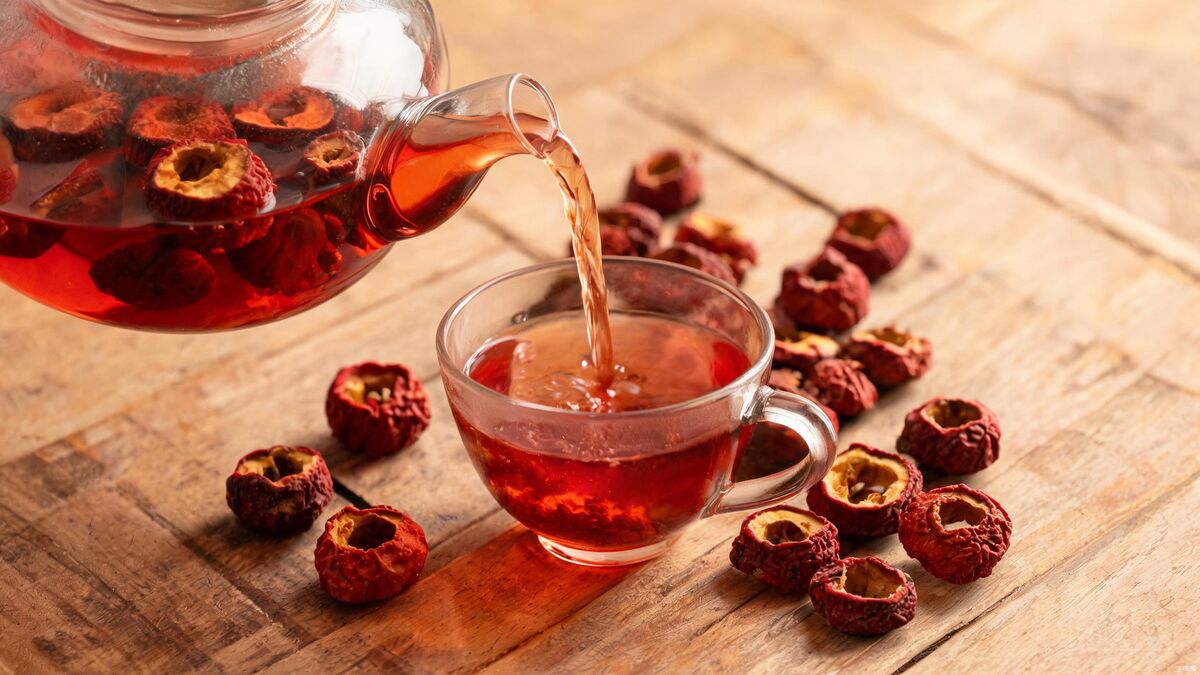
Hawthorn tea (山楂茶, shānzhā chá) is made by steeping or simmering the dried fruits of the hawthorn tree (Crataegus pinnatifida) in hot water. The resulting brew is a deep, translucent red with a distinctive tart, fruity flavor — sour and slightly sweet, reminiscent of cranberry but with a warmer, more complex undertone. It contains no caffeine and has been a household staple in China for centuries, particularly as an after-meal digestive drink.
In Traditional Chinese Medicine, hawthorn is one of the most important food-grade herbs for digestion. Unlike many medicinal herbs that taste bitter or medicinal, hawthorn is genuinely pleasant to drink — its natural tartness is refreshing, and it pairs beautifully with sweeteners like honey or brown sugar, or with complementary herbs like tangerine peel and goji berries. In northern China, candied hawthorn skewers (tanghulu) are a beloved street snack, and hawthorn-flavored drinks are sold in every convenience store.
Beyond digestion, hawthorn has gained attention in both TCM and modern research for its cardiovascular benefits. It has been used traditionally to invigorate blood circulation, and modern studies have identified flavonoids and procyanidins in hawthorn that may support heart health and healthy cholesterol levels. This dual action — digestive and circulatory — makes hawthorn tea one of the most versatile single-herb teas in the TCM pantry.
2. TCM Properties: Nature, Flavor, and Meridians
Every herb in Chinese medicine is classified by its thermal nature, flavor, and the meridians it enters. Understanding these tells you exactly when hawthorn tea is appropriate and when it is not.
Nature (Temperature): Slightly Warm
Hawthorn is slightly warm (微温, wēiwēn). This gentle warmth means it aids digestion without being harsh or overheating. It is particularly effective for digesting cold-natured or heavy foods — meats, fats, and dense starches — that tend to slow down the Spleen and Stomach. The slight warmth also supports its blood-invigorating action, because in TCM, cold causes stagnation while warmth promotes flow.
Flavor: Sour and Sweet
The sour (酸, suān) flavor in TCM has an astringent, gathering quality — it helps consolidate and absorb. In hawthorn's case, the sourness is what gives it its powerful digestive action: it "gathers" and breaks down stagnant food in the stomach. The sweet (甘, gān) flavor provides a harmonizing, slightly tonifying undertone that prevents the sourness from being too harsh. This combination is why hawthorn is classified as a food-grade herb safe for regular use, unlike purely sour, strongly astringent herbs.
Meridian Affinity: Spleen, Stomach, and Liver
Hawthorn enters the Spleen, Stomach, and Liver meridians (归脾、胃、肝经). The Spleen and Stomach connection is the basis of its digestive power — it directly helps these organs break down and transform food, especially meat and fats. The Liver connection is what gives hawthorn its blood-invigorating action: in TCM, the Liver stores blood and governs its smooth flow. By entering the Liver channel, hawthorn helps move stagnant blood, which is why it is used for conditions involving blood stasis, from bruising to menstrual irregularity to circulatory support.
Core Actions
- Resolves food stagnation (消食化积) — especially effective for meat and fat stagnation; the signature use of hawthorn.
- Invigorates blood and resolves stasis (活血化瘀) — promotes circulation, helps with bruising, and supports cardiovascular health.
- Supports healthy lipids and circulation — traditionally used as a gentle complementary approach for high cholesterol and mild hypertension.
3. Ingredients and Where to Buy
Hawthorn tea requires only one essential ingredient — dried hawthorn slices — plus water. The optional additions below enhance either the flavor or the therapeutic effect.
| Ingredient | Amount | Where to Buy |
|---|---|---|
| Dried hawthorn slices (干山楂片) | 10–15g (about 8–12 slices) | Amazon, Asian grocery stores, online TCM shops. Look for whole dried slices, deep red-brown in color, sold in resealable bags. |
| Water | 500ml (about 2 cups) | Filtered or spring water gives the best flavor. |
| Brown sugar (红糖) — optional | 1–2 teaspoons | Asian markets, Amazon. Adds warmth and sweetness; also a blood-nourishing food in TCM. |
| Honey (蜂蜜) — optional | 1 teaspoon | Any supermarket. Add only after the tea has cooled below 60°C / 140°F to preserve enzymes. |
| Goji berries (枸杞) — optional | 8–10 berries | Amazon, iHerb, Costco, Asian markets. Adds Liver and Kidney Yin nourishment and natural sweetness. |
| Dried tangerine peel (陈皮) — optional | 3g (1 small piece) | Asian markets, Amazon. Enhances the digestion-promoting effect; regulates Qi and dries dampness. |
Amazon search tip: Search for "dried hawthorn slices" or "shan zha tea." Several brands sell pre-sliced dried hawthorn in 100–250g resealable bags. Look for slices that are a deep, uniform reddish-brown — pale or grayish slices may be old or improperly stored. Whole dried hawthorn berries (small, round, red) also work; simply crush them lightly before brewing.
4. How to Brew Hawthorn Tea
There are four traditional ways to prepare hawthorn tea, each suited to a different situation. The simple steep is for everyday use, while the simmered versions extract more of the active compounds for stronger effects.
The quickest method — ideal for a light, everyday digestive cup after meals.
- Place 10–15g of dried hawthorn slices (8–12 slices) in a teapot, mug, or glass.
- Rinse the slices briefly with a small amount of hot water, then discard the rinse water. This removes surface dust.
- Pour 500ml of hot water at about 90°C (195°F) — water that has just boiled and rested for 30 seconds — over the hawthorn slices.
- Cover and steep for 10 minutes. The water will turn a deep, translucent ruby red.
- Strain into a cup and drink warm. You can re-steep the same slices once more for a second, lighter cup.
Add honey or brown sugar to taste after steeping. Drink after meals, 1 to 2 cups per day.
A stronger, more medicinal brew — better for stubborn food stagnation or when you want the full circulatory benefit.
- Place 10–15g of dried hawthorn slices in a small saucepan.
- Add 500ml of water.
- Bring to a boil over high heat, then reduce to low and simmer gently for 15 minutes with the lid on.
- Remove from heat and let it sit for 5 minutes. Strain and serve warm.
The simmered version is noticeably stronger and more tart. Add brown sugar or honey to balance the sourness. This method extracts more of the flavonoids and is the preferred method when using hawthorn for circulatory support.
For enhanced digestion — tangerine peel (chen pi) regulates Qi and dries dampness, making this blend especially effective for bloating, gas, and a feeling of fullness after eating.
- Combine 10g dried hawthorn slices and 3g dried tangerine peel (one small piece) in a saucepan.
- Add 500ml of water and bring to a boil.
- Reduce heat and simmer for 10 to 15 minutes.
- Strain and drink warm after a heavy or greasy meal.
The tangerine peel adds a fragrant citrus aroma that beautifully balances hawthorn's tartness. This is the go-to blend for post-holiday-meal recovery.
A balanced blend that supports both digestion and blood — goji berries nourish Liver and Kidney Yin, adding a nourishing, slightly sweet counterpoint to hawthorn's moving, sour action.
- Simmer 10g dried hawthorn slices in 500ml water for 10 minutes using the simmered method above.
- Turn off the heat and add 8–10 goji berries. Let them steep in the hot liquid for 5 minutes — do not boil the goji berries, as prolonged cooking destroys their nutrients.
- Strain and drink warm. The goji berries add a natural sweetness and a gentle blood-nourishing effect.
This is an excellent daily wellness tea for middle-aged and older adults — it supports both digestion and circulation in one cup.
5. Who It Helps: Applicable Symptoms
Hawthorn tea is most effective for the following conditions. If you recognize your symptoms here, this tea is likely a good match.
- Food stagnation from meat and fats — that heavy, bloated, "stuck" feeling after a large, rich, or meat-heavy meal. This is hawthorn's primary and most reliable use.
- General bloating and indigestion — a sense of fullness, belching, or sluggishness after eating, especially when the food was oily or dense.
- High cholesterol and lipid support — as a gentle, food-grade complement to dietary changes and prescribed medication. Regular daily consumption over weeks may help support healthy lipid levels.
- Mild hypertension support — hawthorn's blood-invigorating and vessel-relaxing properties have been traditionally used to support healthy blood pressure. It is not a replacement for medication.
- Mild blood stasis symptoms — bruises that are slow to heal, a feeling of heaviness or aching in the body, or menstrual discomfort with dark clots (blood-stasis type dysmenorrhea).
6. Precautions and Contraindications
Hawthorn tea is a food-grade herb that is safe for most people, but its sour, acidic nature and blood-moving action mean it is not for everyone.
- Excess stomach acid and gastric ulcers. Hawthorn's sourness stimulates gastric acid secretion. If you have acid reflux, gastritis, or a stomach ulcer, hawthorn may worsen your symptoms. Avoid drinking it on an empty stomach under any circumstances.
- Pregnancy. Hawthorn invigorates blood and may stimulate uterine contractions. While a small amount in food (like tanghulu) is traditionally considered acceptable, medicinal-strength tea should be avoided during pregnancy unless specifically prescribed by a qualified practitioner.
- Blood-thinning medications. Because hawthorn invigorates blood and may have mild anticoagulant effects, it could theoretically interact with blood-thinning drugs such as warfarin. Consult your doctor before regular use if you take anticoagulants.
- Heart medications. Hawthorn has documented cardiovascular effects and may interact with certain heart medications (digoxin, beta-blockers, calcium channel blockers). If you take prescription heart medication, talk to your cardiologist before adding hawthorn tea to your routine.
- Do not drink on an empty stomach. Always take hawthorn tea after or with food. On an empty stomach, the acidity can irritate the gastric lining.
- Do not overconsume. Stick to 1 to 2 cups per day. Long-term excessive consumption may erode tooth enamel (due to acidity) or cause stomach discomfort.
Seasonal and Timing Wisdom
Hawthorn tea is best drunk after meals, particularly after heavy, meat-rich, or greasy meals — this is when its food-stagnation-resolving action shines. It is especially useful during holiday seasons, celebrations, and cold-weather months when people tend to eat richer, denser foods. In hot summer weather, a cooled (not iced) hawthorn tea is a refreshing and digestion-supporting alternative to sugary drinks.
Frequently Asked Questions
Can I drink hawthorn tea every day?
For most healthy adults, 1 to 2 cups per day is safe and common in China, especially after heavy meals. However, because hawthorn is acidic and stimulates stomach acid, it is best taken after meals rather than on an empty stomach. If you have a sensitive stomach, limit it to every other day or pair it with a small amount of food. Taking a break for a few days each week is a sensible habit for any single herb. If you notice any stomach discomfort, reduce the amount or frequency.
Is hawthorn tea good for weight loss?
Hawthorn tea is traditionally used to help digest fatty foods and support healthy lipid metabolism, which can be a useful complement to a weight management plan. It is not a weight-loss miracle on its own — no single tea is. Its real value lies in improving digestion after heavy meals, reducing bloating, and supporting circulation. If you are working on weight management, drink hawthorn tea after rich meals as part of a balanced diet and active lifestyle, rather than expecting it to produce results on its own.
Can I drink hawthorn tea while pregnant?
Hawthorn is generally not recommended during pregnancy without professional supervision. In TCM, hawthorn invigorates blood and may stimulate uterine contractions, especially in larger or more concentrated amounts. While a small amount in food (such as candied hawthorn) is traditionally considered acceptable, medicinal-strength tea brewed from 10 to 15g of dried slices should be avoided. If you are pregnant or trying to conceive, consult your doctor or a qualified TCM practitioner before drinking hawthorn tea regularly.
Does hawthorn tea really lower cholesterol?
Modern research suggests that hawthorn contains flavonoids and procyanidins that may help support healthy cholesterol levels and improve blood flow. In TCM, it has been used for centuries to resolve food stagnation from fatty foods and invigorate blood circulation — both of which are conceptually related to lipid metabolism. It is best understood as a gentle, complementary support — not a replacement for prescribed cholesterol medication. If you take lipid-lowering drugs (statins, etc.), discuss hawthorn with your doctor before adding it to your routine, as there may be interactions.
This article is for educational and informational purposes only and is not a substitute for professional medical advice, diagnosis, or treatment. The herbal teas described here are traditional self-care methods and are not intended to treat, cure, or prevent any disease. If you are pregnant, nursing, taking medication (especially blood thinners, heart medications, or acid-suppressing drugs), or have a medical condition (gastric ulcers, heart disease), consult a qualified healthcare provider before drinking hawthorn tea regularly. Read our full disclaimer →