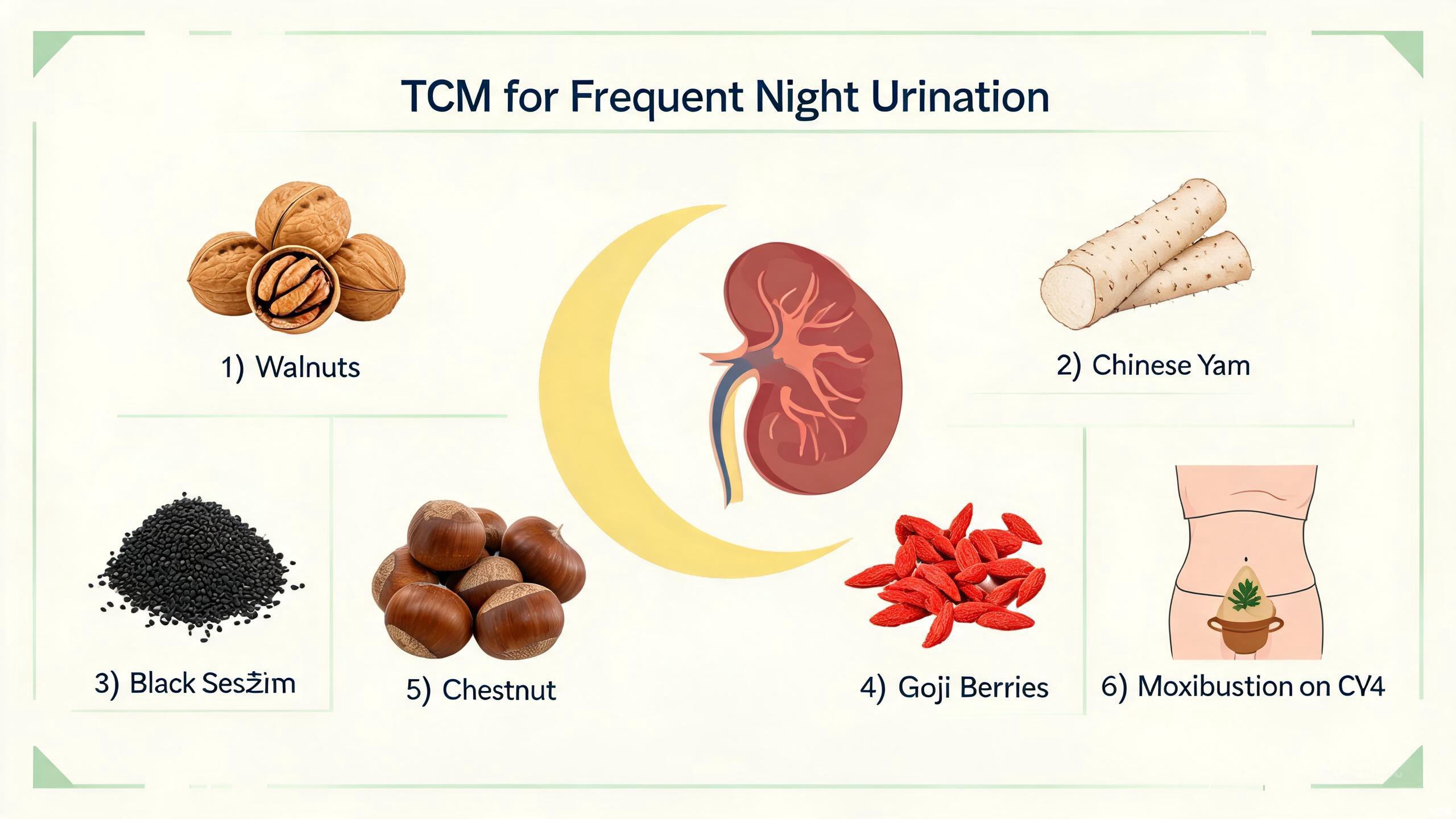
Key Takeaways
- TCM views night urination (nocturia) as a sign of kidney qi not securing or kidney yang deficiency — the kidneys cannot hold fluids properly at night.
- Black beans and walnuts are classic kidney-tonifying foods in TCM, traditionally used to strengthen kidney essence.
- Chinese yam (Shan Yao) supports both the spleen and kidneys, making it ideal for the dual deficiency pattern.
- These recipes use ingredients available at Western supermarkets, Amazon, or iHerb — no specialty stores required.
- Food therapy is complementary. If night urination is persistent or accompanied by pain, consult your healthcare provider.
This article is for wellness education only and is not medical advice. Night urination (nocturia) can be a symptom of medical conditions including diabetes, prostate issues, bladder disorders, or kidney disease. The food therapy recipes below are complementary wellness practices, not a replacement for professional medical care. If you experience persistent or worsening night urination, consult your healthcare provider for proper diagnosis.
Waking up multiple times each night to urinate is more than an inconvenience — it fragments sleep, drains energy, and affects daily life. In Western medicine, this condition is called nocturia, and it becomes increasingly common with age. Traditional Chinese Medicine (TCM) has addressed this concern for centuries through the lens of kidney function, offering food therapy recipes that may support the body's natural fluid regulation.
The beauty of TCM food therapy lies in its accessibility. The ingredients used to support kidney health — black beans, walnuts, Chinese yam, goji berries, and red dates — are everyday foods that you can find at most supermarkets or order online. Let's explore how TCM understands night urination and five traditional recipes that may help.
How TCM Views Night Urination
In TCM theory, the kidneys are the body's "water organ." They govern water metabolism, control the lower orifices (including the urethra), and store essence (Jing). When kidney function is strong, the body holds and releases fluids in a regulated rhythm. When kidney function weakens — especially with age, overwork, or chronic stress — the body loses its ability to secure fluids at night, leading to frequent urination.
TCM identifies three main patterns associated with night urination:
- Kidney Qi Not Securing (Shen Qi Bu Gu) — The most common pattern. Kidney qi is too weak to hold fluids, especially at night when the body is at rest. Symptoms include frequent clear urination at night, lower back soreness, knee weakness, and cold limbs. This is the primary pattern addressed by astringent, kidney-tonifying foods.
- Kidney Yang Deficiency (Shen Yang Xu) — A deeper cold pattern. The kidneys lack warming energy, so fluid transformation is sluggish. Symptoms include copious clear urine (especially at night), cold extremities, aversion to cold, lower back pain that feels better with warmth, and fatigue. Warming foods like ginger and cinnamon are traditionally used here.
- Spleen and Lung Qi Deficiency — The spleen (which transforms fluids) and lungs (which regulate water passages) are too weak to support the kidneys. Symptoms include frequent urination with tiredness, poor appetite, shortness of breath, and a tendency to catch colds. Chinese yam and porridge-based recipes are ideal for this pattern.
By choosing foods that match your pattern, you may find more meaningful support than a one-size-fits-all approach. If you're new to TCM concepts, our guide to yin and yang and zang-fu organ system guide provide helpful background.
5 Kidney-Strengthening Food Therapy Recipes
1. Black Bean, Walnut and Red Date Soup
TCM pattern: Kidney Qi Not Securing
Nature and flavor: Warm, sweet. Enters the Kidney, Spleen, and Heart meridians.
Traditional use: Tonifies kidney qi, secures fluids, and nourishes blood. Black beans are considered one of the most important kidney-tonifying foods in TCM — their dark color corresponds to the Water element and the kidneys. Walnuts resemble the brain and kidneys in shape and are traditionally used to strengthen kidney essence. Red dates (jujubes) nourish spleen qi and blood, completing the formula.
Ingredients:
- 1/2 cup dried black beans (available at most supermarkets)
- 10 walnuts, shelled and halved
- 6 dried red dates (jujubes), pitted — available on Amazon or iHerb
- 4 cups water
- Optional: a pinch of rock sugar or 1 teaspoon honey
Preparation: Soak the black beans for at least 4 hours (or overnight) until softened. In a pot, combine the soaked beans, walnuts, red dates, and water. Bring to a boil, then reduce heat and simmer for 60 to 90 minutes until the beans are very tender. Add rock sugar or honey to taste. Drink 1 bowl in the late afternoon or early evening, ideally finishing at least 2 hours before bedtime to avoid nighttime fluid intake.
Black beans and walnuts are both available at virtually every Western supermarket. Dried red dates (jujubes) can be found at Asian markets, ordered from Amazon, or purchased from iHerb. They store well in a sealed bag for months.
Precautions: If you have digestive sensitivity to beans, start with a smaller portion (1/4 cup beans) and increase gradually. Avoid this recipe if you have a walnut allergy.
2. Chinese Yam and Gorgon Nut Porridge
TCM pattern: Spleen and Kidney Dual Deficiency
Nature and flavor: Neutral, sweet. Enters the Spleen, Lung, and Kidney meridians.
Traditional use: Strengthens the spleen, supports the kidneys, and helps secure fluids. Chinese yam (Shan Yao) is one of the most versatile tonic foods in TCM — it tonifies three organ systems simultaneously. Gorgon nut (Qian Shi / fox nut / euryale seed) is an astringent grain that helps the body retain fluids. Together, they create a gentle, nourishing porridge ideal for the dual spleen-kidney deficiency pattern.
Ingredients:
- 1/2 cup white rice (short or medium grain)
- 1/2 cup dried Chinese yam slices (Shan Yao) — available on Amazon or iHerb
- 1/4 cup dried gorgon nuts (Qian Shi / fox nut) — available on Amazon or iHerb
- 5 cups water
Preparation: Rinse the rice, dried yam slices, and gorgon nuts. Soak the gorgon nuts for 1 to 2 hours if they are very hard. Combine all ingredients with water in a pot, bring to a boil, then reduce to low heat and simmer for 45 to 60 minutes until the porridge is thick and creamy, stirring occasionally to prevent sticking. Eat 1 bowl in the morning or as a light dinner. For convenience, you can also use a rice cooker on the porridge setting.
Dried Chinese yam slices and gorgon nuts (fox nut / euryale seed) are both readily available on Amazon and iHerb. If you cannot find gorgon nuts, you can substitute with 2 tablespoons of lotus seeds (also available on Amazon), which have similar astringent properties.
Precautions: Chinese yam is generally gentle and safe. If you experience bloating, reduce the portion or add a slice of fresh ginger during cooking to aid digestion.
3. Raspberry Leaf Tea
TCM pattern: Kidney Qi Not Securing
Nature and flavor: Warm, slightly astringent. Enters the Kidney and Liver meridians.
Traditional use: In TCM, the herb Fu Pen Zi (Chinese raspberry fruit, Rubus chingii) is one of the most important astringent herbs for "securing the kidneys and reducing urination." While the exact Chinese species may not be readily available in Western stores, red raspberry leaf — widely available as a herbal tea — shares similar astringent properties and has been traditionally used to tone and support the urinary system. This tea offers an accessible Western alternative to the classic TCM formula.
Ingredients:
- 1 to 2 teaspoons dried raspberry leaf (loose leaf or tea bags)
- 8 oz hot water (90°C / 195°F)
- Optional: 2 dried red dates (jujubes) for added kidney support
Preparation: Place the raspberry leaf (and red dates if using) in a cup or teapot. Pour hot water over the herbs, cover, and steep for 8 to 10 minutes. Strain and drink warm. Enjoy 1 cup in the afternoon or early evening. Raspberry leaf tea is mildly astringent and earthy in flavor — the red dates add a gentle sweetness that rounds out the taste.
Dried raspberry leaf is available as a standalone tea from brands like Traditional Medicinals, Alvita, and Frontier Co-op on Amazon, iHerb, and most health food stores. Look for organic, loose-leaf options for the best quality.
Precautions: Raspberry leaf may have mild effects on the uterus. Pregnant women should consult their healthcare provider before using raspberry leaf tea. If you take blood sugar or blood pressure medication, check with your doctor first.
4. Leek and Ginger Porridge
TCM pattern: Kidney Yang Deficiency
Nature and flavor: Warm, pungent. Enters the Kidney and Spleen meridians.
Traditional use: In TCM, chive seeds (Jiu Cai Zi) are the classic herb for warming kidney yang and securing essence. However, chive seeds are difficult to find in Western markets. Leeks — a close relative in the allium family — share a warming nature and are traditionally used to warm the middle and support kidney yang. Combined with ginger, this porridge warms the body from within, making it ideal for the cold-type pattern of night urination (cold limbs, copious clear urine, lower back coldness).
Ingredients:
- 1/2 cup white rice (short or medium grain)
- 1 small leek, washed and thinly sliced (white and light green parts)
- 3 thin slices fresh ginger
- 4 cups water or vegetable broth
- Optional: a pinch of sea salt
Preparation: Rinse the rice. In a pot, combine rice, ginger slices, and water (or broth). Bring to a boil, then reduce heat and simmer for 30 minutes. When the rice is nearly done, add the sliced leeks and cook for another 10 minutes until the leeks are soft and the porridge is thick. Add a pinch of salt to taste. Eat 1 bowl warm, ideally at dinner time, at least 2 hours before bed.
While chive seeds are the traditional TCM ingredient for kidney yang, leeks belong to the same allium family and share warming properties. They are available at every Western supermarket year-round, making this recipe highly accessible. The ginger amplifies the warming effect, supporting kidney yang and digestion simultaneously.
Precautions: This is a warming recipe. If you tend to run hot (night sweats, dry mouth, irritability), this may not be the right choice for you — consider recipe #1 or #2 instead. Avoid if you have a fever or active inflammation.
5. Walnut and Goji Kidney Tonic Soup
TCM pattern: Kidney Essence and Brain Deficiency
Nature and flavor: Warm, sweet. Enters the Kidney and Liver meridians.
Traditional use: This recipe is inspired by the classic TCM formula containing Yi Zhi Ren (Alpinia fruit), which is difficult to source in Western markets. We've adapted it using walnuts and goji berries — two of the most accessible kidney-tonifying foods. Walnuts are traditionally used to strengthen kidney essence and support the brain (in TCM, the kidneys are connected to the brain through marrow). Goji berries nourish kidney yin and liver blood. Together, they create a nourishing tonic soup that supports both the kidneys and cognitive vitality.
Ingredients:
- 12 walnuts, shelled
- 1/4 cup dried goji berries — available on Amazon or iHerb
- 6 dried red dates (jujubes), pitted
- 2 cups vegetable or chicken broth (low sodium)
- 1 cup water
- Optional: a small handful of black sesame seeds for extra kidney support
Preparation: Rinse the goji berries and red dates. In a pot, combine broth, water, walnuts, red dates, and black sesame seeds (if using). Bring to a boil, then reduce heat and simmer for 30 minutes. Add the goji berries in the last 5 minutes (they cook quickly and can become mushy if overcooked). The result is a warming, slightly sweet soup. Drink 1 bowl in the late afternoon or early evening.
Goji berries and dried red dates are both available on Amazon and iHerb from brands like Navitas Organics, Terrasoul Superfoods, and Traditional Medicinals. Black sesame seeds can be found in the spice aisle of most supermarkets. This soup stores well in the refrigerator for up to 2 days — reheat gently before serving.
Precautions: Goji berries may interact with blood thinners (like warfarin) and blood sugar medications. If you take these medications, consult your healthcare provider before consuming goji berries regularly. Avoid this recipe if you have a walnut allergy.
How to Choose the Right Recipe for Your Pattern
| If You Experience... | TCM Pattern | Best Recipe | When to Use |
|---|---|---|---|
| Frequent clear urine, lower back soreness, tired | Kidney Qi Not Securing | Black Bean Soup (#1) or Raspberry Leaf Tea (#3) | Afternoon |
| Cold limbs, copious clear urine, feels cold | Kidney Yang Deficiency | Leek and Ginger Porridge (#4) | Dinner (2 hrs before bed) |
| Tiredness, poor appetite, shortness of breath | Spleen + Lung Qi Def. | Chinese Yam Porridge (#2) | Morning or dinner |
| Lower back weakness, memory fog, fatigue | Kidney Essence Def. | Walnut and Goji Soup (#5) | Late afternoon |
Daily Habits That Support Kidney Health
Food therapy works best alongside supportive daily habits. Consider these practices:
- Manage evening fluids. Reduce fluid intake 2 hours before bedtime. Drink your last cup of water or soup by 7 or 8 pm, then sip only small amounts if needed.
- Keep your lower back warm. In TCM, the kidneys are located in the lower back. Cold exposure here can weaken kidney yang. Wear layers, use a heating pad, or try a warm ginger foot soak before bed to draw warmth downward.
- Avoid overwork. Chronic exhaustion depletes kidney essence. Prioritize sleep (before 11 pm, which TCM associates with the gallbladder and liver detoxification window).
- Practice gentle movement. Slow, grounding exercises like tai chi or qigong help circulate qi without depleting the kidneys.
- Limit cold drinks and raw foods. In TCM, excessive cold foods weaken the spleen and kidneys. Choose warm, cooked foods, especially during autumn and winter.
Frequently Asked Questions
What does TCM say about frequent night urination?
In TCM theory, night urination is most commonly associated with kidney qi not securing or kidney yang deficiency. The kidneys govern water metabolism and control the lower orifices. When kidney qi is weak, it cannot hold fluids properly at night, leading to frequent urination. Spleen and lung qi deficiency may also contribute. TCM food therapy traditionally uses warming, astringent foods like black beans, walnuts, Chinese yam, and goji berries to support kidney function. For a deeper understanding, see our zang-fu organ guide.
What foods strengthen the kidneys in TCM?
TCM traditionally recommends black-colored foods (black beans, black sesame), walnuts, Chinese yam (Shan Yao), goji berries, and dried red dates (jujubes) for kidney support. These foods are believed to tonify kidney qi and yang, help secure fluids, and warm the body. Most of these ingredients are available at Western supermarkets, Amazon, or iHerb. They are used in soups, porridges, and teas as part of daily food therapy.
How long does it take for TCM food therapy to help with night urination?
TCM food therapy is a gradual approach. Most people may notice improvements after 2 to 4 weeks of consistent daily use. Results vary depending on the underlying pattern and individual constitution. Food therapy works best as a complement to healthy sleep habits and proper hydration timing (reducing fluids 2 hours before bed). If night urination is severe or persistent, consult your healthcare provider to rule out medical conditions such as diabetes, prostate enlargement, or bladder disorders.
Can I use these kidney-strengthening recipes alongside my medication?
These food therapy recipes use common food ingredients that are generally safe. However, if you take medication for diabetes, blood pressure, kidney conditions, or diuretics, consult your healthcare provider before adding new foods to your daily routine. Goji berries may interact with blood thinners or blood sugar medications. Always inform your doctor about all dietary changes, even with common foods.
Precautions and When to Seek Help
While these food therapy recipes are gentle and use common ingredients, keep the following in mind:
- Medical evaluation: Night urination can be a symptom of medical conditions including diabetes, enlarged prostate (BPH), bladder or kidney infections, sleep apnea, or heart failure. If you experience sudden changes, pain, blood in urine, or excessive thirst, see your doctor promptly.
- Allergies: Check for nut allergies before using walnut-based recipes. If you are allergic to tree nuts, substitute with pumpkin seeds or sunflower seeds.
- Pregnancy: Some herbs and foods may not be suitable during pregnancy. Raspberry leaf tea, in particular, may affect the uterus. Always consult your healthcare provider during pregnancy.
- Not a substitute: These recipes are complementary wellness practices. They are not a replacement for medical diagnosis or treatment.
For more TCM food therapy guides, explore our congee guide and everyday TCM kitchen remedies. If sleep disruption is your primary concern, our TCM insomnia types guide may also be helpful.
The Bottom Line
Night urination doesn't have to be an inevitable part of aging. TCM offers a time-tested framework for understanding why it happens — weakened kidney function — and accessible food therapy recipes that may support the body's natural fluid regulation. Start with one recipe that matches your pattern, use it consistently for 2 to 4 weeks, and notice how your body responds. Combined with smart evening habits and proper medical care, these kidney-strengthening foods may help you sleep more soundly and wake more refreshed.
This article is for educational purposes only and is not medical advice. The food therapy recipes described here are traditional wellness practices, not medical treatments. Night urination (nocturia) can indicate underlying medical conditions that require professional diagnosis and treatment. Always consult a qualified healthcare provider before making dietary changes, especially if you have existing health conditions or take medication. The TCM Home Editorial Team does not claim that these recipes cure, treat, or diagnose any disease.