Key Takeaways
- TCM sees insomnia as several distinct patterns, not one disease — each involves a different organ and needs a different remedy.
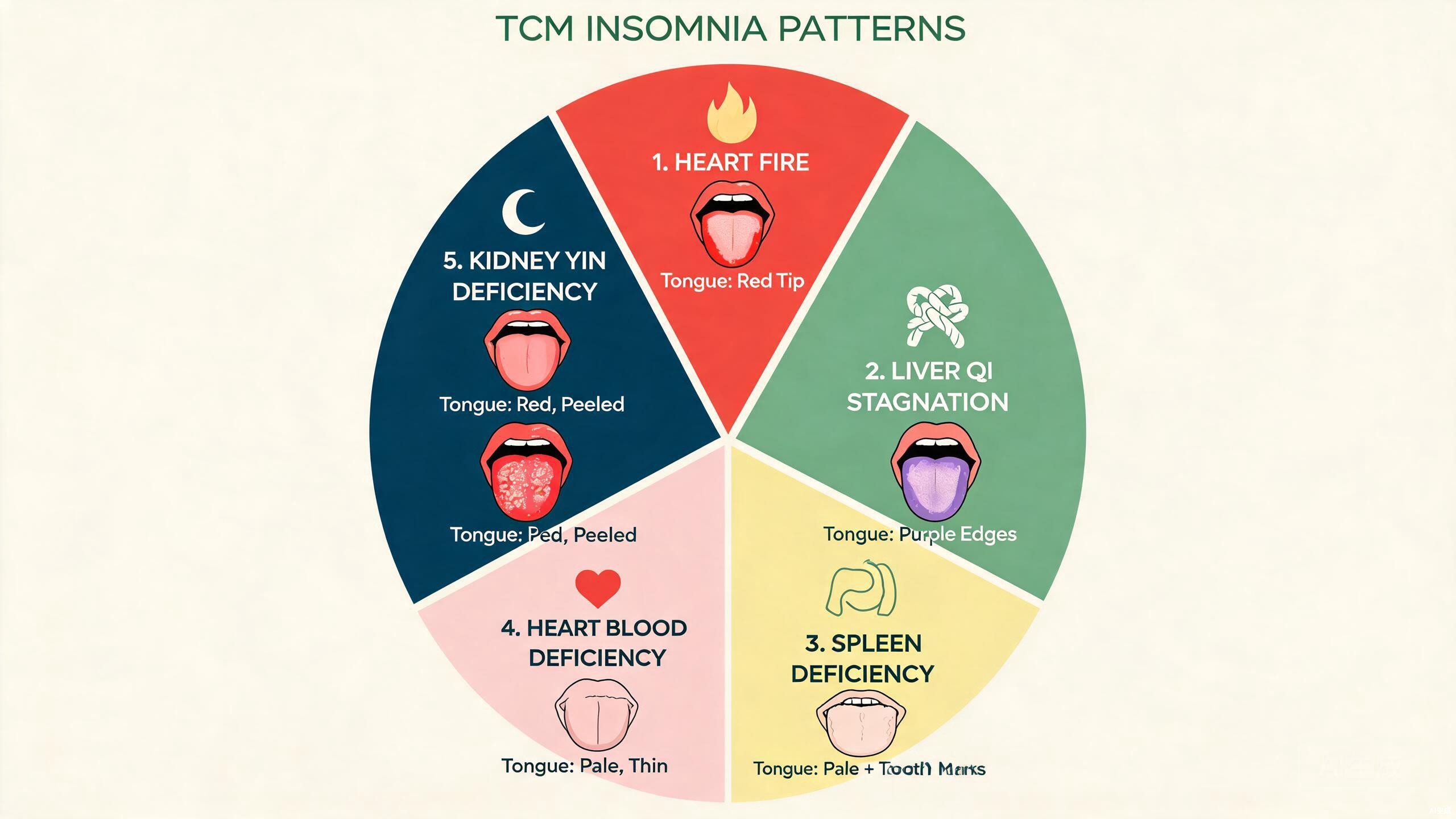
- The five main types are Heart Fire, Liver Qi Stagnation, Spleen Deficiency, Heart Blood Deficiency, and Kidney Yin Deficiency.
- The tongue is a key diagnostic tool — its color, coating, and shape reveal the imbalance.
- Each pattern pairs with a specific tea (e.g., sour date seed for Heart Blood Deficiency) and point (e.g., Shenmen HT7, Yongquan KD1).
- Timing matters — sleep before 11 p.m., warm light dinners, and gentle qigong support these remedies.
This article is for wellness education only and is not medical advice. The practices described are complementary, not a replacement for professional care. If you experience chronic or worsening insomnia, consult your healthcare provider. Some herbs may interact with sleep medications. Read our full disclaimer →
Insomnia is one of the most common reasons people explore Traditional Chinese Medicine (TCM). Where conventional care often offers the same sleep aid to everyone, TCM sees sleeplessness as a signal pointing to a specific pattern of imbalance.
In TCM, two people may both say "I can't sleep," yet one lies awake with a racing mind while the other wakes exhausted before dawn with night sweats. These reflect different organs and call for different remedies. This guide walks through the five most common TCM insomnia types and the teas, acupressure points, and habits matched to each. If you're new to these concepts, our guide to yin and yang helps.
How TCM Views Insomnia
In TCM theory, healthy sleep depends on the spirit (shen) being quietly anchored at night. The Heart houses the shen; when calm and well-nourished, sleep comes naturally. When the shen is disturbed — by heat flaring upward, stagnation blocking settling, or deficiency leaving it unanchored — sleep becomes shallow, delayed, or broken. Rather than labeling all insomnia the same, TCM asks which organ is involved and whether the imbalance is hot or cool, excess or deficient. Five patterns account for most everyday sleeplessness:
- Heart Fire — excess heat disturbs the spirit; a racing, hot mind.
- Liver Qi Stagnation — stress blocks energy flow; lying awake stewing over the day.
- Spleen Deficiency — worry and weak digestion leave the mind looping.
- Heart Blood Deficiency — the spirit lacks blood to stay anchored; light, anxious sleep.
- Kidney Yin Deficiency — low cooling yin lets heat rise; early waking with night sweats.
Type 1: Heart Fire Insomnia (Heart Fire)
Best recognized by: a racing, overheated mind that won't switch off at night.
Heart Fire is an excess pattern: heat accumulates in the Heart and flares upward, agitating the shen so it cannot settle. It often follows overwork, strong emotions, or stimulating food and drink.
Key symptoms: difficulty falling asleep, vivid dreams, agitation, a red face, thirst, mouth ulcers or a bitter taste, and a rapid heartbeat.
Tongue signs: a red tongue tip, often with a yellow coating.
Recommended tea: Lotus plumule tea (Lian Zi Xin) is the traditional choice for clearing Heart Fire and calming the spirit. Brew 1 to 2 grams in hot water for 5 minutes. Chrysanthemum is a milder alternative; for more, see our guide to the best TCM teas for sleep.
Acupressure point: Shenmen (HT7), on the outer wrist crease, traditionally used to calm the Heart and settle the shen. Press gently for 1 to 2 minutes per wrist before bed.
Type 2: Liver Qi Stagnation Insomnia
Best recognized by: lying awake stewing over the day, often waking between 1 and 3 a.m.
When stress interrupts the Liver's job of keeping energy flowing, qi stagnates and the mind replays grievances instead of resting. A tell-tale sign is waking between 1 and 3 a.m. — the Liver's time on the TCM body clock.
Key symptoms: trouble falling asleep as the mind loops over frustrations, frequent 1 to 3 a.m. waking, irritability, sighing, and a tight chest.
Tongue signs: often normal in color, sometimes slightly purplish, with a thin white coating.
Recommended tea: Rose tea is the classic qi-moving brew, traditionally used to ease emotional tension and encourage stagnant Liver qi to flow. Brew 3 to 5 grams of dried rose buds for 5 to 7 minutes. (A hotter related pattern, Liver Fire, pairs better with chrysanthemum.)
Acupressure point: Taichong (LR3), between the big and second toes, traditionally used to move Liver qi and release frustration. Apply firm pressure for 1 to 2 minutes per foot.
Type 3: Spleen Deficiency Insomnia
Best recognized by: overthinking that keeps you awake, paired with digestive unease.
In TCM, the Spleen governs thinking and worry. When weak — from poor diet, overthinking, or cold raw foods — the mind loops over tasks at night and the body feels heavy and tired. It often affects those who eat irregularly.
Key symptoms: difficulty falling asleep as the mind loops over tasks, light easily disturbed sleep, fatigue on waking, bloating, and loose stools.
Tongue signs: pale, possibly swollen with teeth-marked edges, and a thin white coating.
Recommended tea: Ginger and red date tea warms and strengthens the Spleen while the red dates nourish. Simmer 3 thin ginger slices with 2 to 3 pitted red dates for 10 minutes. Avoid cold or iced drinks in the evening.
Acupressure point: Zusanli (ST36), below the knee on the outer shin — the classic point for digestion and energy. Press firmly for 1 to 2 minutes per leg.
Type 4: Heart Blood Deficiency Insomnia
Best recognized by: light, anxious sleep, easy startling, and daytime fatigue.
In TCM, blood anchors the shen. When Heart blood is insufficient — from overwork, poor nutrition, blood loss, or long worry — the spirit lacks a "nest" to rest in, drifts, and the sleeper wakes with anxiety and palpitations.
Key symptoms: shallow sleep, waking easily and startled, palpitations, anxiety, poor memory, dizziness, and a pale complexion.
Tongue signs: pale and thin.
Recommended tea: Sour date seed tea (Suan Zao Ren) — the most important spirit-calming herb in TCM — nourishes Heart blood and yin and anchors the shen. Lightly crush 10 to 15 grams and simmer for 15 minutes; drink 1 to 2 hours before bed. Longan is a gentler alternative.
Acupressure point: Shenmen (HT7) to calm the Heart and steady the spirit, or Neiguan (PC6) on the inner wrist for anxiety and palpitations.
Type 5: Kidney Yin Deficiency Insomnia
Best recognized by: waking very early (often 3 to 5 a.m. or before dawn) with heat signs.
Yin is the body's cooling, moistening aspect. When Kidney yin is low — common with aging, chronic overwork, or after illness — internal heat rises at night, producing the classic picture of waking hot and restless in the small hours.
Key symptoms: difficulty staying asleep, waking early unable to return to sleep, night sweats, hot flashes, a dry mouth at night, tinnitus, and lower-back ache.
Tongue signs: red with little or no coating, sometimes peeled (a "mirror" tongue).
Recommended tea: a yin-nourishing blend such as goji and chrysanthemum, or lily bulb tea. Simmer 10 to 15 grams of dried lily bulb for 10 minutes. Avoid warming, drying herbs like ginger in the evening for this pattern.
Acupressure point: Yongquan (KD1), on the sole of the foot, traditionally used to draw rising heat downward and nourish Kidney yin. Press firmly or massage for 2 to 3 minutes before bed.
Comparing the Five TCM Insomnia Types
The clearest clues are usually when you wake and how it feels, supported by the tongue.
| Pattern | Key Symptoms | Tongue | Traditional Tea | Point |
|---|---|---|---|---|
| Heart Fire | Racing mind, vivid dreams, agitation, mouth ulcers | Red tip, yellow coat | Lotus plumule | Shenmen HT7 |
| Liver Qi Stagnation | Can't fall asleep, 1–3 a.m. waking, irritability | Normal / slightly purple | Rose | Taichong LR3 |
| Spleen Deficiency | Worry loops, fatigue, bloating | Pale, swollen, teeth marks | Ginger + red date | Zusanli ST36 |
| Heart Blood Deficiency | Light sleep, palpitations, anxiety, pale | Pale, thin | Sour date seed | Shenmen HT7 |
| Kidney Yin Deficiency | Early waking, night sweats, dry mouth | Red, little/no coat | Lily bulb / goji | Yongquan KD1 |
Lifestyle Tips for Better Sleep
In TCM, remedies work best when daily habits support them. These practices benefit every pattern:
- Sleep before 11 p.m. — In the TCM body clock, the hours before midnight build yin and blood; missing this window makes restful sleep harder over time.
- Eat warm, light evening meals. Heavy, cold, or late meals burden the Spleen and disrupt sleep; a light soup is ideal.
- Try a warm foot soak. Soaking the feet in warm water for 15 minutes before bed draws energy downward and settles the spirit.
- Practice gentle qigong. Slow, breathing-led movement releases the day's qi stagnation. See our guide to qigong for sleep.
- Dim screens and slow down. Bright light keeps the shen outward and active; begin a wind-down ritual an hour before bed.
- Match food to your pattern. Cooling foods for hot patterns (mung beans, pear); warming foods for cold patterns (ginger, lamb in moderation). Avoid caffeine after mid-afternoon.
When to See a Practitioner
Gentle self-care may support many people through occasional sleepless nights, but some situations call for professional guidance. Consider consulting a qualified TCM practitioner or your healthcare provider if:
- Insomnia has lasted more than three weeks, or is steadily worsening.
- Sleeplessness comes with significant daytime fatigue, low mood, or anxiety.
- You wake with chest pain, severe night sweats, or other concerning symptoms.
- You take prescription sleep medication or other drugs and want to add herbal teas.
A qualified practitioner can assess your individual pattern and recommend a personalized approach. For hands-on self-care, our acupressure for insomnia guide complements this article.
Frequently Asked Questions
What is TCM insomnia?
TCM does not define insomnia as a single disease. It sees sleeplessness as a sign of an underlying pattern of imbalance — Heart Fire, Liver Qi Stagnation, Spleen Deficiency, Heart Blood Deficiency, or Kidney Yin Deficiency. Each involves a different organ and nature (hot or cool, excess or deficient), so the supportive tea, food, and acupressure differ accordingly.
Which tea is best for sleep?
There is no single best tea, because TCM matches teas to patterns. Sour date seed tea calms the spirit for Heart Blood Deficiency, rose tea moves stagnant Liver qi for stress-related sleeplessness, lotus plumule clears Heart Fire, and lily bulb nourishes Kidney yin. Identify your pattern to choose the right tea.
What acupressure points help insomnia?
Several points are traditionally used: Shenmen (HT7) on the wrist to calm the Heart and spirit, Taichong (LR3) on the foot to release Liver qi, Zusanli (ST36) below the knee to strengthen the Spleen, and Yongquan (KD1) on the sole to draw heat downward for Kidney yin. Gentle pressure for 1 to 2 minutes per point before bed is typical.
Is TCM safe with sleep medication?
Gentle practices like acupressure and warm foods are generally safe, but some calming herbs — especially sour date seed — may add to the sedative effect of sleep medication. If you take prescription sleep aids, consult your healthcare provider before adding herbal teas, and inform your doctor about all herbs and supplements you use.
The Bottom Line
The key idea in TCM insomnia care is that not all sleeplessness is the same. Before reaching for a remedy, ask which pattern fits: a hot, racing mind points one way, an early-morning wake with night sweats another, worry-driven sleeplessness yet another. Observe your tongue and when you wake. Choose one tea and one point that match your pattern, practice for two weeks, and pair them with the basics — sleep before 11 p.m., a warm light dinner, a calm wind-down. Matching the remedy to the pattern is the key to more restful nights.
This article is for educational purposes only and is not medical advice. These statements have not been evaluated by the FDA. Always consult a qualified healthcare provider before beginning any new wellness practice, especially if you are pregnant, nursing, taking medication, or have a medical condition. Read our full disclaimer →