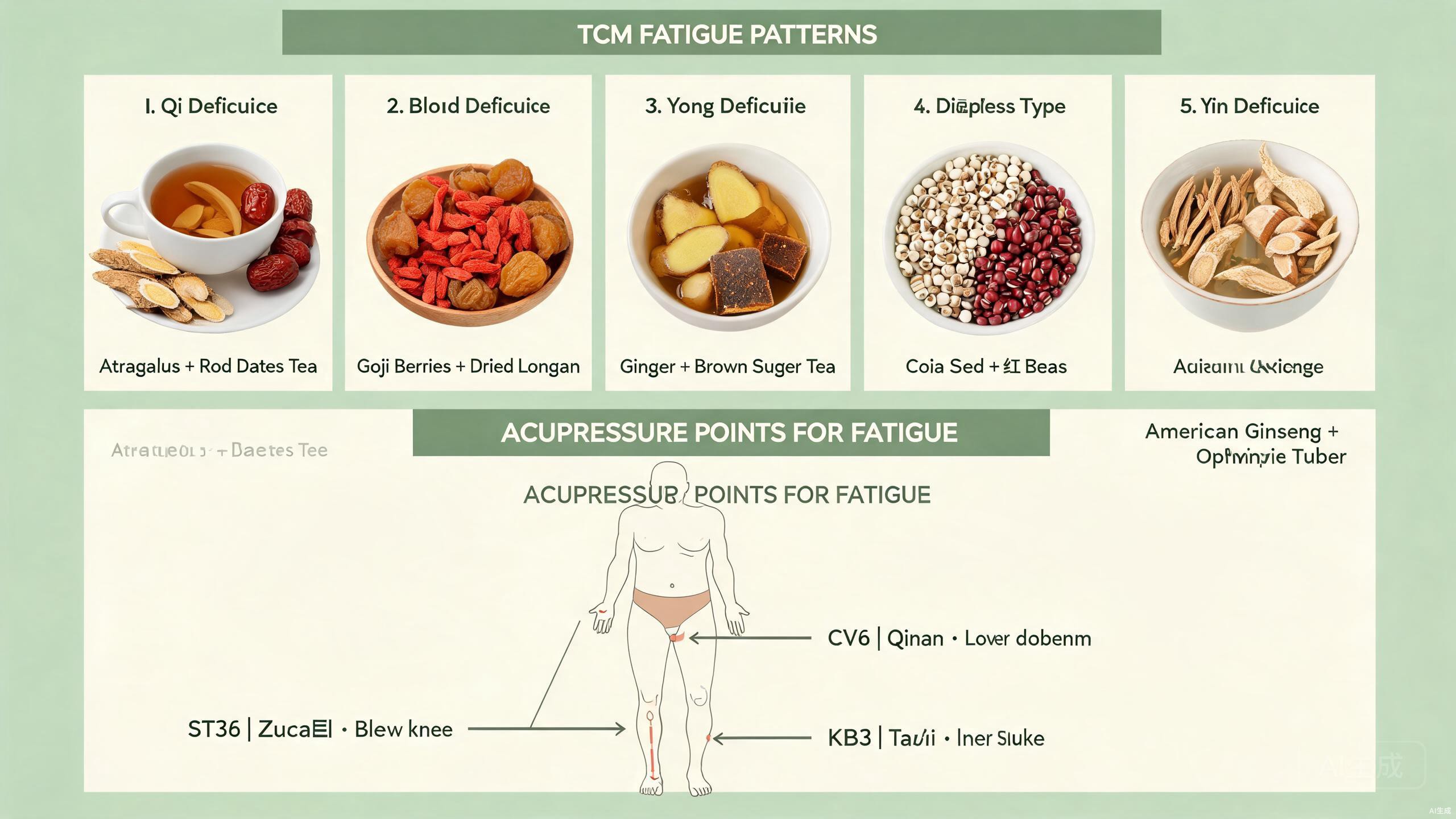
Key Takeaways
- TCM views fatigue through several distinct patterns — qi deficiency, blood deficiency, yang deficiency, dampness, and yin deficiency — each pointing to a different organ system.
- Five traditional food therapy recipes — from astragalus red date tea to American ginseng ophiopogon tea — use ingredients available at Western supermarkets, Amazon, or iHerb.
- Three acupressure points, Zusanli (ST36), Qihai (CV6), and Taixi (KD3), are traditionally used to support qi production, warm the body, and nourish kidney essence.
- TCM energy support works gradually — consistent daily use over two to four weeks is traditionally recommended for noticeable support.
- These are traditional wellness practices, not a treatment for any medical condition. Persistent fatigue requires evaluation by a qualified healthcare provider.
This article is for educational purposes only and is not medical advice. The foods, teas, and practices described here are traditional wellness practices rooted in Chinese culture. They are not a substitute for professional medical care, diagnosis, or treatment. Fatigue can result from many causes — including hypothyroidism, anemia, vitamin deficiencies, sleep disorders, depression, and chronic fatigue syndrome — that require proper evaluation by a healthcare provider. Never stop, delay, or replace prescribed treatment based on information in this article. Some foods and herbs may interact with medications — always inform your doctor about everything you consume. These statements have not been evaluated by the FDA and are not intended to diagnose, treat, cure, or prevent any disease. Read our full disclaimer →
Persistent tiredness is one of the most common wellness complaints of the modern era. Long work hours, insufficient sleep, irregular meals, and chronic stress all deplete the body's energy reserves. While coffee and stimulants offer a quick jolt followed by a crash, Traditional Chinese Medicine (TCM) takes a fundamentally different approach: rather than pushing an already-tired body harder, it seeks to nourish and rebuild the body's internal vitality — what it calls qi. This is the core philosophy behind Chinese medicine for fatigue.
In TCM, fatigue is not viewed as a single condition. It is a signal pointing to a specific pattern of imbalance — most commonly qi deficiency, blood deficiency, yang deficiency, or dampness accumulation. The five recipes below use foods and teas that have been enjoyed for generations to tonify qi, nourish blood, warm yang, and resolve dampness. All ingredients are available at Western supermarkets, Asian markets, Amazon, or iHerb. If you are new to these concepts, our guide to Chinese herbs for energy is a helpful companion to this article, and our TCM self-assessment tool may help you identify your pattern.
How TCM Views Fatigue
Traditional Chinese Medicine sees fatigue as a sign that the body's energy-producing and energy-storing systems are out of balance. In TCM theory, qi — the body's vital energy — is produced daily from food and air, with the Spleen as the primary organ of digestion and the source of qi and blood production. A deeper reserve called jing (essence) is stored in the Kidneys. When qi production falls behind demand, or when reserves are depleted by overwork, poor sleep, or illness, fatigue results.
TCM identifies several distinct patterns associated with tiredness, each calling for different supportive foods:
- Qi Deficiency (Qi Xu) — the most common pattern. Signs include fatigue that worsens with exertion, a weak voice, sweating with little effort, poor appetite, and loose stools. Often related to overwork, irregular eating, or chronic worry. The Spleen and Lungs are most involved. See our guide to qi, blood, and body fluids for more.
- Blood Deficiency (Xue Xu) — insufficient blood fails to nourish the body and mind. Signs include tiredness with dizziness on standing, a pale complexion, dry skin, brittle nails, and poor sleep. Often related to poor nutrition, blood loss, or overwork. The Heart and Liver are most involved.
- Yang Deficiency (Yang Xu) — a deeper, colder form of depletion. Signs include deep exhaustion with cold limbs, a preference for warm drinks and clothing, lower back soreness, frequent clear urination, and reduced willpower. The Kidney and Spleen yang are most involved. See our guide to cold hands and feet for related patterns.
- Dampness (Shi) — heavy, sluggish fatigue with a feeling of being weighed down. Signs include a heavy sensation in the head and limbs, bloating, sticky stools, and a greasy tongue coating. Often related to a diet high in dairy, sweets, greasy foods, or living in a humid climate. Dampness obstructs the smooth flow of qi, leaving the body feeling stuck and tired.
- Yin Deficiency (Yin Xu) — tiredness with heat signs. Signs include fatigue accompanied by a feeling of heat in the palms and soles, night sweats, a dry mouth, and restlessness. Often related to aging, chronic stress, or recovery from febrile illness.
Understanding these patterns helps explain why TCM recommends different foods for different situations. The recipes below are matched to the patterns they traditionally address. For a deeper look at TCM physiology, see our zang-fu organ guide.
5 Food Therapy Recipes for Natural Energy
Each recipe below is matched to a specific TCM pattern. Choose the one that best fits your situation, and use it consistently for two to four weeks. All ingredients are available at Western supermarkets, Asian markets, Amazon, or iHerb.
1. Astragalus and Red Date Tea (黄芪红枣茶)
Best for: Qi deficiency fatigue
TCM nature and flavor: Astragalus (huang qi, Astragalus membranaceus): sweet, slightly warm. Enters the Spleen and Lung channels. Red date (hong zao / jujube, Ziziphus jujuba): sweet, warm. Enters the Spleen, Stomach, and Heart channels.
Traditional use: This is one of the most popular daily qi-tonifying teas in TCM. Astragalus is traditionally used to tonify spleen and lung qi, lift yang energy, and strengthen the body's defensive qi. Red dates nourish blood, support the spleen, and calm the spirit, while harmonizing the formula and protecting the stomach. Together they form a gentle, slightly sweet tea that may support natural stamina — especially for those whose fatigue comes with weak digestion, low appetite, or frequent colds. For more on astragalus, see our astragalus tea guide.
Ingredients:
- 10 grams dried astragalus root slices (about 2 tablespoons) — available on Amazon or iHerb (search "astragalus root slices")
- 6 dried red dates (jujubes), pitted — available on Amazon, iHerb, and most supermarkets
- 12 oz water
- Optional: a few rock sugar crystals or a small amount of honey
Preparation: Rinse the astragalus slices and red dates. In a pot, combine them with water. Bring to a boil, then reduce heat and simmer for 20 minutes. Strain into a cup. Drink 1 cup per day, preferably in the morning or early afternoon. The tea is mild, slightly sweet, and pleasant. You can eat the softened red dates afterward.
Precautions: Avoid astragalus during acute infections (colds or flu), as it is traditionally said to "trap" pathogens. If you take immunosuppressants or have an autoimmune condition, consult your healthcare provider before using astragalus regularly.
2. Goji and Longan Tea (枸杞桂圆茶)
Best for: Blood deficiency fatigue
TCM nature and flavor: Goji berry (gou qi zi, Lycium barbarum): sweet, neutral. Enters the Liver and Kidney channels. Longan aril (long yan rou, Dimocarpus longan): sweet, warm. Enters the Heart and Spleen channels.
Traditional use: This tea is a classic blood-nourishing blend. Goji berries are traditionally used to nourish liver and kidney yin and blood, while longan aril is valued for tonifying heart blood and spleen qi and calming the spirit. Together they address the fatigue that comes with poor sleep, mental exhaustion, overthinking, and a pale complexion. If your tiredness feels emotional and mental rather than purely physical, this tea is traditionally recommended. For more on longan, see our longan tea guide.
Ingredients:
- 10 grams dried goji berries (about 1 tablespoon) — available on Amazon, iHerb, and most supermarkets
- 8 grams dried longan aril (about 1 tablespoon) — available on Amazon or iHerb
- 8 oz hot water (90°C / 195°F)
- Optional: a few rock sugar crystals
Preparation: Rinse the goji berries and longan. Place them in a cup or teapot. Pour hot water over the ingredients, cover, and steep for 8 to 10 minutes. The goji berries will soften and plump up — you can eat them after drinking the tea. Drink 1 cup per day, ideally in the afternoon or early evening.
Precautions: Longan is warm in nature — avoid if you have signs of heat such as mouth sores, a red face, or irritability. Goji berries may interact with blood thinners such as warfarin and diabetes medications — consult your doctor if you take these. Avoid during acute colds or flu.
3. Ginger and Brown Sugar Drink (姜枣红糖水)
Best for: Yang deficiency fatigue with cold limbs
TCM nature and flavor: Ginger (sheng jiang, Zingiber officinale): pungent, warm. Enters the Lung, Spleen, and Stomach channels. Red date (hong zao, Ziziphus jujuba): sweet, warm. Enters the Spleen, Stomach, and Heart channels. Brown sugar (hong tang): sweet, warm. Enters the Liver, Spleen, and Stomach channels.
Traditional use: This warming drink is a staple of Chinese folk wellness, especially in cold weather. Ginger is traditionally used to warm the middle, dispel cold, and support the spleen and stomach. Brown sugar is valued for warming and nourishing blood and qi, while red dates support qi and blood production. Together they address the deep, cold-type fatigue of yang deficiency — the tiredness accompanied by cold hands and feet, a preference for warm drinks, and lower back weakness. This drink is particularly comforting in winter or after exposure to cold.
Ingredients:
- 15 grams fresh ginger (about a 1-inch piece), sliced thinly — available at all supermarkets
- 5 dried red dates (jujubes), pitted
- 15 grams brown sugar (about 1 tablespoon) — available at all supermarkets; dark muscovado works well
- 12 oz water
Preparation: Lightly crush the ginger slices with the flat of a knife. In a pot, combine ginger, red dates, and water. Bring to a boil, then reduce heat and simmer for 10 minutes. Add the brown sugar and stir until dissolved. Strain into a cup. Drink 1 cup per day, ideally in the morning or during cold weather. For more on ginger, see our ginger tea guide.
Precautions: Ginger and brown sugar are warming — avoid if you have signs of internal heat such as mouth ulcers, a sore throat, or a red face. If you monitor your blood sugar, use less brown sugar or consult your healthcare provider. Avoid during late pregnancy without medical guidance.
4. Coix Seed and Red Bean Porridge (薏米红豆粥)
Best for: Dampness-type fatigue with heaviness and bloating
TCM nature and flavor: Coix seed (yi yi ren, Coix lacryma-jobi): sweet, bland, slightly cool. Enters the Spleen, Lung, and Kidney channels. Red bean / adzuki (chi xiao dou, Vigna angularis): sweet, sour, neutral. Enters the Heart and Small Intestine channels.
Traditional use: This porridge is the classic TCM remedy for dampness. Coix seed is traditionally used to drain dampness, strengthen the spleen, and clear mild heat. Red beans are valued for promoting urination, draining dampness, and supporting blood circulation. Together they address the heavy, sluggish fatigue that comes with a feeling of being weighed down, bloating, sticky stools, and a greasy tongue coating. Dampness obstructs the smooth flow of qi; by draining it, this porridge may help restore a lighter, more energized feeling. It is a popular everyday breakfast across East Asia.
Ingredients:
- 1/4 cup coix seed (Job's tears) — available on Amazon or iHerb (search "coix seed" or "Job's tears")
- 1/4 cup dried red beans (adzuki) — available on Amazon, iHerb, and most supermarkets
- 1/2 cup white rice (short or medium grain) or rolled oats
- 5 cups water
- Optional: a pinch of rock sugar or a few red dates for sweetness
Preparation: Rinse the coix seed and red beans. For best results, soak them in water for 2 to 4 hours (or overnight) to shorten cooking time. In a pot, combine coix seed, red beans, rice, and water. Bring to a boil, then reduce heat and simmer for 40 to 50 minutes, stirring occasionally, until thick and creamy. Eat 1 bowl per day, ideally in the morning. For more on congee, see our congee guide.
Precautions: Coix seed is slightly cooling; if you have a cold constitution with loose stools, reduce the amount or add extra ginger. Pregnant women should consult their healthcare provider before using large amounts of coix seed, as it is traditionally avoided in early pregnancy.
5. American Ginseng and Ophiopogon Tea (西洋参麦冬茶)
Best for: Yin deficiency fatigue with heat signs
TCM nature and flavor: American ginseng (xi yang shen, Panax quinquefolius): sweet, slightly bitter, cold. Enters the Heart, Lung, and Kidney channels. Ophiopogon (mai dong, Ophiopogon japonicus): sweet, slightly bitter, cold. Enters the Heart, Lung, and Stomach channels.
Traditional use: This tea is the classic yin-nourishing and qi-supporting blend. Unlike Asian ginseng, which is warming, American ginseng is cooling and is traditionally used to tonify qi and nourish yin, clear heat, and generate fluids. Ophiopogon is valued for nourishing lung and stomach yin, moistening dryness, and clearing heart heat. Together they address the fatigue accompanied by a dry mouth, a feeling of heat in the palms and soles, night sweats, and restlessness — the picture of yin deficiency with heat. This tea is particularly suited for those who feel tired yet "wired," especially after periods of overwork or in hot, dry climates.
Ingredients:
- 3 grams American ginseng slices (about 1 teaspoon) — available on Amazon or iHerb (search "American ginseng slices" or "Panax quinquefolius")
- 5 grams dried ophiopogon root (mai dong) (about 1 tablespoon) — available on Amazon or iHerb
- 8 oz hot water (90°C / 195°F)
- Optional: a few dried goji berries
Preparation: Rinse the American ginseng slices and ophiopogon. Place them in a cup or teapot. Pour hot water over the ingredients, cover, and steep for 10 minutes. Alternatively, simmer gently for 10 minutes for a stronger decoction. Drink 1 cup per day, preferably in the morning or afternoon. You can re-steep the ginseng slices two to three times.
Precautions: American ginseng and ophiopogon are cooling — avoid if you have a cold constitution with cold limbs and diarrhea. American ginseng may interact with blood thinners and diabetes medications — consult your doctor if you take these. Avoid during acute colds or flu with chills.
Three Acupressure Points for Energy
In addition to food therapy, TCM uses acupressure — the practice of applying steady pressure to specific points on the body — to support energy and vitality. The three points below are traditionally used to tonify qi, warm the body, and nourish kidney essence. They are simple to find and can be pressed daily as part of a wellness routine.
1. Zusanli (ST36) — The "Leg Three Miles"
Location: About four finger-widths below the kneecap, on the outer side of the shin bone (tibia), one finger-width lateral to the crest of the tibia.
How to find it: Place your hand over your knee with fingers pointing down. The point sits below the kneecap, in the muscle just outside the shin bone. Pressing here often reveals a slight soreness or ache, especially when you are tired.
How to press: Using your thumb or index finger, press firmly but comfortably into the point. Hold for 1 to 2 minutes while breathing slowly. You can also use small circular motions. Repeat on both legs. Moderate to firm pressure is appropriate here — this is a hardy point.
Traditional use: Zusanli is arguably the most important acupressure point for energy in all of TCM. It is traditionally used to tonify spleen and stomach qi, support digestion, build stamina, and strengthen the body overall. Its name, "Leg Three Miles," reflects the traditional belief that pressing it could help a weary traveler walk another three miles. It is the primary point for qi deficiency fatigue. See our Zusanli ST36 guide and our acupressure safety guide for more.
2. Qihai (CV6) — The "Sea of Qi"
Location: On the midline of the abdomen, about 1.5 finger-widths (two cun) below the navel.
How to find it: Lie down or sit comfortably. Place your index and middle fingers horizontally just below your navel. The point sits on the midline, about two finger-widths below the belly button. You may feel a slight tenderness or a sense of warmth when pressing correctly.
How to press: Using two or three fingers, press gently but firmly inward and slightly upward. Hold for 1 to 2 minutes while breathing slowly and deeply into the abdomen. Use moderate pressure — the abdomen is sensitive. You can also use a gentle circular motion. Repeat 3 to 5 times per session.
Traditional use: Qihai, meaning "Sea of Qi," is one of the most important points for cultivating and storing qi. It is traditionally used to tonify qi, warm yang, and support the kidneys and original qi. For fatigue involving cold limbs, lower back weakness, or a feeling of depleted reserves, Qihai is particularly relevant. It is widely used in TCM wellness practices alongside abdominal breathing. See our TCM breathing techniques guide for complementary practices.
Precautions: Use gentle pressure — never press hard on the abdomen. Avoid pressing Qihai during pregnancy. If you feel discomfort, reduce pressure or stop.
3. Taixi (KD3) — The "Supreme Stream"
Location: On the inner ankle, in the depression between the highest point of the medial malleolus (inner ankle bone) and the Achilles tendon.
How to find it: Place your fingers on your inner ankle bone. Move slightly backward toward the Achilles tendon. In the small depression between the ankle bone and the tendon, you will find Taixi. Pressing here often reveals a deep, satisfying ache.
How to press: Using your thumb, press gently but firmly into the depression. Hold for 1 to 2 minutes while breathing slowly. You can use small circular motions. Repeat on both ankles. Moderate pressure is appropriate.
Traditional use: Taixi is the source point of the Kidney meridian and one of the most important points for nourishing kidney yin and yang. It is traditionally used to nourish kidney essence, support the body's deep reserves, and address fatigue with lower back weakness, tinnitus, or frequent urination. Because the kidneys store jing (essence) — the foundational energy reserve — Taixi is a key point for deep, chronic fatigue. See our Yongquan KD1 guide for a complementary kidney point.
Precautions: Use moderate pressure. Avoid pressing on swollen or injured ankles. If you are pregnant, consult your healthcare provider before using kidney points.
For a simple daily routine, press all three points in sequence: start with Zusanli (ST36) for 1 to 2 minutes on each leg, then Qihai (CV6) for 1 to 2 minutes on the lower abdomen, and finish with Taixi (KD3) for 1 to 2 minutes on each ankle. The entire routine takes about 5 minutes and can be done morning and evening, or whenever you feel your energy flagging. Consistency matters more than duration — daily gentle pressure over several weeks is more effective than occasional long sessions.
Lifestyle Tips for Energy
TCM is a whole-person system. Foods and acupressure work best when combined with supportive daily habits. The TCM principle jiu shi shang xue ("prolonged looking exhausts blood") places lifestyle at the center of vitality. The following areas are emphasized in classical TCM for maintaining natural energy:
- Protect your sleep. In the TCM body clock, the hours before midnight are considered the most restorative for building yin and blood. Going to bed before 11:00 PM allows the body to enter deep rest before the Liver's active restoration period (1:00 to 3:00 AM). Poor sleep directly depletes qi and blood and worsens fatigue. See our TCM insomnia types guide for sleep support.
- Eat warm, regular meals. The Spleen thrives on warmth and routine. Cold, raw, or irregular meals weaken digestive qi over time. Favor warm, cooked foods — soups, stews, congee, and stir-fries — and eat at consistent times. Avoid skipping breakfast, which the Spleen relies on to begin daily qi production. See our congee guide for nourishing meals.
- Move gently and regularly. TCM values movement that circulates qi without exhausting it. Gentle practices such as qigong, tai chi, and walking support the smooth flow of energy. Avoid exhausting workouts when already fatigued — in TCM, excessive sweating depletes qi and yin. See our guide to the Eight Brocades qigong for a gentle daily practice.
- Breathe deeply. The Lungs govern qi and respiration. Conscious, slow abdominal breathing nourishes qi and calms the mind. Even five minutes of deep breathing can shift a sluggish, tired state. See our TCM breathing techniques guide for practical starting points.
- Manage stress and emotions. In TCM, overthinking depletes spleen qi, while frustration and anger cause liver qi to stagnate. Building in genuine rest, relaxation, and emotional balance helps qi flow smoothly. Chronic stress is one of the most common hidden causes of fatigue. See our herbal tea for anxiety guide for supportive practices.
Comparison of the Five Recipes
| Recipe | TCM Pattern | Key Action | Frequency |
|---|---|---|---|
| Astragalus and Red Date Tea | Qi Deficiency | Tonify spleen and lung qi | 1 cup daily |
| Goji and Longan Tea | Blood Deficiency | Nourish blood, calm the spirit | 1 cup daily |
| Ginger and Brown Sugar Drink | Yang Deficiency (cold) | Warm middle, dispel cold | 1 cup daily |
| Coix Seed and Red Bean Porridge | Dampness | Drain dampness, strengthen spleen | 1 bowl daily |
| American Ginseng and Ophiopogon Tea | Yin Deficiency (heat) | Nourish yin, clear heat, generate fluids | 1 cup daily |
Frequently Asked Questions
What does TCM say about fatigue?
In Traditional Chinese Medicine, fatigue is not viewed as a single disease but as a signal pointing to a specific pattern of imbalance. The most common patterns include qi deficiency (the most common, related to the Spleen and Lungs), blood deficiency (Heart and Liver), yang deficiency (Kidney and Spleen, with cold signs), and dampness (a heavy, sluggish type of tiredness). Each pattern calls for different supportive foods and practices. TCM food therapy traditionally uses astragalus, red dates, goji berries, longan, ginger, and coix seed to address these patterns. These are traditional wellness practices, not medical treatments. For a deeper understanding, see our zang-fu organ guide.
Which Chinese herbs for fatigue may support energy?
Five traditional TCM food therapy recipes for fatigue include astragalus and red date tea (for qi deficiency), goji and longan tea (for blood deficiency), ginger and brown sugar drink (for yang deficiency), coix seed and red bean porridge (for dampness-type fatigue), and American ginseng and ophiopogon tea (for yin deficiency fatigue). These recipes use ingredients available at Western supermarkets, Asian markets, Amazon, or iHerb. Warming recipes (ginger brown sugar drink) suit cold-type fatigue, while draining recipes (coix seed porridge) suit dampness-type fatigue. They are traditional wellness foods, not treatments for any medical condition. For a herb-focused overview, see our Chinese herbs for energy guide.
Can TCM acupressure help with fatigue?
TCM acupressure on points like Zusanli (ST36) below the knee, Qihai (CV6) on the lower abdomen, and Taixi (KD3) at the inner ankle is traditionally used to support qi production, warm the body, and nourish kidney essence. Gentle, regular pressure on these points may complement overall vitality and energy. Zusanli is the primary point for qi deficiency, while Taixi supports deeper, kidney-related fatigue. However, acupressure is not a treatment for chronic fatigue syndrome, anemia, thyroid disorders, or any medical condition. If you experience persistent or severe fatigue, consult your healthcare provider promptly. See our acupressure safety guide for general precautions.
Is astragalus tea good for fatigue?
Astragalus (Huang Qi) tea is one of the most popular TCM beverages traditionally used to support energy and vitality. Astragalus is traditionally said to tonify spleen and lung qi, lift yang energy, and strengthen the body's defensive qi. Paired with red dates (jujube), which nourish blood and calm the spirit, it forms a gentle, daily tea that may help maintain natural stamina — especially for people whose fatigue comes with weak digestion, low appetite, or frequent colds. The tea is widely available as pre-sliced root or can be made from loose ingredients. These are traditional wellness practices, not medical treatments, and should not replace professional medical care. See our astragalus tea guide for more details.
Precautions and When to Seek Help
While TCM food therapy and acupressure may support general wellness, persistent fatigue can indicate serious medical conditions that require professional evaluation:
- Seek prompt medical attention if fatigue is sudden, severe, or worsening; if it interferes with daily functioning; or if it is accompanied by unexplained weight loss, fever, night sweats, chest pain, or shortness of breath.
- See your healthcare provider if fatigue persists for more than a few weeks despite rest and lifestyle changes. Chronic fatigue may indicate hypothyroidism, iron-deficiency anemia, vitamin B12 deficiency, sleep apnea, depression, or chronic fatigue syndrome — all of which require proper diagnosis and treatment.
- Medication interactions. If you take blood thinners (warfarin), blood pressure medication, diabetes medication, immunosuppressants, or hormone therapy, consult your healthcare provider before adding astragalus, goji berries, American ginseng, or coix seed to your routine.
- Pregnancy. Several points and herbs mentioned here are traditionally avoided during pregnancy. Always consult your healthcare provider before using herbs or acupressure during pregnancy.
- Not a substitute. TCM food therapy is complementary. It sits alongside — never in place of — professional medical care.
For related topics, see our guides on Chinese herbs for energy, TCM insomnia types, and TCM self-assessment.
The Bottom Line
Traditional Chinese Medicine offers a gentle, food-based tradition for supporting natural energy. By understanding whether your fatigue is rooted in qi deficiency, blood deficiency, yang deficiency, dampness, or yin deficiency, you can choose foods and teas that work with your body's specific needs. Astragalus and red date tea tonifies qi. Goji and longan tea nourishes blood and calms the mind. Ginger and brown sugar drink warms cold-type fatigue. Coix seed and red bean porridge drains dampness to lift heaviness. And American ginseng and ophiopogon tea nourishes yin while clearing heat. Paired with three acupressure points — Zusanli (ST36), Qihai (CV6), and Taixi (KD3) — and lifestyle habits like early sleep, warm regular meals, gentle movement, and deep breathing, these traditional practices form a whole-person approach to vitality.
But they are traditions — not treatments, and not a replacement for medical care. Persistent or severe fatigue requires evaluation by a qualified healthcare provider. Use these traditional practices only as complementary wellness habits, alongside your doctor's guidance.
This article shares traditional wellness practices for educational purposes only. It is not a substitute for medical advice, diagnosis, or treatment. The foods, teas, and acupressure practices described here are not intended to treat, cure, or prevent any disease, including but not limited to chronic fatigue syndrome, hypothyroidism, anemia, depression, or sleep disorders. If you have persistent fatigue — especially with unexplained weight loss, fever, night sweats, or other concerning symptoms — consult your healthcare provider promptly for proper evaluation. These statements have not been evaluated by the FDA. Never stop or adjust prescribed treatment without your doctor's explicit guidance. Read our full disclaimer →