Key Takeaways
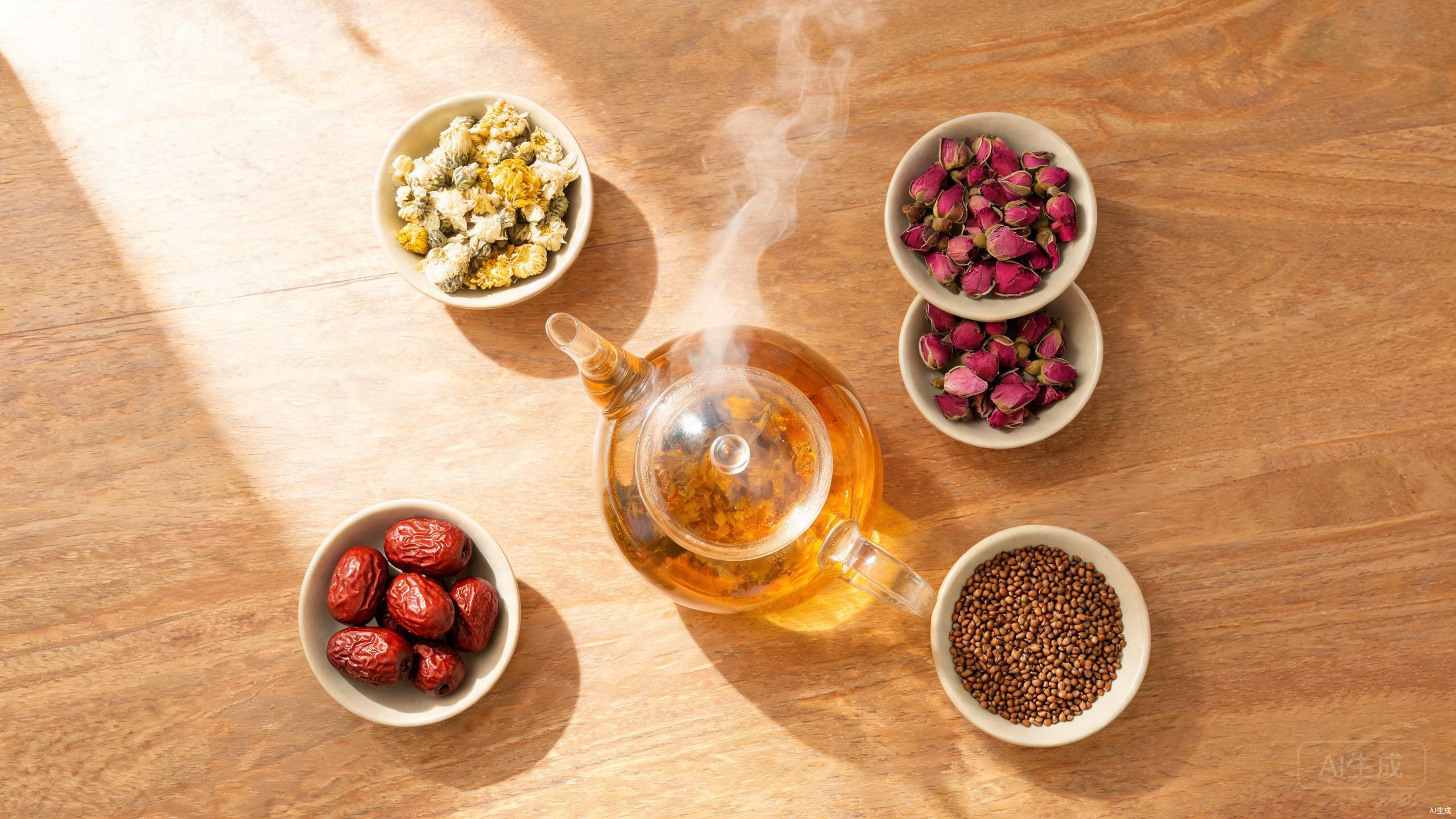
- TCM views anxiety as a pattern of qi stagnation, heart blood deficiency, or liver fire rising — different teas address different patterns.
- Chrysanthemum tea clears heat and calms a racing, irritable mind; best for daytime stress.
- Rose tea moves stagnant qi and eases emotional tension; ideal for frustration and mood swings.
- Sour date seed tea is the classic spirit-calming brew for anxiety that disrupts sleep.
- Most calming TCM teas are safe for daily use, but consult your healthcare provider if you take medication.
This article is for wellness education only and is not medical advice. Herbal teas are complementary practices, not a replacement for professional care. If you experience persistent anxiety, consult your healthcare provider. Some herbs may interact with medications.
Anxiety is one of the most common reasons people turn to herbal remedies. While chamomile and lavender dominate Western shelves, Traditional Chinese Medicine (TCM) offers a rich tradition of calming herbal teas that have been used for centuries to settle the spirit, ease tension, and restore emotional balance. The key difference? TCM doesn't treat all anxiety the same — it matches specific teas to specific patterns of imbalance.
Whether you're dealing with daytime restlessness, evening overwhelm, or stress that keeps you awake at night, there is a TCM tea traditionally used for exactly that pattern. Here are seven of the most valued calming blends, what they do, and how to use them.
How TCM Views Anxiety
In TCM theory, anxiety is rarely seen as a single condition. Instead, it is understood through patterns — combinations of signs that point to an underlying imbalance. The three most common patterns associated with everyday stress and anxiety are:
- Liver Qi Stagnation — frustration, irritability, tight chest, sighing. Often from emotional stress or suppressed feelings. Rose tea is the classic remedy.
- Heart Blood Deficiency — palpitations, insomnia, overthinking, pale complexion. Often from overwork or poor nutrition. Longan and red date teas nourish this pattern.
- Liver Fire Rising — racing thoughts, irritability, headache, red face. Often from chronic stress and heat accumulation. Chrysanthemum tea is the go-to cooling brew.
By choosing a tea that matches your pattern, you may find more meaningful relief than from a one-size-fits-all approach. If you're new to TCM concepts, our guide to yin and yang provides helpful background.
7 Calming Herbal Teas for Anxiety
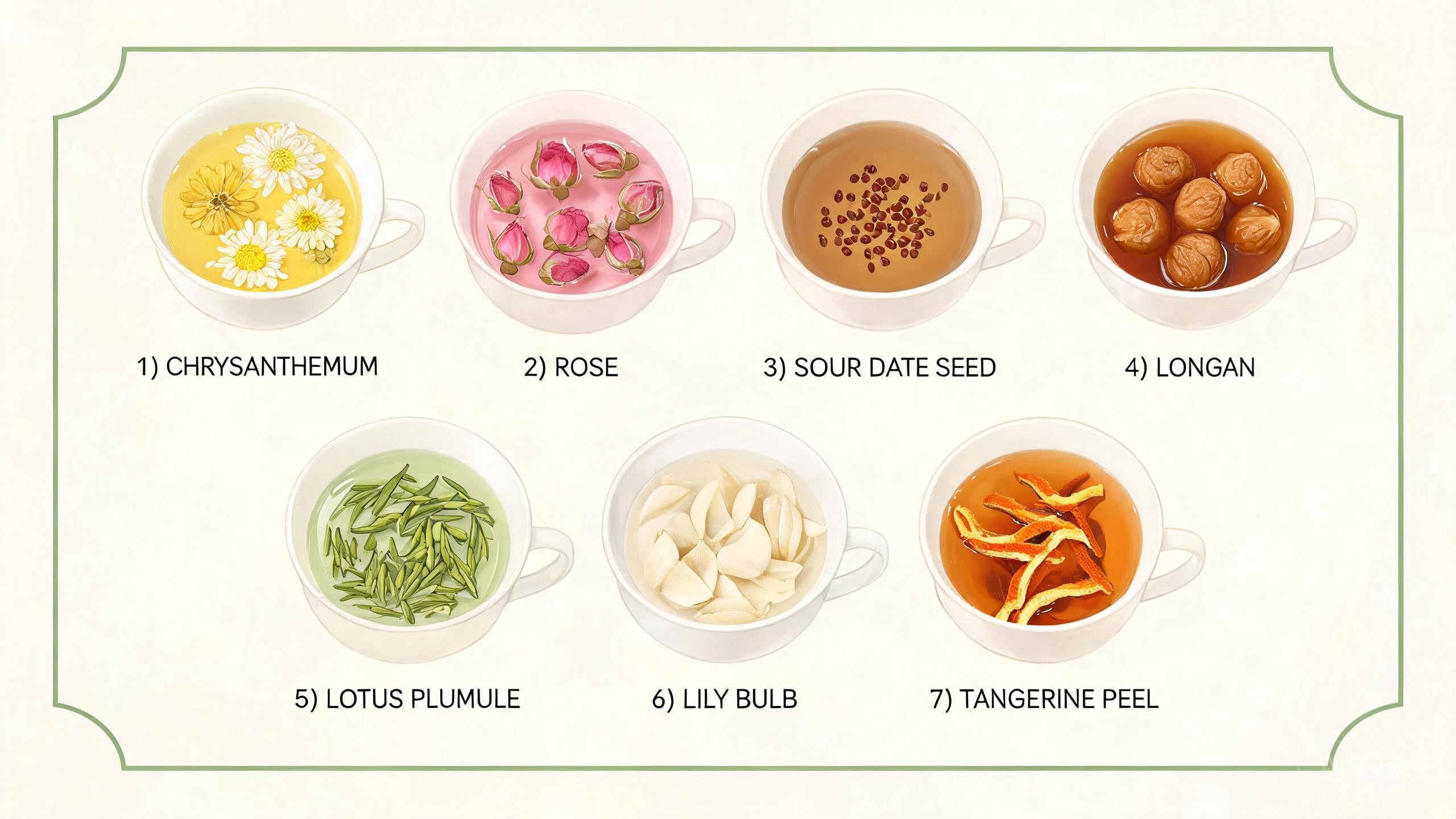
1. Chrysanthemum Tea (Ju Hua)
Best for: Racing thoughts, irritability, headaches from stress, screen-fatigue
Chrysanthemum is the most widely used cooling flower tea in TCM. Its nature is sweet, slightly bitter, and cold — making it ideal for clearing heat from the liver channel, which in TCM terms means calming the overheated, overactive mind. If your anxiety feels hot, fast, and pressured — with tension headaches or eye strain from screens — chrysanthemum is traditionally the first choice.
Brew 5 to 8 dried chrysanthemum flowers in 8 oz of hot water (90°C) for 5 minutes. The result is a pale golden, delicately floral tea. For a detailed guide, see our complete chrysanthemum tea guide.
Chrysanthemum pairs beautifully with goji berries. The goji adds a sweet, nourishing note that balances chrysanthemum's cooling nature — a combination that supports both calm focus and eye health.
2. Rose Tea (Mei Gui Hua)
Best for: Emotional tension, mood swings, frustration, PMS-related anxiety
In TCM, rose is classified as a qi-moving herb — it helps stagnant energy flow again. When stress causes you to feel stuck, tight, or emotionally blocked, rose tea is traditionally used to gently unblock and soothe. It is especially valued for women's stress patterns, including premenstrual tension.
Brew 3 to 5 grams of dried rose buds in 8 oz of hot water for 5 to 7 minutes. The tea is fragrant, slightly sweet, and deeply comforting. Learn more in our rose tea guide.
3. Sour Date Seed Tea (Suan Zao Ren)
Best for: Anxiety that disrupts sleep, overthinking at night, restless mind
Sour date seed is arguably the most important spirit-calming herb in the entire TCM pharmacy. It nourishes heart yin and blood, anchors the spirit, and is the backbone of classic formulas used for stress-related insomnia. If your anxiety peaks at night — when the mind races and sleep won't come — this is the tea to reach for.
For best results, lightly crush 10 to 15 grams of dried sour date seeds and simmer in 10 oz of water for 15 minutes. Drink 1 to 2 hours before bed. See our sour date seed tea guide for full brewing instructions.
4. Longan Tea (Long Yan Rou)
Best for: Anxiety with exhaustion, palpitations, pale complexion, post-illness stress
When anxiety comes with depletion — you feel tired, pale, and worn thin — longan tea is the gentle tonic that nourishes heart blood and calms the spirit. It is sweet, warming, and deeply restorative, making it ideal for people whose anxiety is rooted in overwork or recovery from illness.
Brew 8 to 12 grams of dried longan aril in hot water for 8 to 10 minutes. Our complete longan tea guide covers sourcing, brewing methods, and smart combinations.
5. Chamomile and Red Date Blend
Best for: General anxiety, gentle daily calming, combining Eastern and Western traditions
This blend bridges Western and TCM herbalism. Chamomile is well-known for its gentle sedative properties, while red dates (jujubes) nourish spleen qi and heart blood in TCM. Together, they create a tea that is both familiar and deeply supportive — a perfect entry point for those new to TCM teas.
Combine 1 teaspoon of dried chamomile flowers with 2 to 3 pitted dried red dates. Steep in 8 oz of hot water for 7 minutes. For more on this blend, see our chamomile and red date tea guide.
6. Ginger and Tangerine Peel Tea
Best for: Anxiety with digestive upset, nausea from stress, cold hands and feet
Some anxiety manifests primarily in the gut — butterflies, nausea, bloating, or loss of appetite. In TCM, this is often a sign that worry has weakened the spleen. Fresh ginger warms the middle and settles the stomach, while aged tangerine peel (chen pi) moves qi and reduces bloating. The result is a warming, settling tea that calms both body and mind.
Slice 3 thin pieces of fresh ginger and add a small strip of dried tangerine peel. Simmer in 8 oz of water for 5 minutes. For more on ginger tea, see our ginger tea guide.
7. Lily Bulb Tea (Bai He)
Best for: Dry cough with anxiety, restlessness, hot flashes, dry mouth from stress
Lily bulb is a lesser-known but remarkably effective TCM herb for anxiety patterns that include dryness — dry throat, dry cough, or a feeling of internal heat without fever. It nourishes lung yin and clears heart heat, making it suitable for stress that feels dry, restless, and slightly feverish.
Simmer 10 to 15 grams of dried lily bulb in 8 oz of water for 10 minutes. The tea is mild, slightly sweet, and pleasantly starchy — a comforting evening brew.
How to Choose the Right Tea for Your Anxiety
| If Your Anxiety Feels... | TCM Pattern | Best Tea | When to Drink |
|---|---|---|---|
| Hot, fast, irritable, with headaches | Liver Fire | Chrysanthemum | Afternoon |
| Stuck, frustrated, moody | Qi Stagnation | Rose | Mid-morning |
| Racing at night, can't sleep | Heart Blood Def. | Sour Date Seed | 1-2 hrs before bed |
| Tired, pale, depleted | Heart Blood Def. | Longan | Afternoon/evening |
| In the gut, with nausea | Spleen Weakness | Ginger + Tangerine | After meals |
| Dry, restless, with dry cough | Lung Yin Def. | Lily Bulb | Evening |
Brewing Tips for Maximum Calm
- Use good water. Filtered spring water produces the cleanest flavor. Avoid distilled water, which can taste flat.
- Cover while steeping. A lid traps volatile oils — the calming compounds in flower teas — that would otherwise escape as steam.
- Brew mindfully. The act of making tea — measuring, pouring, waiting — is itself a calming ritual. Treat it as a 5-minute pause, not a chore.
- Avoid sugar. Calming TCM teas are naturally mild. Adding sugar can cause energy spikes that counteract the calming effect. If you need sweetness, add a single red date.
- Drink warm, not scalding. Warm liquids are more soothing to the nervous system than very hot or cold ones.
Precautions and When to Seek Help
While these teas are gentle and traditionally safe for most adults, keep the following in mind:
- Pregnancy: Some herbs, including rose and safflower, are traditionally avoided during pregnancy. Consult your healthcare provider.
- Medication interactions: If you take prescription anxiety medication, blood thinners, or sedatives, speak with your doctor before adding herbal teas.
- Not a substitute: Herbal teas are complementary wellness practices. If anxiety is persistent, worsening, or interfering with daily life, seek support from a qualified mental health professional.
For a comprehensive guide to TCM teas that support sleep — closely related to anxiety — see our best TCM teas for sleep guide.
The Bottom Line
Herbal tea for anxiety is one of the most accessible entry points into TCM wellness. You don't need special equipment, hard-to-find ingredients, or deep knowledge of Chinese medicine to begin. Start with one tea that matches your pattern, brew it daily for a week, and notice how your body responds. Over time, you may find — as generations have before — that a simple cup of warm herbal tea is one of the most effective daily rituals for a calmer, steadier mind.