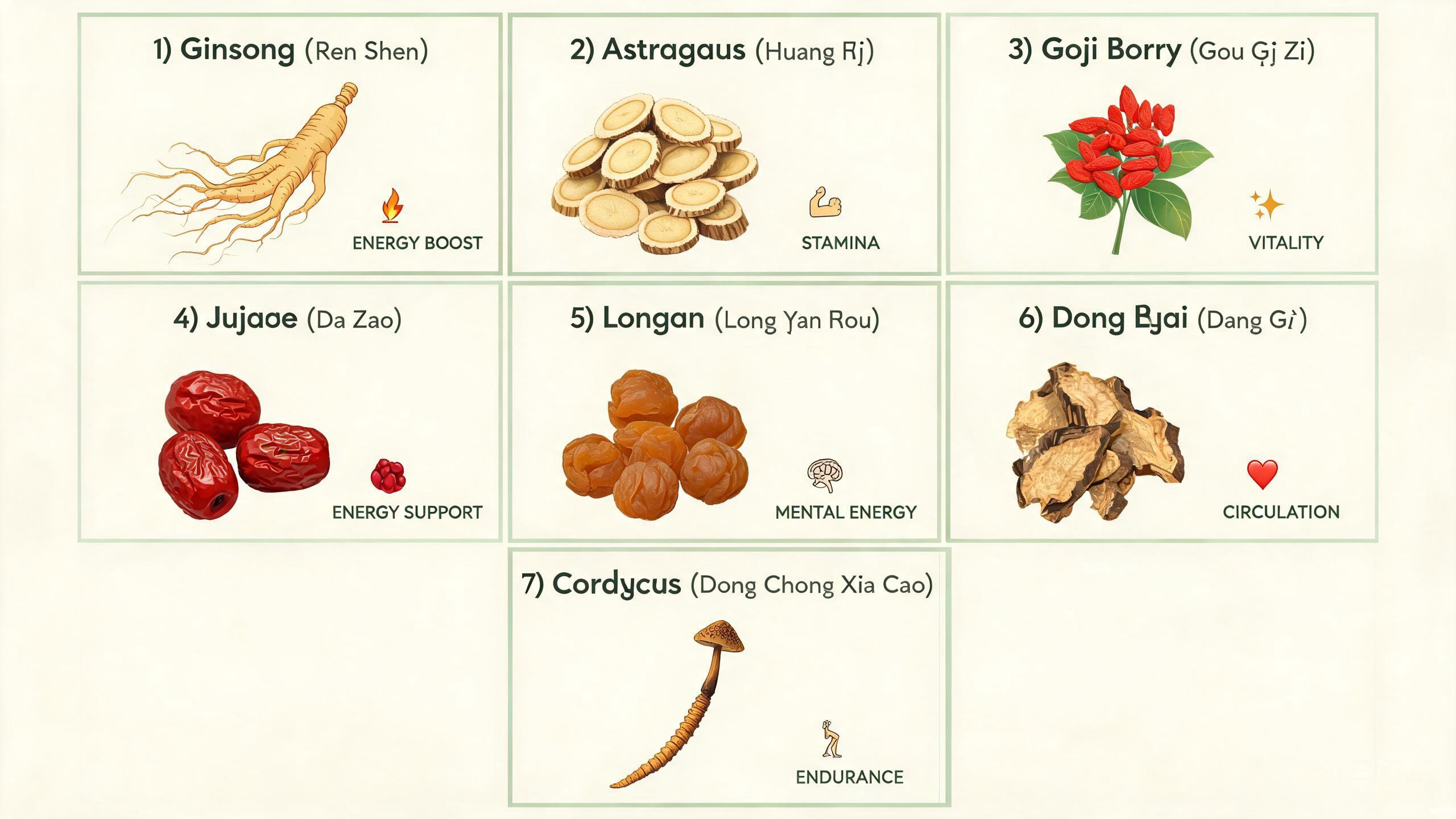
Key Takeaways
- TCM views fatigue primarily as qi deficiency, but the specific pattern — spleen, lung, kidney, or heart — determines which herb is most appropriate.
- Ginseng (Ren Shen) is the most powerful qi-tonifying herb, traditionally used for profound exhaustion and recovery.
- Astragalus (Huang Qi) and Jujube (Da Zao) are gentler, food-friendly options for daily energy support.
- TCM herbs work gradually — consistent daily use over 2 to 4 weeks typically yields noticeable improvements.
- Persistent fatigue may signal underlying medical conditions such as hypothyroidism or anemia — always rule these out with your doctor.
This article is for wellness education only and is not medical advice. Chinese herbs are complementary wellness practices, not a replacement for professional medical care. Some herbs may interact with medications, including blood thinners, diabetes drugs, and stimulants. Consult your healthcare provider before using any herbs, especially if you are pregnant, nursing, or taking prescription medication. These statements have not been evaluated by the FDA. TCM products are not intended to diagnose, treat, cure, or prevent any disease.
Feeling tired is the most common health complaint in the modern world. While coffee and energy drinks offer a quick jolt followed by a crash, Traditional Chinese Medicine (TCM) takes a fundamentally different approach. Rather than stimulating the nervous system, TCM seeks to nourish and rebuild the body's internal energy reserves — what it calls qi. This is the core philosophy behind Chinese herbs for energy: not a temporary boost, but a gradual restoration of natural vitality.
TCM has identified dozens of herbs that tonify qi, nourish blood, and strengthen the body's vital functions. Here, we explore seven of the most valued energy herbs — what they do, how to use them, and how to choose the right one for your specific pattern of fatigue. If you're new to TCM, our introduction to TCM provides essential background.
How TCM Views Energy and Fatigue
In TCM theory, the body's energy — qi — is produced daily from food and air, and stored as a deeper reserve called jing (essence). When qi production falls behind demand, fatigue results. But not all fatigue is the same. TCM identifies several distinct patterns, each pointing to a different organ system:
- Spleen Qi Deficiency — the most common pattern. Symptoms include fatigue after eating, bloating, weak digestion, and loose stools. The spleen is the primary organ of digestion in TCM and is considered the source of qi and blood production. Astragalus and jujube are key herbs.
- Lung Qi Deficiency — shortness of breath, weak voice, easy sweating, and frequent colds. The lungs govern qi and respiration. Ginseng and cordyceps are traditionally used.
- Kidney Qi/Yang Deficiency — deep exhaustion, cold limbs, low back pain, and reduced willpower. The kidneys are the root of congenital qi — the inherited energy reserve. Cordyceps and ginseng address this pattern.
- Heart Blood Deficiency — fatigue with palpitations, poor memory, and insomnia. The heart governs blood and houses the spirit. Longan and dong quai are traditionally used.
By matching the herb to your specific pattern, TCM aims to address the root of fatigue rather than mask it. For a deeper understanding of TCM physiology, see our guides on qi, blood, and body fluids and the zang-fu organ system.
7 Chinese Herbs for Energy and Vitality
1. Ginseng (Ren Shen)
Chinese: 人参 • Pinyin: Ren Shen • Latin: Panax ginseng • Nature/Flavor: Warm, sweet, slightly bitter • Meridians: Spleen, Lung, Heart
Ginseng is the most celebrated qi-tonifying herb in all of TCM. It is classified as a superior herb — meaning it is traditionally used for long-term wellness rather than acute illness. Its primary function is to strongly tonify the original qi, making it the herb of choice for profound exhaustion, post-illness recovery, and chronic depletion.
How to use: Steep 1 to 3 grams of sliced ginseng root in hot water for 10 minutes, or simmer for 20 minutes for a stronger decoction. Take in the morning, not before bed. Cycle usage: 3 weeks on, 1 week off.
Caution: Not suitable for people with heat signs (red face, irritability, hypertension). Avoid combining with caffeine. See our complete ginseng tea guide for sourcing and preparation.
Available forms: Dried whole root, sliced root, powder, capsules, liquid extract.
Ginseng is most effective when taken on an empty stomach in the morning. However, if it causes stomach discomfort, take it after a light meal. Red ginseng (steamed and dried) is warmer and more potent; white ginseng (simply dried) is gentler.
2. Astragalus (Huang Qi)
Chinese: 黄芪 • Pinyin: Huang Qi • Latin: Astragalus membranaceus • Nature/Flavor: Warm, sweet • Meridians: Spleen, Lung
Astragalus is the most widely used daily qi tonic in TCM — gentler than ginseng, more affordable, and better suited for long-term use. It tonifies spleen and lung qi, lifts yang energy, and is traditionally used to strengthen the body's defensive (wei) qi. If your fatigue comes with frequent colds, weak digestion, or low appetite, astragalus is often the first choice.
How to use: Simmer 9 to 15 grams of dried astragalus root slices in water for 20 to 30 minutes. The resulting tea is mild, slightly sweet, and pleasant. Astragalus is also excellent in soups — see our astragalus soup recipe and astragalus tea guide.
Caution: Avoid during acute infections (colds, flu), as astragalus may "trap" pathogens. Not for use with autoimmune conditions without medical supervision.
Available forms: Dried root slices, powder, capsules, liquid extract.
3. Goji Berry (Gou Qi Zi)
Chinese: 枸杞子 • Pinyin: Gou Qi Zi • Latin: Lycium barbarum • Nature/Flavor: Neutral, sweet • Meridians: Liver, Kidney
Goji berries are perhaps the most accessible and food-friendly herb on this list. They nourish liver and kidney yin and blood, making them ideal for fatigue accompanied by dry eyes, blurry vision, dizziness, or lower back weakness. Goji is gentle enough for daily use and is commonly added to teas, soups, and congee.
How to use: Add 1 tablespoon (approximately 10 to 15 grams) of dried goji berries to hot water and steep for 10 minutes, or add directly to soups and stews during cooking. See our goji tea guide for more.
Caution: May interact with blood thinners and diabetes medications. Avoid during acute diarrhea.
Available forms: Dried berries, powder, juice, capsules.
4. Jujube / Red Date (Da Zao)
Chinese: 大枣 • Pinyin: Da Zao • Latin: Ziziphus jujuba • Nature/Flavor: Warm, sweet • Meridians: Spleen, Stomach, Heart
Red dates are a staple of Chinese kitchens and the most commonly used food-grade herb in TCM. They tonify spleen qi, nourish blood, and calm the spirit. Their gentle, sweet nature makes them perfect for people whose fatigue comes with poor appetite, weak digestion, or mild anxiety. Red dates are frequently combined with other herbs to harmonize formulas and protect the stomach.
How to use: Simmer 3 to 5 pitted dried red dates in water for 15 minutes. Pair with longan for a blood-nourishing tea, or with ginger for digestive support. See our chamomile and red date tea guide.
Caution: High in natural sugars — use moderation with diabetes. Can cause bloating if overused.
Available forms: Dried whole dates, pitted dates, powder.
5. Longan (Long Yan Rou)
Chinese: 龙眼肉 • Pinyin: Long Yan Rou • Latin: Dimocarpus longan • Nature/Flavor: Warm, sweet • Meridians: Heart, Spleen
Longan aril is the sweet, translucent flesh of the longan fruit, dried for medicinal use. It tonifies heart blood and spleen qi, making it the herb of choice for fatigue that comes with poor sleep, anxiety, and mental exhaustion. If your tiredness feels emotional and mental rather than physical — overthinking, worry, and restlessness — longan is traditionally recommended.
How to use: Steep 8 to 12 grams of dried longan aril in hot water for 10 minutes. Best taken in the afternoon or evening. See our longan tea guide for detailed instructions.
Caution: Warm in nature — avoid if you have signs of heat (mouth sores, red face, irritability). Not recommended during acute colds or flu.
Available forms: Dried aril, canned in syrup, powder.
6. Dong Quai (Dang Gui)
Chinese: 当归 • Pinyin: Dang Gui • Latin: Angelica sinensis • Nature/Flavor: Warm, sweet, acrid • Meridians: Heart, Liver, Spleen
Dong quai is often called the "female ginseng," but it benefits anyone whose fatigue is rooted in blood deficiency. In TCM, qi and blood are interdependent — qi moves blood, and blood nourishes qi. When blood is deficient, fatigue comes with pallor, dizziness, dry skin, and brittle nails. Dong quai tonifies and invigorates blood, making it uniquely suited for post-menstrual, postpartum, or post-surgical fatigue.
How to use: Simmer 3 to 9 grams of sliced dong quai root in water for 20 minutes. It has a strong, distinctive flavor — often blended with red dates or longan. Avoid taking during menstruation unless directed by a practitioner.
Caution: May increase bleeding risk — avoid with blood thinners and before surgery. Not recommended during pregnancy or heavy menstrual bleeding.
Available forms: Dried root slices, powder, capsules, liquid extract.
7. Cordyceps (Dong Chong Xia Cao)
Chinese: 冬虫夏草 • Pinyin: Dong Chong Xia Cao • Latin: Cordyceps sinensis • Nature/Flavor: Warm, sweet • Meridians: Kidney, Lung
Cordyceps is one of the most prized and expensive herbs in TCM. A parasitic fungus that grows on caterpillar larvae in high-altitude Tibetan plateaus, it tonifies kidney yang and lung yin, making it uniquely suited for fatigue that involves both respiratory weakness and deep exhaustion. It is traditionally used for chronic fatigue, reduced stamina, and age-related energy decline. Modern cultivable strains (CS-4) make it more accessible.
How to use: Simmer 1 to 3 grams of cordyceps powder or dried fruiting body in water for 15 to 20 minutes. Take in the morning or early afternoon.
Caution: Generally safe but expensive — beware of counterfeits. Purchase from reputable suppliers. Avoid during acute infections.
Available forms: Dried whole, powder (CS-4 strain), capsules, liquid extract.
Quick Comparison: 7 Energy Herbs at a Glance
| Herb | Nature | Main Function | Best For | Preparation | Buying Tips |
|---|---|---|---|---|---|
| Ginseng (Ren Shen) | Warm | Tonifies original qi | Profound exhaustion | Steep 1–3g, 10 min | Look for 6-year-old roots |
| Astragalus (Huang Qi) | Warm | Tonifies spleen/lung qi | Daily fatigue, weak digestion | Simmer 9–15g, 20 min | Choose thick, pale slices |
| Goji (Gou Qi Zi) | Neutral | Nourishes liver/kidney | Dry eyes, blurry vision | Steep 10–15 berries | Plump, deep red berries |
| Jujube (Da Zao) | Warm | Tonifies spleen qi/blood | Poor appetite, mild fatigue | Simmer 3–5 dates | Whole, unwaxed dates |
| Longan (Long Yan Rou) | Warm | Nourishes heart blood | Mental fatigue, poor sleep | Steep 8–12g | Translucent, amber color |
| Dong Quai (Dang Gui) | Warm | Tonifies/invigorates blood | Blood deficiency fatigue | Simmer 3–9g, 20 min | Fresh, aromatic slices |
| Cordyceps | Warm | Tonifies kidney/lung | Deep exhaustion, low stamina | Simmer 1–3g, 15 min | CS-4 strain from reputable labs |
How to Use TCM Herbs Safely
TCM herbs can be incorporated into daily life in several ways:
- As tea (decoction): The most traditional method. Simmer harder roots (ginseng, astragalus, dong quai) for 20 to 30 minutes. Steep softer materials (goji, longan, red dates) in hot water for 5 to 10 minutes. Drink 1 to 2 cups daily.
- In soups and stews: Many qi-tonifying herbs are also foods. Add astragalus, red dates, goji, or longan to chicken soup, bone broth, or congee. This is the gentlest and most sustainable approach. See our astragalus soup recipe for inspiration.
- As powder or capsules: Convenient for travel or busy schedules. Follow package instructions or consult a practitioner for dosage.
Dosage guidelines: When using herbs as tea, start with smaller amounts (1 to 3 grams per cup) and increase gradually. For food-based herbs like goji and red dates, culinary amounts (a handful) are safe for most people. For stronger herbs like ginseng and dong quai, use medicinal amounts (3 to 9 grams) and cycle usage. For comprehensive safety information, see our herbal tea safety guide.
Energy-Boosting TCM Foods
Beyond herbs, TCM emphasizes everyday foods that support qi production. These are gentler than herbs and can be eaten regularly:
- Chinese yam (Shan Yao): Tonifies spleen, lung, and kidney qi. Steam, boil, or add to soups. Mild, pleasant, and versatile.
- Job's tears / Coix seed (Yi Yi Ren): Strengthens the spleen and drains dampness. Cook as porridge or add to soups. Ideal for fatigue with heaviness and bloating.
- Red dates (Da Zao): As listed above — a food and herb in one.
- Walnuts (Hu Tao Rou): Warm in nature, tonify kidney yang and brain. Eat 3 to 5 daily as a snack or add to congee.
For a comprehensive guide to qi-supporting foods, see our qi-boosting foods guide and energy foods guide.
When Fatigue Needs Medical Attention
While TCM herbs may support energy levels, persistent fatigue can be a symptom of underlying medical conditions that require diagnosis and treatment. The following conditions can cause chronic fatigue and should be ruled out by a healthcare provider:
- Hypothyroidism — an underactive thyroid that slows metabolism and causes persistent tiredness, cold intolerance, and weight gain.
- Iron-deficiency anemia — low red blood cells that reduce oxygen delivery, causing fatigue, pallor, and shortness of breath.
- Vitamin B12 deficiency — common in vegetarians and older adults; causes fatigue, tingling, and cognitive changes.
- Sleep disorders — sleep apnea, insomnia, and restless leg syndrome can cause unrefreshing sleep despite adequate hours.
- Depression and anxiety — mental health conditions that frequently manifest as physical exhaustion.
- Chronic fatigue syndrome — a complex condition requiring specialized medical management.
Seek medical attention if: fatigue is sudden, severe, or worsening; it interferes with daily functioning; it is accompanied by unexplained weight loss, fever, or night sweats; or it does not improve with rest and lifestyle changes.
The Bottom Line
Chinese herbs for energy offer a fundamentally different approach to fatigue than stimulants. Rather than pushing an already-tired body harder, TCM herbs aim to rebuild the body's capacity to generate and sustain qi. Whether you start with a cup of astragalus tea, a handful of goji berries, or a warming bowl of red date congee, the key is consistency and patience. Match the herb to your pattern, use it daily for several weeks, and pay attention to how your body responds. Over time, you may discover — as generations have before — that true vitality comes not from stimulation, but from nourishment.