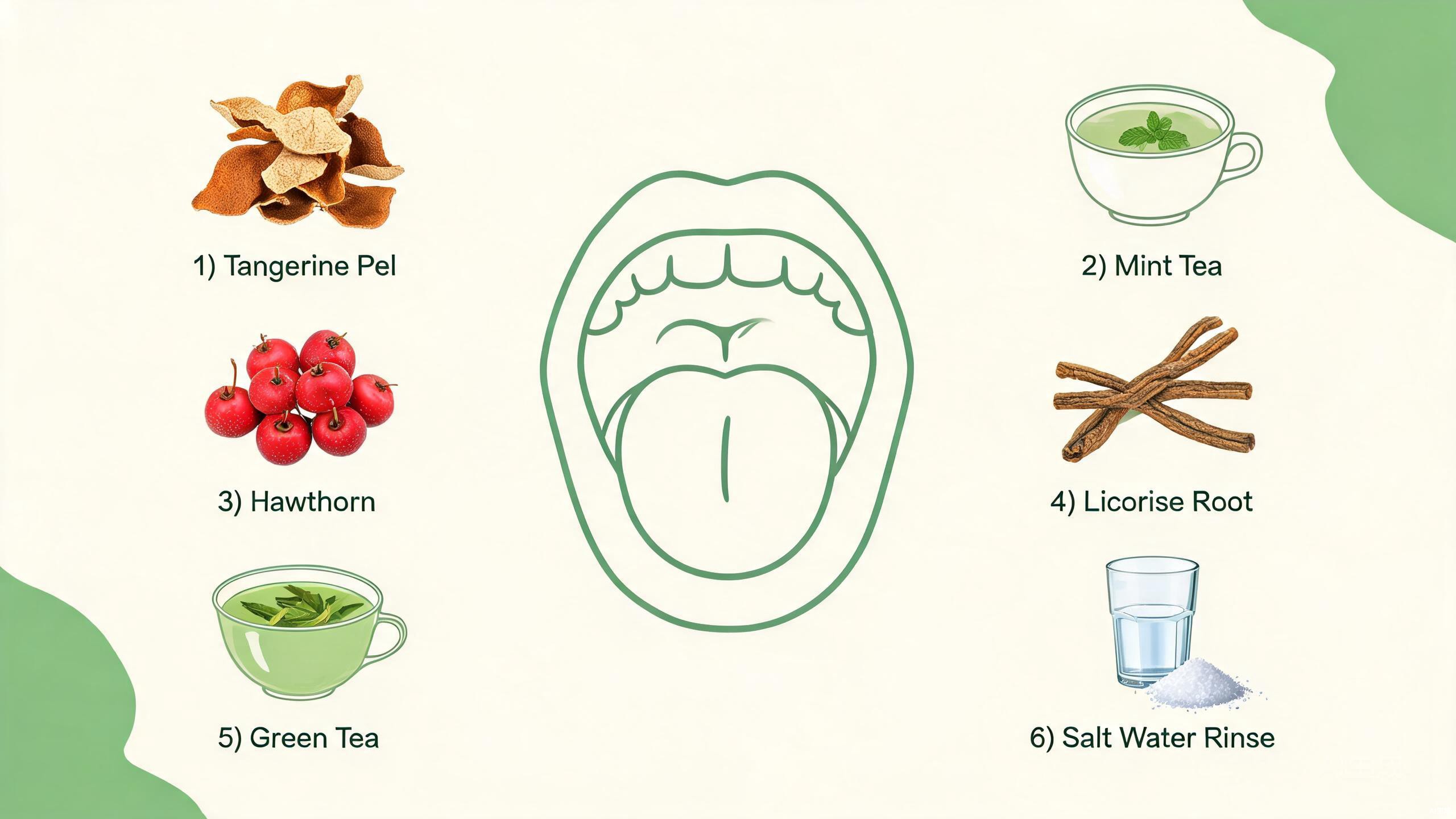
Key Takeaways
- TCM views bad breath not as a mouth problem alone, but as a signal of digestive imbalance — most commonly stomach heat, food stagnation, or damp-heat.
- Peppermint green tea is the go-to cooling beverage for stomach heat patterns (strong odor, thirst, dry mouth).
- Hawthorn and malt drink helps resolve food stagnation when breath odor worsens after heavy meals.
- Mung bean and licorice soup is the traditional heat-clearing and detoxifying remedy for persistent halitosis.
- All ingredients are available at Western supermarkets, Amazon, or iHerb — no specialty herb shops required.
This article is for wellness education only and is not medical advice. Persistent bad breath can be a sign of dental disease, digestive disorders, or other medical conditions that require professional evaluation. The food therapy recipes described here are traditional dietary practices, not treatments for any disease. If bad breath persists despite good oral hygiene, consult a dentist or healthcare provider. Some herbs may interact with medications.
Bad breath, or halitosis, is an uncomfortable problem that most people address with mouthwash, mints, and diligent brushing. But what if the root cause is not in the mouth at all? Traditional Chinese Medicine (TCM) has long understood that breath odor often originates from internal imbalances — particularly in the digestive system. When the stomach, spleen, and intestines are functioning harmoniously, the breath tends to be fresh. When they are not, odor rises.
This perspective does not replace good oral hygiene. Rather, it complements it by addressing the internal environment that may be contributing to the problem. Below, we explore how TCM understands bad breath and share five traditional food therapy recipes — using ingredients you can find at Western supermarkets, Amazon, or iHerb — that have been used for generations to support digestive harmony and naturally fresh breath.
How TCM Views Bad Breath
In TCM theory, bad breath is understood not as an isolated oral issue but as a symptom of internal disharmony. The mouth is the upper opening of the digestive tract, and the stomach's energy (qi) is said to communicate upward through the mouth. When the stomach is healthy and functioning well, this upward energy is clean and neutral. But when the stomach accumulates heat, food stagnation, or damp-heat, that pathological energy rises through the mouth as unpleasant odor.
The classical TCM text Huangdi Neijing (Yellow Emperor's Inner Canon) recognized this connection over two thousand years ago, noting that the stomach's condition is reflected in the breath, the tongue coating, and the taste in the mouth. This is why a TCM practitioner examining someone with halitosis will ask about digestion, appetite, thirst, tongue coating, and bowel habits — not just oral hygiene.
The Four Main TCM Patterns of Halitosis
TCM distinguishes between several distinct patterns that may cause bad breath. Understanding which pattern matches your experience helps you choose the right food therapy:
- Stomach Heat Rising — The most common pattern. Breath odor is strong and persistent, accompanied by thirst, dry mouth, a preference for cold drinks, hunger with no desire to eat, and sometimes gum swelling or mouth ulcers. Often caused by excessive spicy food, alcohol, or rich fried foods. This pattern calls for cooling, heat-clearing foods like peppermint, mung beans, and green tea.
- Food Stagnation — Breath odor is sour or foul, noticeably worse after eating, especially after heavy or rich meals. Accompanied by bloating, belching, acid reflux, and a feeling of fullness. Often caused by overeating, eating too quickly, or weak digestion. This pattern benefits from foods that aid digestion and move stagnant food, such as hawthorn and malt.
- Liver-Gallbladder Damp-Heat — Breath odor is bitter or sour, accompanied by a bitter taste in the mouth (especially in the morning), sticky saliva, heavy feeling in the body, irritability, and possibly a yellow tongue coating. Often triggered by stress combined with greasy foods. This pattern requires foods that clear damp-heat, such as mint and mung beans.
- Spleen Deficiency with Dampness — Breath odor is mild but persistent, accompanied by fatigue, poor appetite, bloating after eating, loose stools, and a thick, greasy tongue coating. Often chronic, caused by irregular eating habits, overthinking, or a constitutionally weak digestive system. This pattern benefits from foods that strengthen the spleen and transform dampness, such as tangerine peel and lotus seeds.
For more on TCM digestive theory, see our TCM for digestion guide and our TCM for stomach cold guide. To understand how TCM views the organ systems, our zang-fu organs guide provides helpful background.
Recipe 1: Peppermint Green Tea
TCM pattern: Stomach heat rising (strong breath odor with thirst and dry mouth)
Traditional function: Clear stomach heat, freshen breath, cool the mouth
Ingredient Properties
Peppermint ( bo he) is acrid, cooling, and aromatic. It enters the lung and liver channels. In TCM, peppermint is one of the primary herbs for dispersing heat and clearing the head and mouth. Its aromatic nature is traditionally said to "vent" heat and unpleasant odors upward and outward. Peppermint also moves liver qi, making it helpful when stress contributes to digestive stagnation.
Green tea ( lu cha) is bitter, sweet, and cool. It enters the heart, lung, and stomach channels. Green tea is traditionally used to clear heat, resolve toxins, and freshen the mouth. Its natural astringency helps tone the oral tissues, while its cooling nature addresses stomach heat. The catechins in green tea also support oral health from a modern perspective.
Preparation
Ingredients: 1 teaspoon loose-leaf green tea (or 1 tea bag), 5 to 6 fresh peppermint leaves (or 1 teaspoon dried peppermint), 2 cups hot water (80°C).
Method: Place the green tea and peppermint in a teapot or mug. Pour hot water (not boiling, to avoid bitterness) over the leaves. Cover and steep for 3 to 5 minutes. Strain and drink warm. Drink 1 to 2 cups daily, ideally between meals or after eating. The mint provides immediate freshness while the green tea works on clearing internal heat.
Precautions
Green tea contains caffeine; avoid drinking it in the late evening if you are sensitive. Peppermint can relax the lower esophageal sphincter in some people, potentially worsening acid reflux — if this occurs, reduce the amount of mint or use green tea alone. Avoid on an empty stomach if you have a sensitive digestive system. Both ingredients are available at any supermarket.
Recipe 2: Hawthorn and Malt Drink
TCM pattern: Food stagnation (sour breath odor that worsens after meals, with bloating)
Traditional function: Digest food, resolve stagnation, reduce bloating
Ingredient Properties
Hawthorn ( shan zha) is sour, sweet, and slightly warm. It enters the spleen, stomach, and liver channels. Hawthorn is the most important food-therapy herb for resolving food stagnation, particularly of meats and fats. It is traditionally used when food feels stuck in the stomach, causing bloating, belching, and sour breath. Hawthorn is also valued for supporting cardiovascular health.
Malt ( mai ya) is sweet and neutral. It enters the spleen and stomach channels. Malt is traditionally used to digest starches and grains — the carbohydrates that often form the bulk of heavy meals. It also helps regulate digestion and soothe the stomach. Together, hawthorn and malt cover the two main types of food stagnation: fatty/protein foods and starchy foods.
Preparation
Ingredients: 15 grams dried hawthorn slices (about 2 tablespoons), 15 grams malt grains (about 2 tablespoons), 3 cups water, optional: 1 teaspoon honey.
Method: Rinse the hawthorn slices and malt. Combine with 3 cups of water in a small pot. Bring to a boil, then reduce heat and simmer for 15 minutes. Strain into a cup. Add honey if desired. Drink 1 cup after heavy meals, or once daily for chronic stagnation. The flavor is tart and slightly malty.
Precautions
Hawthorn is sour and may irritate an empty stomach; always drink this after meals, not before. If you have gastric ulcers or acid reflux, use with caution or consult your healthcare provider. Hawthorn may interact with heart medications and blood pressure drugs; consult your doctor if you take such medications. Dried hawthorn slices and malt are available on Amazon and iHerb. For more on hawthorn, see our hawthorn tea guide.
This drink is particularly useful after holiday meals, restaurant dinners, or any time you have overindulged in rich, heavy foods. Keep dried hawthorn and malt on hand for digestive emergencies.
Recipe 3: Mint and Lemon Balm Tea
TCM pattern: Damp-heat in the spleen and stomach (sticky mouth, heavy feeling, bitter taste)
Traditional function: Aromatically transform dampness, clear heat, freshen the mouth
Ingredient Properties
Mint ( in this context, spearmint or peppermint) is acrid, cooling, and aromatic. It enters the lung and liver channels. In TCM, aromatic herbs are particularly valued for their ability to "transform dampness" — a concept that refers to resolving heavy, sticky, turbid conditions in the digestive system. When damp-heat causes a thick tongue coating and sticky saliva, aromatic herbs help clear and refresh.
Lemon balm ( Melissa officinalis) is a Western herb that closely mirrors the properties of TCM aromatic herbs like agastache ( huo xiang) and eupatorium ( pei lan), which are traditionally used for dampness in the digestive system. Lemon balm is cooling, aromatic, and calming. It supports digestion, relieves bloating, and has a naturally fresh, lemony aroma that helps freshen the mouth. This substitution makes the recipe accessible to anyone shopping at Western supermarkets.
Preparation
Ingredients: 1 teaspoon fresh mint leaves (or 1/2 teaspoon dried), 1 teaspoon fresh lemon balm leaves (or 1/2 teaspoon dried), 2 cups hot water (90°C), optional: a thin slice of fresh lemon.
Method: Rinse the fresh herbs and place them in a teapot or mug. Pour hot water over the herbs, cover, and steep for 5 to 7 minutes. Strain and add a lemon slice if desired. Drink warm, 1 to 2 cups daily. The aroma is bright, clean, and immediately refreshing. Fresh herbs produce the best flavor, but dried versions work well too.
Precautions
Lemon balm is generally very safe and gentle. It may have mild sedative effects, which can be beneficial for stress-related digestive issues but should be noted if you are taking sedative medications. Mint may worsen acid reflux in some individuals; if this occurs, use lemon balm alone. Both herbs are easy to grow at home or available as dried tea bags at supermarkets and Amazon.
Recipe 4: Lotus Plumule Tea
TCM pattern: Heart fire with stomach heat (bad breath with mouth ulcers, irritability, insomnia)
Traditional function: Clear heart fire, cool the mouth, calm the spirit
Ingredient Properties
Lotus plumule ( lian zi xin) is the green germ found inside lotus seeds. It is bitter and cold. It enters the heart and kidney channels. In TCM, the heart is connected to the tongue and mouth — when heart fire blazes upward (often from emotional stress, overwork, or lack of sleep), it can manifest as mouth ulcers, a red tongue tip, irritability, and bad breath. Lotus plumule is the traditional remedy for clearing this specific type of heart fire.
While the heart may seem unrelated to bad breath, TCM recognizes that emotional stress and sleep deprivation can heat up the body's internal environment, contributing to breath odor through multiple pathways. Lotus plumule addresses this pattern by clearing the heat at its source while also calming the mind.
Preparation
Ingredients: 1 to 2 grams dried lotus plumule (about 1 teaspoon), 1 cup hot water (90°C).
Method: Place the dried lotus plumule in a small cup. Pour hot water over it, cover, and steep for 5 minutes. The tea will be a pale greenish-yellow with a distinctly bitter taste. Drink 1 cup daily, preferably in the afternoon. The bitterness is part of the therapeutic effect — in TCM, bitter flavors clear heat. If the taste is too strong, add a small amount of honey.
Precautions
Lotus plumule is quite bitter and cold in nature. It should not be used long-term or by people with cold, weak digestion (signs include cold hands and feet, loose stools, and a pale tongue). It is best used short-term, for 1 to 2 weeks, when heart fire symptoms are present. Dried lotus plumule is available on Amazon and iHerb. If you cannot find it, chrysanthemum tea (also cooling) is a gentler alternative — see our chrysanthemum tea guide.
Recipe 5: Mung Bean and Licorice Soup
TCM pattern: Accumulated heat and toxicity (persistent bad breath with thirst, restlessness, possibly skin eruptions)
Traditional function: Clear heat, resolve toxicity, cool the stomach
Ingredient Properties
Mung beans ( lu dou) are sweet and cool. They enter the heart and stomach channels. Mung beans are one of the most important heat-clearing foods in TCM. They are traditionally used to clear summer heat, resolve toxicity, and cool the stomach. In the context of bad breath, mung beans address the deep, accumulated heat that causes persistent, strong odor — especially when it is accompanied by thirst, restlessness, or skin breakouts (another sign of heat trying to exit the body).
Licorice root ( gan cao) is sweet and neutral. It enters all twelve channels but is particularly associated with the spleen, stomach, and heart. Licorice is the great harmonizer in TCM — it moderates the properties of other herbs, soothes the stomach, and has natural anti-inflammatory properties. In this recipe, licorice tempers the coldness of mung beans (making the soup easier on digestion) while adding its own heat-clearing and mouth-soothing effects.
Preparation
Ingredients: 1/2 cup dried mung beans (rinsed and soaked for 2 hours), 2 to 3 grams dried licorice root slices (about 3 to 4 thin slices), 4 cups water.
Method: Combine the soaked mung beans, licorice root, and water in a pot. Bring to a boil, then reduce heat and simmer for 30 to 40 minutes until the beans are soft and the liquid has turned slightly cloudy. You can drink just the broth or eat the beans as well. Drink 1 bowl daily, ideally in the afternoon during hot weather or when heat symptoms are prominent. A small amount of rock sugar can be added if desired.
Precautions
Mung beans are cooling; avoid this soup if you have a cold, weak digestive system with loose stools, or if you feel cold easily. Licorice root, when consumed in large amounts or over long periods, can raise blood pressure and lower potassium levels; use in moderation and for short periods (1 to 2 weeks). If you take blood pressure medication, diuretics, or digoxin, consult your healthcare provider before using licorice. Mung beans are available at all supermarkets; dried licorice root is available on Amazon and iHerb.
Comparison of the Five Remedies
| Recipe | TCM Pattern | Key Function | Best For | When to Drink |
|---|---|---|---|---|
| Peppermint Green Tea | Stomach heat | Clear heat, freshen mouth | Strong odor with thirst | Between meals |
| Hawthorn & Malt Drink | Food stagnation | Digest food, reduce bloating | Odor worse after meals | After heavy meals |
| Mint & Lemon Balm Tea | Damp-heat | Transform dampness, freshen | Sticky mouth, heavy feeling | Afternoon |
| Lotus Plumule Tea | Heart fire | Clear heart fire, calm mind | Odor with ulcers, insomnia | Afternoon |
| Mung Bean & Licorice Soup | Accumulated heat/toxicity | Clear heat, resolve toxicity | Persistent strong odor | Afternoon |
Daily Habits for Fresh Breath
Food therapy is most effective when supported by good daily habits. TCM offers several recommendations for maintaining fresh breath:
- Chew thoroughly. In TCM, the spleen (the digestive organ) depends on the mouth to begin the work of digestion. Thorough chewing prevents food stagnation, one of the most common causes of breath odor. Aim for 20 to 30 chews per bite.
- Avoid overeating. Eating beyond 70% fullness is a traditional TCM guideline. Overeating overwhelms the digestive system, leading to stagnation and fermentation that produce odor.
- Limit spicy, fried, and greasy foods. These are the primary dietary causes of stomach heat and damp-heat. If you enjoy spicy food, balance it with cooling foods like cucumber, mung beans, or green tea.
- Drink warm water. TCM discourages ice-cold drinks, which are said to "freeze" the digestive fire. Warm water supports digestion and helps prevent stagnation. A cup of warm water in the morning is a simple traditional habit.
- Maintain regular meal times. Irregular eating weakens the spleen over time, leading to chronic digestive weakness and persistent mild breath odor. Try to eat at consistent times each day.
- Practice tongue scraping. In both TCM and modern dentistry, the tongue coating reflects digestive health. Gently scraping the tongue each morning removes accumulated debris and bacteria. A thick, yellow coating suggests heat; a thick, white coating suggests dampness.
- Manage stress. Emotional tension directly affects the liver, which in turn affects digestion. When liver qi stagnates, it can cause food to stagnate, contributing to breath odor. Practices like qigong and meditation help keep both the mind and the digestive system flowing smoothly.
Since bad breath is often rooted in digestive health, you may find our TCM for digestion guide and our TCM warming spices guide helpful. For a broader collection of kitchen remedies, see our everyday TCM kitchen remedies.
Precautions and When to Seek Help
While these food therapy recipes are gentle and traditionally safe for most adults, the following precautions apply:
- Dental evaluation is essential. Most persistent bad breath originates from dental issues — gum disease, tooth decay, tonsil stones, or oral bacteria. A dental checkup should be your first step if breath odor persists despite good hygiene.
- Dry mouth. Chronic dry mouth (xerostomia) is a common cause of bad breath. If you take medications that cause dryness, or if you breathe through your mouth at night, address these issues with your healthcare provider.
- Digestive disorders. Conditions like acid reflux (GERD), H. pylori infection, and irritable bowel syndrome can cause breath odor. If you have chronic digestive symptoms alongside halitosis, consult a gastroenterologist.
- Systemic conditions. Certain conditions like diabetes (which can cause a fruity breath odor), liver disease, and kidney disease can affect breath. If breath odor has a distinct, unusual quality, seek medical evaluation.
- Medication interactions. Licorice can affect blood pressure and potassium levels. Hawthorn may interact with heart medications. Consult your healthcare provider before adding new herbs to your routine.
- Not a substitute. These recipes are complementary dietary practices, not a replacement for professional dental or medical care.
Frequently Asked Questions
Can TCM cure bad breath?
TCM does not claim to cure bad breath. Persistent halitosis can have many causes, including dental issues, digestive disorders, and systemic conditions that require medical evaluation. TCM food therapy is traditionally used to support internal balance and digestive health, which may contribute to fresher breath. These practices are complementary wellness approaches, not a replacement for professional dental or medical care.
Why does TCM connect bad breath to the stomach?
In TCM theory, the stomach and spleen are the central digestive organs. When stomach heat accumulates from spicy foods, alcohol, or poor digestion, this heat rises upward through the mouth, manifesting as bad breath. Similarly, when food stagnates in the digestive tract, it ferments and produces an unpleasant odor that rises. This is why TCM addresses bad breath through the digestive system rather than just the mouth.
What is the best TCM tea for bad breath?
There is no single best tea, because the right choice depends on the underlying pattern. For stomach heat (strong odor, thirst, dry mouth), peppermint green tea is traditionally recommended. For food stagnation (odor worse after meals, bloating), hawthorn and malt drink is more appropriate. For damp-heat patterns (sticky mouth, heavy feeling), mint and lemon balm tea may help. Matching the remedy to the pattern is a core TCM principle.
How long does it take for TCM food therapy to improve breath?
TCM food therapy is a gradual approach. Some people notice improvement within a few days of consistent practice, especially when the underlying cause is dietary. However, persistent bad breath that does not respond to dietary changes within two weeks should be evaluated by a dentist or doctor to rule out gum disease, tooth decay, or other medical conditions.
The Bottom Line
TCM offers a refreshingly holistic perspective on bad breath — one that looks past the mouth to the digestive system and internal balance. By identifying whether your breath odor stems from stomach heat, food stagnation, damp-heat, or heart fire, you can choose foods that may support the underlying balance. The five recipes in this guide use accessible ingredients from Western supermarkets, Amazon, and iHerb, making them practical for daily life.
However, food therapy is not a substitute for good oral hygiene or professional care. If bad breath persists despite dietary changes, your first step should be a dental checkup, followed by a medical evaluation if needed. Use these traditional recipes as complementary dietary habits, with your healthcare provider's knowledge and guidance.
This article is for educational and informational purposes only and is not a substitute for professional medical advice, diagnosis, or treatment. These statements have not been evaluated by the FDA. Always consult a qualified healthcare provider before beginning any new wellness practice, especially if you are pregnant, nursing, taking medication, or have a medical condition. Read our full disclaimer →