Key Takeaways
- In TCM, "stomach cold" (胃寒, wei han) refers to insufficient warming energy in the digestive system — either from spleen yang deficiency (internal weakness) or cold attacking the stomach (external factors).
- Common signs include a preference for warm food and drinks, stomach pain that improves with warmth, cold hands and feet, and a pale tongue with a white coating.
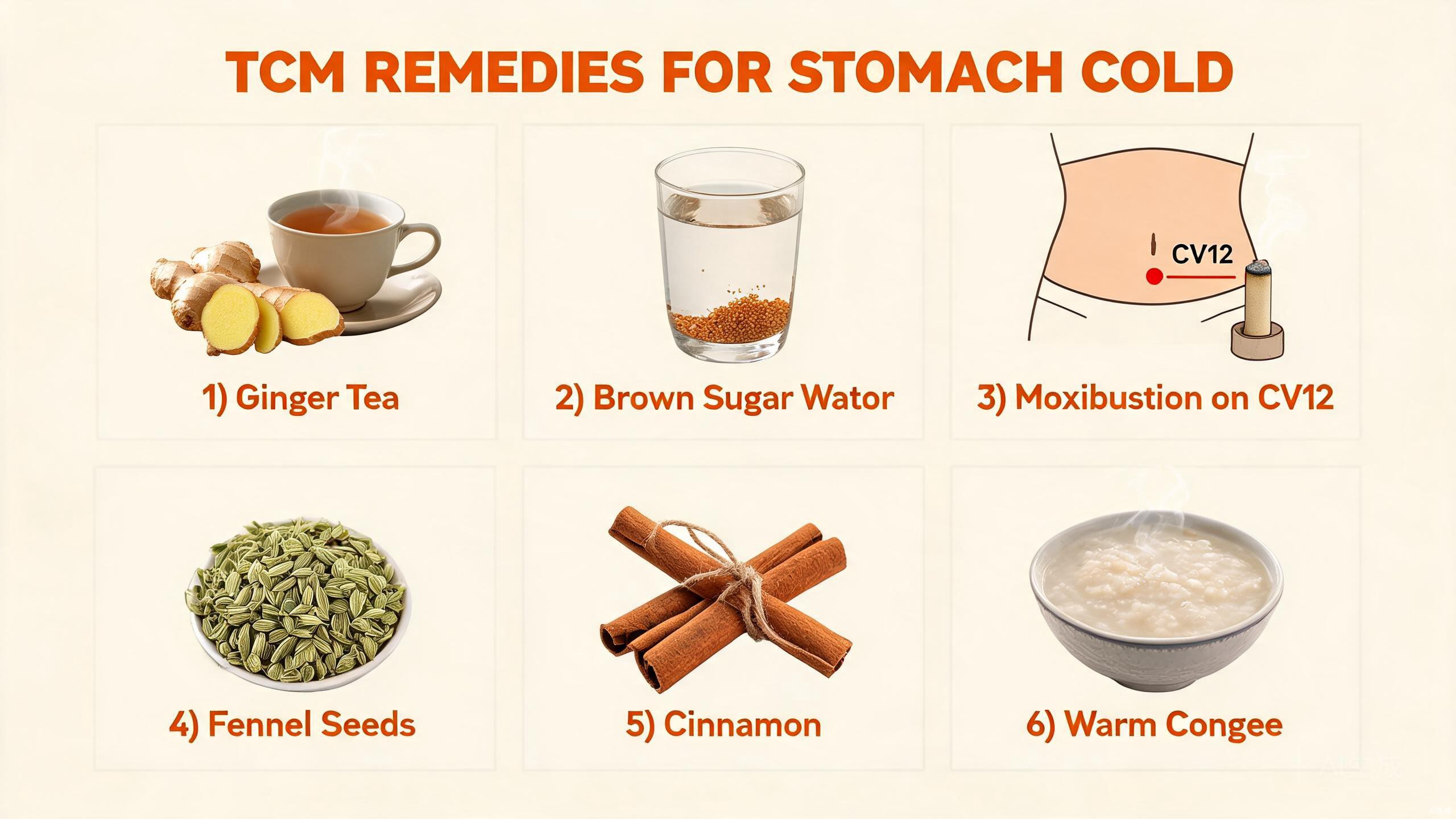
- Ginger brown sugar tea is the most accessible warming remedy, traditionally used to "warm the middle and disperse cold."
- TCM strongly recommends warm, cooked foods and avoiding ice-cold drinks, raw salads, and frozen desserts for this pattern.
- These are traditional wellness foods, not medical treatments. Persistent stomach pain requires medical evaluation.
This article is for educational purposes only and is not medical advice. The foods and practices described here are traditional wellness practices rooted in Chinese culture. They are not a substitute for professional medical care, diagnosis, or treatment. Stomach pain and digestive symptoms can be signs of serious conditions, including ulcers, gastritis, gallbladder disease, appendicitis, or gastrointestinal cancers. Never stop, adjust, or replace prescribed medication based on information in this article. If you are pregnant, nursing, have a pre-existing condition, or take medication, consult your healthcare provider before making dietary changes. Some herbs may interact with medications — always inform your doctor about everything you consume. These statements have not been evaluated by the FDA and are not intended to diagnose, treat, cure, or prevent any disease.
Do you feel cold from the inside out? Does your stomach ache when you drink cold water, but feel better with a hot water bottle pressed against it? Do you crave warm, cooked food and feel worse after salads, smoothies, or ice cream? If so, you may be experiencing what Traditional Chinese Medicine calls "stomach cold" (胃寒, wei han) — a pattern in which the warming, transformative energy of the digestive system is insufficient or has been disrupted by cold.
This is one of the most common digestive patterns in TCM, particularly in modern life where air-conditioning, cold beverages, raw food diets, and fast-paced eating have become the norm. The good news is that TCM has developed a rich tradition of warming food therapies over thousands of years — and the ingredients are all things you can find at your local supermarket, Amazon, or iHerb. If you are new to TCM concepts, our introduction to Traditional Chinese Medicine provides helpful background.
How TCM Views Stomach Cold
In TCM theory, the Spleen (脾, Pi) and Stomach (胃, Wei) are paired organs that form the center of the digestive system. Together, they are known as the "postnatal foundation" of health — the source of all qi and blood production. The Spleen's transformative function depends on spleen yang (脾阳) — the warming, active, metabolic aspect of spleen energy. Think of spleen yang as the "digestive fire" that cooks and transforms food into usable nourishment. When this fire is strong, digestion is efficient and comfortable. When it is weak or extinguished by cold, digestion slows, stalls, and becomes painful.
TCM distinguishes two main types of stomach cold:
- Spleen Yang Deficiency (脾阳虚) — This is an internal pattern that develops gradually. The spleen's warming energy is depleted over time by poor diet (too many cold, raw, or sweet foods), overwork, chronic illness, or emotional worry. Symptoms develop slowly and include chronic digestive weakness, cold extremities, preference for warm food and drinks, loose stools, bloating after eating, fatigue, and a pale complexion. The tongue is typically pale with a thin white coating.
- Cold Attacking the Stomach (寒邪犯胃) — This is an acute, external pattern. Cold enters the body from outside — through eating very cold food or drinks, exposure to cold weather, or sitting in cold environments. Symptoms come on suddenly and include sharp stomach pain, a feeling of cold in the abdomen, nausea or clear watery vomit, and a strong desire for warmth. The pain typically improves with warmth and worsens with cold. This pattern can also accompany a common cold.
The key difference is that spleen yang deficiency is a chronic, internal weakness that requires long-term nourishment, while cold attacking the stomach is an acute, external invasion that responds quickly to warming remedies. Both patterns benefit from the foods in this guide. To learn more about the foundational concepts, see our guides on yin and yang and qi, blood, and body fluids.
Common Signs of Stomach Cold
Not sure if stomach cold applies to you? The following signs, when present together, traditionally suggest this pattern:
- A strong preference for warm food and drinks; feeling worse after cold or raw foods
- Stomach pain or discomfort that improves with the application of warmth (hot water bottle, warm hands)
- Cold hands and feet, especially a cold feeling in the abdomen
- Clear, watery vomit or nausea
- Loose stools or diarrhea, especially in the morning
- A pale complexion and a feeling of fatigue
- A pale tongue with a white, possibly moist coating
- Craving warm, sweet, nourishing foods
If these signs resonate, the five warming food therapies below may offer gentle, traditional support. They are not medicines, and they are not a replacement for any prescribed treatment.
Five Warming Food Therapies for Stomach Cold
1. Millet Porridge (小米粥)
TCM nature: Sweet, salty, slightly cool (but warming when cooked as porridge). Enters: Spleen, Stomach, and Kidney channels.
Millet is the foundational grain of digestive wellness in TCM. It is traditionally used to "nourish the stomach," "strengthen the spleen," and "supplement kidney qi." In northern China, a bowl of golden millet porridge (小米粥) is the first food given to anyone whose digestion needs rest and warmth — the sick, the elderly, postpartum mothers, and children. While millet is technically slightly cool in its raw nature, when cooked slowly into a soft porridge, it becomes one of the gentlest, most easily digested foods available. The layer of "millet oil" that forms on top of the porridge is considered especially nourishing for the stomach lining.
For stomach cold, millet porridge serves as both a remedy and a daily staple. It provides the digestive system with food that requires minimal "fire" to transform, giving the weakened spleen a chance to rest and recover. It is the perfect base for adding other warming ingredients like ginger, pumpkin, or red dates.
How to prepare: Rinse 1 cup of millet thoroughly. Combine with 6 to 8 cups of water in a pot, bring to a boil, then reduce heat and simmer for 25 to 30 minutes, stirring occasionally, until thick and creamy. The longer it simmers, the more nourishing it becomes. Eat warm, ideally for breakfast. For added warming benefit, stir in a few slices of fresh ginger or a handful of diced pumpkin during cooking. Millet is available at all supermarkets, Amazon, and health food stores.
Caution: Millet is one of the safest and gentlest grains in TCM. If you have a thyroid condition, consult your healthcare provider, as millet contains mild goitrogenic compounds. Otherwise, it is a safe daily staple for nearly everyone.
For the most nourishing millet porridge, toast the rinsed millet in a dry pan for 1 to 2 minutes before adding water. This "wakes up" the grain, enhances its flavor, and adds a subtle warming quality that is especially beneficial for stomach cold.
2. Ginger Brown Sugar Tea (生姜红糖水)
TCM nature: Ginger is pungent, warm; brown sugar is sweet, warm. Enters: Spleen, Stomach, Lung, and Heart channels.
This is the most iconic warming remedy in all of Chinese home medicine. Fresh ginger is traditionally classified as a substance that "warms the middle" (温中), "dispels cold" (散寒), and "transforms phlegm." Brown sugar (红糖) is valued in TCM for its warming, nourishing, and blood-supplementing qualities — it is richer in minerals than refined white sugar and is the traditional sweetener for warming teas. Together, they create a tea that directly addresses cold in the stomach and spleen, warming from the inside out.
This tea is the go-to remedy for the acute form of stomach cold — cold attacking the stomach. If you have eaten ice cream on a cold day, drunk too much ice water, or caught a chill and now feel a cold, cramping pain in your stomach, this tea is traditionally the first thing to reach for. It is also widely used at the onset of a cold, particularly when there are chills and clear nasal discharge. For more on ginger tea, see our complete ginger tea guide.
How to prepare: Slice 3 to 5 thin pieces of fresh ginger (about the size of a thumb). Combine with 2 cups of water in a small pot, bring to a boil, then simmer for 5 to 10 minutes. Add 1 to 2 tablespoons of brown sugar (adjust to taste) and stir until dissolved. Drink warm, 1 to 2 cups per day. Fresh ginger and brown sugar are available at every supermarket. For a more convenient option, ginger brown sugar tea bags are available on Amazon.
Caution: Ginger is warming. If you have a hot constitution (red face, dry mouth, irritability, constipation with dry stools), use ginger sparingly. Ginger may interact with blood-thinning medications — consult your healthcare provider if you take anticoagulants. People with acid reflux or GERD may find ginger worsens their symptoms — start with a small amount and discontinue if discomfort increases. Brown sugar should be used in moderation, especially if you have diabetes.
3. White Pepper and Pork Belly Soup (胡椒猪肚汤)
TCM nature: White pepper is pungent, hot; pork belly is sweet, warm. Enters: Stomach and Spleen channels.
This is a classic Cantonese soup that is deeply valued in TCM for warming the stomach. White pepper (白胡椒) is one of the hottest spices in the TCM pantry — its pungent, hot nature is traditionally used to "warm the middle," "dispel cold," and "relieve stomach pain." Pork belly, with its rich fat content, is considered nourishing and warming, providing the body with substantive, energy-dense nourishment that supports the spleen and stomach. When simmered together into a milky white soup, they create a deeply comforting dish that is traditionally served during cold weather and to people recovering from stomach cold.
This soup is particularly suited for the chronic form of stomach cold — spleen yang deficiency. The heat of white pepper combined with the richness of pork belly provides sustained warming nourishment. It is a more substantial remedy than the teas and porridges in this guide, making it ideal as a main meal during colder months.
How to prepare: Clean 1 pork belly thoroughly (rub with salt and cornstarch, rinse several times). Cut into strips. Bring a pot of water to a boil, blanch the pork belly for 2 minutes, then drain. In a clean pot, combine the blanched pork belly with 8 cups of water, 1 tablespoon of whole white peppercorns (lightly crushed), and a few slices of ginger. Bring to a boil, then simmer for 1.5 to 2 hours until the pork is tender and the broth is milky white. Season with salt to taste. White peppercorns are available at all supermarkets; pork belly is available at butchers and many grocery stores. For a simpler version, use chicken thighs instead of pork belly.
Caution: White pepper is very hot and pungent. If you have stomach heat (burning sensation, acid reflux, thirst for cold drinks), avoid this soup. People with hemorrhoids should use white pepper with caution. If you have high cholesterol or are managing fat intake, substitute chicken for pork belly. Consult your healthcare provider if you take medication.
4. Cinnamon Bark and Hawthorn Tea (桂皮山楂茶)
TCM nature: Cinnamon bark is pungent, sweet, hot; hawthorn is sour, sweet, slightly warm. Enters: Spleen, Stomach, Heart, and Liver channels.
This tea combines two of TCM's most valued warming ingredients. Cinnamon bark (桂皮, also called Rou Gui / 肉桂 when used medicinally) is traditionally classified as a substance that "warms the spleen and kidneys," "dispels cold," and "unblocks channels." It is one of the hottest herbs in the TCM warming category. Hawthorn (山楂) is traditionally used to "transform food stagnation" — particularly the stagnation that follows heavy, greasy meals — and to "invigitate blood circulation." When combined, cinnamon provides the deep warming action while hawthorn ensures that the warmth is distributed and that any accumulated food stagnation is resolved. This makes the tea ideal for stomach cold accompanied by bloating and a feeling of fullness after eating.
This tea is particularly suitable for people whose stomach cold manifests as pain that worsens with cold and improves with warmth, combined with a heavy, bloated feeling in the abdomen after meals. The warming, moving nature of both herbs supports both the temperature and the motility of the digestive system.
How to prepare: Combine 1 to 2 inches of cinnamon bark (or 1/2 teaspoon of ground cinnamon), 10 grams of dried hawthorn slices, and 2 cups of water in a small pot. Bring to a boil, then simmer for 10 minutes. Strain and drink warm, 1 to 2 cups per day. Add a small amount of honey or brown sugar if desired. Cinnamon sticks are available at all supermarkets. Dried hawthorn slices are available on Amazon, iHerb, and at Asian grocery stores. For more on hawthorn, see our hawthorn tea guide.
Caution: Cinnamon is very warming. Avoid if you have a hot constitution, are pregnant (cinnamon in large amounts is traditionally contraindicated during pregnancy), or have a bleeding disorder. Cassia cinnamon, the most common type in Western supermarkets, contains coumarin, which may affect the liver in high doses — use Ceylon cinnamon if consuming regularly. Hawthorn may interact with blood-thinning and heart medications — consult your healthcare provider. See our herbal tea safety guide for more.
5. Pumpkin and Millet Porridge (南瓜小米粥)
TCM nature: Pumpkin is sweet, warm; millet is sweet, slightly cool (warming when cooked). Enters: Spleen and Stomach channels.
This is the most comforting and family-friendly remedy in this guide. Pumpkin (南瓜) is traditionally classified as a food that "tonifies the middle jiao" (补中), "benefits qi" (益气), and "warms the spleen and stomach." Its sweet, warm nature and soft, easily digestible texture make it ideal for people with digestive cold and weakness. When combined with millet — the grain of stomach nourishment — the result is a golden, creamy porridge that is both warming and deeply restorative. This is the kind of food that is traditionally served to children, the elderly, and anyone recovering from illness.
This porridge is particularly suitable for the chronic, deficiency type of stomach cold. It is gentle enough for daily use and provides sustained, warming nourishment without being too harsh or stimulating. The natural sweetness of pumpkin means little or no added sugar is needed. From a modern nutritional perspective, pumpkin is rich in beta-carotene, fiber, and potassium — all of which support overall digestive health.
How to prepare: Peel and dice 1 cup of pumpkin (butternut squash works perfectly). Rinse 1/2 cup of millet. Combine the pumpkin, millet, and 5 cups of water in a pot. Bring to a boil, then simmer for 25 to 30 minutes, stirring occasionally, until the pumpkin is soft and the porridge is creamy. For a smoother texture, mash the pumpkin pieces as they soften. Eat warm for breakfast or as a light dinner. Pumpkin and millet are available at all supermarkets.
Caution: This is one of the gentlest remedies in TCM and is generally safe for everyone, including children and the elderly. If you have diabetes, monitor your blood sugar, as pumpkin contains natural sugars. Otherwise, this porridge can be enjoyed freely as a daily staple.
Comparison of the Five Warming Foods
| Food | TCM Nature | Traditional Use | Best For | Preparation |
|---|---|---|---|---|
| Millet Porridge | Sweet, neutral (cooked) | Nourish stomach, strengthen spleen | Daily digestive support | Breakfast, daily |
| Ginger Brown Sugar Tea | Pungent, warm | Warm middle, disperse cold | Acute cold in stomach | 1–2 cups, as needed |
| White Pepper & Pork Belly Soup | Pungent, hot | Warm stomach, relieve pain | Chronic cold with pain | Main meal, weekly |
| Cinnamon & Hawthorn Tea | Pungent, warm | Warm spleen, move stagnation | Cold with bloating | 1–2 cups, afternoon |
| Pumpkin & Millet Porridge | Sweet, warm | Tonify middle, benefit qi | Deficiency-type cold | Breakfast or dinner, daily |
Daily Habits to Protect Digestive Warmth
In TCM, the most important factor in managing stomach cold is not any single food — it is the way you eat and live. The following habits are traditionally recommended to protect and support the digestive fire:
- Avoid ice-cold foods and drinks. This is the single most important rule. Ice water, smoothies, ice cream, and frozen desserts are considered directly harmful to the spleen and stomach's warming energy. Drink room-temperature or warm water, and choose cooked foods over raw.
- Eat warm, cooked meals. The Spleen and Stomach thrive on warmth. Steaming, stir-frying, simmering, and roasting are all preferred. Raw salads, while nutritious, are considered cooling and harder to digest — save them for summer or pair with warming ginger dressing. See our TCM for digestion guide for more.
- Keep the abdomen warm. The TCM concept of "protecting the middle" (护中) means keeping the abdomen warm, especially in cold weather and air-conditioned environments. Avoid bare midriffs, use a light abdominal wrap if needed, and try a warm ginger foot soak before bed.
- Eat at regular times. The TCM organ clock associates 7 to 11 AM with peak Stomach and Spleen activity. A warm breakfast — especially millet porridge — is particularly important. Avoid eating large meals late at night.
- Chew thoroughly and eat slowly. "The Stomach relies on the teeth to do half its work." Thorough chewing reduces the burden on a weakened digestive system. Avoid eating while stressed, rushed, or distracted.
- Limit raw, cold, and excessively sweet foods. In TCM, too much sugar is said to generate dampness, which further impairs the spleen. Raw foods require more digestive fire to process. For someone with stomach cold, both should be minimized.
- Use warming spices in cooking. Incorporate ginger, cinnamon, white pepper, fennel, and cardamom into your daily cooking. These spices subtly and continuously support digestive warmth. For more everyday kitchen wisdom, see our everyday TCM kitchen remedies guide.
When to See a Doctor
The foods and practices in this article are complementary wellness traditions, not medical treatments. Stomach pain and digestive symptoms can be signs of serious conditions. You should see a healthcare provider if you experience any of the following:
- Severe or persistent stomach pain
- Vomiting blood or material that looks like coffee grounds
- Black, tarry stools or blood in stool
- Unexplained weight loss, fever, or night sweats
- Difficulty swallowing or persistent nausea
- Jaundice (yellowing of skin or eyes)
- Stomach pain that wakes you from sleep
- Any new, persistent, or worsening digestive symptoms
If you are currently taking medication — especially blood thinners, acid reducers, or gastrointestinal prescriptions — speak with your doctor before adding new herbs, teas, or foods to your routine. For related conditions, see our guides on TCM for digestion and TCM for constipation. If your digestive discomfort is stress-related, our herbal tea for anxiety guide may also be helpful.
The Bottom Line
Stomach cold is one of the most common digestive patterns in modern life, fueled by cold beverages, air-conditioning, raw food trends, and fast-paced eating. TCM offers a time-tested approach: warm the middle, nourish the spleen, and protect the digestive fire. The five foods in this guide — millet porridge, ginger brown sugar tea, white pepper and pork belly soup, cinnamon and hawthorn tea, and pumpkin and millet porridge — represent a spectrum of warming support, from the gentle daily staple to the deeply therapeutic.
Start with the simplest remedies. A cup of ginger brown sugar tea when you feel a chill in your stomach. A bowl of millet porridge for breakfast instead of cold cereal with cold milk. A warm pumpkin porridge on a cold evening. These small, consistent changes, combined with the lifestyle habits of eating warm foods, avoiding ice-cold drinks, and keeping the abdomen warm, form a whole-person approach that has supported digestive wellness in Chinese households for millennia.
But these are traditions — not treatments, and not a replacement for medical care. If your symptoms are persistent, severe, or accompanied by any warning signs, seek medical evaluation. The wisdom of TCM lies not in replacing medicine, but in offering accessible, daily practices that may support comfort and balance alongside professional care.
This article shares traditional wellness practices for educational purposes only. It is not a substitute for medical advice, diagnosis, or treatment. The foods described here are not intended to treat, cure, or prevent any disease. Stomach pain and digestive symptoms can be signs of serious medical conditions — persistent or severe symptoms require medical evaluation. If you are pregnant, nursing, or take medication, consult your healthcare provider before making dietary changes. These statements have not been evaluated by the FDA. Never stop or adjust prescribed medication without your doctor's explicit guidance.