Key Takeaways
- TCM views constipation through several patterns — large intestine fluid deficiency, qi stagnation, and spleen qi deficiency — each calling for a different dietary approach.
- Honey and black sesame paste is the most widely recommended TCM remedy, traditionally taken on an empty stomach in the morning to moisten and lubricate the intestines.
- Cassia seed tea may support bowel regularity when constipation is accompanied by heat, dryness, and irritability.
- TCM emphasizes warm, cooked, easily digestible foods and adequate hydration as the foundation of bowel regularity.
- These are traditional wellness foods, not medical treatments. Chronic constipation requires medical evaluation.
This article is for educational purposes only and is not medical advice. The foods and practices described here are traditional wellness practices rooted in Chinese culture. They are not a substitute for professional medical care, diagnosis, or treatment. Constipation can be a symptom of serious conditions, including bowel obstruction, colorectal cancer, thyroid disorders, or neurological issues. Never stop, adjust, or replace prescribed medication based on information in this article. If you are pregnant, nursing, have a pre-existing condition, or take medication, consult your healthcare provider before making dietary changes. Some herbs may interact with medications — always inform your doctor about everything you consume. These statements have not been evaluated by the FDA and are not intended to diagnose, treat, cure, or prevent any disease.
Constipation is one of the most common digestive complaints worldwide. While fiber supplements and over-the-counter laxatives are the standard Western approach, Traditional Chinese Medicine (TCM) offers a different perspective — one that has been refined over thousands of years. Rather than viewing constipation as a single problem to be solved with a single solution, TCM identifies distinct patterns of imbalance that may underlie difficult or infrequent bowel movements, and matches specific foods to each pattern.
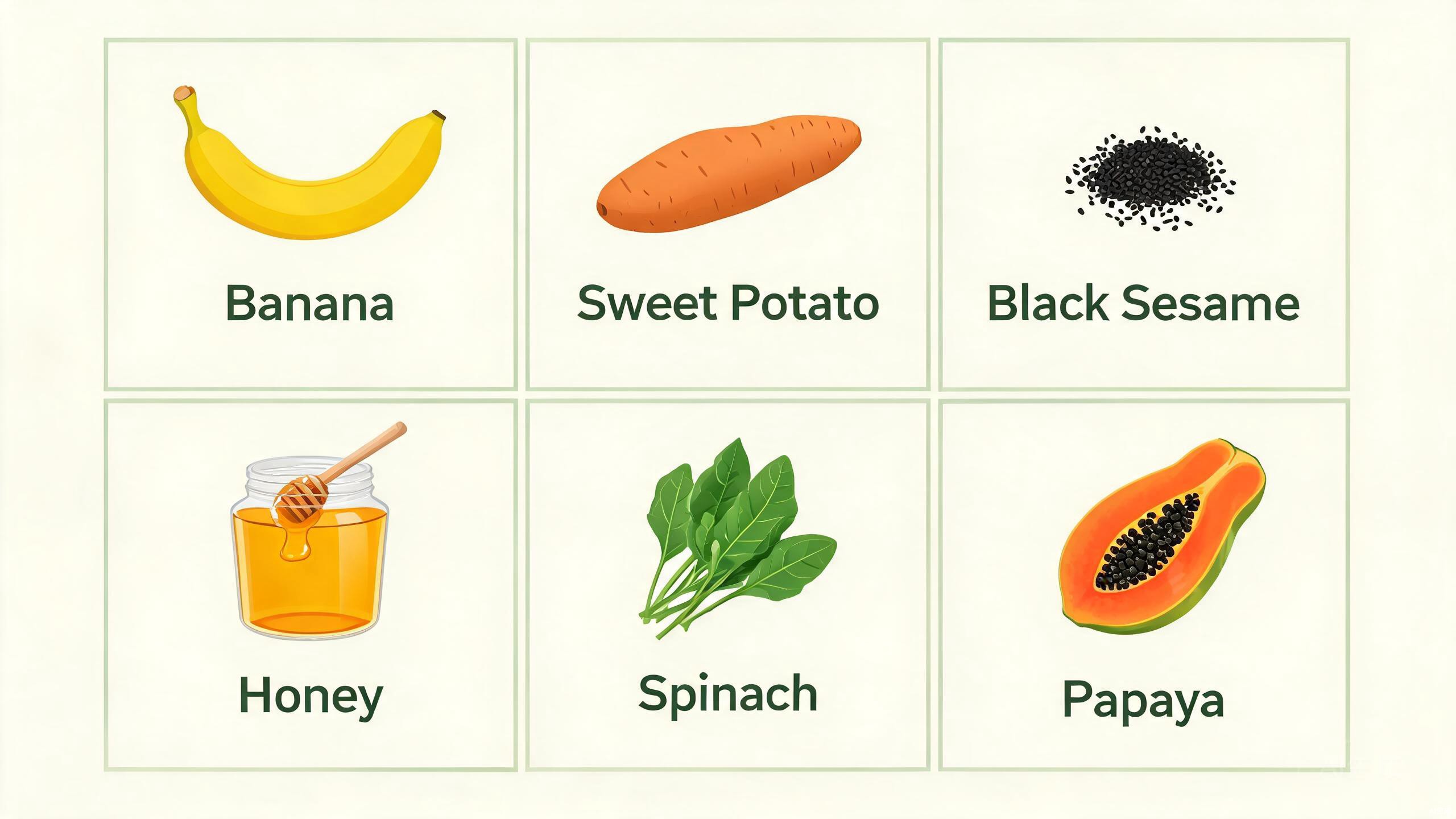
The beauty of the TCM approach lies in its accessibility. The five food therapies in this guide use ingredients you can find at any Western supermarket, health food store, or online retailer like Amazon or iHerb. Honey, black sesame seeds, pine nuts, walnuts, spinach, tofu, bananas, oatmeal, and cassia seeds are all easy to source — no specialty herb shop required. If you are new to TCM dietary concepts, our introduction to Traditional Chinese Medicine is a helpful starting point.
How TCM Views Constipation
In TCM theory, the Large Intestine (大肠, Da Chang) is paired with the Lungs and is responsible for receiving waste from the Small Intestine, absorbing remaining fluids, and forming and excreting stool. When this process functions smoothly, bowel movements are regular, formed, and effortless. When it is disrupted, constipation results. But TCM does not stop at the Large Intestine — it looks at the whole system to understand why the disruption occurred.
The three most common TCM patterns associated with constipation are:
- Large Intestine Fluid Deficiency (大肠津液不足) — This is the most common pattern. Stools are dry, hard, and difficult to pass, sometimes described as "sheep droppings" (small, dry, round lumps). The person may also have a dry mouth, dry skin, and scanty urine. This pattern often arises from inadequate fluid intake, eating too many drying or spicy foods, fever, or aging. The strategy is to moisten and lubricate the intestines.
- Qi Stagnation Constipation (气机郁滞) — Here, the stool may not be particularly dry, but it is difficult to pass — there is a sense of incomplete evacuation, bloating, and fullness in the abdomen. This pattern is strongly linked to emotional stress, worry, and a sedentary lifestyle, which cause the body's qi (energy) to stagnate rather than flow smoothly. The strategy is to move qi and relieve stagnation.
- Spleen Qi Deficiency Constipation (脾虚便秘) — In this pattern, the person lacks the "pushing power" to move stool through the intestines. Stools may alternate between loose and dry, and the person feels fatigued, especially after eating. There may be a pale complexion and weak voice. This pattern often follows chronic illness, poor diet, or overwork. The strategy is to strengthen spleen qi and gently moisten the intestines.
By understanding which pattern best describes your situation, you can choose foods that address the root imbalance rather than just the symptom. To learn more about the foundational concepts, see our guides on qi, blood, and body fluids and the balance of yin and yang.
Five Food Therapies for Constipation Support
The following five food therapies are staples of Chinese home kitchens, each chosen for a specific role in supporting bowel regularity. Some moisten and lubricate dry intestines; others move stagnant qi or strengthen the spleen's propulsive function. They are not medicines, and they are not a replacement for any prescribed treatment. All ingredients can be found at Western supermarkets, health food stores, Amazon, or iHerb.
1. Honey and Black Sesame Paste (蜂蜜黑芝麻糊)
TCM nature: Honey is sweet, neutral; black sesame is sweet, neutral. Enters: Lung, Spleen, Large Intestine, Liver, and Kidney channels.
This is arguably the single most famous TCM food remedy for constipation. Honey is traditionally classified as a substance that "moistens the intestines" (润肠) and "nourishes the spleen and stomach." Black sesame seeds are rich in oils and are traditionally used to "nourish liver and kidney yin," "benefit essence," and "moisten the intestines." Together, they create a potent lubricating combination that directly addresses the large intestine fluid deficiency pattern — the dry, hard, difficult-to-pass stools that are the hallmark of the most common form of constipation.
The remedy is traditionally taken first thing in the morning on an empty stomach, when the body's digestive channels are most receptive. The oils in sesame and the natural sugars in honey work together to coat and lubricate the intestinal tract, while the warmth of the paste stimulates the downward flow of qi.
How to prepare: Toast 2 tablespoons of black sesame seeds in a dry pan over low heat for 3 to 5 minutes until fragrant, stirring constantly to prevent burning. Let cool, then grind into a fine powder using a coffee grinder or mortar and pestle. Mix the powder with 1 tablespoon of raw honey and 2 to 3 tablespoons of warm water to form a smooth paste. Consume on an empty stomach in the morning, followed by a cup of warm water. Black sesame seeds and sesame paste (黑芝麻酱) are readily available on Amazon and at most health food stores.
Caution: Do not give honey to children under 1 year old due to the risk of infant botulism. People with diabetes should use honey cautiously and consult their healthcare provider. If you have loose stools or diarrhea, avoid this remedy, as its moistening action may worsen those symptoms. Consult your healthcare provider if you take medication.
Black sesame paste can be prepared in larger batches. Toast and grind a cup of seeds, store the powder in an airtight jar in the refrigerator, and mix a spoonful with honey each morning. This keeps the preparation quick and easy for daily use.
2. Pine Nut and Walnut Porridge (松子核桃粥)
TCM nature: Pine nuts are sweet, warm; walnuts are sweet, warm. Enters: Large Intestine, Lung, Kidney, and Liver channels.
Both pine nuts and walnuts are classified in TCM as foods that "moisten the intestines" and "nourish yin." Pine nuts are particularly valued for their high oil content and gentle, lubricating action on the intestines — they are one of the few nuts specifically categorized for their bowel-moistening properties. Walnuts add a warming, kidney-nourishing quality that supports the body's deeper reserves. When combined with rice to make a porridge (congee), this remedy is both nourishing and easy to digest, making it suitable for people whose constipation is accompanied by dryness and mild depletion — particularly older adults and those recovering from illness.
This remedy is especially appropriate for the fluid deficiency pattern, where stools are dry and hard, and the person feels dry overall — dry skin, dry mouth, perhaps a dry cough. The warming nature of the nuts also gently supports the spleen's transformative function, so this porridge does more than just lubricate — it also strengthens.
How to prepare: Rinse 1/2 cup of white rice (or glutinous rice for a creamier texture). Combine with 4 cups of water in a pot, bring to a boil, then reduce heat and simmer. After 15 minutes, add 2 tablespoons of pine nuts and 2 tablespoons of chopped walnuts. Continue simmering for another 15 to 20 minutes until the porridge is thick and creamy. Add a pinch of salt or a drizzle of honey to taste. Eat warm, preferably in the morning or as a light evening meal. Pine nuts and walnuts are available at all supermarkets.
Caution: Walnuts and pine nuts are calorie-dense. If you are managing your weight, consume in moderation. People with nut allergies should avoid this remedy entirely. If you have loose stools or spleen deficiency with dampness (bloating, heavy feeling, thick tongue coating), the oily nature of this porridge may not be suitable. Consult your healthcare provider if you take medication.
3. Spinach and Tofu Soup (菠菜豆腐汤)
TCM nature: Spinach is sweet, cool; tofu is sweet, cool. Enters: Stomach, Large Intestine, and Spleen channels.
In traditional Chinese food therapy, the original version of this soup uses spinach with pork blood, which is believed to "nourish blood" and "lubricate the intestines." However, pork blood is not widely available or culturally accepted in Western countries. We have adapted this recipe to use tofu instead, which is equally accessible and shares a similar cooling, moistening nature. Tofu is traditionally classified as a food that "clears heat," "moistens the intestines," and "benefits qi." Spinach is valued for its cooling, blood-nourishing, and lubricating properties. Together, they create a light, hydrating soup that supports bowel regularity through fluid nourishment rather than heavy oils.
This soup is particularly suitable for constipation accompanied by heat signs — a feeling of internal warmth, dry mouth, dark urine, and irritability. The cooling nature of both spinach and tofu helps clear heat while their moistening quality supports the intestines.
How to prepare: Cut 1 block of firm tofu into small cubes. Wash 2 cups of fresh spinach and cut into bite-sized pieces. Bring 4 cups of vegetable or chicken broth to a boil, add the tofu, and simmer for 5 minutes. Add the spinach and cook for 1 to 2 minutes until wilted. Season with a pinch of salt, a few drops of sesame oil, and a dash of white pepper. Serve warm. This soup can be eaten daily as part of a meal. All ingredients are available at any supermarket.
Caution: Spinach is high in oxalates. If you have a history of kidney stones, consult your healthcare provider before consuming large amounts. Tofu is generally safe, but if you have a soy allergy, substitute with mushrooms or zucchini. The cooling nature of this soup means it may not be ideal for those with cold, weak digestion (cold hands and feet, preference for warm drinks, loose stools). For more on warming the digestive system, see our guide on TCM for stomach cold.
4. Banana Oatmeal Porridge (香蕉燕麦粥)
TCM nature: Banana is sweet, cold; oats are sweet, warm. Enters: Spleen, Stomach, and Large Intestine channels.
Bananas are traditionally used in TCM to "moisten the intestines" and "clear heat." Their sweet, cooling nature makes them suitable for constipation with heat and dryness. Oats, on the other hand, are sweet and warming, traditionally used to "strengthen the spleen" and "nourish qi." This combination of cooling (banana) and warming (oats) creates a balanced remedy that both moistens the intestines and supports the spleen's digestive function — making it suitable for a wide range of constipation patterns, including mild spleen qi deficiency.
From a modern nutritional perspective, this combination makes excellent sense: bananas provide potassium and natural sugars, while oats provide soluble fiber (beta-glucan) that softens stool and feeds beneficial gut bacteria. The synergy between Eastern tradition and Western nutrition is especially clear here.
How to prepare: Combine 1/2 cup of rolled oats with 2 cups of water (or milk of your choice) in a pot. Bring to a boil, then reduce heat and simmer for 10 to 15 minutes, stirring occasionally, until creamy. Remove from heat and mash 1 ripe banana into the porridge. Add a pinch of cinnamon and a drizzle of honey if desired. Eat warm for breakfast. Rolled oats and bananas are available at every supermarket. For a TCM-inspired variation, add a few chopped walnuts.
Caution: In TCM, bananas are cooling. If you have cold, weak digestion (cold hands and feet, chronic loose stools, preference for very warm food), eat bananas in moderation and always cooked or warm, as in this porridge. Unripe bananas contain resistant starch that can actually worsen constipation — always use fully ripe bananas with brown spots. Consult your healthcare provider if you take medication or have kidney disease (due to potassium content).
5. Cassia Seed Tea (决明子茶)
TCM nature: Sweet, bitter, salty, slightly cold. Enters: Liver and Large Intestine channels.
Cassia seeds (决明子, Jue Ming Zi) are one of the most important herbs in TCM for supporting bowel regularity. They are traditionally classified as a substance that "clears liver heat," "brightens the eyes," and "moistens the intestines." This dual action — clearing heat from the liver while lubricating the intestines — makes cassia seed tea uniquely suited for constipation that is accompanied by irritability, red or dry eyes, headaches, and a feeling of internal heat. This is the classic presentation of "liver heat" constipation, which often follows chronic stress and overwork.
Cassia seeds are widely available on Amazon, iHerb, and at Asian grocery stores. When brewed, they produce a tea with a deep amber color, a roasted, nutty aroma, and a slightly bitter taste that is pleasantly cleansing. The seeds contain compounds that, from a modern perspective, may gently stimulate bowel motility and support liver function.
How to prepare: Lightly roast 2 tablespoons of dried cassia seeds in a dry pan over medium heat for 2 to 3 minutes until fragrant (this step reduces their cold nature and improves flavor). Transfer to a teapot or cup and pour 10 oz of boiling water over them. Cover and steep for 10 to 15 minutes. Strain and drink warm. Drink 1 to 2 cups per day, ideally in the afternoon. For a balanced blend, combine with a small pinch of chrysanthemum flowers.
Caution: Cassia seeds are cooling and may cause loose stools if consumed in excess. Use for 1 to 2 weeks at a time, then take a break. Cassia seeds may lower blood pressure and should not be combined with blood pressure medication without consulting your healthcare provider. Avoid during pregnancy and diarrhea. Long-term, high-dose use is not recommended. See our herbal tea safety guide for more.
Comparison of the Five Constipation Remedies
| Remedy | TCM Nature | Traditional Use | Best For | Preparation |
|---|---|---|---|---|
| Honey & Black Sesame Paste | Sweet, neutral | Moisten intestines, nourish yin | Dry, hard stools (fluid deficiency) | Morning, empty stomach |
| Pine Nut & Walnut Porridge | Sweet, warm | Nourish yin, lubricate bowels | Dry stools with depletion (elderly) | Breakfast or dinner |
| Spinach & Tofu Soup | Sweet, cool | Clear heat, moisten intestines | Constipation with heat signs | With meals |
| Banana Oatmeal Porridge | Sweet, balanced | Moisten intestines, strengthen spleen | General constipation support | Breakfast |
| Cassia Seed Tea | Bitter, cold | Clear liver heat, moisten bowels | Constipation with irritability, headache | 1–2 cups, afternoon |
Choosing the Right Remedy for Your Pattern
Because TCM distinguishes between different types of constipation, the most effective approach is to match the remedy to your pattern. Here is a simple guide:
- If your stools are dry, hard, and round (like sheep droppings), with dry mouth and skin — this is fluid deficiency. Choose honey and black sesame paste or pine nut and walnut porridge.
- If you feel bloated and full, with a sense of incomplete evacuation — this is qi stagnation. Choose cassia seed tea (which also moves liver qi) and add gentle movement like walking.
- If you feel fatigued, with weak digestion and stools that alternate between loose and dry — this is spleen qi deficiency. Choose banana oatmeal porridge and see our TCM for digestion guide for spleen-strengthening foods.
- If you feel hot, irritable, and have dry eyes or headaches — this is liver heat. Choose cassia seed tea or spinach and tofu soup.
For an overall digestive wellness approach, see our guide to TCM for digestion, which covers the Spleen and Stomach in depth. If your constipation is related to stress, our herbal tea for anxiety guide may also be relevant.
Lifestyle Tips for Bowel Regularity From a TCM Perspective
Food therapy works best when combined with supportive daily habits. TCM has always emphasized lifestyle alongside diet. The following practices are traditionally recommended for bowel regularity:
- Drink warm water. TCM strongly favors warm or room-temperature water over ice-cold drinks. Warm water is believed to support the spleen and stomach's function and help moisten the intestines. Start your day with a cup of warm water before breakfast.
- Establish a morning routine. The Large Intestine's peak energy time in the TCM organ clock is 5 to 7 AM. Establishing a regular morning bathroom habit — even if nothing happens immediately — helps train the body's rhythm.
- Eat warm, cooked foods. The Spleen thrives on warmth. Excessive raw foods, cold drinks, and frozen desserts can weaken the spleen over time, indirectly affecting bowel function. See our guide to stomach cold for more on this principle.
- Move your body. Physical movement promotes the flow of qi. A short walk after meals, gentle stretching, or practices like tai chi and qigong can help move stagnant qi that contributes to constipation. See our acupressure for constipation guide for targeted self-massage techniques.
- Manage stress. Emotional stress and worry are major contributors to qi stagnation constipation. Practices like meditation and calming teas can support both emotional and digestive balance.
- Eat adequate oils. In TCM, healthy oils from nuts and seeds are considered essential for intestinal lubrication. Very low-fat diets can contribute to dryness. Include moderate amounts of sesame seeds, walnuts, pine nuts, and a little olive or sesame oil in your diet.
When to See a Doctor
The foods and practices in this article are complementary wellness traditions, not medical treatments. Constipation can be a sign of serious medical conditions. You should see a healthcare provider if you experience any of the following:
- Constipation lasting more than two weeks despite dietary changes
- Severe abdominal pain or cramping
- Blood in your stool or black, tarry stools
- Unexplained weight loss, fever, or night sweats
- Alternating constipation and diarrhea
- Constipation accompanied by nausea and vomiting
- A sudden change in bowel habits lasting more than a few days
- Constipation that does not respond to over-the-counter remedies
If you are currently taking medication — especially laxatives, blood pressure medication, or gastrointestinal prescriptions — speak with your doctor before adding any new herbs, teas, or foods to your routine. For more everyday kitchen wisdom, see our guide to everyday TCM kitchen remedies.
The Bottom Line
Constipation is one of the most common reasons people explore TCM food therapy, and for good reason — the tradition offers a nuanced, pattern-based approach that goes beyond simply adding fiber. By understanding whether your constipation is rooted in fluid deficiency, qi stagnation, or spleen weakness, you can choose foods that address the underlying imbalance rather than just the symptom.
Honey and black sesame paste remains the most popular and accessible remedy, taken on an empty stomach each morning to lubricate dry intestines. Pine nut and walnut porridge offers gentle nourishment for depleted systems. Spinach and tofu soup provides cooling, hydrating support. Banana oatmeal porridge balances moistening and spleen-strengthening actions. And cassia seed tea addresses the liver-heat pattern that underlies stress-related constipation.
But these are traditions — not treatments, and not a replacement for medical care. The most powerful practice for bowel regularity in TCM is not any single food, but the way of living itself: warm water, regular meals, gentle movement, stress management, and listening to your body's natural rhythms. Paired with these habits, the food therapies in this guide may support smoother, more comfortable digestion — one cup, one bowl, one day at a time.
This article shares traditional wellness practices for educational purposes only. It is not a substitute for medical advice, diagnosis, or treatment. The foods described here are not intended to treat, cure, or prevent any disease. Constipation can be a symptom of serious medical conditions — persistent or severe symptoms require medical evaluation. If you are pregnant, nursing, or take medication, consult your healthcare provider before making dietary changes. These statements have not been evaluated by the FDA. Never stop or adjust prescribed medication without your doctor's explicit guidance.