Key Takeaways
- In TCM, digestion is governed by the Spleen (脾, Pi) and Stomach (胃, Wei) — together known as the "postnatal foundation" of health, the source of all qi and blood production.
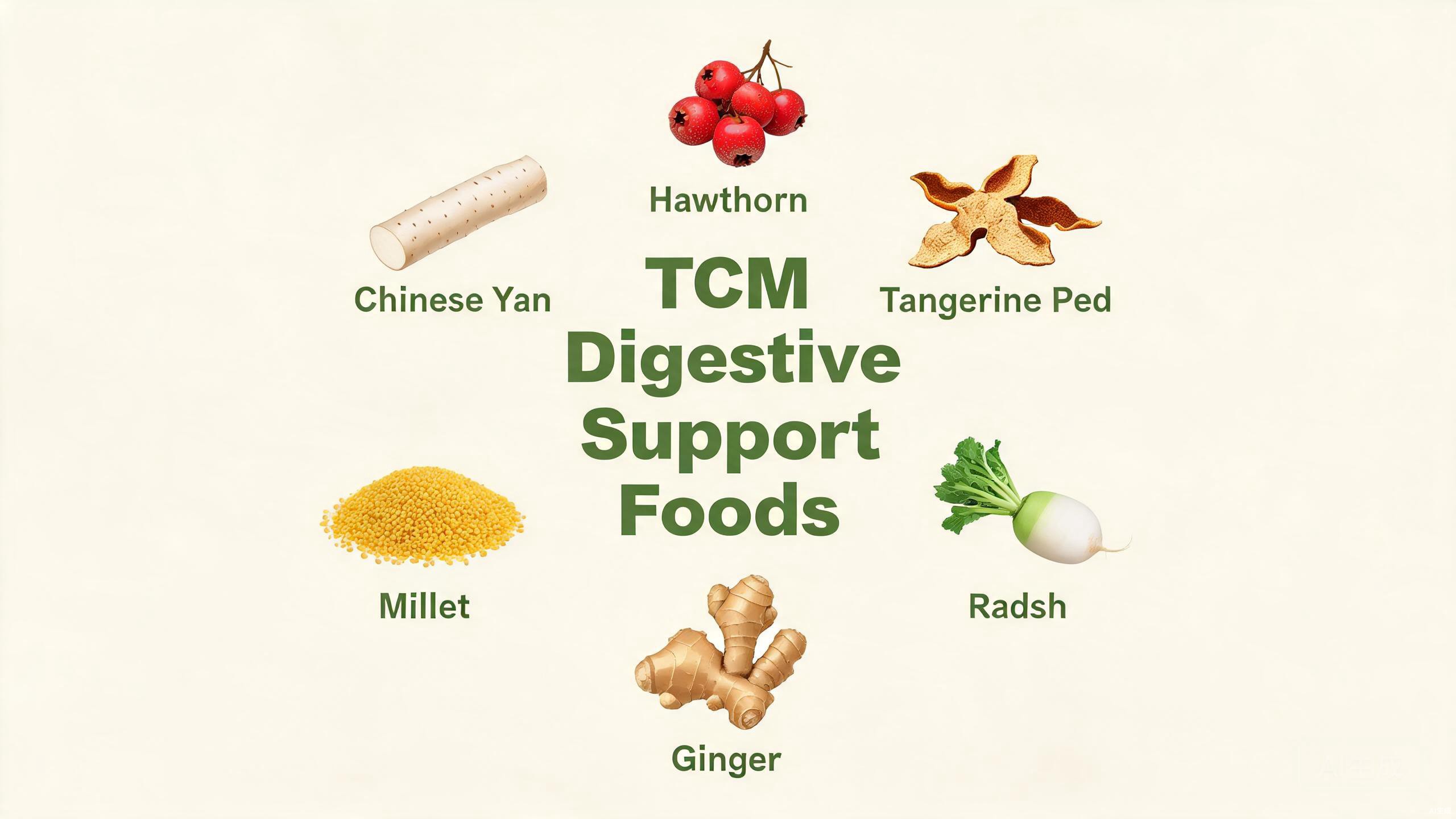
- Five everyday foods — hawthorn, Chinese yam, millet, radish, and barley sprout tea — are traditionally used to support digestive wellness in different ways.
- TCM distinguishes between foods that strengthen the Spleen (tonify) and foods that move stagnation (resolve) — the right choice depends on whether the problem is weakness or blockage.
- TCM strongly favors warm, cooked foods over raw or cold foods for digestive health, because the Spleen thrives on warmth.
- These are traditional wellness practices, not medical treatments. Always consult your healthcare provider before making dietary changes, especially if you take medication.
This article is for educational purposes only and is not medical advice. The foods and practices described here are traditional wellness practices rooted in Chinese culture. They are not a substitute for professional medical care, diagnosis, or treatment. Digestive symptoms can be signs of serious conditions, including ulcers, inflammatory bowel disease, celiac disease, or gastrointestinal cancers. Never stop, adjust, or replace prescribed medication based on information in this article. If you are pregnant, nursing, have a pre-existing condition, or take medication, consult your healthcare provider before making dietary changes. Some foods and herbs may interact with medications — always inform your doctor about everything you consume. These statements have not been evaluated by the FDA and are not intended to diagnose, treat, cure, or prevent any disease.
Bloating after meals. A heavy, uncomfortable feeling in the stomach. Fatigue that sets in after eating. Irregular bowel movements. These are among the most common complaints that bring people to explore Traditional Chinese Medicine — and for good reason. In TCM, the digestive system is not just one organ among many. It is considered the "postnatal foundation" (后天之本, hou tian zhi ben) of the entire body — the source from which all qi (energy) and blood are produced after birth. Every cell, every tissue, every other organ depends on the Spleen and Stomach to transform food into usable nourishment.
This is why, in Chinese households, so much attention is paid to what and how you eat. A cup of barley tea after a heavy meal. A bowl of millet congee for breakfast. Hawthorn candy after a feast. These are not random habits — they are part of a sophisticated food-as-medicine tradition that has been refined over thousands of years. In this guide, we will explore five everyday foods that TCM uses to support digestive wellness, and the theory that makes them work.
If you are new to TCM concepts, our introduction to Traditional Chinese Medicine is a helpful starting point before diving in.
How TCM Views Digestion: The Spleen and Stomach
In Western medicine, the spleen is a lymphatic organ with immune and blood-filtering functions, and digestion is handled primarily by the stomach, intestines, liver, gallbladder, and pancreas. In TCM, the picture is quite different. The Spleen (脾, Pi) and Stomach (胃, Wei) are paired as a functional unit that governs the entire digestive process — from receiving food to transforming it into qi and blood.
Here is how TCM describes the division of labor:
- The Stomach governs reception. The Stomach is responsible for receiving food and drink and beginning the process of breakdown. In TCM, it is said to "likes moisture but dislikes dryness." Its energy naturally flows downward — when this downward flow is disrupted, symptoms like nausea, vomiting, acid reflux, and hiccups arise.
- The Spleen governs transformation and transportation. The Spleen takes what the Stomach has received and "transforms" it — extracting the pure nutritive essence and "transporting" it throughout the body to be used as qi and blood. The Spleen's energy naturally flows upward — when this upward flow is disrupted, symptoms like diarrhea, organ prolapse, and fatigue after eating can occur.
- The Spleen and Stomach are the source of qi and blood. Because all qi and blood are derived from the food the Spleen and Stomach process, their health is fundamental to every other organ. A weak Spleen means insufficient qi and blood production, which can affect the Heart, Lungs, Liver, and Kidneys.
When the Spleen and Stomach are functioning well, digestion is smooth, energy is steady, appetite is healthy, and bowel movements are regular. When they are weakened — by poor diet, overeating, excessive cold or raw foods, stress, or overwork — a cluster of symptoms appears that TCM collectively calls "Spleen qi deficiency" (脾气虚, pi qi xu):
- Bloating and fullness, especially after eating
- Fatigue and lethargy, particularly post-meal
- Loose stools or chronic diarrhea
- Poor appetite or feeling full quickly
- A pale complexion and weak voice
- Easy bruising (the Spleen is also said to "keep blood in the vessels")
Another common pattern is "food stagnation" (食积, shi ji) — when food sits in the stomach too long without being properly digested. This typically follows overeating, eating too quickly, or consuming heavy, greasy meals. Symptoms include a feeling of fullness and distension, belching, acid reflux, bad breath, and a thick coating on the tongue. Different foods address different aspects of these patterns: some strengthen, some move, some resolve stagnation. To learn more about the organ systems involved, see our guide to Zang-Fu organs, and for the substances these organs produce, our guide on qi, blood, and body fluids.
Five Foods That Support Digestive Wellness
The following five foods are staples of East Asian kitchens, each chosen for a specific digestive role. Some strengthen the Spleen over time; others provide quick relief after a heavy meal. Together, they represent a balanced approach to digestive wellness. They are not medicines, and they are not a replacement for any prescribed treatment.
1. Hawthorn (山楂, Shan Zha)
TCM nature: Sour, sweet, slightly warm. Enters: Spleen, Stomach, and Liver channels.
Hawthorn is the single most important food for resolving food stagnation in all of TCM. It is traditionally used to "transform food stagnation" — especially the stagnation that follows heavy meals of meat, fats, and rich foods. If you have ever eaten a hawthorn candy (山楂糕) or sipped hawthorn tea (山楂茶) after a big Chinese banquet, you have experienced this tradition in action. The sour flavor in TCM is associated with an astringent, gathering quality, but hawthorn's specific action is digestive — it helps the Stomach break down stubborn, heavy foods that are sitting and causing discomfort. It is also traditionally said to "invigorate blood circulation," which is why it appears in our hawthorn tea guide for cardiovascular wellness as well.
How to prepare: Simmer 10 to 15 grams of dried hawthorn slices in 10 oz of water for 10 minutes. Drink the tart, ruby-red tea warm after a heavy meal. For a digestive candy, look for hawthorn flakes (山楂片) at Asian grocery stores — eat 2 to 3 small pieces after a rich meal. Hawthorn can also be added to braised meat dishes, where it helps tenderize the meat and aids digestion of the fat.
Caution: Hawthorn is sour and may irritate the stomach lining if consumed on an empty stomach or in excess. It may interact with blood-thinning medications and heart medications. Avoid during pregnancy. Consult your healthcare provider if you take any prescription medication. See our herbal tea safety guide for more.
2. Chinese Yam (山药, Shan Yao)
TCM nature: Sweet, neutral. Enters: Spleen, Lung, and Kidney channels.
If hawthorn is the "rescue" food for acute stagnation, Chinese yam (also called dioscorea or shan yao) is the "daily tonic" for long-term Spleen strengthening. It is traditionally used to "strengthen spleen qi," "nourish the stomach," and "supplement lung and kidney yin." Its gentle, sweet, neutral nature makes it suitable for almost everyone — it is one of the few tonic foods in TCM that can be eaten daily without concern. For people with chronic Spleen qi deficiency — the ongoing fatigue, bloating, and loose stools described above — Chinese yam is one of the most important foods to incorporate regularly. It is also naturally mucilaginous (slightly slippery when cooked), which coats and soothes the digestive tract.
How to prepare: Peel fresh Chinese yam (wear gloves, as the raw sap can irritate skin) and slice into rounds. Stir-fry briefly with a little oil and salt for a simple side dish. Alternatively, cut into chunks and add to soups or stews — it becomes soft, starchy, and mildly sweet. For a Spleen-strengthening congee, combine diced Chinese yam with millet and water, and simmer until creamy. Dried Chinese yam slices are also available and can be simmered in soups or steeped as tea.
Caution: Chinese yam is one of the gentlest foods in TCM and is generally safe for regular consumption. If you are constipated, its slightly astringent nature means you should consume it in moderation. Some people experience skin irritation from the raw sap — always wear gloves when peeling fresh yam. Consult your healthcare provider if you take medication.
3. Millet (小米, Xiao Mi)
TCM nature: Sweet, salty, slightly cool. Enters: Spleen, Stomach, and Kidney channels.
Millet is the grain of digestive wellness in TCM. It is traditionally used to "nourish the stomach," "strengthen the spleen," and "supplement kidney qi." In northern China, millet congee (小米粥) is the quintessential comfort food — served to the sick, the elderly, the recovering, and anyone whose digestion needs a rest. The golden, slightly sweet porridge is one of the easiest foods for the Stomach to receive and the Spleen to transform. Its slightly cool nature is tempered by cooking, making it gentle and neutral enough for daily consumption. Millet is naturally gluten-free and rich in B vitamins, which aligns well with modern nutritional understanding of digestive support.
How to prepare: Rinse 1 cup of millet. Combine with 6 to 8 cups of water in a pot, bring to a boil, then reduce heat and simmer for 20 to 30 minutes, stirring occasionally, until the congee is thick and creamy. The longer it simmers, the more nourishing it becomes. For added digestive benefit, add diced Chinese yam or a few red dates (jujubes) during cooking. Eat warm for breakfast or as a light evening meal. A thin layer of "millet oil" (the film that forms on top) is considered especially nourishing for the stomach.
Caution: Millet is one of the safest and gentlest grains in TCM. It is generally appropriate for everyone, including those with weak digestion. If you have a thyroid condition, consult your healthcare provider, as millet contains mild goitrogenic compounds. Otherwise, it is a safe daily staple.
4. Radish (白萝卜, Bai Luo Bo)
TCM nature: Sweet, pungent, cool. Enters: Lung and Stomach channels.
White radish (daikon) is the great "mover" of the TCM kitchen. It is traditionally used to "move qi downward," "resolve food stagnation," and "clear heat." When food stagnates in the Stomach — that heavy, bloated, stuck feeling after overeating — radish is the food that helps get things moving again. Its pungent, cool nature cuts through greasiness and encourages the downward flow of Stomach qi that is essential for normal digestion. In northern China, there is a saying: "Eating radish in winter and ginger in summer keeps the doctor away." Radish soup is a traditional remedy for post-feast bloating, and radish is often paired with fatty meats in braised dishes precisely because it aids the digestion of fats.
How to prepare: Peel and slice half a white radish into thin rounds or cubes. Simmer with a few slices of ginger in water for 20 to 30 minutes, then season with salt and a little white pepper. Drink the broth and eat the radish. For a stronger stagnation-resolving effect, grate raw radish, mix with a little rice vinegar and honey, and eat 1 to 2 tablespoons after a heavy meal. Radish can also be added to stews with beef or pork, where it absorbs the rich broth and helps digest the meat.
Caution: Radish is cooling and qi-moving. Avoid large amounts if you have cold, weak digestion (chronic loose stools, cold extremities). Radish is traditionally said to reduce the effects of ginseng and other qi-tonifying herbs — do not consume them at the same time. Consult your healthcare provider if you take medication or have a thyroid condition.
5. Barley Sprout Tea (大麦茶, Da Mai Cha)
TCM nature: Sweet, warm (when roasted). Enters: Spleen and Stomach channels.
Roasted barley tea is the unsung hero of East Asian digestive wellness. It is the default after-meal beverage in Korean and Japanese restaurants, and in China, barley sprout tea (made from roasted barley or malted barley sprouts, known as 麦芽, mai ya) is a traditional remedy for "food stagnation" and "stomach fullness." Barley sprouts (麦芽) are specifically classified in TCM as a food that "transforms food stagnation" and "aids the digestion of starches," making them a complement to hawthorn (which is better for meat and fats). The roasted, nutty flavor of barley tea is caffeine-free, warming, and deeply comforting. It is the perfect digestive beverage for everyday use — gentle enough to drink daily, effective enough to make a difference.
How to prepare: Place 2 tablespoons of roasted barley grains (available at Asian grocery stores) in a pot with 4 cups of water. Bring to a boil, then simmer for 5 to 10 minutes. Strain and serve warm. The tea will be amber-brown with a toasty, nutty aroma. For a simpler version, look for barley tea bags and steep in hot water for 3 to 5 minutes. Drink 1 to 3 cups per day, especially after meals. In summer, barley tea can be served at room temperature or lightly chilled (though TCM prefers warm for digestion).
Caution: Barley contains gluten. If you have celiac disease or gluten sensitivity, avoid barley tea. If you take medication, consult your healthcare provider. Barley sprout (mai ya) in medicinal amounts may reduce milk production in nursing mothers — consult your healthcare provider if breastfeeding. Otherwise, barley tea is a safe and gentle everyday beverage.
Comparison of the Five Digestive Foods
| Food | TCM Nature | Traditional Use | Preparation | Typical Frequency |
|---|---|---|---|---|
| Hawthorn (Shan Zha) | Sour, sweet, slightly warm | Transform food stagnation (meat/fats) | Simmer slices as tea, or eat as candy | After heavy meals, as needed |
| Chinese Yam (Shan Yao) | Sweet, neutral | Strengthen spleen qi, nourish stomach | Stir-fry, add to soup, or make congee | Daily, as a staple |
| Millet (Xiao Mi) | Sweet, salty, slightly cool | Nourish stomach, strengthen spleen | Cook as congee or porridge | Daily, especially breakfast |
| Radish (Bai Luo Bo) | Sweet, pungent, cool | Move qi downward, resolve stagnation | Simmer as soup, or grate raw | After heavy meals, as needed |
| Barley Sprout Tea (Da Mai Cha) | Sweet, warm (roasted) | Aid digestion, reduce bloating | Simmer roasted barley as tea | 1–3 cups daily, after meals |
How to Build a Digestive-Supportive Day
These foods work best when woven into the rhythm of daily eating rather than used in isolation. Here is what a simple, TCM-inspired digestive wellness day might look like:
- Morning: Start with a warm bowl of millet congee, perhaps with diced Chinese yam stirred in. This is the gentlest way to wake the Spleen and Stomach after a night of fasting. Avoid cold cereals with cold milk, which TCM considers taxing to the digestive fire.
- Midday: A balanced lunch with cooked vegetables, a protein, and a whole grain. If the meal is heavy, follow it with a cup of warm barley sprout tea to support digestion.
- Afternoon: If you feel bloated or heavy after a large lunch, a small cup of hawthorn tea can help transform the stagnation. Sip slowly and warm.
- Evening: Keep dinner light and early. A simple radish soup or a small bowl of millet congee is easy on the Stomach before sleep. TCM advises against eating large meals close to bedtime, as the Spleen and Stomach need rest along with the rest of the body.
In TCM, the Spleen and Stomach are associated with the Earth element and the late summer season, but their wellness matters year-round. The most important digestive habit is not any single food — it is eating warm, cooked meals at regular times, chewing thoroughly, and avoiding ice-cold drinks with meals. These simple practices do more for digestive health than any single remedy.
Digestive Lifestyle Tips From a TCM Perspective
Food is one pillar of digestive wellness, but TCM has always emphasized that how you eat is just as important as what you eat. The following habits are traditionally recommended for Spleen and Stomach health:
- Eat warm, cooked foods. This is the single most repeated piece of TCM dietary advice. The Spleen and Stomach thrive on warmth. Raw salads, ice-cold drinks, frozen desserts, and excessive raw foods are considered damaging to the digestive fire over time. Steaming, stir-frying, simmering, and roasting are all preferred cooking methods.
- Eat at regular times. TCM values rhythm. Eating meals at consistent times helps the Spleen and Stomach function predictably. Skipping meals, eating late at night, or erratic snacking disrupts the digestive rhythm. The TCM clock associates 7 to 11 AM with Stomach and Spleen peak activity — a nourishing breakfast is especially important.
- Chew thoroughly and eat slowly. In TCM, "the Stomach relies on the teeth to do half its work." Thorough chewing reduces the burden on the Stomach and Spleen. Eating while rushed, working, or watching screens is considered harmful to digestion.
- Do not overeat. TCM advises stopping at 70 to 80 percent full. Overeating directly causes food stagnation, which weakens the Spleen over time. Smaller, more frequent meals may be better for those with weak digestion.
- Manage stress and worry. In TCM, the emotion associated with the Spleen is worry and overthinking (思, si). Excessive worry, rumination, and mental strain are said to "knot the spleen qi" and impair digestion. This is the TCM explanation for why stress so often manifests as digestive discomfort. See our TCM emotional wellness guide for more on the emotion-organ connection.
- Keep the abdomen warm. The TCM concept of "protecting the middle" (护中) means keeping the abdomen warm, especially in cold weather. A light abdominal wrap, avoiding bare midriffs in cold environments, and a warm ginger foot soak before bed all support the Spleen and Stomach's need for warmth.
- Move after eating. A short, gentle walk after meals encourages the smooth flow of qi and helps food move through the digestive tract. This is sometimes called "a hundred steps after a meal" in Chinese tradition. Avoid vigorous exercise immediately after eating.
When to See a Doctor
The foods and practices in this article are complementary wellness traditions, not medical treatments. Digestive symptoms can be signs of serious conditions that require medical diagnosis and treatment. You should see a healthcare provider if you experience any of the following:
- Persistent or severe abdominal pain
- Unexplained weight loss, fever, or night sweats
- Blood in stool or vomit, or black tarry stools
- Persistent nausea, vomiting, or difficulty swallowing
- Chronic diarrhea or constipation lasting more than a few weeks
- Jaundice (yellowing of skin or eyes)
- A feeling of fullness after eating very small amounts (early satiety)
- Any new, persistent, or worsening digestive symptoms
If you are currently taking medication — especially blood thinners, diabetes medication, or gastrointestinal prescriptions — speak with your doctor before adding any new herbs, teas, or foods to your routine. Hawthorn may interact with heart and blood-thinning medications; radish may affect the absorption of certain supplements. For more everyday kitchen wisdom, see our guide to everyday TCM kitchen remedies, and for the foundational concepts, our guides on yin and yang and the role of qi, blood, and body fluids.
The Bottom Line
In Traditional Chinese Medicine, the Spleen and Stomach are the foundation of all health — the organs that transform food into the qi and blood that sustain every other system. By incorporating simple, supportive foods like hawthorn, Chinese yam, millet, radish, and barley sprout tea into your daily meals, you are participating in a tradition that has nourished East Asian families for millennia. Each food has a distinct role: hawthorn and radish resolve stagnation after heavy meals; Chinese yam and millet gently strengthen the Spleen over time; barley tea offers daily, gentle support.
But they are traditions — not treatments, and not a replacement for medical care. The most powerful digestive wellness practice in TCM is not any single food, but the way of eating itself: warm, cooked meals at regular times, eaten slowly and without stress. Paired with emotional balance, adequate rest, and gentle movement, these habits form a whole-person approach to digestive health that is as relevant today as it was thousands of years ago.
This article shares traditional wellness practices for educational purposes only. It is not a substitute for medical advice, diagnosis, or treatment. The foods described here are not intended to treat, cure, or prevent any disease. Digestive symptoms can be signs of serious medical conditions — persistent or severe symptoms require medical evaluation. If you are pregnant, nursing, or take medication, consult your healthcare provider before making dietary changes. These statements have not been evaluated by the FDA. Never stop or adjust prescribed medication without your doctor's explicit guidance.