Key Takeaways
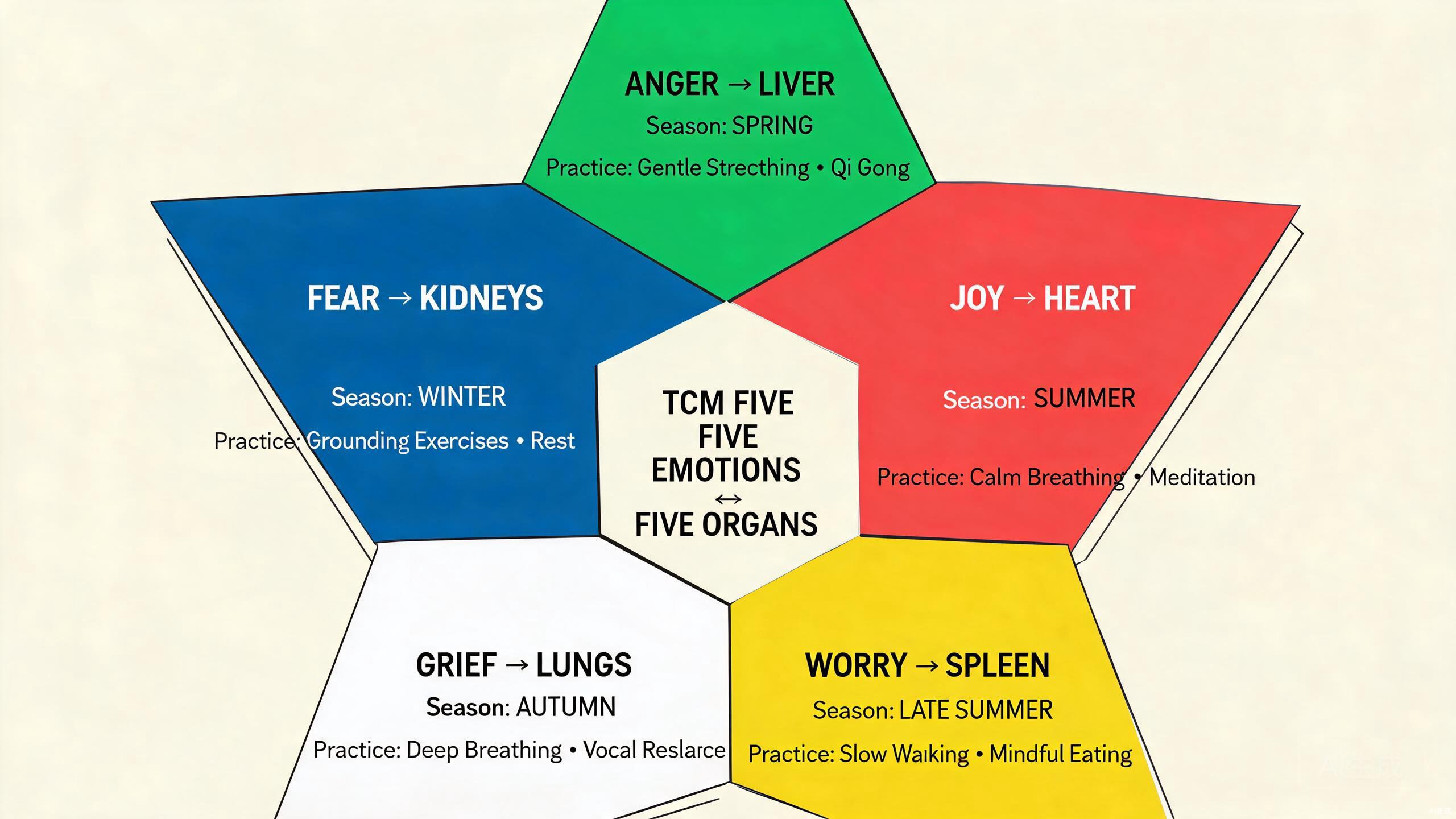
- In TCM, dreams are not random — each organ stores a part of the spirit that shapes dreaming.
- The Liver stores the hun (ethereal soul); restless, vivid, agitated dreams often point to the Liver.
- The Heart stores the shen; flying, fire, or joyful dreams point to the Heart.
- The Kidney stores the zhi (will); fearful dreams or nightmares point to the Kidney.
- Dream patterns are one clue among several — pair them with the time you wake and your insomnia pattern.
This guide is for wellness education only and is not medical advice. The practices described are complementary and are not a replacement for professional care. If you live with chronic or worsening insomnia, talk with your healthcare provider. Some herbs may interact with sleep medications. Read our full disclaimer →
Dreams are a part of sleep we often dismiss, but in TCM they carry meaning. The qualities of your dreams — vivid or vague, frightening or peaceful, full of movement or still — are traditionally read as reflections of the organs that store the spirit. Long before modern sleep science, TCM described a "five spirits" model in which each organ houses an aspect of the psyche, and the state of that organ shapes the night's dreaming.
This guide explores what your dreams may reveal about organ health in TCM, and how to use that insight alongside the rest of this series — the insomnia patterns, the body clock, and the calming practices.
The Five Spirits and Sleep
Recall the five spirits from our pattern guide. Each is stored by an organ, and each has a relationship to sleep and dreaming:
| Organ | Spirit | Aspect | Link to dreams |
|---|---|---|---|
| Heart | Shen (神) | Consciousness, spirit | Vivid, intense, joyful or fiery dreams |
| Liver | Hun (魂) | Ethereal soul, movement | Active, agitated, frustrating dreams |
| Spleen | Yi (意) | Intellect, worry | Mundane, repetitive, worry-based dreams |
| Lung | Po (魄) | Corporeal soul, instinct | Dreams of grief, weeping, or letting go |
| Kidney | Zhi (志) | Will, deep reserves | Fearful dreams, nightmares, drowning |
When an organ is in balance, its aspect of spirit rests quietly and dreams are unremarkable or forgotten. When an organ is disturbed — by heat, stagnation, or deficiency — the corresponding spirit grows restless, and the disturbance shows up in the quality of the dreams.
Liver Dreams: The Restless Hun
The Liver stores the hun — the ethereal soul, associated with movement, dreaming, and the smooth flow of emotion. When Liver qi is stagnant (the most common pattern in modern, stressed life), the hun cannot settle, and dreams become active, vivid, and often frustrating: arguments, being chased, replaying the day's tensions.
This is the Liver qi stagnation sleeper from our pattern guide — the person who lies awake stewing and often wakes between 1 and 3 a.m. (the Liver hour on the body clock). Restless dreams are the nighttime signature of the same imbalance.
Supportive direction
- Rose tea to move stagnant Liver qi (see our tea comparison).
- The point Taichong (LR3) to release frustration.
- Gentle movement — qigong to release the day's tension.
- A wind-down that closes the day emotionally, not just physically.
Heart Dreams: The Agitated Shen
The Heart stores the shen — the overall spirit. When Heart Fire flares upward, the shen is agitated, and dreams become intense, vivid, and often fiery or joyful in a restless way: bright colors, fire, flying, overwhelming imagery. The Heart Fire sleeper often has trouble falling asleep, a red face, and a red tongue tip.
A different Heart pattern — Heart Blood Deficiency — produces a different dream quality: light, anxious sleep with dreams of falling, being startled, or feeling unprepared. Here the shen lacks blood to anchor it.
Supportive direction
- For Heart Fire: lotus plumule tea to clear heat; the point Shenmen (HT7) to calm the shen.
- For Heart Blood Deficiency: sour date seed tea to nourish blood and anchor the shen; red dates and longan in the diet (see our food guide).
Spleen Dreams: The Looping Yi
The Spleen stores the yi — the intellect. When the Spleen is weak, dreams become mundane, repetitive, and worry-based: dreaming about work, lists, tasks you forgot, exams you were not prepared for. The content is ordinary but persistent, and you wake mentally tired rather than physically restored.
Supportive direction
- Warm, light, early meals — the foundation of Spleen care (see our food guide).
- Ginger and red date tea to warm and strengthen the Spleen.
- The point Zusanli (ST36) to support digestion and energy.
- A mental wind-down — write tomorrow's list before bed so the yi can rest.
Lung Dreams: The Po and Grief
The Lung stores the po — the corporeal soul, tied to instinct and grief. Dreams of weeping, loss, or letting go can reflect the Lung. In TCM, unprocessed grief is held in the Lung, and the 3 to 5 a.m. window (the Lung hour on the body clock) is when this can surface as waking or sad dreams.
Supportive direction
- Deep, slow breathing — the simplest Lung support; see our meditation guide.
- Acknowledge grief — gentle emotional processing during the day, not suppression.
- White, moistening foods — pear, lily bulb, white rice (in moderation); see our calming foods guide.
Kidney Dreams: The Zhi and Fear
The Kidney stores the zhi — the will, rooted in the body's deepest reserves. When Kidney qi or yin is low, dreams become fearful: being chased, falling, drowning, or nightmares. This is the Kidney yin deficiency sleeper — the early waker with night sweats, a dry mouth, and a red, uncoated tongue.
Supportive direction
- Lily bulb or goji tea to nourish Kidney yin (see our tea comparison).
- The point Yongquan (KD1) on the sole to draw heat downward.
- A warm foot soak to settle energy into the lower body.
- Rest and warmth — protect the body's reserves; avoid overwork.
Using Dreams as a Clue
Dreams are one piece of a larger picture. To use them well, combine the dream quality with two other clues:
- The time you wake — see the body clock (1 to 3 a.m. Liver, 3 to 5 a.m. Lung or Kidney).
- Your daytime symptoms and tongue — see the five-pattern guide.
For example, frustrating dreams plus 1 to 3 a.m. waking plus a tight, irritable mood strongly suggests the Liver. Fearful dreams plus 3 to 5 a.m. waking plus night sweats suggests Kidney yin. The more clues that align, the more confident the pattern.
Practices for Calmer Dreaming
Whatever the pattern, a few practices support calmer sleep and dreaming across the board:
- Finish eating early and lightly — heavy late meals generate heat and disturb the spirit.
- A calming tea 1 to 2 hours before bed — see our tea comparison.
- A short wind-down — foot soak, acupressure, or meditation.
- Close the day emotionally — a few minutes of journaling or slow breathing can release the day's tension before sleep.
When Dreams Signal Something More
Dreams are usually a benign reflection of the day's state, but persistent distressing dreams, nightmares that disrupt sleep, or dreams accompanied by concerning symptoms deserve attention. If distressing dreams persist for more than a few weeks, come with significant anxiety or low mood, or follow a traumatic event, talk with your healthcare provider or a mental health professional. TCM practices can complement, but not replace, professional care for trauma or persistent distress.
Frequently Asked Questions
What do dreams mean in TCM?
In TCM, dreams are not random. Each organ stores a part of the spirit — the Liver stores the hun (ethereal soul), the Heart the shen, the Spleen the yi, the Lung the po, and the Kidney the zhi. Disturbance in an organ can shape the quality and content of dreams. Vivid, agitated dreams often point to the Liver or Heart; fearful dreams to the Kidney.
Why do I have vivid dreams every night?
Frequent vivid or agitated dreams often reflect a restless hun — the Liver's spirit — common with stress and Liver qi stagnation, or Heart Fire agitating the shen. A warm, light early dinner, a calming tea such as sour date seed or lotus plumule, and a wind-down may help. If vivid dreams persist with poor sleep, see a qualified practitioner.
What do nightmares mean in TCM?
TCM traditionally links fearful or frightening dreams to the Kidney (which stores the zhi, or will) and to insufficient Kidney qi or yin. They can also accompany Heart Blood Deficiency, where the spirit is unanchored. The pattern matters: night sweats and fear point to Kidney yin; paleness and anxiety point to Heart blood.
Can food or tea affect dreams?
Yes. Heavy, spicy, or late meals can generate heat and disturb the spirit, leading to vivid or agitated dreams. Calming, spirit-settling foods and teas — sour date seed, lotus seed, lily bulb, and red dates — are traditionally used to support calmer sleep and dreaming. See our food and tea guides for pattern-matched options.
The Bottom Line
In TCM, dreams are a window onto the organs that store the spirit. Restless, vivid, frustrating dreams often point to the Liver and its hun; intense or fiery dreams to the Heart; mundane, looping dreams to the Spleen; dreams of grief to the Lung; and fearful dreams or nightmares to the Kidney. Pair the dream quality with the time you wake and your daytime symptoms to identify your pattern, then choose a matching tea, point, and wind-down. Dreams are not something to fear — they are one more clue the body offers, quietly, through the night.
This article is for educational and informational purposes only and is not a substitute for professional medical advice, diagnosis, or treatment. Always consult a qualified healthcare provider before beginning any new wellness practice, especially if you are pregnant, nursing, taking medication, or have a medical condition. Read our full disclaimer →