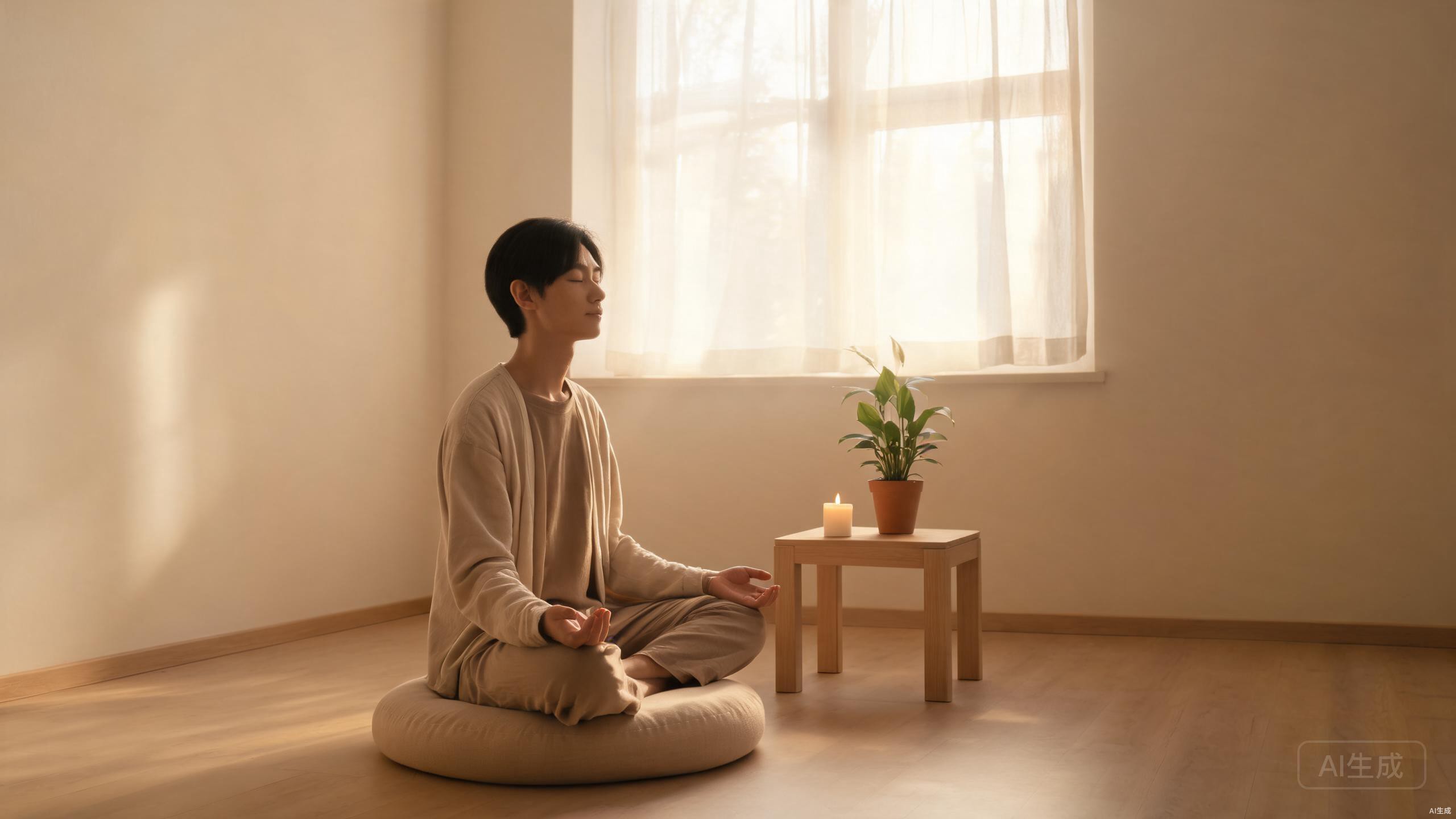
Key Takeaways
- In TCM, meditation for sleep aims to anchor the shen (spirit) so it can rest — not to empty the mind.
- A simple practice takes 5 to 15 minutes: slow abdominal breathing, a body scan, and a downward visualization.
- The key TCM idea is to move attention from the head down into the lower body, mirroring the body's shift into yin.
- It pairs naturally with acupressure, a foot soak, and a calm bedroom.
- Consistency beats length — a short nightly practice is more useful than a long occasional one.
This guide is for wellness education only and is not medical advice. The practices described are complementary and are not a replacement for professional care. If you live with chronic or worsening insomnia, talk with your healthcare provider. Some herbs may interact with sleep medications. Read our full disclaimer →
When the body is tired but the mind will not stop, meditation is one of the most direct ways to bridge the gap. In TCM, the aim of a bedtime meditation is specific: to anchor the shen — the spirit housed by the Heart — so it can settle into rest. This is not about achieving a special state or emptying the mind completely. It is about giving the spirit a single, quiet place to rest, so the body can follow.
This guide offers a simple, secular practice rooted in TCM principles. It complements our broader TCM meditation guide and the gentle movement of qigong for sleep.
How TCM Understands Meditation for Sleep
Recall from our pattern guide that sleep requires the shen to settle. Modern life does the opposite: it pulls the shen outward and upward — into screens, planning, worry. By the time you lie down, the spirit is still "up" in the head, buzzing. A bedtime meditation works on three TCM principles:
- Slow the breath to calm the shen. The breath and the spirit are closely linked in TCM; long, slow breathing steadies the Heart.
- Move attention downward. Shifting focus from the head to the lower body mirrors the body's natural shift from yang (upward, active) to yin (downward, restful).
- Release stagnation. A gentle body scan loosens the physical tension — tight shoulders, a clenched jaw — that mirrors and reinforces mental stagnation.
Preparing to Meditate
- Timing: practice in the last 15 to 30 minutes before sleep, after your wind-down has begun.
- Place: a dim, quiet bedroom (see our environment guide). You can sit on the edge of the bed or lie down.
- Posture: if sitting, keep the spine upright but relaxed; if lying down, let the arms rest at the sides, palms down.
- Phones: put them away — this is the one practice a screen cannot help with.
The Practice: Three Stages
Follow the three stages in order. The whole sequence takes about 10 minutes; you can shorten it to 5 on tired nights by spending less time on each stage.
Stage 1: Slow Abdominal Breathing (3 to 5 minutes)
Place one hand on your lower abdomen, just below the navel. In TCM, this area (the lower dantian) is the body's center of energy. Breathe so that your hand rises gently on the inhale and falls on the exhale.
- Inhale slowly through the nose for a count of 4, feeling the abdomen expand.
- Exhale slowly through the mouth for a count of 6, feeling the abdomen soften.
- The exhale is longer than the inhale — this signals the nervous system to settle.
- Continue for 3 to 5 minutes. If your mind wanders, gently return to the count and the feeling of the hand rising and falling.
Stage 2: A Downward Body Scan (3 to 5 minutes)
Move your attention slowly from the head down to the feet, releasing tension as you go. This mirrors the downward settling the body needs for sleep.
- Head: notice the forehead, the jaw, the tongue. Soften the brow; let the jaw hang slightly open; let the tongue rest behind the front teeth.
- Shoulders and chest: let the shoulders drop away from the ears; feel the chest widen and relax with each exhale.
- Abdomen: feel the breath moving the lower belly; let it be soft and unhurried.
- Legs: feel the weight of the thighs and calves sinking into the bed or seat.
- Feet: rest your attention on the soles of the feet — the location of Yongquan (KD1). Let this be the final resting place of your attention.
Stage 3: A Downward Visualization (2 to 3 minutes)
With your attention on the soles of the feet, picture a gentle warmth or a soft, heavy sensation settling there — as if warm water were pooling in the soles and drawing everything downward. This is the TCM idea of drawing energy (qi) and heat down from the head, away from the racing mind. Stay with this image and the slow breathing for 2 to 3 minutes, then let the visualization go and simply rest.
A Short Version for Tired Nights
On nights when even 10 minutes feels long, use this 3-minute version:
- Six rounds of slow abdominal breathing (inhale 4, exhale 6).
- One slow pass of attention from head to feet, softening as you go.
- Rest your attention on the soles of the feet for one minute of slow breathing.
Troubleshooting Common Difficulties
"My mind won't stop"
This is normal and expected. The goal is not to stop thoughts but to stop fighting them. When a thought arises, label it gently ("thinking") and return to the breath or the soles of the feet. Each return is the practice. Over weeks, the gaps between thoughts lengthen on their own.
"I feel more awake afterward"
If meditation leaves you alert, you may be concentrating too hard. Soften your effort. Try lying down rather than sitting, lengthen the exhale further, and keep the visualization gentle. A few rounds of slow breathing with the attention on the feet is enough.
"I fall asleep during the practice"
If you are meditating in bed at bedtime, falling asleep is not a failure — it is the goal. If you prefer to finish the practice, sit on the edge of the bed until the scan is complete, then lie down.
Pairing Meditation with Other Practices
Meditation sits well at the end of a wind-down sequence:
- A warm, light dinner (see our food guide).
- A calming tea, such as sour date seed tea (see the tea comparison).
- A 15-minute foot soak.
- A short acupressure routine — Yintang pairs especially well.
- The 10-minute meditation above, then sleep.
When Meditation Is Not Enough
Meditation is a supportive practice, not a treatment for a sleep disorder. If insomnia has lasted more than three weeks, is worsening, or comes with significant daytime fatigue, low mood, anxiety, or concerning symptoms, talk with your healthcare provider or a qualified TCM practitioner. Meditation can be part of a broader plan, but persistent insomnia deserves professional assessment. See our guide to insomnia types for guidance on when to seek help.
Frequently Asked Questions
What is the best TCM meditation for sleep?
A simple shen-calming practice works for most people: slow abdominal breathing, a body scan to release tension, and a downward-focused visualization to settle energy from the head into the lower body. There is no single best form — the goal is to anchor the spirit (shen) so it can rest. Consistency matters more than technique.
How long should I meditate before bed?
Five to fifteen minutes is enough for most people. Longer is not necessarily better — the aim is to relax, not to achieve a deep meditative state. A short, consistent practice every night is more useful than a long session occasionally.
Can meditation replace sleep medication?
No. Meditation is a complementary practice that may support relaxation and sleep onset, but it is not a replacement for prescribed medication. If you take sleep medication, do not stop it on your own. Talk with your healthcare provider before changing any treatment, and use meditation alongside, not instead of, professional care.
I can't stop my thoughts — is meditation still useful?
Yes. The goal is not to eliminate thoughts but to stop fighting them. A simple anchor — the breath, or the sensation at Yongquan (KD1) on the soles — gives the mind somewhere to rest. When thoughts arise, notice them and gently return to the anchor. This is the practice, and it gets easier with repetition.
The Bottom Line
A bedtime meditation does not need to be elaborate. Slow abdominal breathing, a downward body scan, and a moment of attention on the soles of the feet — together, they anchor the shen, release the day's tension, and mirror the body's shift into yin. Five to fifteen minutes, nightly, is enough. Paired with a calming tea, a foot soak, and a dark, cool room, it is one of the most dependable ways to invite the spirit to rest.
This article is for educational and informational purposes only and is not a substitute for professional medical advice, diagnosis, or treatment. Always consult a qualified healthcare provider before beginning any new wellness practice, especially if you are pregnant, nursing, taking medication, or have a medical condition. Read our full disclaimer →