Key Takeaways
- TCM matches food to your insomnia pattern — cooling foods for heat patterns, warming foods for deficiency patterns.
- Two universal rules: eat warm, light evening meals, and finish eating 2 to 3 hours before bed.
- Key sleep-supporting foods include red dates, longan, lotus seeds, lily bulb, and warm soups — all available at Asian grocers or online.
- Avoid heavy, greasy, very spicy food, cold or iced drinks, late caffeine, and alcohol near bedtime.
- This guide pairs with our sleep tea guide and calming foods reference.
This guide is for wellness education only and is not medical advice. The practices described are complementary and are not a replacement for professional care. If you live with chronic or worsening insomnia, talk with your healthcare provider. Some herbs may interact with sleep medications. Read our full disclaimer →
What you eat in the hours before bed shapes how you sleep. In TCM, digestion and rest are deeply linked: the Spleen and Stomach must settle before the shen (spirit) can. A heavy, late, or poorly matched meal keeps the body working when it should be winding down, while a warm, light, pattern-appropriate meal can support the natural shift into sleep.
This guide explains what to eat — and what to avoid — before bed, with practical recipes you can make from ingredients found at Asian grocers, well-stocked supermarkets, or online. For the theory behind the patterns, see why you can't sleep.
Why Food Affects Sleep in TCM
The Spleen stores the yi — the intellect — and governs thinking and worry. When the Spleen is burdened by heavy or late food, the mind loops instead of resting. The Heart, which stores the shen, depends on blood made from food; when nutrition is poor, the shen has no nest. And heat-generating foods — spicy, greasy, or warming — can aggravate the hot patterns that keep the mind racing.
Three principles guide evening eating:
- Eat warm, not cold. Cold and raw foods weaken the Spleen; warm, cooked foods support digestion and the body's shift to yin.
- Eat light, not heavy. A heavy meal keeps the Stomach working; a light meal lets the body rest.
- Eat early, not late. Finish two to three hours before bed so digestion can complete.
Universal Foods That Support Sleep
Some foods are traditionally used across patterns because they are gently nourishing and easy to digest. All are widely available online or at Asian markets.
Red dates (jujube)
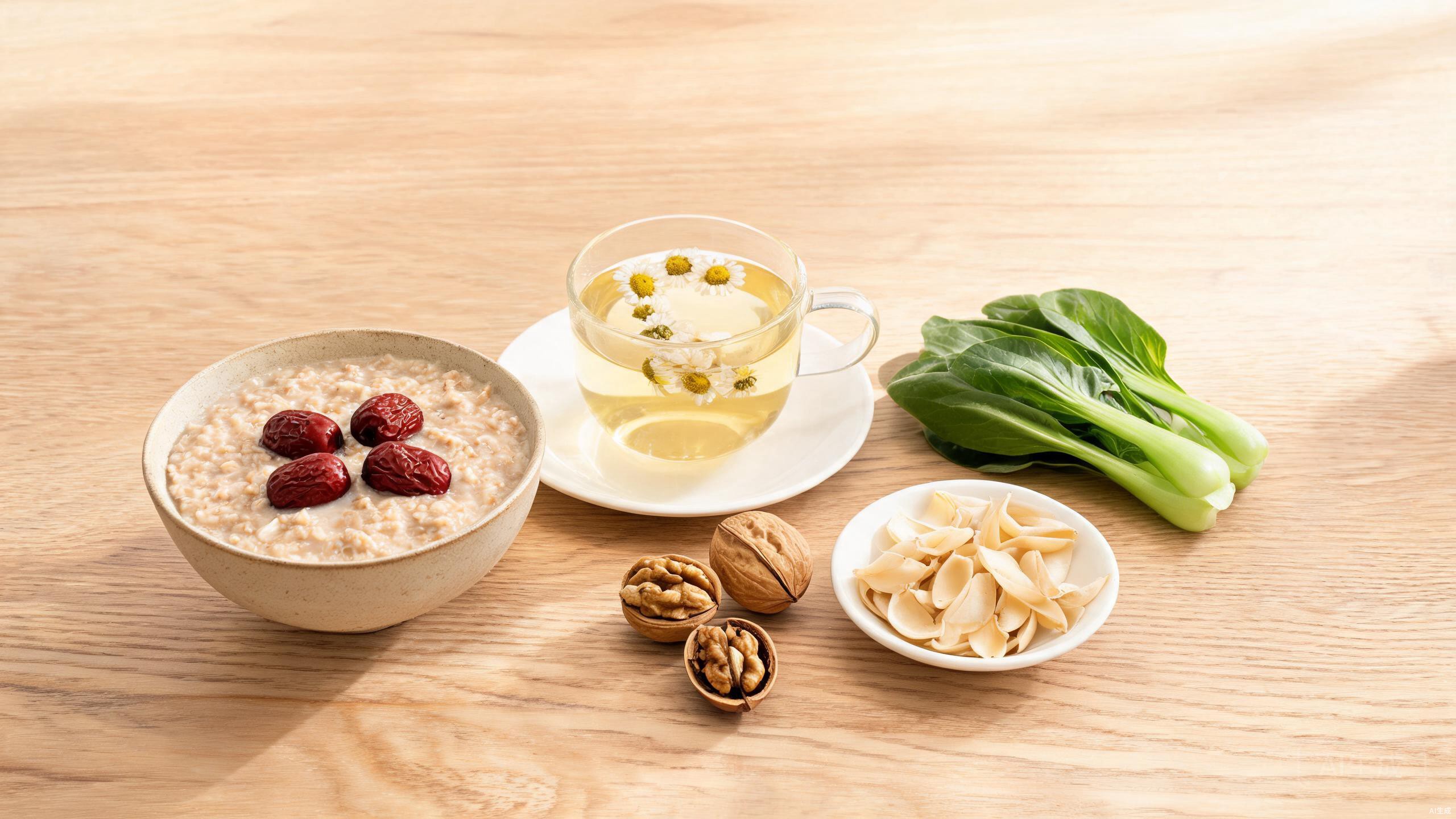
Red dates (also called jujubes) are one of the most important sleep-supporting foods in TCM. They are traditionally said to nourish blood and calm the spirit. Simmer 5 to 8 pitted dates in water for 10 to 15 minutes, or add them to congee. Find dried red dates at Asian grocers or on Amazon.
Longan (gui yuan)
Dried longan is sweet and warming, traditionally used to nourish Heart blood and calm the shen — especially for the pale, anxious, light sleeper. Eat 5 to 8 pieces or brew them as tea. Available dried at Asian markets and online.
Lotus seeds
Lotus seeds are traditionally used to calm the Heart and support the Spleen. They are a key ingredient in lotus seed and lily porridge, a classic evening dish. Buy them dried (pitted) at Asian grocers or online.
Lily bulb (bai he)
Dried lily bulb is used to nourish yin and clear mild heat — useful for the early-waking, dry-mouth sleeper. Simmer 10 to 15 grams for 10 minutes, or combine with lotus seeds in porridge.
Warm soups and congee
A small bowl of warm, thin congee (rice porridge) or a light vegetable soup is the ideal evening meal in TCM — warm, easy to digest, and gently nourishing. See our congee guide for recipes.
Matching Food to Your Pattern
The foods above are gentle, but you can tailor your evening meal to your pattern for stronger support.
For Heart Fire (racing, hot mind)
Choose cooling foods that help clear heat: mung bean soup, pear, cucumber, celery, and chrysanthemum tea. Avoid spicy, greasy, or very warming foods in the evening.
For Liver Qi Stagnation (frustrated, looping)
Choose foods that move qi and ease tension: a little rose tea, tangerine peel (chenpi) in warm water, leafy greens, and a light walk after dinner. Avoid alcohol, which worsens stagnation over time.
For Spleen Deficiency (worried, heavy)
Choose warming, strengthening foods: ginger and red date tea, pumpkin, sweet potato, rice congee, and cooked root vegetables. Avoid cold, raw, or iced foods entirely in the evening.
For Heart Blood Deficiency (light, anxious sleep)
Choose blood-nourishing foods: red dates, longan, dark leafy greens, eggs, and a little lean meat. A cup of sour date seed tea is the classic before-bed drink. See our guide to blood-nourishing foods.
For Kidney Yin Deficiency (early waking, night sweats)
Choose yin-nourishing foods: lily bulb, goji berries, black sesame, pear, and a goji-chrysanthemum tea. Avoid warming, drying foods like ginger in the evening.
Three Simple Evening Recipes
Recipe 1: Red Date and Longan Tea
Best for: Heart Blood Deficiency, general calming.
- 5 to 8 dried red dates (pitted)
- 5 to 8 dried longan pieces
- 2 cups water
Simmer for 10 to 15 minutes. Sip warm 1 to 2 hours before bed. This is gentle and suits most people; skip it if you tend to feel hot at night.
Recipe 2: Lotus Seed and Lily Porridge
Best for: Spleen and Heart support, light sleepers.
- 1/4 cup white rice (or pre-made congee base)
- 15 grams dried lotus seeds (pitted)
- 10 grams dried lily bulb
- 3 to 4 cups water
Simmer all together for 30 to 40 minutes until soft. Eat as a light evening meal. Full details in our lotus seed and lily porridge guide.
Recipe 3: Warm Milk with Nutmeg
Best for: deficiency patterns, gentle calming.
- 1 cup milk (or oat/almond milk)
- A small pinch of ground nutmeg
- Optional: 1/2 teaspoon honey
Warm gently (do not boil), add a pinch of nutmeg, and sip 30 to 60 minutes before bed. Nutmeg is traditionally warming and settling; use only a small pinch.
Foods and Drinks to Avoid Before Bed
- Heavy, greasy, fried food — burdens the Spleen and generates heat; avoid at dinner.
- Very spicy food — generates heat, can aggravate Heart Fire and Liver Fire.
- Cold or iced drinks — weaken the Spleen, especially in the evening.
- Caffeine after mid-afternoon — coffee, strong black tea, energy drinks; the shen stays outward.
- Alcohol — may help you fall asleep but fragments sleep and worsens Liver stagnation over time.
- Too much sugar — can cause a brief energy spike and a restless night.
A Simple Evening Eating Timeline
- 5:30 to 6:30 p.m. — a warm, light dinner (soup, congee, or a small portion of cooked vegetables and protein).
- 7:00 to 8:00 p.m. — a short, easy walk to support digestion.
- 8:30 p.m. — a calming tea, such as red date and longan, or sour date seed tea.
- 9:00 p.m. onward — no more food; begin your wind-down (dim lights, foot soak, acupressure).
Frequently Asked Questions
What foods help you sleep in TCM?
Foods traditionally used to support sleep include warm, nourishing options such as red date and longan tea, lotus seed and lily porridge, warm milk with a pinch of nutmeg, and easy-to-digest soups. The right food depends on your pattern — cooling foods for heat patterns, warming foods for cold patterns. See our calming foods guide for details.
What should I avoid eating before bed?
Avoid heavy, greasy, or very spicy meals late in the evening, cold or iced drinks, caffeine after mid-afternoon, and alcohol. These burden the Spleen, generate heat, or stimulate the shen — all of which can disrupt sleep. Eat a light, warm evening meal at least two to three hours before bed.
How long before bed should I stop eating?
In TCM, it is best to finish eating two to three hours before sleep so the Spleen can complete digestion before the body shifts into yin rest. A small, warm, easily digested snack — such as a cup of warm soup or porridge — is fine closer to bed if you are hungry.
Does TCM recommend warm milk for sleep?
Warm milk is considered nourishing and gently calming in TCM, and a pinch of nutmeg is traditionally added for its warming, settling quality. It suits deficiency patterns. If you are lactose intolerant, warm almond or oat milk with a little honey is a reasonable alternative. Avoid very large portions, which can burden digestion.
The Bottom Line
Food is one of the gentlest, most consistent levers for sleep. Eat warm, light, early evening meals; match the food to your pattern; and reach for traditional supports like red dates, longan, lotus seeds, and lily bulb. Avoid heavy, greasy, spicy, cold, and caffeinated choices near bedtime. Paired with a calming tea and a short wind-down, the right evening meal helps the Spleen settle so the shen can rest.
This article is for educational and informational purposes only and is not a substitute for professional medical advice, diagnosis, or treatment. Always consult a qualified healthcare provider before beginning any new wellness practice, especially if you are pregnant, nursing, taking medication, or have a medical condition. Read our full disclaimer →