Key Takeaways
- A warm foot soak draws energy (qi) downward, calms the shen, and warms the feet — all of which support sleep.
- It takes 15 minutes, ideally 30 to 60 minutes before bed, with water around 40 to 43°C.
- Additions are matched to your pattern: ginger for cold patterns, mugwort to move qi, salt for relaxation.
- It is especially helpful for the hot, overactive mind — heat is drawn away from the head down to the feet.
- This ritual pairs perfectly with a cool bedroom (see our environment guide) and acupressure.
This guide is for wellness education only and is not medical advice. The practices described are complementary and are not a replacement for professional care. If you live with chronic or worsening insomnia, talk with your healthcare provider. Some herbs may interact with sleep medications. Read our full disclaimer →
Of all the bedtime practices in TCM, the foot soak may be the most underappreciated in the West. It is simple, inexpensive, and remarkably consistent in its effect: a warm soak of the feet for 15 minutes before bed. In TCM theory, this single ritual addresses one of the most common roots of poor sleep — energy and heat that have risen to the head and refuse to settle.
This guide explains why a foot soak supports sleep, how to do it, and what to add based on your pattern. It complements our broader TCM foot soak guide and the classic ginger foot soak recipe.
Why a Foot Soak Supports Sleep in TCM
Sleep requires the body to shift from yang (active, outward, upward) into yin (restful, inward, downward). Modern life keeps energy in the head — screens, thinking, worry — and the result is a hot, active mind at the exact moment the body needs to cool and settle. A foot soak works on three principles:
- It draws energy downward. The feet are the lowest point of the body. Warming them encourages qi and heat to move down from the head, easing the racing mind.
- It calms the shen. By settling energy into the lower body, the spirit (shen) is given permission to rest.
- It warms the meridians. Many important meridians begin or end at the feet, including the Kidney meridian at Yongquan (KD1) on the sole. Warmth here supports the flow of qi.
For the hot, overactive sleeper — the Heart Fire or Kidney Yin Deficiency type — drawing heat downward is especially valuable. For the cold, deficient sleeper, the warmth itself is nourishing. Either way, the feet are warmed, and warm feet are one of the simplest signals to the body that it is time to rest.
How to Do a Bedtime Foot Soak
What you need
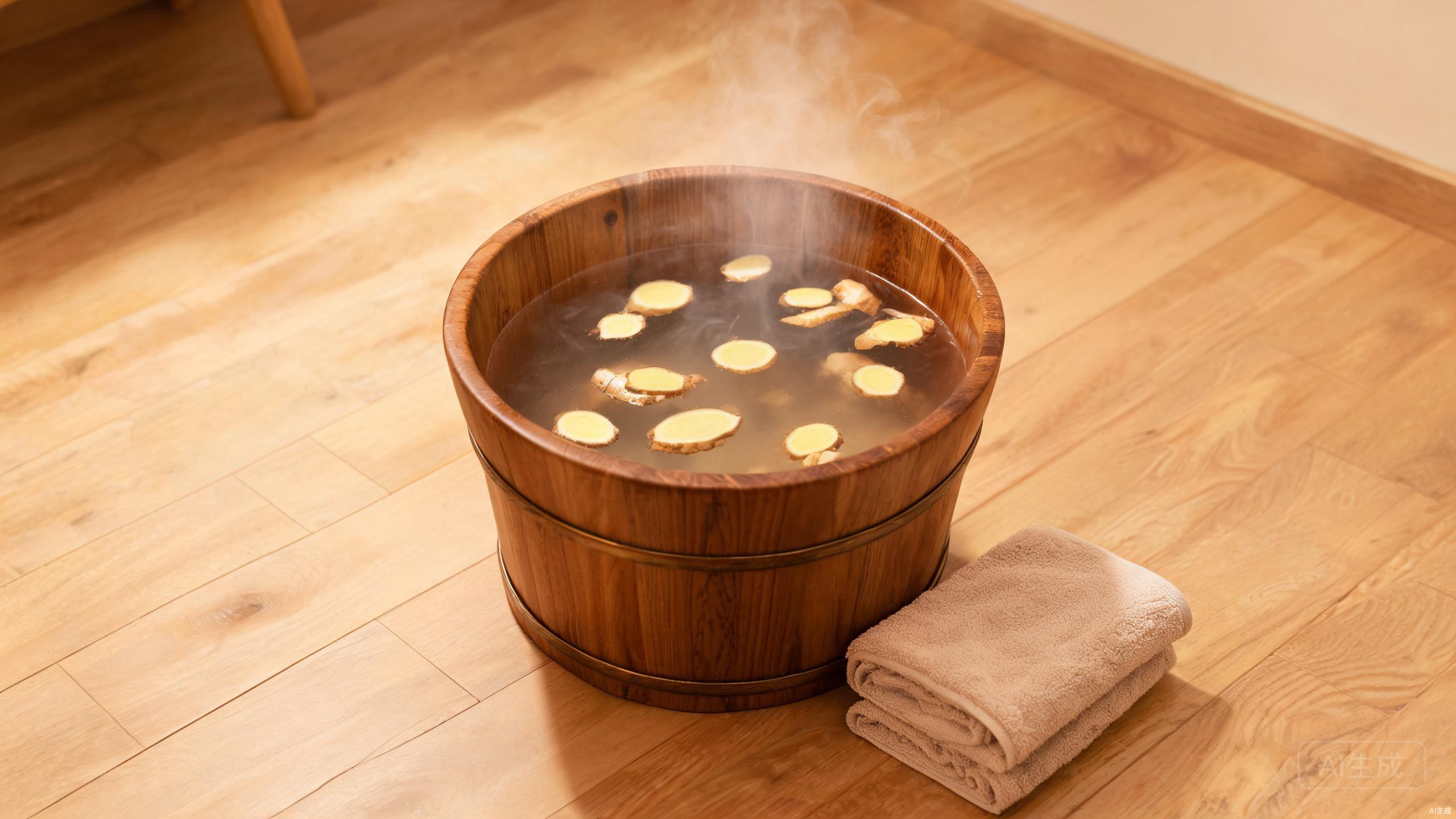
- A basin deep enough to cover the ankles (a dedicated foot-soak tub, a bucket, or even a large pot).
- Warm water (about 40 to 43°C / 104 to 109°F — warm but not scalding).
- Your chosen addition (ginger, mugwort, salt, or plain water).
- A towel, and warm socks for after.
The steps
- Prepare the water. Fill the basin with warm water to just below the calf. Test the temperature with your wrist or elbow — it should be comfortably warm, not burning.
- Add your chosen herb or salt. (See the recipes below.) Stir to dissolve.
- Soak for 15 minutes. Sit comfortably, breathe slowly, and let the warmth rise. Add a little hot water if it cools.
- Stop if you sweat lightly. A faint warmth is good; heavy sweating is not the goal — that can deplete the body.
- Dry and warm. Pat your feet dry, put on warm socks, and move to bed within 30 minutes.
When to soak
The best time is 30 to 60 minutes before bed — after dinner has settled and before your wind-down. Soaking too close to a heavy meal can interfere with digestion; soaking right before bed can leave you a little too warm. A consistent nightly time helps the body recognize the ritual.
Three Foot Soak Recipes
Recipe 1: Ginger Foot Soak (for cold patterns)
Best for: Spleen Deficiency, cold hands and feet, the worried, heavy sleeper.
- 1 thumb-sized piece of fresh ginger, sliced
- Warm water
Boil the ginger slices in a cup of water for 5 minutes, then add to the basin of warm water. Ginger is warming and traditionally used to warm the meridians and support the Spleen. Full details in our ginger foot soak guide. Avoid for hot, sweaty patterns.
Recipe 2: Mugwort Foot Soak (to move qi and warm)
Best for: cold or stagnant patterns, monthly-cycle-related sleep trouble.
- 30 to 50 grams dried mugwort (ai ye)
- Warm water
Boil the mugwort in water for 10 minutes, strain, and add to the basin. Mugwort is warming and traditionally used to move qi and warm the lower body. See our mugwort foot soak guide. Avoid during pregnancy.
Recipe 3: Plain Salt or Epsom-Salt Soak (general, gentle)
Best for: most patterns, a safe all-purpose option.
- 2 to 3 tablespoons Epsom salt or sea salt
- Warm water
Dissolve the salt in warm water and soak. This is the gentlest option and suits hot and cold patterns alike — salt is neutral and relaxing, and Epsom salt is widely available at pharmacies and supermarkets.
Matching the Soak to Your Pattern
| Pattern | Best soak | Why |
|---|---|---|
| Heart Fire (racing, hot) | Plain warm water or salt | Draws heat down without adding more warmth |
| Liver Qi Stagnation (frustrated) | Plain warm water or salt | Settles energy; add a short LR3 press after |
| Spleen Deficiency (cold, worried) | Ginger soak | Warms and strengthens the Spleen |
| Heart Blood Deficiency (anxious) | Plain or salt soak | Gentle, grounding; pair with sour date seed tea |
| Kidney Yin Deficiency (early waking) | Plain warm water, not too hot | Draws heat down without overheating; avoid ginger |
Pairing the Soak with Other Practices
The foot soak sits naturally at the center of a wind-down. A simple sequence:
- Finish eating early — a warm, light dinner, as in our food guide.
- Brew a calming tea — see our tea comparison and sip while you soak.
- Soak the feet for 15 minutes — dim the lights, breathe slowly.
- Press one or two acupressure points — Yongquan (KD1) on the now-warm sole is ideal; see our bedtime routine.
- Move to a dark, cool bedroom — see our environment guide.
Safety and Common Sense
- Temperature: never scalding. Test before putting your feet in; if you have reduced sensation in your feet (for example, from diabetes), use a thermometer and consult your healthcare provider.
- Skin: avoid soaking over open wounds, cuts, or active athlete's foot.
- Pregnancy: mugwort and some warming soaks are traditionally avoided during pregnancy; check with your healthcare provider.
- Time: 15 minutes is enough; very long soaks can be tiring rather than restful.
- Hydration: have a sip of water afterward, especially if you sweat lightly.
Frequently Asked Questions
How does a foot soak help you sleep?
In TCM, sleep requires energy to settle into the lower body. A warm foot soak draws energy (qi) and heat downward away from the head, calms the shen (spirit), and warms the meridians that begin at the feet. Warming the feet also signals the body to shift into yin rest, which may help support sleep.
How hot should a foot soak be?
The water should be comfortably warm — around 40 to 43°C (104 to 109°F) — warm enough to relax but not so hot that it burns or makes you sweat heavily. Test with your wrist or elbow before putting your feet in. Add hot water as it cools to keep the temperature steady for 15 minutes.
Can I do a foot soak every night?
A gentle plain warm-water or ginger foot soak can be done most evenings. Stronger soaks with mugwort or salt are best used a few times a week. Avoid foot soaks if you have open wounds, athlete's foot flare-ups, diabetes with nerve damage, or during pregnancy without your healthcare provider's okay.
What can I add to a foot soak for sleep?
Common additions include fresh ginger (warming, for cold patterns), mugwort (warming, moves qi), Epsom salt (relaxing), and a little sea salt. Choose based on your pattern: warming additions for cold patterns, plain or mildly cooling for hot patterns. Avoid essential oils that irritate the skin.
The Bottom Line
A 15-minute warm foot soak is one of the most reliable sleep rituals in TCM. It draws energy and heat downward, calms the shen, and warms the feet — all of which support the body's shift into yin rest. Match the addition to your pattern (ginger for cold, plain or salt for hot), pair it with a calming tea and a short acupressure sequence, and make it a nightly cue. Small, consistent, and grounding, it is a ritual that quietly does a great deal of work.
This article is for educational and informational purposes only and is not a substitute for professional medical advice, diagnosis, or treatment. Always consult a qualified healthcare provider before beginning any new wellness practice, especially if you are pregnant, nursing, taking medication, or have a medical condition. Read our full disclaimer →