Key Takeaways
- The TCM body clock assigns each of the 12 organs a two-hour window of peak activity.
- 11 p.m. to 3 a.m. (Gallbladder and Liver hours) is the most important restorative window for sleep.
- When you wake at night is a diagnostic clue — 1 to 3 a.m. points to the Liver, 3 to 5 a.m. to the Lung or Kidney yin.
- Being asleep before 11 p.m. is one of the most impactful sleep habits in TCM.
- The body clock is a traditional framework — useful for clues, not a clinical diagnosis. Pair it with the pattern guide.
This guide is for wellness education only and is not medical advice. The practices described are complementary and are not a replacement for professional care. If you live with chronic or worsening insomnia, talk with your healthcare provider. Some herbs may interact with sleep medications. Read our full disclaimer →
Have you ever noticed that you tend to wake at the same time each night, no matter when you went to bed? In TCM, this is not random. The TCM body clock (the "Chinese meridian clock") assigns each of the 12 main organs a two-hour window when its energy is most active. The time you wake — and the time you go to sleep — is considered a meaningful clue to which organ system is involved in your sleep trouble.
This guide explains the body clock, why the hours before midnight matter so much, and how to use the timing of your sleep and waking to understand your pattern. It connects directly to our guides on insomnia patterns and waking up tired.
What the TCM Body Clock Is
TCM describes 12 main meridians, each linked to an organ. According to the body clock, qi flows through each meridian in turn, spending two hours in each, in a fixed daily sequence. The organ whose window is active is said to be at peak function — and, traditionally, most likely to reveal an imbalance if one exists.
The clock runs as follows (times are approximate and refer to local time):
| Time | Organ (meridian) | Traditional focus |
|---|---|---|
| 11 p.m. – 1 a.m. | Gallbladder | Renewal; beginning of the body's restorative yin phase |
| 1 – 3 a.m. | Liver | Detoxification, blood storage, emotional processing |
| 3 – 5 a.m. | Lung | Breath, grief processing, qi distribution |
| 5 – 7 a.m. | Large Intestine | Letting go, elimination |
| 7 – 9 a.m. | Stomach | Digestion — the best time for breakfast |
| 9 – 11 a.m. | Spleen | Transformation, thinking, energy production |
| 11 a.m. – 1 p.m. | Heart | Midday peak; a traditional time for a short rest |
| 1 – 3 p.m. | Small Intestine | Sorting and absorbing |
| 3 – 5 p.m. | Bladder | Fluid metabolism |
| 5 – 7 p.m. | Kidney | Storing essence; a good time for gentle rest |
| 7 – 9 p.m. | Pericardium | Emotional warmth, intimacy, winding down |
| 9 – 11 p.m. | Triple Burner | Integration of body systems; the ideal bedtime |
Why the Hours Before Midnight Matter
The most important sleep insight from the body clock is simple: be asleep before 11 p.m.
From 11 p.m., the body enters its most yin, restorative phase. The Gallbladder hour (11 p.m. to 1 a.m.) marks the beginning of this deep renewal, and the Liver hour (1 to 3 a.m.) is when the body traditionally processes, restores, and stores blood. TCM holds that sleep during these hours is qualitatively more restorative than the same number of hours taken later. This is why sleeping from 1 a.m. to 9 a.m. can leave you tired even though the total is eight hours — see our guide on waking up tired.
Modern chronobiology agrees on the broad point: the deepest, most restorative sleep tends to occur in the early part of the night, and the body's circadian rhythm is tuned to light and dark. The TCM clock offers a practical, memorable version of the same idea.
Waking at Night: What the Time Tells You
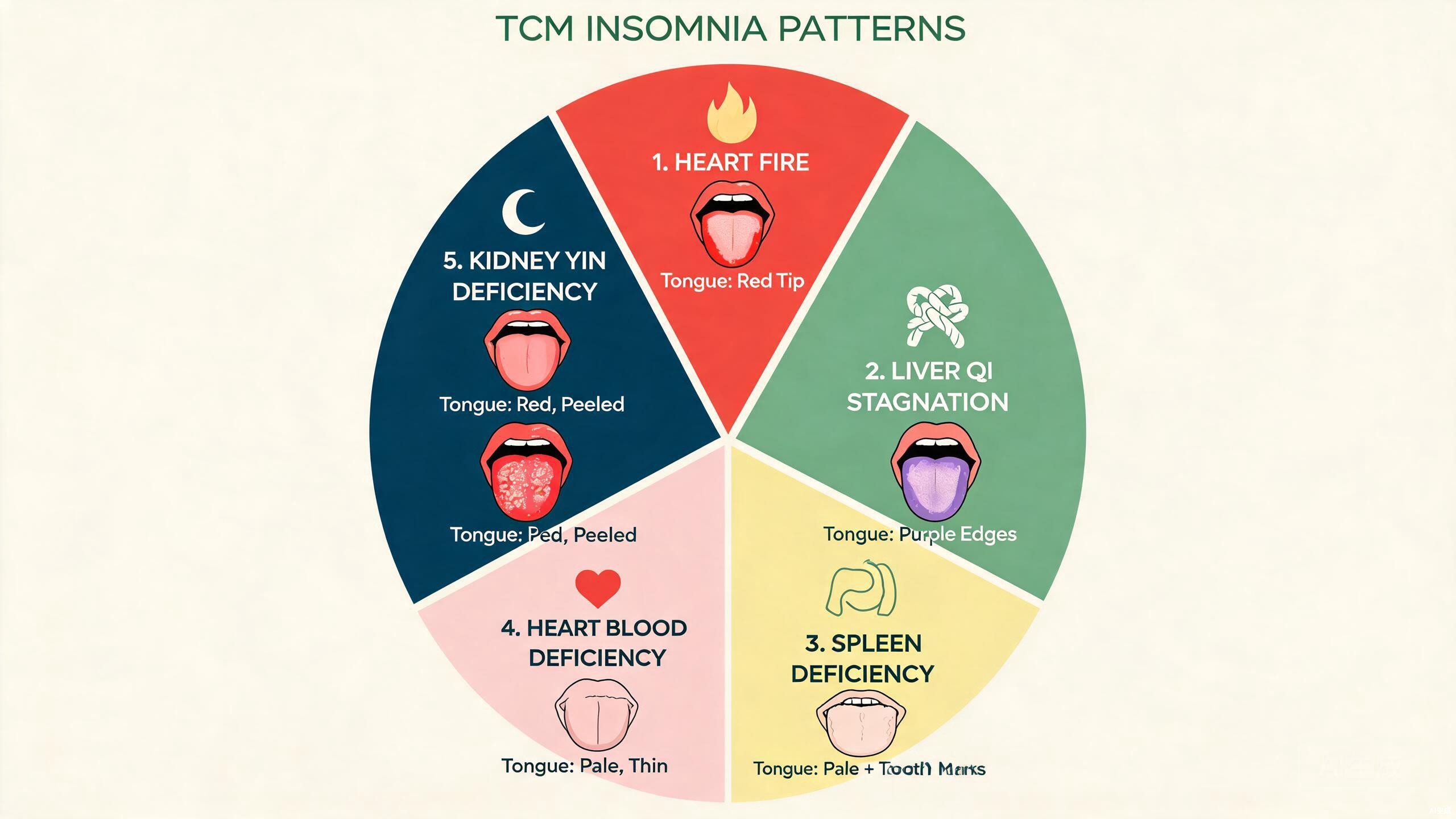
If you wake at a consistent time, the body clock offers a clue to the organ involved. This is a traditional framework, not a diagnosis, but it often matches the patterns in our five-pattern guide.
Waking 1 to 3 a.m. — the Liver hour
This is the classic sign of Liver qi stagnation — the stressed sleeper who replays the day. The Liver stores the hun (ethereal soul), and when its flow is blocked by frustration, the hun grows restless. Support: rose tea, the point Taichong (LR3), and a wind-down that releases the day (see qigong for sleep).
Waking 3 to 5 a.m. — the Lung hour
Early-morning waking in this window can relate to the Lung (which stores the po, or corporeal soul) and sometimes to sadness or grief. It is also a common time for Kidney yin deficiency — the hot, dry, early waker. Support: lily bulb or goji tea, the point Yongquan (KD1), and our dreams and organs guide if vivid dreams accompany the waking.
Trouble falling asleep before 11 p.m.
If you cannot wind down in time, the issue is often a shen that is still outward — screens, planning, or Heart Fire. Support: dim lights an hour before bed, a calming tea (see our tea comparison), and the point Shenmen (HT7).
Aligning Your Day with the Clock
The body clock is not only about sleep. It also suggests when to eat, rest, and be active:
- 7 to 9 a.m. — eat a warm breakfast. The Stomach hour; digestion is strongest. A cooked breakfast suits the Spleen far better than cold cereal.
- 11 a.m. to 1 p.m. — take a short rest. The Heart hour; a brief midday pause or nap (10 to 20 minutes) is traditional and may support the heart and mind.
- 5 to 7 p.m. — gentle rest. The Kidney hour; avoid heavy exercise now; let the body settle.
- 7 to 9 p.m. — wind down. The Pericardium hour; warm tea, conversation, gentle stretching.
- 9 to 11 p.m. — bedtime. The Triple Burner hour; the ideal window to fall asleep, ahead of the crucial 11 p.m. Gallbladder hour.
Practical Steps to Reset Your Clock
If you currently sleep late, do not try to shift everything at once. Use these steps:
- Shift bedtime earlier in 15-minute steps. Move bedtime 15 minutes earlier every few days until you reach a target before 11 p.m.
- Get morning daylight. Light in the first hour after waking is the strongest signal to set your rhythm for an earlier sleep that night.
- Dim the lights early. From 9 p.m., lower the lights and avoid screens (or use a warm filter).
- Eat dinner early and light. A heavy late meal keeps the body working past bedtime.
- Build a wind-down. A foot soak, a calming tea, or a short meditation cues the body that night has come.
The Clock as a Clue, Not a Rule
The TCM body clock is a traditional framework, not a clinical test. Its real value is practical: it gives you a memorable way to notice the timing of your sleep and waking, and to connect those times to organs and patterns. Use it as one clue among several — alongside your tongue, your symptoms, and how you feel on waking — and confirm any persistent concern with a qualified practitioner. For the full picture of patterns, see our five-pattern guide.
Frequently Asked Questions
Why is 11 p.m. important in the TCM body clock?
On the TCM body clock, 11 p.m. to 1 a.m. is the Gallbladder time and 1 to 3 a.m. is the Liver time. These hours are considered crucial for the body's renewal and for building yin and blood. Being asleep before 11 p.m. means you are resting during this key restorative window, which TCM associates with more refreshing sleep.
What does waking at 3 a.m. mean in TCM?
In the TCM body clock, 3 to 5 a.m. is the Lung time, and 1 to 3 a.m. is the Liver time. Waking regularly in the 1 to 3 a.m. window is traditionally linked to Liver qi stagnation and stress; waking around 3 to 5 a.m. can relate to the Lung or to Kidney yin deficiency. The consistent time you wake is a useful clue to your pattern.
Is the TCM body clock scientifically proven?
The TCM body clock is a traditional concept describing two-hour windows associated with each organ system. It is not a clinical diagnosis. However, some of its observations overlap with modern chronobiology — for example, the importance of sleep before midnight and the existence of circadian rhythms. Regard it as a useful framework, not a strict rule.
How can I align my sleep with the TCM body clock?
Aim to be asleep before 11 p.m., eat a warm light dinner at least two to three hours before bed, and build a consistent wind-down. Protect the Gallbladder and Liver hours (11 p.m. to 3 a.m.) with real sleep, not screens. Shift bedtime earlier in 15-minute increments if you currently sleep late.
The Bottom Line
The TCM body clock offers a simple, practical lens on sleep: be asleep before 11 p.m., protect the 11 p.m. to 3 a.m. window, and pay attention to the consistent time you wake. The hours before midnight are when the body does its deepest renewal, and the time you wake is a clue to which organ is involved. Shift bedtime earlier in small steps, get morning daylight, and build a wind-down. Regard the clock as a useful framework, pair it with your pattern, and let it guide the timing of your sleep.
This article is for educational and informational purposes only and is not a substitute for professional medical advice, diagnosis, or treatment. Always consult a qualified healthcare provider before beginning any new wellness practice, especially if you are pregnant, nursing, taking medication, or have a medical condition. Read our full disclaimer →