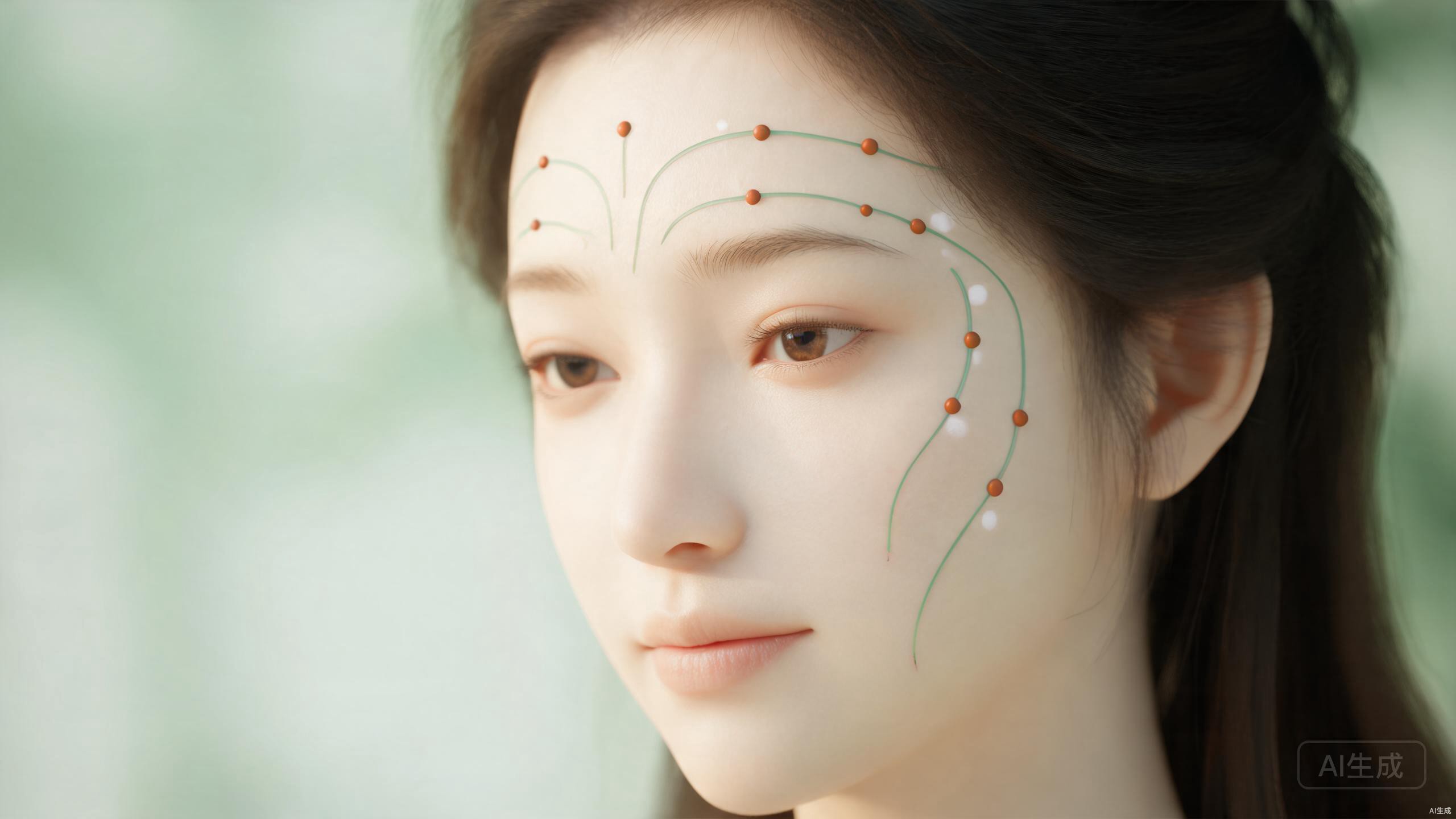
AI-Powered Educational Tool
AI Facial Feature Explorer
Explore facial color and texture patterns through the lens of Traditional Chinese Medicine. Upload a photo and receive an educational summary about visible features — for curiosity and learning only.
How it works
Three simple steps from photo to educational insight. No account required, and your image is processed only for this exploration.
1. Upload a photo
Choose a clear, front-facing photo in soft natural light. The tool accepts common image formats and does not store your photo by default.
2. AI highlights visible features
The model looks at color, tone, and texture across facial zones — such as the forehead, cheeks, and under-eye area — and marks what it can see.
3. Read an educational summary
Receive a plain-language summary about TCM facial mapping concepts that relate to the visible patterns. Use it as a starting point for learning.
This tool is designed for educational curiosity only. It cannot detect disease, replace a licensed practitioner, or evaluate symptoms that are not visible in a photograph. If you have health concerns, please consult a qualified TCM practitioner or medical professional.
Upload your photo
Drag and drop an image, or click to browse. For best results, use a well-lit, front-facing portrait without heavy filters or makeup.
What the model can and cannot observe
Understanding the boundaries of this tool helps you use it responsibly and know when to seek professional guidance.
What the model can observe
- General skin tone and color distribution across facial zones
- Visible texture such as dryness, oiliness, or mild redness
- Under-eye tone and cheek color patterns
- Symmetry and proportion of observable facial features
What it cannot observe
- Internal organ function or tongue diagnosis
- Pulse quality, pain level, or emotional state
- Medical conditions, allergies, or medication effects
- Subtle changes that require an in-person clinical exam
Confidence and uncertainty
Every result includes a confidence indicator that shows how clearly the model interpreted the visible features. Low confidence means lighting, angle, or image quality made interpretation difficult. A low-confidence result is not a sign of illness — it simply means the tool is less certain about what it sees.
We display uncertainty explicitly because facial analysis in TCM is inherently subjective and cultural. The summary is a conversation starter, not a conclusion.
Privacy and deletion controls
Your photo is used only to generate the on-screen educational summary. Your image stays in your browser — it is not uploaded to or stored on any server. You remain in control of your data at every step.
- Delete your uploaded image and results at any time
- Optional analysis mode that does not retain any image data
- Processing is limited to the current session unless you choose to save
Data choices
Frequently asked questions
Is this a medical diagnosis?
No. The AI Facial Feature Explorer is for educational purposes only. It maps visible facial patterns to general TCM concepts and is not a substitute for professional evaluation.
What kind of photo works best?
Use a clear, front-facing photo taken in soft, natural light. Avoid heavy filters, extreme shadows, sunglasses, or anything that obscures the face. Neutral expressions give the most consistent results.
Who can see my photo?
By default, no one. Your image is processed for analysis and then discarded. If you choose session storage, it remains available only to you until you close the page or delete it.
How accurate are the results?
Accuracy depends on image quality, lighting, and the limits of visible observation. Each result includes a confidence score. Even high-confidence results are educational interpretations, not clinical findings.
Can children use this tool?
This tool is intended for adults aged 18 and over. It is not designed for pediatric assessment, and children with health concerns should be seen by a qualified practitioner.
Save Your Results to My TCM Profile
Keep a record of your exploration in your personal TCM Profile. Build a wellness history over time — educational, not diagnostic.
This tool provides educational information within the traditional TCM framework. It is not a medical diagnosis and should not replace professional healthcare advice.