Key Takeaways
- TCM does not view sugar cravings as a simple lack of willpower. It identifies four underlying patterns: Spleen deficiency seeking the sweet flavor, Stomach heat creating false hunger, Liver qi stagnation driving emotional eating, and yin deficiency with internal heat.
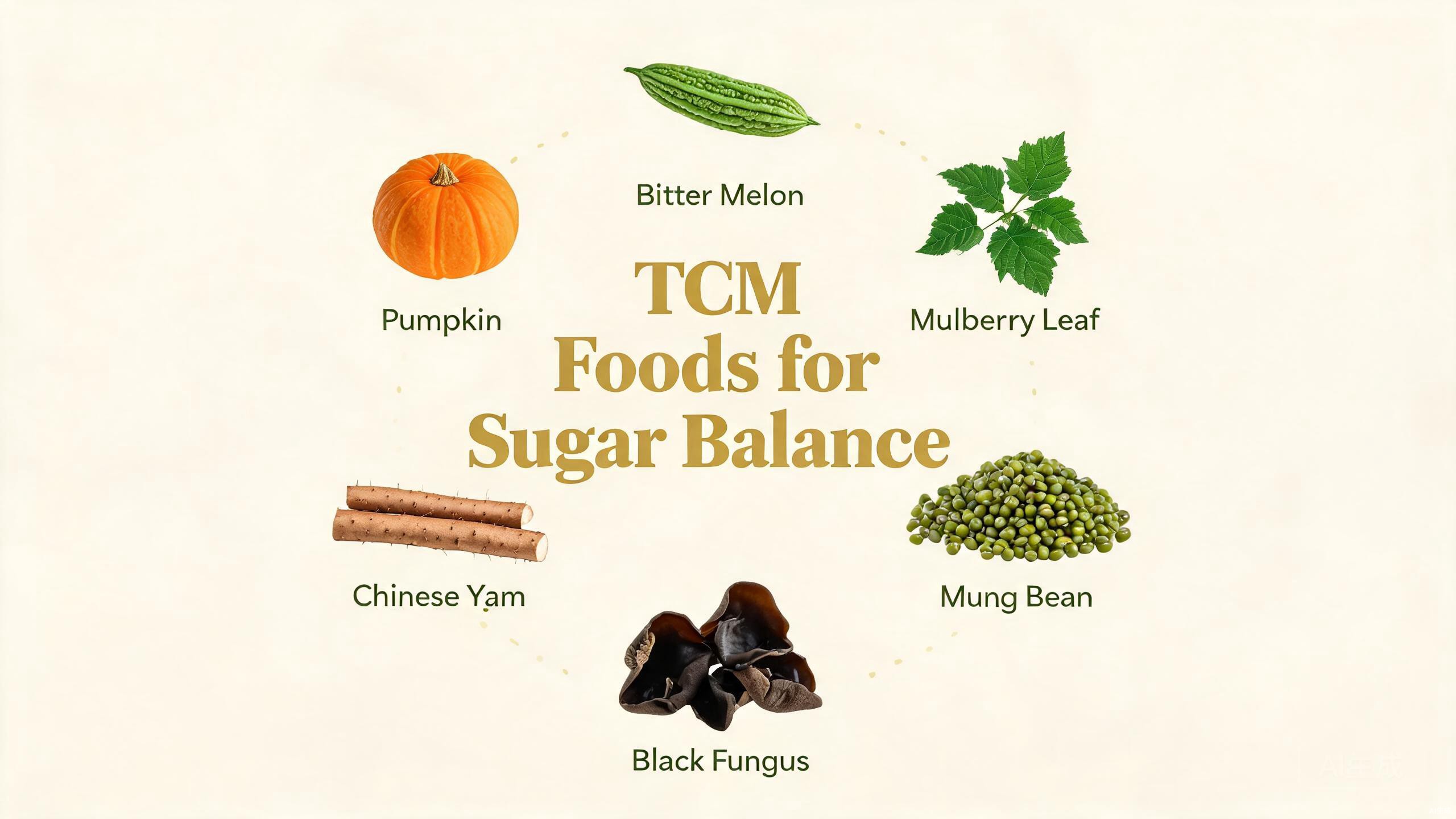
- Chinese yam (shan yao) provides natural, gentle sweetness that nourishes the Spleen and stabilizes blood sugar — the most direct food-based substitute for refined sweets.
- Goji and red date tea replaces sugary beverages with a naturally sweet, Spleen-tonifying drink that satisfies the desire for sweetness without sugar spikes.
- Bitter foods (bitter melon, lotus plumule) clear Stomach and Heart fire, directly reducing the physiological drive for sweets.
- Sour foods (hawthorn, smoked plum) balance the Liver and restrict the excessive Earth element that drives sweet cravings through the five-element generating cycle.
- Ear acupressure on the Hunger Point and Shenmen provides a portable, drug-free tool to interrupt cravings in the moment.
This article is for wellness education only and is not medical advice. The dietary and acupressure practices described here are traditional wellness methods and are not intended to diagnose, treat, cure, or prevent any disease, including diabetes, metabolic syndrome, or eating disorders. If you have diabetes, insulin resistance, or any blood sugar-related condition, consult your healthcare provider before making dietary changes. Ear acupressure should not be used as a substitute for professional medical treatment. Always inform your doctor about any complementary practices you are using.
Sugar cravings are one of the most common obstacles to healthy eating. Modern nutrition typically attributes them to blood sugar fluctuations, dopamine cycles, or simple habit. Traditional Chinese Medicine (TCM) offers a different and surprisingly practical perspective: it asks why the body is signaling for sweetness in the first place. Is the Spleen deficient and instinctively seeking the sweet flavor to tonify itself? Is Stomach heat creating a false sensation of hunger? Has Liver qi stagnation from stress transformed into fire, driving the urge to self-soothe with sweets? Or has yin deficiency left the body dry and depleted, craving the moistening, sweet foods that might replenish it?
Each of these patterns calls for a different approach. Rather than relying on willpower alone — which TCM considers a limited and ultimately exhausting resource — the methods below work by addressing the root imbalance that gives rise to the craving. By using food therapy, tea, and acupressure to restore internal balance, the desire for excessive sweetness naturally diminishes. If you are new to TCM concepts, our guides to yin and yang and the five elements provide useful background.
How TCM Views Sweet Cravings
In TCM theory, the sweet flavor (gan wei) belongs to the Earth element and corresponds to the Spleen and Stomach. The sweet flavor has a tonifying, harmonizing, and moistening quality. In moderate amounts — from natural sources like grains, yams, dates, and goji berries — it nourishes the Spleen and supports digestion. The problem arises when the body seeks sweetness in excessive or refined forms, which TCM understands through four primary patterns:
- Spleen Deficiency Seeking Sweetness (Pi Xu Xu Gan): The Spleen is responsible for transforming food into qi and blood. When it is weak — from poor diet, overthinking, irregular eating, or chronic fatigue — the body instinctively seeks the sweet flavor to tonify the Earth element. This is the most common pattern. The craving is not a sign of indulgence but of depletion: the body is asking for nourishment. Unfortunately, refined sugar does not actually nourish the Spleen — it further weakens it by creating dampness and destabilizing blood sugar. The solution is to provide the sweet flavor in a form that genuinely tonifies, such as Chinese yam, red dates, and goji berries.
- Stomach Heat Consuming Grain (Wei Re Xiao Gu): When heat accumulates in the Stomach — from spicy foods, alcohol, rich greasy meals, or emotional stress — it accelerates digestion unnaturally, creating a sensation of constant hunger (the classical term is "consuming grain"). The body craves sweet, cooling foods to counteract the heat. This pattern is often accompanied by bad breath, a strong appetite, dry mouth, and constipation. The solution is to clear the Stomach heat with bitter, cooling foods rather than feeding the false hunger with more sweets.
- Liver Qi Stagnation Transforming to Fire (Gan Qi Yu Jie Hua Huo): Chronic stress, frustration, and suppressed emotions cause Liver qi to stagnate. Over time, stagnant qi generates internal heat or fire. This fire drives an emotional, compulsive urge to eat sweets — not from physical hunger but from the need to self-soothe. The sweet flavor temporarily calms the Liver, but the relief is short-lived, and the cycle repeats. This pattern is common in people whose sugar cravings intensify under stress. The solution is to move the stagnant Liver qi and address the emotional root.
- Yin Deficiency with Internal Heat (Yin Xu Nei Re): When the body's cooling, moistening yin is depleted — from overwork, lack of sleep, chronic illness, or aging — internal heat rises. The body craves sweet, moistening foods to replenish the depleted yin. This pattern is common in perimenopause and menopause, and in people who are chronically overworked and under-rested. Symptoms include dry mouth and throat, night sweats, restlessness, and a sensation of heat in the afternoon or evening. The solution is to nourish yin with moistening, gently sweet foods.
Understanding which pattern underlies your cravings is the key to choosing the right method. The five approaches below address different patterns — and many people benefit from combining two or three.
1. Chinese Yam as a Sweet Substitute (Shan Yao)
Best for: Spleen deficiency sugar cravings, afternoon energy dips, unstable blood sugar, general desire for sweet snacks
TCM Principle: Chinese yam (shan yao, Dioscorea opposita) is one of the most important food-herbs in TCM dietary therapy. It is sweet, neutral, and enters the Spleen, Lung, and Kidney meridians. Its primary function is to tonify Spleen qi, nourish Spleen yin, and stabilize the Kidneys. Unlike refined sugar, which provides a rapid spike followed by a crash, Chinese yam provides a gentle, sustained sweetness that nourishes the Spleen and helps stabilize blood sugar. It is the most direct food-based answer to the Spleen deficiency pattern of sugar craving: it gives the body the sweet flavor it is asking for, in a form that actually heals rather than depletes.
The classical text Ben Cao Gang Mu (Compendium of Materia Medica) describes Chinese yam as a supreme food for strengthening the Spleen and Stomach. Modern research has identified compounds in Chinese yam, including diosgenin and mucilage polysaccharides, that may support metabolic function and blood sugar regulation.
How to Use It:
- Steamed as a snack: Peel and slice fresh Chinese yam into rounds about half an inch thick. Steam for 15 to 20 minutes until tender. Eat warm, plain or with a light drizzle of honey. This is the simplest and most effective way to use Chinese yam as a sweet substitute — the natural sweetness is mild but satisfying, and the starchy texture provides a sense of fullness.
- In congee: Add sliced Chinese yam to rice congee along with a few red dates. Simmer until the yam is soft and the congee is creamy. This is a traditional Spleen-tonifying breakfast that sets a stable metabolic tone for the day.
- Yam powder: Dried Chinese yam can be ground into a fine powder. Mix one tablespoon into warm water or plant milk for a quick, mildly sweet drink that curbs afternoon cravings.
- Roasted yam: Wrap fresh Chinese yam in foil and roast at 200°C (400°F) for 30 to 40 minutes. The roasting caramelizes the natural sugars, creating a deeper sweetness that can satisfy dessert cravings.
When to Use: As a mid-afternoon snack (the time when Spleen deficiency cravings typically peak), or as part of breakfast to stabilize blood sugar for the day. Substitute it directly when the urge to eat something sweet arises.
Precautions: Chinese yam is gentle and safe for most people. Raw Chinese yam contains compounds that can irritate the skin — wear gloves when peeling, or peel under running water. If you have constipation, use in moderation, as Chinese yam has mild astringent properties. See our qi-boosting foods guide for more Spleen-tonifying options.
Combine steamed Chinese yam with a few goji berries and one or two red dates for a complete Spleen-tonifying snack. The three ingredients work synergistically: the yam strengthens the Spleen, the goji nourishes blood and yin, and the red date adds natural sweetness and harmonizes the formula.
2. Goji and Red Date Tea Instead of Sugary Drinks (Gou Qi Hong Zao Cha)
Best for: Replacing sweet beverages, Spleen and blood deficiency, fatigue-driven sugar cravings, habitual soda or sweetened coffee consumption
TCM Principle: Goji berries (gou qi zi) are sweet, neutral, and enter the Liver and Kidney meridians. They nourish Liver blood, Kidney yin, and improve vision. Red dates (hong zao, jujube) are sweet, warm, and enter the Spleen and Stomach meridians. They are the most important Spleen-tonifying food in TCM — they nourish blood, calm the spirit, and harmonize the digestive system. Together, goji and red dates create a naturally sweet tea that satisfies the desire for a sweet drink while actively nourishing the Spleen and blood, rather than depleting them as refined sugar does.
This tea addresses the Spleen deficiency and blood deficiency patterns simultaneously. Many sugar cravings — particularly the afternoon energy crash that drives people to reach for a sweetened coffee or soda — are rooted in blood deficiency: the body lacks the nourishment to sustain steady energy, so it signals for a quick fix. Goji and red date tea provides a sustained, nourishing sweetness that breaks this cycle.
How to Make It:
- Place 10 to 15 goji berries and 3 to 5 pitted dried red dates in a teapot or mug.
- For a stronger brew, lightly crush or tear the red dates to expose the interior.
- Pour 10 oz of hot water (90°C) over the ingredients.
- Cover and steep for 8 to 10 minutes.
- The tea will be naturally sweet, amber-colored, and fragrant. The goji berries and red dates can be eaten after drinking for additional nourishment.
When to Drink: Mid-morning or mid-afternoon, as a replacement for sweetened beverages. This tea is caffeine-free, making it suitable for any time of day. It can be drunk daily. For a cooling variation in summer, add a few chrysanthemum flowers. For a warming variation in winter, add a thin slice of fresh ginger.
Precautions: Red dates are warming and sweet — if you have significant internal heat (red face, irritability, constipation, strong thirst), reduce the number of dates or add chrysanthemum to balance the temperature. Goji berries may interact with blood thinners — consult your healthcare provider if you take anticoagulant medication. See our chrysanthemum tea guide and goji berry tea guide for more details on individual ingredients.
3. Bitter Foods to Reduce Craving (Ku Wei Shi Wu)
Best for: Stomach heat pattern, strong appetite with constant hunger, sugar cravings accompanied by bad breath or dry mouth, the "consuming grain" pattern
TCM Principle: In TCM five-flavor theory, the bitter flavor (ku wei) belongs to the Fire element and corresponds to the Heart. Bitter flavors have a descending, drying, and heat-clearing quality. They directly counteract the Stomach heat that drives false hunger and sugar cravings. When Stomach heat is present, the body feels perpetually hungry and craves sweet, cooling foods to balance the internal fire. By introducing bitter foods, you clear the heat at its source — and the false hunger, along with the craving for sweets, naturally subsides.
This is one of the most direct and effective TCM strategies for sugar reduction: it does not try to satisfy the craving with substitutes but instead removes the internal condition that generates the craving. The bitter flavor also has a naturally appetite-suppressing quality — after eating something bitter, the desire for sweetness typically diminishes for several hours.
Key Bitter Foods:
- Bitter Melon (Ku Gua): The quintessential bitter food in TCM. It is cold in nature and enters the Heart, Spleen, and Stomach meridians. Its primary function is to clear heat, resolve toxicity, and brighten the eyes. Bitter melon is the most potent food for clearing Stomach heat and reducing the consuming-grain type of hunger. Modern research has identified compounds in bitter melon (including charantin and polypeptide-P) that may support blood sugar regulation.
How to use: Slice bitter melon thinly, salt lightly, and let sit for 10 minutes to reduce extreme bitterness. Rinse, then stir-fry with eggs or add to soups. Eat 2 to 3 times per week. Alternatively, juice half a bitter melon with cucumber and celery for a potent heat-clearing drink. - Lotus Plumule (Lian Zi Xin): The green germ found inside lotus seeds. It is very bitter, cold, and enters the Heart and Kidney meridians. Its function is to clear Heart heat and communicate Heart and Kidney. Lotus plumule is specifically indicated when sugar cravings are accompanied by restlessness, insomnia, or anxiety — signs that Heart fire is contributing to the craving.
How to use: Steep 1 to 2 grams of dried lotus plumule in hot water for 5 minutes. The tea is intensely bitter but remarkably effective at clearing heat and reducing the desire for sweets. Drink a small cup when cravings are intense. A small amount of honey can be added if the bitterness is overwhelming, though pure is more effective. - Dandelion Greens (Pu Gong Ying): Bitter and cold, entering the Liver and Stomach meridians. They clear heat, resolve toxicity, and reduce dampness. Dandelion greens are particularly useful when Stomach heat is combined with Liver fire.
How to use: Add fresh young dandelion leaves to salads, or brew dried dandelion root as a tea. Drink 1 cup daily. See our dandelion tea guide for more information. - Celery (Qin Cai): Mildly bitter and cool, entering the Liver and Stomach meridians. A gentle, accessible bitter food that can be eaten daily. Celery clears heat, reduces blood pressure, and supports digestion.
When to Eat: Before meals (to reduce appetite and clear heat), or whenever sugar cravings are intense. A small amount of bitter food before a meal can significantly reduce the desire for sweets afterward.
Precautions: Bitter foods are cold in nature and should be used cautiously by those with Spleen deficiency with cold (cold hands and feet, preference for warm drinks, loose stools, bloating after cold foods). If you have a cold, weak digestion, cook bitter foods rather than eating them raw, and add warming ingredients like ginger to balance the temperature. Bitter melon should be avoided during pregnancy. If you take diabetes medication, monitor blood sugar closely, as bitter melon may enhance the effect of medication.
4. Sour Foods to Balance Liver Wood (Suan Wei Shi Wu)
Best for: Liver qi stagnation pattern of sugar cravings, stress-related sweet cravings, emotional eating, cravings that intensify with frustration or anxiety
TCM Principle: In the TCM five-element generating cycle (wu xing xiang sheng), Wood (Liver) controls Earth (Spleen). When Liver qi stagnates — from stress, frustration, or suppressed emotions — it overacts on the Spleen, weakening digestion and disrupting the Spleen's function of regulating appetite. This disruption manifests as irregular, emotionally driven cravings, particularly for sweets. The sour flavor (suan wei) belongs to the Wood element and corresponds to the Liver. By consuming sour foods, you can restrict the excessive Earth element (which is generating the craving for sweets) through the five-element controlling cycle, while simultaneously astringing and regulating Liver qi to address the emotional root.
This is a subtle but powerful principle: the sour flavor does not directly reduce the craving for sweets the way bitter foods clear heat. Instead, it works through the five-element system to rebalance the relationship between the Liver and the Spleen — the very relationship that stress disrupts. When the Liver-Spleen harmony is restored, the emotionally driven craving for sweets naturally diminishes.
Key Sour Foods:
- Hawthorn (Shan Zha): Sour, sweet, and slightly warm. Enters the Spleen, Stomach, and Liver meridians. Hawthorn is the most important sour food in TCM for digesting food stagnation and moving blood. It is particularly effective when sugar cravings follow heavy meals — the stagnation from rich food triggers a desire for sweets, and hawthorn resolves the stagnation directly.
How to use: Brew 10 to 15 grams of dried hawthorn slices in hot water for 10 minutes. Drink after meals, especially after heavy or fatty foods. See our hawthorn tea guide for full instructions. Hawthorn is also a key ingredient in our TCM weight loss teas guide. - Smoked Plum / Dark Plum (Wu Mei): Very sour, astringent, and neutral. Enters the Liver, Spleen, Lung, and Large Intestine meridians. Smoked plum is the classic sour remedy in TCM — it generates fluids, astringes leakage, and calms roundworms (a historical use). In the context of sugar reduction, smoked plum is valued for its intense sourness, which directly counters the desire for sweetness and generates the fluids that dryness-driven cravings seek.
How to use: Brew 2 to 3 smoked plums in hot water for 10 minutes. The tea is deeply sour, dark, and intensely thirst-quenching. Drink when sugar cravings are strong — the sourness disrupts the craving within minutes. Smoked plum drink (suan mei tang) is a traditional Chinese summer beverage that is far healthier than modern sweetened drinks. - Pomelo and Grapefruit: Sour, sweet, and cool. These citrus fruits enter the Lung and Stomach meridians. They regulate qi, resolve phlegm, and aid digestion. A section of grapefruit or pomelo after a meal can reduce the desire for dessert.
- Plain Yogurt (unsweetened): While not a traditional TCM food, unsweetened yogurt aligns with the sour flavor principle. It supports the Spleen's digestive function through its probiotic content while providing the sour flavor that balances the Liver-Spleen relationship. Choose plain, unsweetened varieties.
When to Eat: After meals (to aid digestion and prevent post-meal sweet cravings), or whenever emotional stress triggers the urge for sweets. The sour flavor has an almost immediate effect on disrupting the craving cycle.
Precautions: Excessive sour consumption can injure the Liver in those with Liver deficiency. If you have stomach ulcers or gastric hyperacidity, use sour foods cautiously, as they may increase acid. Hawthorn should not be used on an empty stomach and should be avoided during pregnancy. Smoked plum is very astringent — if you have constipation, use it sparingly.
5. Ear Acupressure for Appetite Control (Er Xue An Ya)
Best for: Acute sugar cravings, stress-driven eating, appetite regulation, a portable tool for cravings on the go
TCM Principle: Auricular therapy (ear acupuncture and acupressure) is based on the TCM concept that the ear is a microsystem of the entire body — every organ and body part has a corresponding point on the external ear. This concept, developed and refined over centuries, was systematized into modern auricular medicine in the 1950s by Dr. Paul Nogier, who confirmed that the ear's point map resembles an inverted fetus. By stimulating specific ear points, you can influence the corresponding organs and physiological processes.
For sugar cravings, two ear points are particularly relevant:
- Hunger Point (Ji Dian): Located on the tragus (the small cartilaginous flap in front of the ear canal). This point regulates appetite by influencing the vagus nerve and the hypothalamic satiety center. Stimulating the Hunger Point reduces the sensation of hunger and helps control the physical drive to eat, including the urge for sweets.
- Shenmen (Shen Men): Located in the upper part of the triangular fossa (the triangular depression at the top of the ear). Shenmen means "Spirit Gate" — it is the most widely used calming point in auricular therapy. It calms the nervous system, reduces stress and anxiety, and addresses the emotional component of cravings. When sugar cravings are driven by stress, anxiety, or emotional tension, Shenmen is the primary point.
How to Practice Ear Acupressure:
- Locate the points: The Hunger Point is on the tragus — the small flap of cartilage in front of the ear opening. Press gently on different areas of the tragus until you find a tender spot. Shenmen is in the triangular fossa at the top of the ear — look for the small triangular depression where the upper and lower cartilage ridges meet. The point is usually tender when pressed.
- Apply pressure: Using your thumb and index finger, press the point firmly but gently. Hold for 30 to 60 seconds, applying steady pressure. You should feel a mild ache or tingling sensation — this is normal. Breathe slowly and deeply while pressing.
- Alternate sides: Treat one ear at a time. You can treat both ears in the same session, or alternate between left and right ears on different days.
- Frequency: Practice 2 to 3 times daily, or whenever a sugar craving arises. The technique takes less than two minutes and can be done anywhere, discreetly.
- Optional — ear seeds: For continuous stimulation, you can apply small adhesive seeds (available as "ear seeds" or Vaccaria seeds) to the points. Press the seeds gently several times throughout the day. Ear seeds can be left in place for 3 to 5 days before replacing.
When to Use: Whenever a sugar craving arises, before meals to regulate appetite, or during periods of stress when emotional eating is likely. The beauty of ear acupressure is its portability — it can be practiced at a desk, in a car (while parked), or before opening the refrigerator.
Combine ear acupressure with a slow, deep breath. Press the Shenmen point while inhaling for 4 counts and exhaling for 6 counts. The combination of acupressure and slow exhalation activates the parasympathetic nervous system, amplifying the craving-reducing effect. This is particularly effective for stress-driven sugar cravings.
Precautions: Do not apply ear acupressure if the skin on the ear is broken, inflamed, or infected. If you have a pacemaker, consult your healthcare provider before using ear acupressure or ear seeds. Ear acupressure is a complementary practice and should not replace professional medical treatment for eating disorders, diabetes management, or other medical conditions. If you use ear seeds, remove them if they cause irritation, and do not leave them in place for more than 5 days. For more acupressure techniques, see our acupressure for anxiety guide and Shenmen (HT7) acupressure guide.
Choosing the Right Approach for Your Pattern
| If Your Cravings Feature... | TCM Pattern | Best Method | When to Use |
|---|---|---|---|
| Afternoon energy crash, fatigue, desire for sweet snacks | Spleen Deficiency | Chinese Yam | Mid-afternoon snack |
| Habitual sweet drinks, soda, sweetened coffee | Spleen + Blood Deficiency | Goji + Red Date Tea | Mid-morning / afternoon |
| Constant hunger, bad breath, dry mouth, strong appetite | Stomach Heat | Bitter Foods | Before meals |
| Cravings triggered by stress, frustration, emotional tension | Liver Qi Stagnation | Sour Foods | After meals / when stressed |
| Acute cravings, on-the-go, stress-driven eating | All Patterns | Ear Acupressure | Whenever craving strikes |
Combining These Methods with Other TCM Practices
Sugar reduction is most effective when these methods are combined with broader TCM wellness practices that address the body as a whole:
- Stress management: Since stress is a primary driver of Liver qi stagnation and emotional eating, practices like TCM meditation and breathing techniques directly reduce the emotional roots of sugar cravings. Even 10 minutes of daily sitting stillness can weaken the stress-craving connection over time.
- Gentle movement: Tai chi and qigong move stagnant Liver qi, improve circulation, and reduce the stress that drives emotional eating. A 15-minute daily practice can make a significant difference in craving intensity.
- Weight management teas: If sugar cravings are part of a broader pattern of weight gain, the teas in our TCM weight loss teas guide — particularly rose tea for emotional eating and hawthorn tea for food stagnation — complement the methods in this guide.
- Dampness-removing foods: Excess sugar consumption generates dampness in TCM theory, which further weakens the Spleen and perpetuates the craving cycle. Our dampness-removing foods guide provides dietary strategies to break this cycle.
- Calming herbal teas: Evening sugar cravings are often linked to stress and poor sleep. A cup of calming herbal tea — such as chrysanthemum, rose, or sour date seed — can satisfy the desire for a warm, soothing drink without sugar while promoting better sleep.
Frequently Asked Questions
Why do I crave sugar more in the afternoon?
In TCM theory, the afternoon corresponds to the Spleen and Stomach's secondary active period (the primary Spleen time is 9 to 11 AM, and the Stomach time is 7 to 9 AM). If the Spleen is deficient, its energy dips noticeably in the mid-to-late afternoon, and the body signals for the sweet flavor — which belongs to the Earth element and the Spleen — to tonify itself. This is also the time when blood sugar naturally dips after lunch. The TCM solution is to eat a Spleen-tonifying lunch (warm, cooked, easy to digest) and have a Chinese yam snack or goji and red date tea ready for the afternoon dip. Over time, as the Spleen strengthens, the afternoon craving diminishes.
Can I use all five methods at the same time?
Yes, and many people benefit from combining two or three. A practical approach is: use Chinese yam or goji-red date tea as your daily substitute for sweets, add bitter or sour foods to your meals based on your pattern (bitter for Stomach heat, sour for Liver qi stagnation), and use ear acupressure as your on-the-spot tool for acute cravings. The methods work through different mechanisms — substitution, heat clearing, five-element balancing, and nervous system regulation — so they complement rather than conflict with each other. However, do not overdo any single method. Start with one or two, observe how your body responds, and gradually incorporate more as needed.
Will these methods help if I have diabetes or insulin resistance?
If you have diabetes, insulin resistance, or any blood sugar-related condition, these methods may be supportive but must be used under medical supervision. Chinese yam and bitter melon in particular contain compounds that may affect blood sugar levels, and their use alongside diabetes medication could potentially cause hypoglycemia. Always consult your endocrinologist or primary care provider before adding new foods, herbs, or supplements to your routine. Ear acupressure is generally safe and may be a useful complementary tool, but it should not replace any prescribed treatment. Never discontinue or adjust medication based on information from this or any wellness article.
How long does it take for sugar cravings to decrease?
With consistent practice, most people notice a reduction in craving intensity within 1 to 2 weeks. The cravings typically become less frequent and less intense, and the ability to resist them improves. Significant, lasting changes usually emerge after 3 to 4 weeks of regular practice. The timeline depends on several factors: how long you have had the craving pattern, how deeply rooted the underlying TCM pattern is, how consistently you practice, and whether you are also addressing contributing factors like stress and sleep. The key insight from TCM is that the cravings do not disappear through suppression but through restoration of balance — as the Spleen strengthens, the Stomach heat clears, and the Liver qi flows freely, the desire for excessive sweetness naturally diminishes on its own. Be patient and consistent, and the changes will be both more meaningful and more sustainable than any quick fix.
The Bottom Line
TCM offers a refreshingly different perspective on sugar cravings: they are not a character flaw or a failure of willpower but a signal from the body that something is out of balance. Whether the root is Spleen deficiency seeking nourishment, Stomach heat creating false hunger, Liver qi stagnation driving emotional eating, or yin deficiency craving moistening sweetness, TCM provides practical, food-based methods to address the underlying pattern rather than merely suppressing the symptom.
The five approaches in this guide work together as a system: Chinese yam gives the body the sweet flavor it craves in a genuinely nourishing form. Goji and red date tea replaces the sweet beverages that perpetuate the cycle. Bitter foods clear the heat that generates false hunger. Sour foods rebalance the Liver-Spleen relationship that stress disrupts. And ear acupressure provides a portable, immediate tool for the moments when cravings are strongest. None of these methods requires willpower in the conventional sense — they work by giving the body what it actually needs, so the craving for what it does not need naturally fades.
Start with one method that matches your pattern. Be consistent for two weeks. Notice how the cravings shift. Then add another method if needed. Over time, as the internal balance is restored, you may find that the desire for refined sugar diminishes not because you are fighting it, but because the body no longer needs to ask for it.
This article is for educational and informational purposes only and is not a substitute for professional medical advice, diagnosis, or treatment. The dietary and acupressure practices described here are traditional wellness methods and are not intended to diagnose, treat, cure, or prevent any disease, including diabetes, metabolic syndrome, obesity, or eating disorders. If you have diabetes, insulin resistance, or any blood sugar-related condition, consult your healthcare provider before making dietary changes. Herbal teas and foods may interact with prescription medications. Always consult a qualified healthcare provider before beginning any new dietary or wellness practice, especially if you are pregnant, nursing, taking medication, or have a medical condition. Read our full disclaimer →