Key Takeaways
- TCM views blood pressure concerns through patterns such as Liver Yang Rising (Gan Yang Shang Kang) — understanding the pattern helps guide food and lifestyle choices.
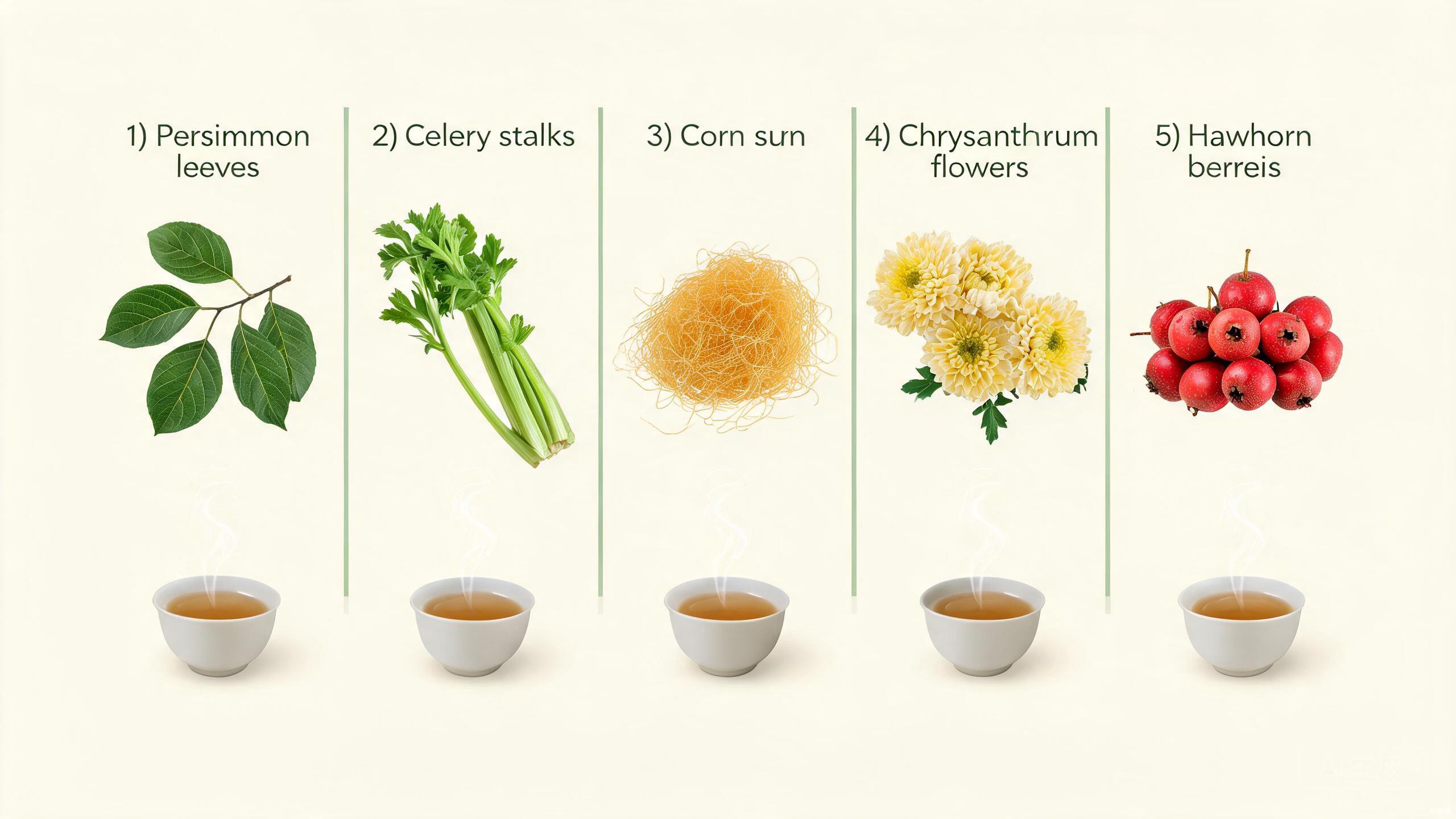
- Five everyday foods — persimmon leaves, celery, corn silk, chrysanthemum, and hawthorn — are traditionally used to support cardiovascular wellness.
- Persimmon leaf tea is one of the simplest TCM home remedies; learn how to harvest, dry, and brew it properly.
- Acupressure and lifestyle habits (low-salt eating, emotional balance, movement) are part of a whole-person TCM approach.
- These are traditional wellness practices, not a replacement for prescribed blood pressure medication. Always consult your doctor.
This article is for educational purposes only and is not medical advice. The foods, teas, and practices described here are traditional wellness practices rooted in Chinese culture. They are not a substitute for professional medical care or prescribed blood pressure medication. Never stop, adjust, or replace prescribed medication based on information in this article. If you have high blood pressure or any cardiovascular condition, work closely with your healthcare provider on a comprehensive management plan. Some foods and herbs may interact with medications — always inform your doctor about everything you consume. These statements have not been evaluated by the FDA and are not intended to diagnose, treat, cure, or prevent any disease.
A reader recently wrote to us after watching a TCM practitioner recommend persimmon leaf tea (柿叶茶, shi ye cha) for cardiovascular wellness. Curious, they asked: "Is this a genuine tradition, and are there other everyday foods used this way in Chinese medicine?" The answer is yes — TCM has a long tradition of using simple, accessible foods and teas as part of a whole-person approach to supporting healthy blood pressure. None of these are meant to replace medical care. Rather, they are time-honored dietary habits that generations of families in East Asia have incorporated into daily life alongside broader wellness practices.
If you are new to TCM concepts, our introduction to Traditional Chinese Medicine provides helpful background before diving in.
How TCM Views Blood Pressure
Traditional Chinese Medicine does not use the modern measurement of "blood pressure" in its classical texts, but it recognizes the cluster of signs that often accompany elevated readings — dizziness, headache, flushed face, irritability, chest tightness, and a feeling of pressure in the head. Rather than treating a number, TCM looks at the pattern of imbalance beneath those signs.
The most commonly discussed pattern in relation to these signs is called Liver Yang Rising (肝阳上亢, Gan Yang Shang Kang). In plain English: when stress, frustration, or long-term emotional tension builds up, the "yang" energy of the Liver organ system is said to rise upward toward the head. This can manifest as headaches, a red face, irritability, dizziness, and a sense of internal heat or pressure. Foods and teas in this category are traditionally chosen for their cooling, calming nature — aimed at "calming the liver" and "subduing rising yang."
Other patterns that TCM practitioners may identify include:
- Liver and Kidney Yin Deficiency — dizziness, dry eyes, ringing in the ears, lower back ache. Often associated with aging or overwork.
- Phlegm-Damp Obstruction — a feeling of heaviness, chest oppression, sluggishness. Often linked to a diet high in greasy or sweet foods.
- Qi and Blood Stagnation — chest discomfort, purple lips, a fixed quality of pain. Often connected to long-term emotional stress.
This pattern-based thinking is central to TCM. To learn more about the organ systems involved, see our guides on Zang-Fu organs and the balance of yin and yang.
Five Everyday TCM Foods for Blood Pressure Support
The following five foods are staples of East Asian kitchens and tea cabinets. Each has a place in TCM tradition as a food that may support cardiovascular wellness when enjoyed as part of a balanced lifestyle. They are not medicines, and they are not a replacement for prescribed treatment.
1. Persimmon Leaves (柿叶, Shi Ye)
TCM nature: Bitter, cold. Enters: Lung and Liver channels.
Persimmon leaf tea has been consumed as a daily wellness beverage in parts of China, Korea, and Japan for centuries. TCM classifies it as cooling and bitter — properties traditionally associated with clearing heat and calming the liver. The leaves contain flavonoids and other plant compounds that have attracted modern research interest. In traditional practice, it is said to help "subdue rising liver yang," which aligns with the pattern of headaches, dizziness, and irritability described above.
How to prepare: Dry fresh persimmon leaves and brew as tea (see the step-by-step guide below).
Caution: Avoid if you have a cold, weak digestion, or are pregnant. Consult your doctor if you take medication. For a general overview of safe tea practices, see our herbal tea safety guide.
2. Celery (芹菜, Qin Cai)
TCM nature: Sweet, slightly cold. Enters: Liver and Stomach channels.
Celery is one of the most accessible foods on this list — you can find it in any grocery store. In TCM, it is classified as cooling and is traditionally said to "clear liver heat" and "calm rising liver yang." It contains apigenin, a flavonoid that has been studied for various properties. Many Chinese families juice fresh celery or stir-fry it as a regular vegetable.
How to prepare: Juice 2 to 3 stalks of fresh celery, or stir-fry with a little garlic and olive oil. As a tea, simmer chopped celery in water for 10 minutes.
Caution: Celery is generally safe as a food. If juicing in large amounts, consult your healthcare provider, especially if you take medication or have kidney concerns.
3. Corn Silk (玉米须, Yu Mi Xu)
TCM nature: Sweet, neutral. Enters: Liver, Gallbladder, and Bladder channels.
The silky threads found inside corn husks are often discarded, but in TCM they are a valued remedy. Corn silk is traditionally used to "promote urination" and "resolve dampness and swelling" — concepts that align with the body's natural fluid balance. It is mild, pleasant-tasting, and makes a gentle daily tea.
How to prepare: Collect fresh corn silk from organic corn, rinse, and simmer in water for 10 to 15 minutes. Drink as a light tea, 1 to 2 cups per day.
Caution: Because corn silk promotes urination, consult your doctor if you take diuretic medication or have kidney conditions.
4. Chrysanthemum (菊花, Ju Hua)
TCM nature: Sweet, bitter, slightly cold. Enters: Lung and Liver channels.
Chrysanthemum is perhaps the most famous cooling flower tea in all of TCM. It is traditionally used to "clear liver heat," "calm liver yang," and "brighten the eyes." For the pattern of Liver Yang Rising — with its signature headaches, eye strain, and irritability — chrysanthemum is the go-to daily brew. It pairs beautifully with goji berries for a balanced, nourishing cup.
How to prepare: Steep 5 to 8 dried chrysanthemum flowers in 8 oz of hot water (90°C) for 5 minutes. See our complete chrysanthemum tea guide for sourcing and brewing details.
Caution: Generally safe for daily use. Avoid if you have a cold with chills. Consult your doctor if you take blood thinners.
5. Hawthorn (山楂, Shan Zha)
TCM nature: Sour, sweet, slightly warm. Enters: Spleen, Stomach, and Liver channels.
Hawthorn is one of the most important food-as-medicine items in TCM. It is traditionally used to "transform food stagnation" (aid digestion of rich or greasy meals) and "invigorate blood circulation" (address stagnation). For cardiovascular wellness, hawthorn is the single most referenced everyday food in Chinese tradition. It is widely consumed as tea, candied snack, and ingredient in soups.
How to prepare: Simmer 10 to 15 grams of dried hawthorn slices in 10 oz of water for 10 minutes. See our hawthorn tea guide for a full walkthrough.
Caution: Hawthorn may interact with heart medications. If you take any prescription medication for blood pressure or heart conditions, consult your healthcare provider before using hawthorn regularly.
Comparison of the Five Foods
| Food | TCM Nature | Traditional Use | Preparation | Typical Frequency |
|---|---|---|---|---|
| Persimmon Leaves (Shi Ye) | Bitter, cold | Clear heat, calm liver yang | Dry leaves, brew as tea | 1 cup daily |
| Celery (Qin Cai) | Sweet, slightly cold | Clear liver heat, calm rising yang | Juice or stir-fry | Several times weekly |
| Corn Silk (Yu Mi Xu) | Sweet, neutral | Promote urination, resolve dampness | Simmer as tea | 1–2 cups daily |
| Chrysanthemum (Ju Hua) | Sweet, bitter, slightly cold | Clear liver heat, brighten eyes | Steep flowers as tea | 1–2 cups daily |
| Hawthorn (Shan Zha) | Sour, sweet, slightly warm | Aid digestion, invigorate blood | Simmer slices as tea | 1 cup daily |
How to Prepare Persimmon Leaf Tea
Among the five foods above, persimmon leaf tea is the one most readers ask about. Here is a traditional step-by-step method for making it at home.
- Gather fresh leaves. Collect young, healthy persimmon leaves in late spring or early summer, when they are vibrant green. Use leaves from trees that have not been sprayed with pesticides. If you cannot access fresh leaves, dried persimmon leaves are available from reputable herbal suppliers.
- Rinse thoroughly. Gently wash the leaves under cool running water to remove dust and any residue. Pat dry with a clean cloth.
- Cut into strips. Remove the stems, then cut the leaves into strips roughly 1 inch wide. This helps them dry evenly and brew more efficiently.
- Steam lightly (traditional step). In the classic method, steam the leaves for 2 to 3 minutes. This softens them, sets their green color, and mellows the bitterness. Skip this step if you prefer a simpler approach.
- Dry completely. Spread the strips in a single layer on a clean screen or bamboo tray. Place in a well-ventilated, shaded area. Turn daily. Drying takes 3 to 5 days depending on humidity. The leaves are ready when they snap crisply.
- Store properly. Place dried leaves in an airtight glass jar, away from light and moisture. They keep well for up to one year.
- Brew the tea. Place 1 to 2 teaspoons of dried persimmon leaf in a teapot. Pour 8 oz of hot water (85 to 90°C) over the leaves. Cover and steep for 5 to 7 minutes. Strain and enjoy warm. The tea is pale green with a mild, slightly grassy flavor. Drink 1 cup per day.
Persimmon leaf tea pairs well with a few goji berries or a small piece of rock sugar to round out its slight bitterness. Avoid adding regular sugar, which can cause energy fluctuations.
Acupressure for Blood Pressure
In TCM, dietary habits are just one piece of the wellness picture. Acupressure — the practice of applying gentle pressure to specific points on the body — is another traditional approach that many people find calming and centering. Points such as Taichong (LR3, on the foot) and Fengchi (GB20, at the base of the skull) are traditionally associated with calming the liver and easing head tension.
For a detailed, illustrated walkthrough of acupressure points traditionally used to support cardiovascular wellness, see our dedicated guide: Acupressure for Blood Pressure Support.
Lifestyle Tips from a TCM Perspective
TCM is a whole-person system. Foods and teas work best when combined with supportive daily habits. The following four areas are emphasized again and again in classical TCM texts for overall cardiovascular wellness:
- Emotional balance. In TCM, the Liver is the organ most affected by anger, frustration, and bottled-up feelings. Chronic emotional stress is considered a major factor in Liver Yang Rising. Practices such as mindful breathing, journaling, and gentle movement help qi flow smoothly. See our TCM emotional wellness guide and our meditation guide for practical starting points.
- A low-salt, whole-food diet. TCM has long cautioned against excessive salty, greasy, and sweet foods. A diet built around vegetables, whole grains, and moderate amounts of lean protein aligns with both TCM wisdom and modern dietary guidance.
- Regular, moderate movement. Tai chi, qigong, walking, and swimming are all excellent. The key in TCM is consistency over intensity — gentle daily movement keeps qi and blood flowing without exhausting the body.
- Restful sleep. TCM associates the hours between 11 PM and 3 AM with Liver and Gallbladder recovery. Prioritizing sleep during this window is considered essential for liver health. A warm ginger foot soak before bed is a traditional way to encourage deep rest.
When to See a Doctor
This cannot be emphasized enough: the foods, teas, and practices in this article are complementary wellness traditions, not medical treatments. You should see a healthcare provider promptly if you experience any of the following:
- A blood pressure reading consistently above your doctor's recommended range
- Severe headache, chest pain, shortness of breath, or visual changes
- Dizziness, fainting, or a feeling of pressure in the head
- Nosebleeds that are frequent or difficult to stop
- Any new or worsening symptoms
If you are currently taking blood pressure medication, do not stop, skip, or adjust your dosage based on anything you read here. Speak with your doctor before adding any new herbs, teas, or supplements to your routine, as interactions are possible.
The Bottom Line
Traditional Chinese Medicine offers a gentle, food-based tradition for supporting cardiovascular wellness. Persimmon leaves, celery, corn silk, chrysanthemum, and hawthorn are five everyday foods that generations of East Asian families have enjoyed as part of a balanced lifestyle. Paired with emotional balance, mindful movement, restful sleep, and a low-salt diet, these simple practices form a whole-person approach to wellness.
But they are traditions — not treatments, and not a replacement for medical care. If you have high blood pressure or any cardiovascular concern, your most important step is to work with a qualified healthcare provider. Use these traditional practices only as complementary habits, with your doctor's knowledge and guidance.
This article shares traditional wellness practices for educational purposes only. It is not a substitute for medical advice, diagnosis, or treatment. The foods and teas described here are not intended to treat, cure, or prevent any disease. If you have high blood pressure or take medication, consult your healthcare provider before making any changes. These statements have not been evaluated by the FDA. Never stop or adjust prescribed medication without your doctor's explicit guidance.