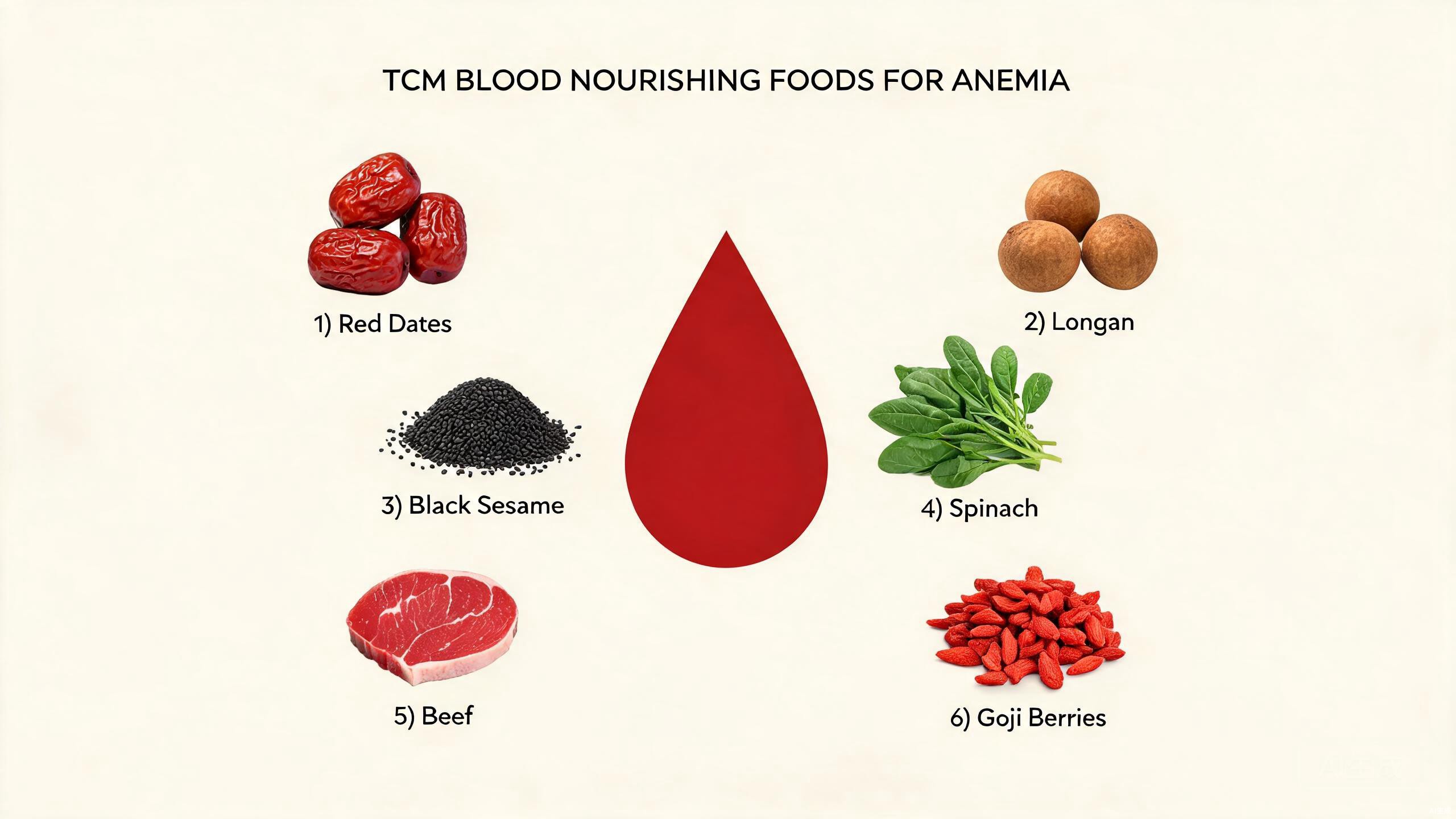
Key Takeaways
- TCM "blood deficiency" is a pattern of symptoms — pale complexion, dizziness, palpitations, poor sleep — that overlaps with but is not identical to Western anemia.
- In TCM, blood is more than just the red fluid in your veins; it nourishes the muscles, skin, hair, and mind. Building blood requires both the right foods and good digestion.
- Angelica, ginger and mutton soup is the classic blood-building recipe, traditionally used after illness, childbirth, or during winter.
- Red date, longan and goji tea is the easiest daily blood-building practice — gentle, accessible, and safe for regular use.
- All ingredients are available at Western supermarkets, Amazon, or iHerb.
This article is for wellness education only and is not medical advice. Blood deficiency symptoms can overlap with serious medical conditions including anemia, bleeding disorders, and cardiovascular disease. If you experience persistent fatigue, pallor, dizziness, or palpitations, consult your healthcare provider for proper diagnosis. The food therapy recipes described here are traditional dietary practices, not treatments for any disease. Some herbs may interact with medications.
Feeling tired, looking pale, sleeping poorly, and easily dizzy — these are signs that millions of people experience, often without understanding why. In Western medicine, these symptoms might prompt a blood test for anemia. In Traditional Chinese Medicine (TCM), they point to a pattern called blood deficiency ( xue xu), one of the most commonly recognized imbalances in clinical practice.
While the two concepts overlap, TCM blood deficiency is a broader pattern that encompasses more than just low hemoglobin. It reflects a state where the body's blood — which in TCM nourishes the muscles, skin, hair, and mind — is insufficient in quality or quantity. The good news is that TCM has developed a rich tradition of blood-building foods over thousands of years, many of which are accessible at Western supermarkets, Amazon, or iHerb. Below, we explore the concept and share five traditional recipes.
Understanding Blood Deficiency in TCM
In TCM theory, blood is understood as more than the red fluid that flows through blood vessels. It is a nourishing substance that moistens the body, fuels the muscles, anchors the mind ( shen), and supports the menstrual cycle. Blood is produced by the spleen and stomach from the food we eat, stored by the liver, and circulated by the heart. This means that blood deficiency can arise from poor digestion, inadequate nutrition, blood loss (including heavy menstruation), or chronic illness that depletes the body's reserves.
The classical text Huangdi Neijing states: "When blood is harmonious, the spirit has a place to rest." This captures a key TCM insight: blood deficiency doesn't just affect the physical body — it disturbs the mind, causing restlessness, overthinking, and dream-disturbed sleep. This is why blood-building foods often also calm the spirit.
How TCM Blood Deficiency Differs from Western Anemia
It is important to understand that TCM blood deficiency and Western anemia are not the same thing, though they frequently coexist:
- Western anemia is defined objectively by a blood test showing low hemoglobin, low red blood cell count, or low hematocrit. It has specific causes (iron deficiency, B12 deficiency, blood loss, etc.) and specific medical treatments.
- TCM blood deficiency is a pattern diagnosed subjectively by symptoms and signs — pale complexion, dry skin, brittle nails, dizziness, palpitations, poor sleep, scanty menstruation, and a pale tongue. You can have blood deficiency symptoms without meeting the lab criteria for anemia.
This means that TCM food therapy may support people who feel depleted but test "normal" on blood work, as well as those with confirmed anemia who want to complement their medical treatment. However, if you suspect anemia, a blood test is essential. TCM food therapy should never replace medically prescribed iron supplements or other treatments. For more on TCM concepts, see our guide to qi, blood, and body fluids.
Common Symptoms of Blood Deficiency
TCM identifies a cluster of symptoms that, when appearing together, suggest blood deficiency. You do not need all of them to have the pattern:
- Pale complexion — the face, lips, and nail beds look pale or dull rather than rosy.
- Dizziness and lightheadedness — especially when standing up quickly, after exertion, or during menstruation.
- Palpitations — a sensation of the heart racing or fluttering, often with anxiety.
- Insomnia with vivid dreams — difficulty falling asleep, or waking frequently with disturbing or busy dreams.
- Scanty menstruation — light periods, delayed cycles, or absent periods (in women).
- Dry skin, hair, and nails — blood moistens the body; when deficient, dryness appears everywhere.
- Numbness or tingling — especially in the hands and feet, as blood nourishes the nerves.
- Poor memory and difficulty concentrating — blood supports the mind's capacity for focus.
- Fatigue — particularly a type that feels like emptiness rather than heaviness.
If these symptoms sound familiar, the recipes below may offer gentle, nourishing support. For related conditions, see our TCM for PMS symptoms guide and our TCM insomnia types guide.
Recipe 1: Angelica, Ginger and Mutton Soup
TCM pattern: Blood deficiency with cold (fatigue, pallor, cold hands and feet, menstrual cramps)
Traditional function: Tonify blood, warm the channels, dispel cold, relieve pain
Ingredient Properties
Angelica sinensis ( dang gui, also known as dong quai) is sweet, acrid, and warm. It enters the heart, liver, and spleen channels. Angelica is arguably the most important blood-tonifying herb in all of TCM. It is traditionally called the "female ginseng" for its widespread use in women's health, but it benefits anyone with blood deficiency. Angelica both builds blood and invigorates blood circulation — a rare dual action.
Ginger ( sheng jiang) is acrid and warm. It enters the lung, spleen, and stomach channels. In this recipe, ginger serves two purposes: it warms the middle to support digestion (helping the body assimilate the rich soup), and it moderates the slightly cloying nature of blood-tonifying ingredients. Fresh ginger also helps neutralize any gaminess from the mutton.
Mutton ( yang rou) is sweet and warm. It enters the spleen and kidney channels. In TCM food therapy, mutton is one of the most warming and blood-building meats. Its warmth makes this soup particularly suited to blood deficiency that is accompanied by coldness — cold hands, cold feet, or menstrual cramps that feel better with warmth.
Preparation
Ingredients: 10 grams angelica slices ( dang gui, about 3 to 4 pieces), 1 lb mutton (bone-in or boneless, cut into chunks), 5 slices fresh ginger, 6 cups water, 2 tablespoons cooking wine (optional), salt to taste.
Method: Blanch the mutton in boiling water for 5 minutes, then drain and rinse. Combine the mutton, angelica, ginger, cooking wine, and water in a pot. Bring to a boil, then reduce to a low simmer. Cover and cook for 1.5 to 2 hours, until the meat is very tender and the broth is rich. Add salt to taste. Drink 1 bowl daily, ideally during colder months or after menstruation (for women). This is a traditional winter dish.
Precautions
Angelica (dong quai) should be avoided during pregnancy and during heavy menstrual bleeding. It may interact with blood-thinning medications; consult your healthcare provider if you take anticoagulants. This soup is warming; avoid it if you have signs of heat (red face, irritability, fever). Mutton can be substituted with beef if unavailable or if you prefer a milder flavor. Dried angelica root is available on Amazon and iHerb. For more on TCM warming foods, see our TCM warming spices guide.
Recipe 2: Red Date, Longan and Goji Tea
TCM pattern: Blood and qi deficiency (general fatigue, poor sleep, pale complexion)
Traditional function: Tonify qi, nourish blood, calm the spirit, improve sleep
Ingredient Properties
Red dates ( hong zao, also called jujubes) are sweet and warm. They enter the spleen and stomach channels. Red dates are the most widely used blood-building food in TCM. They tonify spleen qi (which produces blood), nourish heart blood (which calms the mind), and harmonize the properties of other herbs. Their natural sweetness makes them a perfect daily tonic.
Longan ( long yan rou, dried longan aril) is sweet and warm. It enters the heart and spleen channels. Longan is the premier heart-blood tonic in TCM. It is specifically used for blood deficiency that affects the mind — poor memory, anxiety, and insomnia. While red dates build the foundation, longan directly nourishes the heart and calms the spirit.
Goji berries ( gou qi zi) are sweet and neutral. They enter the liver and kidney channels. Goji berries nourish liver blood and kidney yin, complementing the heart-focused longan with liver and kidney support. The liver stores blood, making goji an essential part of any blood-building formula.
Preparation
Ingredients: 6 to 8 dried red dates (pitted), 10 grams dried longan (about 2 tablespoons), 1 tablespoon dried goji berries, 3 cups water.
Method: Pit the red dates if not already pitted. Rinse all ingredients. Combine with 3 cups of water in a small pot. Bring to a boil, then simmer gently for 15 minutes. Alternatively, steep in a thermos with hot water for 20 minutes. Drink 1 to 2 cups daily. The tea is naturally sweet and deeply comforting. The softened dates and goji berries can be eaten.
Precautions
This tea is warm and sweet, making it unsuitable for people with damp-heat patterns (heavy feeling, thick yellow tongue coating, acne, or strong body odor). Red dates are high in natural sugars; diabetics should use in moderation and monitor blood sugar. If you tend to feel warm or have a red face, reduce the number of dates and longan. All three ingredients are available at supermarkets, Amazon, and iHerb. For a detailed guide, see our red date tea guide and our longan tea guide.
This tea is ideal as an afternoon or evening beverage. The calming, blood-nourishing combination of longan and red dates is traditionally used to support restful sleep. Drink it 1 to 2 hours before bed for best results.
Recipe 3: Spinach and Pork Liver Soup
TCM pattern: Liver blood deficiency (dry eyes, brittle nails, dizziness, scanty menstruation)
Traditional function: Nourish blood, brighten the eyes, support liver function
Ingredient Properties
Spinach ( bo cai) is sweet and cool. It enters the large intestine and stomach channels. Spinach is rich in iron and chlorophyll, making it valuable for blood building from both a TCM and modern nutritional perspective. In TCM, spinach is traditionally used to nourish blood, moisten dryness, and support the liver. Its cooling nature also helps balance the warmth of liver.
Pork liver ( zhu gan) is sweet and warm. It enters the liver channel. In TCM food therapy, animal livers are the most direct blood-builders — the principle of "like treats like" ( eating liver to support the liver and build blood). Pork liver is particularly valued for liver blood deficiency patterns marked by dry eyes, blurred vision, and pale nails. It is also extremely rich in bioavailable iron and B12, aligning TCM and modern nutrition.
Preparation
Ingredients: 1/2 lb fresh pork liver (sliced thin), 4 cups fresh spinach (washed), 5 slices fresh ginger, 6 cups water or chicken broth, 1 tablespoon cooking wine, salt to taste.
Method: Soak the sliced pork liver in water with a splash of cooking wine for 15 minutes to remove any bitterness. Drain. Bring the water or broth to a boil with the ginger slices. Add the liver slices and cook for 3 to 4 minutes until just cooked (do not overcook). Add the spinach and cook for 1 more minute until wilted. Add salt to taste. Drink 1 bowl, 2 to 3 times per week. The soup should be light and fresh.
Precautions
Pork liver is high in cholesterol and vitamin A; avoid consuming large amounts if you have high cholesterol or are pregnant (excess vitamin A can be harmful during pregnancy). People with gout should limit organ meats due to purine content. Ensure the liver is fresh and from a reputable source. Do not eat raw or undercooked liver. If you cannot find pork liver, chicken liver is a good substitute. Spinach contains oxalates; if you have a history of kidney stones, blanch the spinach before adding to the soup.
Recipe 4: Black Bean, Red Date and Chicken Soup
TCM pattern: Kidney and blood deficiency (chronic fatigue, lower back weakness, pale complexion, hair thinning)
Traditional function: Tonify kidney, nourish blood, support vitality
Ingredient Properties
Black beans ( hei dou) are sweet and neutral. They enter the spleen and kidney channels. In TCM, black beans nourish kidney yin, activate blood, and support overall vitality. The kidneys are the root of blood production in TCM theory (kidney essence produces marrow, which produces blood), making kidney-nourishing foods essential for deep blood building.
Red dates ( hong zao) tonify spleen qi and nourish heart blood, as described in Recipe 2. In this soup, they complement the kidney-focused black beans by supporting the spleen (which produces blood from food).
Chicken ( ji rou) is sweet and warm. It enters the spleen and stomach channels. Chicken is one of the most commonly used qi-tonifying meats in TCM. In this recipe, chicken provides the protein base and warming qi that helps the body assimilate the blood-building properties of the black beans and dates. This recipe traditionally uses black-bone chicken ( wu ji), but regular chicken is an accessible substitute that provides similar benefits.
Preparation
Ingredients: 1/2 cup dried black beans (soaked overnight), 8 dried red dates (pitted), 1 whole chicken (about 2 lbs, cut into pieces), 5 slices fresh ginger, 8 cups water, salt to taste.
Method: Blanch the chicken pieces in boiling water for 5 minutes, then drain and rinse. Combine the chicken, soaked black beans, red dates, ginger, and water in a large pot. Bring to a boil, then reduce to a low simmer. Cover and cook for 1.5 to 2 hours, skimming foam as needed, until the beans are soft and the broth is rich. Add salt to taste. Drink 1 bowl daily. This soup is deeply nourishing and suitable for postpartum recovery, post-illness, and general blood building.
Precautions
This soup is warming and building, making it best for deficiency patterns. Avoid it if you have an active cold, flu, or signs of heat (fever, sore throat, yellow phlegm). Black beans can cause bloating in sensitive individuals; thorough soaking and cooking with ginger helps. This soup is safe for long-term use as a weekly tonic. For more on kidney-nourishing foods, see our TCM for tinnitus guide, which also features kidney-tonifying recipes.
Recipe 5: Mulberry and Red Date Porridge
TCM pattern: Liver and kidney yin deficiency with blood deficiency (dryness, dizziness, premature graying, poor sleep)
Traditional function: Nourish yin, enrich blood, moisten dryness
Ingredient Properties
Mulberries ( sang shen) are sweet, sour, and cold. They enter the heart, liver, and kidney channels. Mulberries are one of the finest yin-nourishing and blood-enriching fruits in TCM. They are traditionally used to treat blood deficiency accompanied by yin deficiency — a pattern that includes dryness (dry skin, dry eyes, dry hair), dizziness, and premature graying. Dried mulberries retain the nourishing properties of fresh ones and are widely available.
Red dates ( hong zao) provide the spleen-tonifying, blood-building foundation. Their warmth balances the cooling nature of mulberries, creating a harmonious combination that builds blood without being too warm or too cold.
Rice ( mi) serves as the base for the porridge, providing easily digestible energy that supports the spleen's blood-producing function. White rice is traditional; brown rice can be used for added nutrients but takes longer to cook.
Preparation
Ingredients: 2 tablespoons dried mulberries, 6 dried red dates (pitted), 1/2 cup white rice, 4 cups water, optional: 1 teaspoon honey.
Method: Rinse the rice, mulberries, and red dates. Combine all ingredients in a pot with 4 cups of water. Bring to a boil, then reduce to a low simmer. Cook for 30 to 40 minutes, stirring occasionally, until the porridge is thick and creamy. Add honey if desired. Eat 1 bowl daily, ideally for breakfast. The porridge is gentle, easily digestible, and suitable for all ages.
Precautions
Mulberries are cooling and moistening. If you have a weak digestive system with loose stools or internal dampness (heavy feeling, thick tongue coating), use fewer mulberries or add an extra slice of ginger to the porridge. Diabetics should monitor blood sugar, as both mulberries and red dates contain natural sugars. Dried mulberries are available on Amazon and iHerb. For more on porridge as a TCM food therapy form, see our congee guide.
Comparison of the Five Blood-Building Recipes
| Recipe | TCM Pattern | Key Function | Best For | When to Use |
|---|---|---|---|---|
| Angelica, Ginger & Mutton Soup | Blood deficiency with cold | Tonify blood, warm channels | Cold hands, menstrual cramps | Winter, post-menstruation |
| Red Date, Longan & Goji Tea | Blood & qi deficiency | Tonify qi, nourish blood | Fatigue, poor sleep | Daily, afternoon/evening |
| Spinach & Pork Liver Soup | Liver blood deficiency | Nourish blood, brighten eyes | Dry eyes, brittle nails | 2-3 times per week |
| Black Bean, Red Date & Chicken Soup | Kidney & blood deficiency | Tonify kidney, nourish blood | Chronic fatigue, hair thinning | Weekly tonic |
| Mulberry & Red Date Porridge | Blood & yin deficiency | Nourish yin, enrich blood | Dryness, dizziness, poor sleep | Daily breakfast |
Lifestyle Practices to Support Blood Building
Food therapy is most effective when supported by matching lifestyle habits. TCM offers several recommendations for supporting blood building:
- Strengthen the spleen. In TCM, the spleen produces blood from food. If digestion is weak, even the best blood-building foods will not be fully absorbed. Eat warm, cooked meals; avoid ice-cold drinks; and chew thoroughly. See our TCM for digestion guide for spleen-strengthening practices.
- Rest during menstruation. For women, menstruation is a natural time of blood loss. TCM advises gentle rest, warm foods, and avoiding cold or raw foods during the menstrual period to support blood recovery.
- Sleep before midnight. In TCM, the hours before midnight are when the body produces and stores blood most actively. Going to bed by 10:30 PM supports this natural rhythm.
- Avoid excessive blood loss. This includes heavy menstrual bleeding, frequent blood donation, and bleeding from hemorrhoids or ulcers. If you experience heavy bleeding, seek medical evaluation.
- Moderate exercise. Gentle movement like qigong, tai chi, and walking supports blood circulation without depleting reserves. Avoid excessive sweating, which is said to "injure blood" in TCM.
- Manage stress. Overthinking and worry directly deplete spleen qi and heart blood. Practices like meditation and qigong for stress protect both the mind and the blood.
Blood deficiency is closely related to other TCM patterns. If you also experience tinnitus, insomnia, or PMS symptoms, those guides may offer additional support. For understanding the five elements theory that underlies organ relationships, see our five elements guide.
Precautions and When to Seek Help
While these food therapy recipes are gentle and traditionally safe for most adults, the following precautions apply:
- Medical evaluation is essential. If you suspect anemia, a simple blood test from your healthcare provider can confirm or rule it out. Anemia has many causes — iron deficiency, B12 deficiency, folate deficiency, bleeding disorders, chronic disease — each requiring different treatment.
- Iron supplements. If your healthcare provider prescribes iron supplements, take them as directed. TCM food therapy can complement but should not replace prescribed supplements. Do not take high-dose iron supplements without medical supervision, as excess iron can be harmful.
- Heavy menstrual bleeding. If you experience very heavy periods (soaking through pads/tampons every hour, or periods lasting more than 7 days), seek medical evaluation. Food therapy alone cannot address significant blood loss.
- Unexpected symptoms. If you experience new or worsening dizziness, severe fatigue, chest pain, shortness of breath, or fainting, seek medical attention promptly.
- Herb interactions. Angelica (dong quai) may interact with blood thinners. Goji berries may interact with warfarin. Consult your healthcare provider before adding new herbs if you take medications.
- Pregnancy. Angelica should be avoided during pregnancy. Some blood-building herbs are not suitable during pregnancy. Always consult your healthcare provider.
Frequently Asked Questions
Is TCM blood deficiency the same as anemia?
TCM blood deficiency and Western anemia are related but not identical. Anemia is defined by low hemoglobin or red blood cell counts on a blood test. Blood deficiency is a TCM pattern diagnosed by symptoms such as pale complexion, dizziness, dry skin, and scanty menstruation. You can have blood deficiency symptoms without meeting the medical criteria for anemia, and vice versa. If you suspect anemia, a blood test from your healthcare provider is essential for proper diagnosis.
What are the best TCM foods for building blood?
The most valued blood-building foods in TCM include red dates (jujube), longan, goji berries, black beans, spinach, pork liver, mulberries, and angelica (dong quai). These foods are traditionally combined in soups, teas, and porridges to maximize their nourishing effects. The classic recipe is angelica, ginger, and mutton soup, which has been used for centuries to support blood building, especially during winter and after illness or childbirth.
Can I use TCM food therapy instead of iron supplements?
If you have diagnosed iron-deficiency anemia, you should follow your healthcare provider's treatment plan, which may include iron supplements. TCM food therapy can complement medical treatment by supporting overall nutrition and digestion, but it should not replace prescribed supplements or medical care. Always inform your doctor about any dietary changes or herbs you are using.
How long does it take for blood-building foods to work?
TCM food therapy is a gradual approach. Blood building takes time because the body must absorb and assimilate nutrients. With consistent daily practice, many people notice improvements in energy, complexion, and sleep within 4 to 8 weeks. However, if symptoms persist or worsen, consult your healthcare provider for a proper medical evaluation, including a blood test.
The Bottom Line
Blood deficiency is one of the most common patterns in TCM, and its symptoms — fatigue, pallor, dizziness, poor sleep — are familiar to many. The beauty of TCM food therapy is that it addresses these symptoms through nourishing, accessible foods that have been used for generations. The five recipes in this guide use ingredients available at Western supermarkets, Amazon, and iHerb, making them practical for daily life.
However, it is essential to distinguish between TCM blood deficiency (a pattern of symptoms) and medical anemia (a lab-confirmed condition). If you suspect anemia, a blood test is your first step. Use these traditional recipes as complementary dietary habits alongside — not instead of — professional medical care, and always keep your healthcare provider informed about any herbs or dietary changes.
This article is for educational and informational purposes only and is not a substitute for professional medical advice, diagnosis, or treatment. These statements have not been evaluated by the FDA. Always consult a qualified healthcare provider before beginning any new wellness practice, especially if you are pregnant, nursing, taking medication, or have a medical condition. Read our full disclaimer →