Key Takeaways
- TCM approaches PMS through pattern-based assessment rather than a one-size-fits-all solution, recognizing that each person's premenstrual experience is unique.
- The Liver plays a central role in menstrual health, and liver qi stagnation is the most common pattern behind PMS mood swings, breast tenderness, and irritability.
- Herbal teas such as rose, chrysanthemum, and ginger-date are traditionally matched to specific patterns for natural PMS relief.
- Acupressure points Sanyinjiao (SP6), Taichong (LR3), and Neiguan (PC6) may support emotional and physical comfort before and during your cycle.
- Simple lifestyle shifts — warm foods, sleep before 11 p.m., and gentle movement — complement these practices and support overall TCM menstrual health.
This article is for wellness education only and is not medical advice, diagnosis, or treatment. The practices described are complementary wellness approaches, not a replacement for professional care. If you experience severe premenstrual symptoms, consult your healthcare provider. Some herbs may interact with medications. Read our full disclaimer →
Premenstrual discomfort affects a significant majority of menstruating women. For many, the days before a period bring a familiar wave of irritability, bloating, breast tenderness, fatigue, and emotional shifts that can disrupt work, relationships, and overall well-being. While conventional approaches often offer the same solution to everyone, Traditional Chinese Medicine (TCM) takes a different path.
In TCM practice, what is commonly called PMS is not viewed as a single condition with a single remedy. Instead, it is understood as a collection of patterns — specific imbalances that vary from person to person. Two women may both experience premenstrual tension, but one might feel irritable with breast tenderness while the other feels bloated and exhausted. In TCM, these are different patterns calling for different approaches. This guide explores how TCM understands premenstrual concerns and the wellness practices traditionally used to support comfort and balance throughout the cycle.
How TCM Understands PMS
The Liver's Role in Menstrual Health
In TCM theory, the Liver is the organ most closely connected to the menstrual cycle. Its primary function is to ensure the smooth flow of qi (vital energy) and blood throughout the body. When Liver qi flows freely, energy moves, emotions remain settled, and the cycle arrives without disruption. When Liver qi becomes stagnant — often due to stress, frustration, or emotional suppression — that flow is interrupted. The days before a period can then bring mood swings, breast tenderness, irritability, and a feeling of tension or "stuckness."
Why Emotions and Cycles Are Connected
The concept of TCM liver qi stagnation is central to understanding why emotions and the menstrual cycle are so deeply linked. In TCM, the Liver governs both the smooth flow of qi and the emotions of anger and frustration. When stress accumulates, qi stagnates; when qi stagnates before a period, emotional and physical signs intensify together. This is why a stressful month often coincides with a more difficult premenstrual phase — the two are not separate events but reflections of the same underlying imbalance.
Recognizing your unique pattern is the first step toward meaningful support. Our guide to TCM body types offers additional context for understanding your constitutional tendencies and how they shape your premenstrual experience.
Common TCM Patterns of PMS
TCM identifies several distinct patterns behind premenstrual discomfort. Each pattern has characteristic signs and traditionally paired wellness practices. The table below summarizes the five most common patterns and their corresponding supportive approaches.
| TCM Pattern | Key Signs | Traditional Support |
|---|---|---|
| Liver Qi Stagnation | Irritability, breast tenderness, mood swings, feeling of tension | Rose tea, acupressure (LR3, PC6), gentle movement |
| Liver Fire | Anger, headaches, red face, thirst | Chrysanthemum tea, cooling foods |
| Spleen Qi Deficiency | Bloating, fatigue, sweet cravings, loose stools | Ginger tea, warm cooked foods, reduced raw food |
| Blood Stasis | Cramps with dark clots, sharp pelvic pain | Ginger date tea, gentle movement, warmth |
| Heart Blood Deficiency | Anxiety, insomnia before period, palpitations | Longan tea, rest, blood-nourishing foods |
TCM Practices for PMS Relief
Herbal Teas Matched to Your Pattern
Herbal tea is one of the most accessible entry points into TCM menstrual health. The key is matching the tea to your pattern rather than choosing randomly.
- Rose tea — Traditionally used to move stagnant Liver qi and ease emotional tension. Ideal for irritability, breast tenderness, and mood swings. Learn more about rose tea for emotional balance.
- Chrysanthemum tea — A cooling brew traditionally used for Liver Fire patterns marked by anger, headaches, and a red face. See our guide to cooling chrysanthemum tea.
- Ginger and date tea — A warming combination traditionally used for Spleen Qi deficiency and Blood stasis patterns, supporting digestion and circulation. Read about warming ginger and date tea.
- Longan tea — A sweet, nourishing tonic for Heart Blood deficiency, traditionally used for anxiety and insomnia before a period. Explore nourishing longan tea.
Acupressure Points for PMS
Acupressure is a gentle self-care technique that applies firm, steady pressure to specific points. Three points are especially valued for premenstrual support:
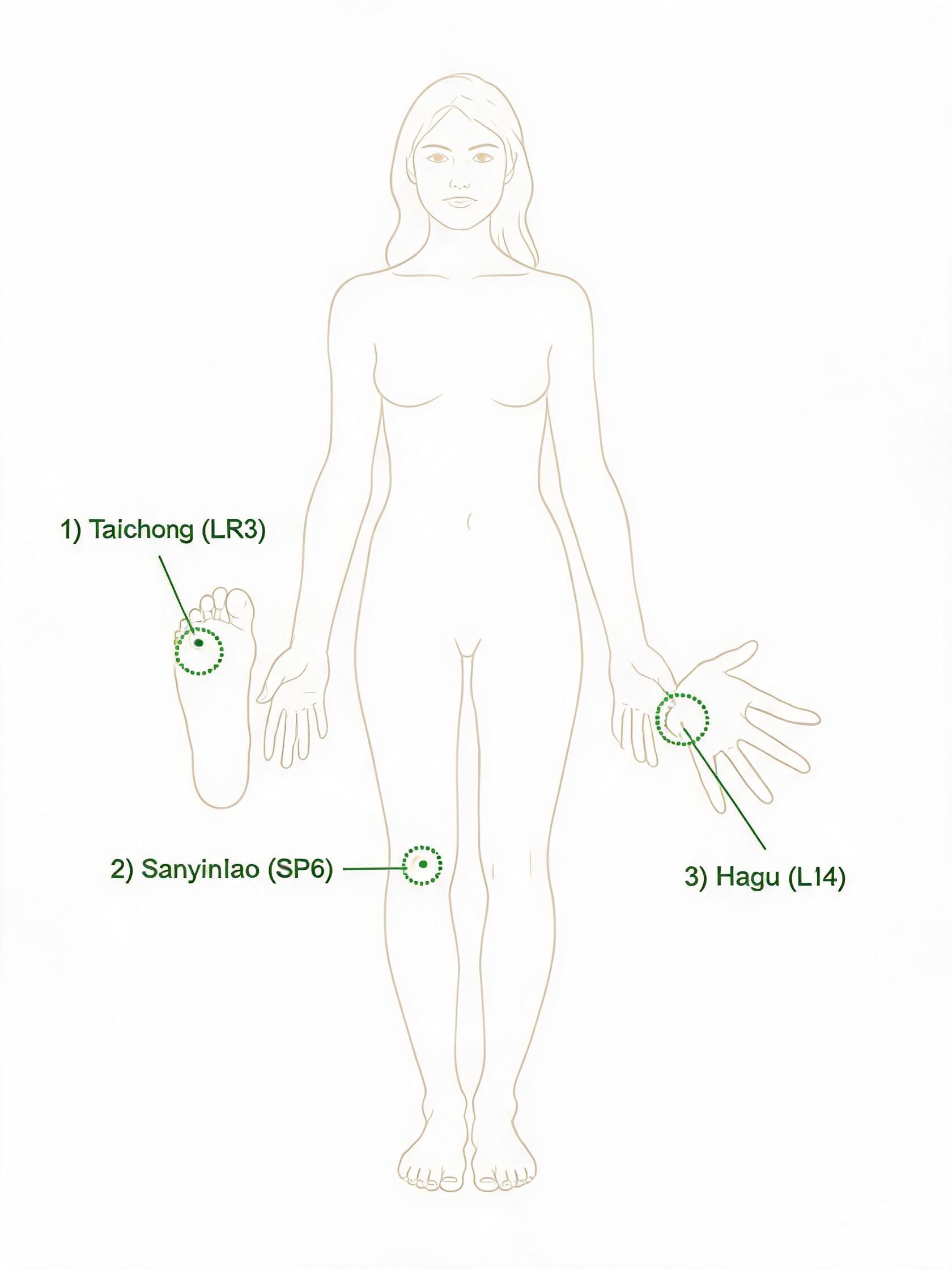
- Sanyinjiao (SP6) — Located on the inner lower leg, about four finger-widths above the ankle. This point is considered the premier point for women's wellness and may support overall menstrual comfort. Learn the Sanyinjiao (SP6) acupressure point.
- Taichong (LR3) — Located on the top of the foot, in the depression between the big and second toes. Traditionally used to move Liver qi and ease frustration and tension. See Taichong (LR3) for stress relief.
- Neiguan (PC6) — Located on the inner wrist, about three finger-widths from the crease. Traditionally used to calm the spirit, ease anxiety, and settle nausea. Read about Neiguan (PC6) for emotional calm.
Apply gentle but firm pressure to each point for 1 to 2 minutes, breathing slowly. Practice daily in the week before your period, or whenever tension arises.
Dietary Adjustments
Food is considered the foundation of wellness in TCM. For premenstrual support, emphasize warm, cooked, easily digested foods such as soups, stews, and congee. Avoid cold and raw foods, which can weaken the Spleen and worsen bloating. Reduce caffeine and sugar, which can intensify mood swings and irritability. Ginger, red dates, and warm grains are particularly supportive.
Lifestyle Practices
- Sleep before 11 p.m. — In TCM, the Liver's restoration time is between 1 and 3 a.m., and quality rest before midnight supports its function.
- Gentle movement — Walking, stretching, and qigong encourage qi flow and help relieve stagnation. Avoid intense exercise right before your period.
- Stress management — Since Liver qi stagnation is often stress-driven, practices like meditation, journaling, and deep breathing directly support the root of many premenstrual concerns.
Week-by-Week PMS Support Timeline
Aligning your wellness practices with the phases of your cycle can enhance their effectiveness. Here is a simple timeline to guide your self-care.
Week Before Your Period (Luteal Phase)
This is when Liver qi tends to stagnate and premenstrual signs peak. Focus on liver-supporting teas like rose or chrysanthemum, gentle exercise such as walking or restorative yoga, and stress reduction. Practice acupressure on LR3 and PC6 daily. Avoid overwork and allow more time for rest.
During Your Period (Menstruation)
Shift to warmth and nourishment. Drink warm water and warming teas like ginger and date. Eat easily digested, cooked foods such as soups, congee, and stews. Avoid cold drinks, raw foods, and excessive caffeine. Prioritize rest and avoid cold exposure — keep your lower back and abdomen warm.
After Your Period (Follicular Phase)
This is the time to rebuild. Blood loss during menstruation can leave you depleted, so focus on blood-nourishing foods such as red dates, longan, dark leafy greens, and lean protein. Drink longan and red date tea to support recovery. This is also an ideal time for gentle strengthening exercise as your energy naturally rises.
When to Seek Professional Help
While gentle self-care practices can support many people through premenstrual discomfort, some situations call for professional guidance. Consider consulting a qualified TCM practitioner or your healthcare provider if:
- Premenstrual signs are severe enough to disrupt daily life, work, or relationships.
- You experience intense mood changes, including feelings of hopelessness or thoughts of self-harm.
- Periods are consistently very heavy, painful, or irregular.
- You notice new or worsening signs that concern you.
- You take medication and want to ensure herbal teas will not interact.
A qualified TCM practitioner can assess your individual pattern and recommend a personalized approach, while your healthcare provider can rule out underlying conditions that may require medical attention.
Frequently Asked Questions
Can TCM help with PMS mood swings?
In TCM practice, PMS mood swings are often linked to liver qi stagnation, where stress interrupts the smooth flow of energy before a period. Rose tea and acupressure on points like Taichong (LR3) and Neiguan (PC6) are traditionally used to encourage qi flow and support emotional balance. Results vary by person and pattern.
What is the best herbal tea for PMS?
There is no single best tea, because TCM matches teas to patterns. Rose tea is traditionally used for irritability and breast tenderness, chrysanthemum tea for anger and headaches, ginger and date tea for bloating and cramps, and longan tea for anxiety and insomnia. Identifying your pattern helps you choose the most appropriate tea.
Which acupressure points are used for PMS relief?
Three points are commonly used: Sanyinjiao (SP6) on the inner lower leg for overall menstrual support, Taichong (LR3) on the foot for stress and qi stagnation, and Neiguan (PC6) on the inner wrist for emotional calm and nausea. Gentle pressure for 1 to 2 minutes on each point is a typical self-care practice.
Is it safe to use TCM practices for PMS alongside medication?
Gentle practices like acupressure and dietary adjustments are generally safe for most adults. However, some herbs may interact with medications. If you take prescription medication, are pregnant, or have a health condition, consult your healthcare provider before adding herbal teas or new wellness practices to your routine.
This article is for educational and informational purposes only and is not a substitute for professional medical advice, diagnosis, or treatment. Always consult a qualified healthcare provider before beginning any new wellness practice, especially if you are pregnant, nursing, taking medication, or have a medical condition. Read our full disclaimer →