Key Takeaways
- TCM views acid reflux not as a single problem but through patterns — liver-stomach disharmony, stomach fire, spleen-stomach deficiency, and liver fire transforming — each calling for different foods.
- Baking soda and honey water may help neutralize stomach acid quickly when discomfort strikes.
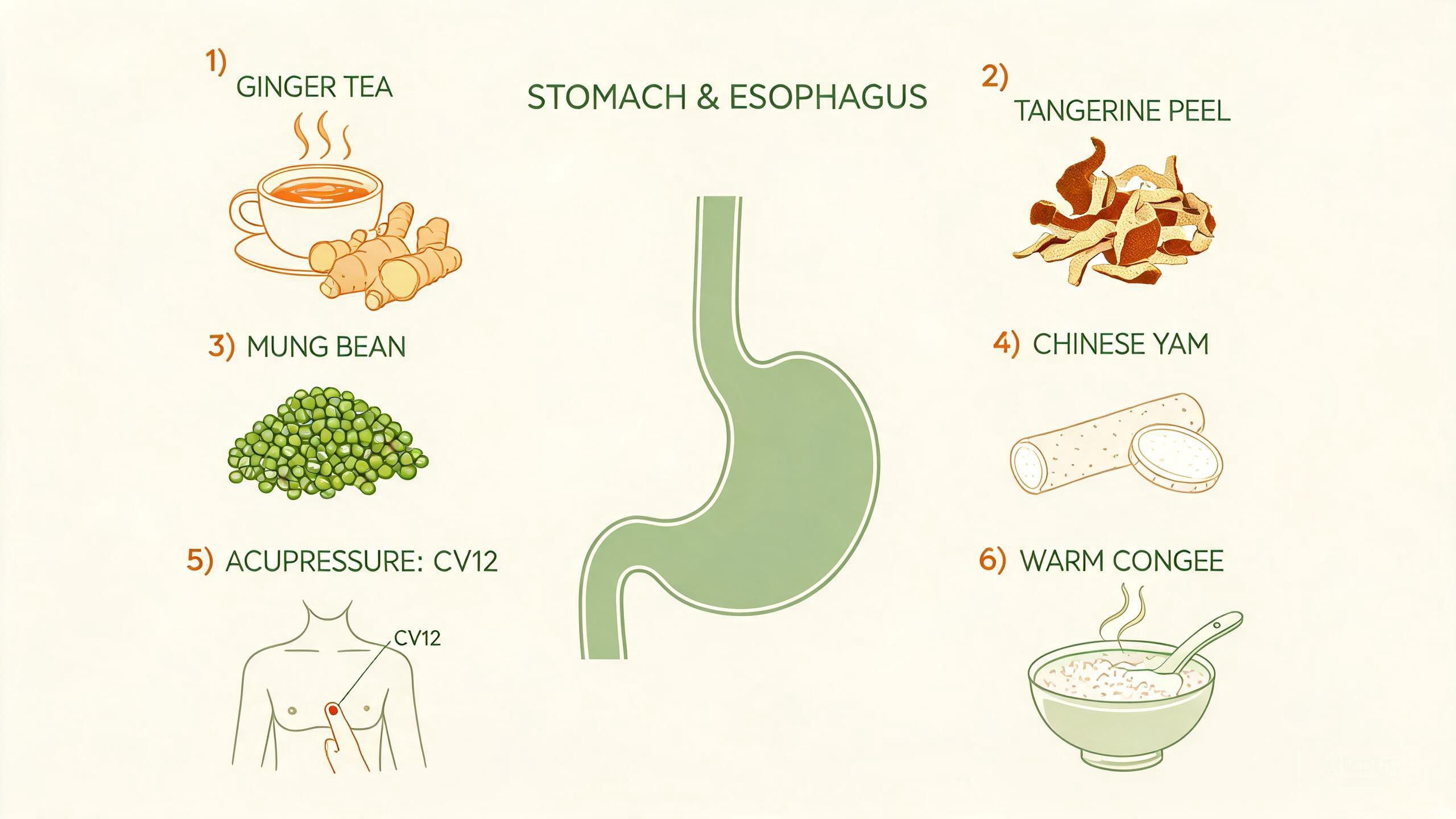
- Chinese yam porridge is traditionally used to strengthen a weak spleen and stomach — the root pattern behind chronic reflux.
- Tangerine peel and ginger tea moves downward-flowing qi and may ease the upward surge sensation.
- All ingredients are available at Western supermarkets, Amazon, or iHerb; none require a special herb shop visit.
This article is for wellness education only and is not medical advice, diagnosis, or treatment. The food therapy practices described are complementary wellness approaches, not a replacement for professional care. If you experience persistent or severe acid reflux, difficulty swallowing, or unexplained weight loss, consult your healthcare provider. Read our full disclaimer →
Acid reflux — that burning sensation rising from the stomach toward the chest — is one of the most common digestive complaints in the modern world. While antacids offer quick relief, many people seek gentler, food-based approaches that address why the reflux happens in the first place. Traditional Chinese Medicine (TCM) has explored this question for centuries, and its answers are surprisingly practical.
In TCM, acid reflux is not seen as excess acid to be suppressed. Instead, it is understood as a sign of disharmony — usually between the liver and stomach, or a weakness in the spleen and stomach system. The upward surge of acid is described as rebellious stomach qi, meaning the stomach's energy is moving up when it should move down. The remedies below work with this principle: some cool heat, some strengthen deficiency, and some gently redirect energy downward. All use ingredients you can find at a regular grocery store or order online.
How TCM Views Acid Reflux
TCM does not have a single name for acid reflux. Instead, it describes the condition through several patterns of imbalance. Understanding which pattern fits your symptoms is the first step in choosing the right food therapy.
- Liver-Stomach Disharmony (Gan Wei Bu He) — the most common pattern. Stress and frustration cause liver qi to stagnate, which then "invades" the stomach, disrupting its downward flow. Signs: reflux worsened by stress or anger, bloating, belching, sighing, and a tight feeling in the chest or ribs.
- Stomach Fire (Wei Re) — excessive heat in the stomach, often from rich, spicy, or fried foods, alcohol, or overeating. Signs: a strong burning sensation, sour or bitter regurgitation, thirst for cold drinks, bad breath, and a red tongue with a yellow coating.
- Spleen-Stomach Deficiency (Pi Wei Xu Ruo) — a weak digestive system that cannot properly process food, leading to sluggish digestion and reflux. Signs: reflux worsened by eating, fatigue after meals, loose stools, bloating, pale complexion, and a preference for warm food and drinks.
- Liver Fire Transforming (Gan Yu Hua Huo) — chronic emotional stress transforms stagnant liver qi into fire, which rises upward. Signs: reflux with irritability, headache, red face, dry mouth, and bitter taste — often worse in the afternoon or after emotional upset.
If you are new to TCM patterns, our guide to TCM for digestion provides a helpful foundation. For a related condition, see our guide on TCM for stomach cold, which addresses the opposite pattern.
5 Food Therapy Remedies for Acid Reflux
The following five remedies use ingredients available at any Western supermarket, health food store, or online retailer like Amazon or iHerb. Each is matched to a specific TCM pattern, so choose the one that best fits your symptoms.
1. Baking Soda and Honey Water
Best for: Immediate relief of burning sensation (all patterns)
TCM nature and flavor: Sweet, neutral to slightly cool. Enters the Stomach channel.
Traditional use: In TCM, this corresponds to the classic remedy of cuttlebone powder (hai piao xiao), which neutralizes stomach acid and calms reflux. Since cuttlebone is difficult to find in Western stores, baking soda serves a similar neutralizing function. Honey adds a moistening, harmonizing quality that soothes the stomach lining.
How to make: Dissolve 1/4 teaspoon of baking soda in 4 oz of warm (not hot) water. Stir in 1 teaspoon of raw honey. Sip slowly when reflux symptoms arise. Do not exceed 3 servings per day.
Precautions: Baking soda is high in sodium. Avoid if you have high blood pressure, are on a sodium-restricted diet, or are pregnant. Do not use daily for extended periods. This is for occasional relief, not ongoing use. If symptoms persist, consult your healthcare provider.
Baking soda is mildly alkaline and may help temporarily neutralize stomach acid. Honey coats and soothes the esophageal lining. Together, they offer quick comfort while you address the underlying pattern with other remedies.
2. Chinese Yam Porridge
Best for: Spleen-stomach deficiency pattern (reflux with fatigue, bloating after eating)
TCM nature and flavor: Sweet, neutral. Enters the Spleen, Lung, and Kidney channels.
Traditional use: Chinese yam (shan yao) is one of the most valued tonic foods in TCM for strengthening the spleen and stomach. It is traditionally used to support digestive function, reduce chronic loose stools, and build the qi that the spleen needs to process food properly. When the spleen is strong, stomach qi flows downward as it should, reducing reflux.
How to make: Peel and dice 1 cup of fresh Chinese yam (available at Asian markets, or use dried yam slices from Amazon/iHerb). Combine with 1/2 cup of white rice and 6 cups of water in a pot. Bring to a boil, then simmer on low for 45 to 60 minutes until the yam is soft and the porridge is creamy. Add a pinch of salt. Eat warm, 1 bowl per day, ideally in the morning.
Precautions: Chinese yam is very safe for regular use. If using dried slices, soak them for 30 minutes before cooking. Some people may experience mild skin irritation when peeling fresh yam — wear gloves if needed. See our yam congee guide for more details.
3. Tangerine Peel and Ginger Tea
Best for: Liver-stomach disharmony pattern (reflux with stress, bloating, belching)
TCM nature and flavor: Tangerine peel (chen pi): pungent, bitter, warm, enters the Spleen and Lung channels. Ginger (sheng jiang): pungent, warm, enters the Spleen, Stomach, and Lung channels.
Traditional use: This combination is a classic TCM pairing for regulating qi and directing it downward. Aged tangerine peel moves stagnant qi, reduces bloating, and eases the feeling of fullness. Fresh ginger warms the stomach, settles nausea, and helps the stomach's energy flow in the right direction — downward instead of upward. Together, they address the core mechanism of acid reflux: rebellious stomach qi.
How to make: Use a 2-inch strip of dried tangerine peel (available from Amazon, iHerb, or Asian markets; alternatively, dry your own by leaving orange peels in a cool, dry place for 2 to 3 weeks). Add 3 thin slices of fresh ginger. Simmer in 10 oz of water for 10 minutes. Drink warm, 1 to 2 cups per day, ideally after meals. See our tangerine peel tea guide and ginger tea guide for more.
Precautions: Avoid this remedy if your reflux is accompanied by strong heat signs — severe burning, thirst for ice water, red face — as both ingredients are warming. For a cooling alternative, see remedy 4 below.
4. Cabbage Juice
Best for: Stomach fire pattern (strong burning, sour regurgitation, thirst)
TCM nature and flavor: Sweet, cool. Enters the Stomach and Large Intestine channels.
Traditional use: Cabbage is valued in TCM for its cooling, soothing, and stomach-protecting nature. It is traditionally used to clear stomach heat and support the stomach lining. In modern times, raw cabbage juice has gained attention for its potential to support gastric mucosal health, aligning with the TCM understanding of cabbage as a food that nourishes and cools the stomach.
How to make: Wash and chop 1/4 head of green cabbage. Run through a juicer, or blend in a high-speed blender and strain through a fine mesh. Drink 4 to 6 oz of fresh juice on an empty stomach, once daily. The taste is mild and slightly sweet. For a more palatable version, add a small piece of apple or carrot.
Precautions: Cabbage contains goitrogens that may affect thyroid function when consumed in very large amounts. If you have a thyroid condition, consult your healthcare provider. Start with a small amount (4 oz) to test tolerance. Drink immediately after juicing for best results.
5. Honey Warm Water
Best for: General soothing and stomach harmonizing (all patterns, especially deficiency)
TCM nature and flavor: Sweet, neutral. Enters the Spleen, Stomach, Lung, and Large Intestine channels.
Traditional use: Honey (feng mi) is one of the most versatile foods in TCM. It is traditionally used to moisten and harmonize the stomach, soothe irritation, and moderate the effects of other herbs. For acid reflux, warm honey water provides a gentle, coating comfort that may help calm the stomach lining and support the downward flow of stomach qi. It is especially suitable for the spleen-stomach deficiency pattern, where the digestive system needs nourishment rather than cooling.
How to make: Stir 1 tablespoon of raw, unfiltered honey into 8 oz of warm water (about 40°C / 104°F — warm to the touch, not hot). Drink slowly on an empty stomach, first thing in the morning or before bed. Use raw honey for maximum benefit.
Precautions: Never give honey to children under 12 months due to the risk of infant botulism. If you have diabetes, monitor your blood sugar, as honey does contain natural sugars. Avoid using very hot water, which can destroy honey's beneficial enzymes.
Choosing the Right Remedy for Your Pattern
| If Your Reflux Features... | TCM Pattern | Best Remedy | When to Use |
|---|---|---|---|
| Worsened by stress, with bloating and belching | Liver-Stomach Disharmony | Tangerine Peel & Ginger Tea | After meals |
| Strong burning, sour taste, thirst | Stomach Fire | Cabbage Juice | Empty stomach, morning |
| Fatigue after eating, loose stools, prefers warm food | Spleen-Stomach Deficiency | Chinese Yam Porridge | Breakfast |
| Irritability, headache, bitter taste, worse in afternoon | Liver Fire Transforming | Cabbage Juice + Honey Water | Between meals |
| General discomfort, needs gentle soothing | Mixed / Mild | Honey Warm Water | Morning or evening |
| Sudden flare-up, immediate relief needed | Any pattern (acute) | Baking Soda & Honey Water | As needed (occasional) |
Lifestyle and Dietary Tips from TCM
Food therapy works best when paired with supportive daily habits. TCM offers several practical principles for managing acid reflux:
- Eat warm, cooked foods. Cold and raw foods weaken the spleen's digestive fire. Favor soups, stews, and porridges over salads and iced drinks. Our congee guide offers many warming, easy-to-digest options.
- Eat smaller, regular meals. Overeating stretches the stomach and encourages upward flow. Eat until 70% full, and avoid eating within 3 hours of lying down.
- Manage stress before meals. Since liver-stomach disharmony is the most common pattern, emotional state directly affects digestion. Take 5 deep breaths before eating, and avoid eating while working or arguing.
- Avoid trigger foods. TCM categorizes spicy food, fried food, excess coffee, and alcohol as heat-generating — they feed stomach fire. Sour foods in excess may also aggravate the liver. See our guide to TCM warming spices to understand which foods warm or cool the body.
- Keep the abdomen warm. Cold on the abdomen constricts digestive function. Avoid bare midriffs in air-conditioned rooms, and consider a warm ginger foot soak before bed, which draws energy downward.
Precautions and When to Seek Help
While TCM food therapy is gentle and traditionally safe for most adults, acid reflux can sometimes signal a more serious condition. Keep the following in mind:
- Frequency matters. Occasional heartburn after a heavy meal is common. If you experience reflux more than twice a week, or it has persisted for weeks, consult your healthcare provider.
- Warning signs. Seek prompt medical attention if you experience difficulty swallowing, pain when swallowing, persistent vomiting, unexplained weight loss, black or bloody stools, or chest pain that radiates to the arm or jaw.
- Medication interactions. If you take acid-reducing medications (PPIs, H2 blockers, or antacids), speak with your doctor before adding baking soda or cabbage juice, which may affect stomach acidity.
- Not a substitute. TCM food therapy is complementary. Chronic untreated acid reflux may lead to esophageal damage. Always work with your healthcare provider for ongoing conditions.
For a broader understanding of TCM digestive care, see our TCM for digestion guide and our TCM for constipation guide.
Frequently Asked Questions
Can TCM cure acid reflux?
TCM does not claim to cure acid reflux. TCM food therapy and lifestyle practices are traditionally used to support digestive comfort and may complement conventional care. If you experience persistent or severe acid reflux, consult your healthcare provider, as it may indicate a more serious condition such as GERD or esophageal inflammation.
What is stomach fire in TCM?
Stomach fire is a TCM pattern describing excessive heat in the stomach, often from rich spicy foods, alcohol, or emotional stress. Signs may include a burning sensation, sour regurgitation, thirst for cold drinks, bad breath, and a red tongue with a yellow coating. Cooling and harmonizing foods like cabbage juice are traditionally used to support this pattern.
Is cabbage juice good for acid reflux?
In TCM, cabbage is valued for its soothing, cooling nature and is traditionally used to support the stomach lining. Raw cabbage juice is a popular home remedy that may help maintain gastric comfort. Start with a small amount (4 oz) and consult your healthcare provider if you take medication or have a thyroid condition, as cabbage contains goitrogens.
When should I see a doctor for acid reflux?
Seek medical attention if you experience acid reflux more than twice a week, difficulty swallowing, unexplained weight loss, persistent vomiting, or chest pain. Chronic acid reflux may lead to complications and should be evaluated by a healthcare professional. TCM food therapy is complementary, not a replacement for medical care.
The Bottom Line
TCM offers a thoughtful, pattern-based approach to acid reflux that goes beyond simply suppressing acid. By identifying whether your reflux stems from liver-stomach disharmony, stomach fire, spleen deficiency, or liver fire, you can choose foods that work with your body rather than against it. The five remedies above — baking soda and honey water for quick relief, Chinese yam porridge for strengthening, tangerine peel and ginger tea for redirecting qi, cabbage juice for cooling heat, and honey warm water for gentle soothing — are all made from ingredients you can find at a regular grocery store or order online. Start with the remedy that matches your pattern, pair it with warm cooked meals and stress management, and give your body time to respond. And always partner with your healthcare provider for persistent or concerning symptoms.
This article is for educational and informational purposes only and is not a substitute for professional medical advice, diagnosis, or treatment. These statements have not been evaluated by the FDA. Always consult a qualified healthcare provider before beginning any new wellness practice, especially if you are pregnant, nursing, taking medication, or have a medical condition. Read our full disclaimer →