Key Takeaways
- TCM views the throat through the Lung and Stomach channels — understanding whether your sore throat is wind-heat, wind-cold, or yin deficiency type helps guide food choices.
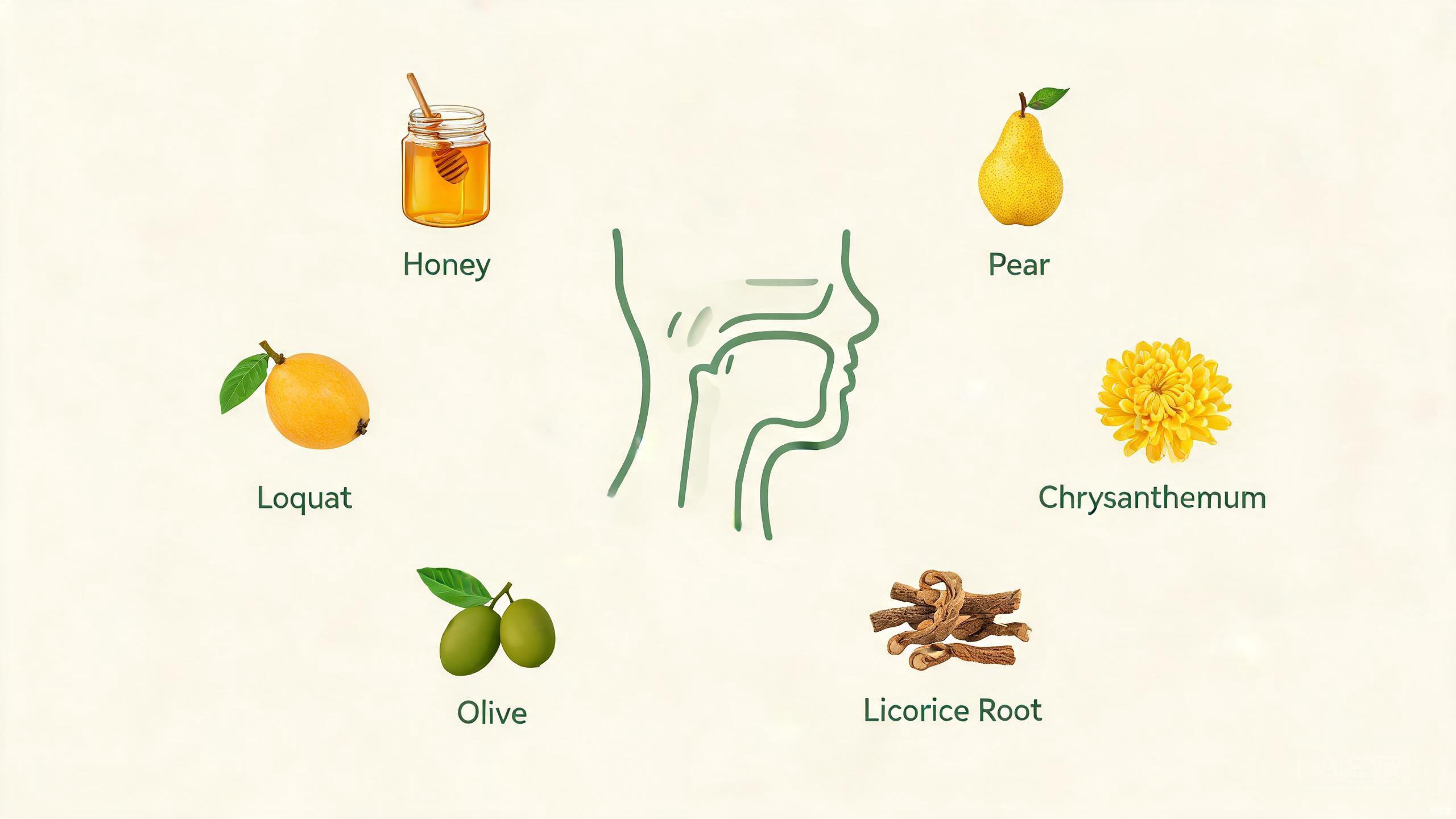
- Five everyday foods — pear with honey, licorice root, monk fruit, tangerine peel, and honey ginger tea — are traditionally used to support throat comfort.
- Licorice root (gan cao) is considered the single most important TCM herb for soothing the throat and is found in countless classical formulas.
- Monk fruit is a natural, sugar-free sweetener that also clears lung heat and moistens the throat — ideal for daily vocal care.
- These are traditional wellness practices, not medical treatments. Persistent or severe throat symptoms require professional medical evaluation.
This article is for educational purposes only and is not medical advice. The foods, teas, and practices described here are traditional wellness practices rooted in Chinese culture. They are not a substitute for professional medical care. A sore throat can sometimes indicate a serious condition such as strep throat, tonsillitis, or other infections that require medical treatment. If you experience severe throat pain, difficulty swallowing or breathing, high fever, or symptoms lasting more than a few days, seek medical attention promptly. Some herbs, especially licorice root, may interact with medications or affect blood pressure. Always inform your healthcare provider about all herbs, teas, and supplements you use. These statements have not been evaluated by the FDA and are not intended to diagnose, treat, cure, or prevent any disease.
Almost everyone has experienced that scratchy, dry, or painful feeling in the throat that signals the start of a cold or the aftermath of a long day of talking. In Traditional Chinese Medicine, the throat is not viewed as an isolated body part. Instead, it is seen as a crossroads — a place where the energy pathways (channels) of several internal organs converge, particularly the Lung and Stomach. By understanding which pattern of imbalance is affecting the throat, TCM offers a tradition of simple, food-based remedies that have been used for generations to soothe and comfort.
If you are new to TCM concepts, our introduction to Traditional Chinese Medicine and our guide to Zang-Fu organ systems provide helpful background before diving in.
How TCM Views the Throat
In TCM theory, the throat is described as the "gateway to the lungs" and the "door of the stomach." Two organ systems are primarily involved in throat health:
- The Lung (Fei) — The Lung channel passes directly through the throat. Because the lungs are considered the most "delicate" organ, they are easily affected by external influences such as wind, cold, and dryness. When the Lung is invaded by pathogenic factors, the throat is often the first place symptoms appear.
- The Stomach (Wei) — The Stomach channel also passes through the throat. When Stomach heat rises — often from eating too much spicy, greasy, or heavy food — it can cause a dry, sore, or inflamed throat. This is why TCM practitioners often ask about dietary habits when evaluating throat complaints.
Beyond the Lung and Stomach, the Kidney channel also connects to the throat. Chronic throat issues — especially those involving dryness, hoarseness, and a sensation of something stuck in the throat that is worse in the evening — may point to Kidney Yin Deficiency, a pattern associated with aging, overwork, and chronic stress. To learn more about the role of yin in the body, see our guide to yin and yang.
Three Common Throat Patterns in TCM
TCM does not treat every sore throat the same way. Instead, it identifies the pattern of imbalance and selects foods accordingly. The three most common throat patterns are:
1. Wind-Heat (Feng Re) — The most common pattern for acute sore throats. Symptoms include a red, swollen, and painful throat, yellow phlegm, fever, slight sweating, and a rapid pulse. The throat feels hot and dry. This pattern calls for cooling, heat-clearing foods such as pear, licorice root, and monk fruit.
2. Wind-Cold (Feng Han) — The throat is uncomfortable but less intensely red or swollen. Accompanying symptoms include chills, aversion to cold, clear or white phlegm, no sweating, and possibly a mild headache. This pattern calls for warming, dispersing foods such as honey ginger tea.
3. Yin Deficiency (Yin Xu) — A chronic pattern rather than an acute one. The throat feels dry, scratchy, or slightly painful, especially in the afternoon or evening. There may be hoarseness, a dry cough, and a sensation of something stuck in the throat. This pattern calls for moistening, nourishing foods such as pear with honey and Chinese yam.
This pattern-based approach is central to how TCM works. To understand the broader framework of how TCM classifies the body's internal processes, see our guide on qi, blood, and body fluids.
Five Everyday TCM Foods for Throat Care
The following five foods are staples of East Asian kitchens and tea cabinets. Each has a place in TCM tradition as a food that may support throat comfort when enjoyed as part of a balanced lifestyle. They are not medicines, and they are not a replacement for professional medical care.
1. Pear with Honey (梨蜜, Li Mi)
TCM nature: Sweet, slightly cold. Enters: Lung and Stomach channels.
The Asian pear (also called "snow pear" or li) is one of the most beloved throat-care foods in all of Chinese tradition. TCM classifies it as cooling and moistening — properties traditionally associated with clearing lung heat, generating fluids, and soothing a dry, scratchy throat. When paired with honey, which itself is classified as sweet and neutral with moistening properties, the combination becomes a classic remedy for wind-heat and yin deficiency type throat discomfort. Many Chinese families prepare steamed pear with honey at the first sign of a dry cough or sore throat.
How to prepare: Core one Asian pear and leave the skin on. Fill the hollow center with 1 tablespoon of raw honey. Place the pear in a small bowl and steam for 20 to 30 minutes until soft. Eat the warm pear and drink the collected juices. Alternatively, slice a pear into a pot, add water, and simmer for 15 minutes, then stir in honey after removing from heat.
Precautions: Pear is cooling by nature, so it is not ideal for wind-cold type sore throats (those accompanied by chills and clear phlegm). If you have weak digestion or tend toward diarrhea, consume in smaller amounts. Children under 12 months should not consume honey due to the risk of infant botulism.
2. Licorice Root (甘草, Gan Cao)
TCM nature: Sweet, neutral. Enters: all twelve channels (traditionally said to "guide" other herbs), especially the Lung, Spleen, and Stomach.
Licorice root is arguably the single most important herb in the entire TCM pharmacopoeia for throat care. Known as gan cao ("sweet grass"), it appears in more classical herbal formulas than any other single ingredient — not only for its own therapeutic properties but also for its ability to harmonize and moderate the effects of other herbs. For the throat specifically, licorice root is traditionally used to "clear heat and detoxify," "moisten the lungs and soothe the throat," and "relieve cough and pain." Its sweet, soothing nature makes it a natural choice for inflamed, irritated, or hoarse throats. Many traditional throat lozenges in East Asia are made primarily from licorice.
How to prepare: Simmer 3 to 5 thin slices of dried licorice root (about 2 to 3 grams) in 10 oz of water for 10 minutes. Strain and drink warm. Licorice tea can be taken on its own or combined with other throat-soothing herbs. For a simple daily throat tonic, combine 2 slices of licorice root with a few chrysanthemum flowers — see our chrysanthemum tea guide for brewing details.
Precautions: Licorice root contains glycyrrhizin, which can raise blood pressure and lower potassium levels when used in large amounts or over long periods. If you have high blood pressure, heart disease, kidney disease, or take diuretic medications, consult your healthcare provider before using licorice root. Avoid during pregnancy in medicinal amounts. Do not use for more than 4 to 6 weeks continuously without professional guidance. For general tea safety guidelines, see our herbal tea safety guide.
3. Monk Fruit (罗汉果, Luo Han Guo)
TCM nature: Sweet, cool. Enters: Lung and Large Intestine channels.
Monk fruit, also known as luo han guo, is a round, green-brown fruit native to southern China. It has been used in TCM for centuries as a natural throat remedy and sweetener. TCM classifies it as cooling and moistening — traditionally used to "clear lung heat," "moisten the throat," "transform phlegm," and "relieve cough." What makes monk fruit particularly appealing is its intense natural sweetness (estimated to be 150 to 250 times sweeter than sugar) without any calories or effect on blood sugar. This has made it increasingly popular worldwide as a natural, sugar-free sweetener for teas and beverages. For wind-heat type sore throats and chronic dry throat, monk fruit tea is a go-to daily brew in many Chinese households.
How to prepare: Break half of a dried monk fruit into pieces and place in a teapot. Pour 16 oz of boiling water over the pieces. Cover and steep for 10 to 15 minutes. The resulting tea is amber-colored and naturally sweet. One half of a monk fruit can be re-steeped 2 to 3 times. Drink 1 to 2 cups per day. For enhanced throat care, add a few goji berries or a slice of licorice root.
Precautions: Monk fruit is generally considered very safe and is well tolerated. Because it is cooling in nature, those with a cold, weak digestive system (spleen yang deficiency) should not consume excessive amounts. If you experience bloating or loose stools after consuming it, reduce the quantity or discontinue use.
4. Tangerine Peel (陈皮, Chen Pi)
TCM nature: Acrid, bitter, warm. Enters: Spleen and Lung channels.
Aged tangerine peel, known as chen pi (literally "old peel"), is one of the most commonly used food-as-medicine ingredients in Chinese daily life. TCM classifies it as warming and drying — traditionally used to "regulate qi," "resolve phlegm," and "transform dampness." For throat care specifically, chen pi is most relevant when there is a sensation of phlegm stuck in the throat, a productive cough with sticky sputum, or a feeling of fullness and oppression in the chest. The aging process (traditionally 3 years or more) is said to mellow the peel's properties and enhance its ability to regulate qi. Many Chinese families save tangerine peels from fruit they have eaten, drying them in the sun and storing them for years.
How to prepare: Rinse 5 to 10 grams of dried aged tangerine peel. Simmer in 12 oz of water for 10 to 15 minutes. Strain and drink warm. A small piece of rock sugar can be added for taste. Chen pi tea is particularly good after heavy meals, as it also aids digestion. It can be combined with a small amount of green tea for a refreshing morning brew.
Precautions: Because chen pi is warming and drying, it is not suitable for yin deficiency type throat dryness (where the throat is dry without phlegm). If your throat feels very dry and there is no phlegm to resolve, choose a moistening food like pear or monk fruit instead. Avoid if you have excessive internal heat.
5. Honey Ginger Tea (蜂蜜姜茶, Feng Mi Jiang Cha)
TCM nature: Sweet and warm (honey); acrid and warm (ginger). Enters: Lung, Spleen, and Stomach channels.
While the first four remedies on this list are cooling or neutral in nature, honey ginger tea is distinctly warming — making it the ideal choice for wind-cold type sore throats. In TCM, ginger (sheng jiang) is one of the most important warming, dispersing foods. It is traditionally used to "release the exterior," "warm the lungs," and "resolve phlegm." When the throat is uncomfortable but not intensely red or swollen, and is accompanied by chills, clear nasal discharge, or a feeling of cold, a warm cup of honey ginger tea is the traditional choice. Honey adds a moistening, soothing quality that complements ginger's warming, dispersing action. This combination is also a comforting daily drink during cold weather.
How to prepare: Slice a 1-inch piece of fresh ginger (no need to peel). Simmer the slices in 10 oz of water for 10 minutes. Remove from heat and let cool slightly. Stir in 1 tablespoon of raw honey once the water is warm but not boiling (excessive heat destroys honey's beneficial properties). Drink warm. For more on the traditional uses of ginger, see our guide to everyday TCM kitchen remedies.
Precautions: Honey ginger tea is warming and should be avoided or limited if you have wind-heat type throat symptoms (red, swollen, hot throat with fever). If you tend to run hot, have night sweats, or experience heartburn, use ginger in moderation. Children under 12 months should not consume honey. If you take blood-thinning medication, consult your healthcare provider before consuming large amounts of ginger.
Comparison of the Five Throat Care Remedies
| Remedy | TCM Nature | Best For | Preparation | Typical Frequency |
|---|---|---|---|---|
| Pear with Honey (Li Mi) | Sweet, slightly cold | Wind-heat, yin deficiency, dry throat | Steam pear with honey | 1 pear daily during discomfort |
| Licorice Root (Gan Cao) | Sweet, neutral | All throat patterns, hoarseness | Simmer slices as tea | 1 cup daily, short-term |
| Monk Fruit (Luo Han Guo) | Sweet, cool | Wind-heat, chronic dry throat, cough | Steep broken pieces as tea | 1–2 cups daily |
| Tangerine Peel (Chen Pi) | Acrid, bitter, warm | Phlegm in throat, productive cough | Simmer peel as tea | 1 cup daily as needed |
| Honey Ginger Tea (Feng Mi Jiang Cha) | Sweet, warm | Wind-cold type sore throat, chills | Simmer ginger, add honey | 1–2 cups daily |
Vocal Health Tips from a TCM Perspective
Teachers, singers, public speakers, and anyone who uses their voice extensively can benefit from TCM throat care traditions. In TCM theory, the voice is governed by the Lung qi. When Lung qi is abundant and flowing freely, the voice is clear and resonant. When Lung qi is depleted or obstructed, the voice becomes weak, hoarse, or strained. The following tips draw on TCM wisdom for maintaining vocal health:
- Stay hydrated with warm fluids. TCM emphasizes warm beverages over cold ones. Cold drinks are said to "constrict" the throat and impair the flow of qi. Warm teas — especially monk fruit or licorice root tea — are ideal for daily throat maintenance. For more on building safe tea habits, see our herbal tea safety guide.
- Avoid excessive spicy, greasy, and fried foods. These foods are said to generate "stomach heat" that rises to the throat. If you rely on your voice professionally, a diet centered on whole grains, vegetables, and moderate protein supports clearer vocal function.
- Rest the voice when needed. TCM views prolonged overuse of the voice as a form of qi depletion. Speaking loudly for extended periods can deplete Lung qi. Incorporate periods of vocal rest, especially after intense speaking or singing.
- Practice gentle breathing exercises. Qigong and tai chi include breathing techniques that are said to nourish Lung qi. Even a few minutes of slow, deep abdominal breathing each morning can help. Our meditation guide offers complementary breathing practices.
- Protect the neck from wind and cold. TCM considers the back of the neck to be a vulnerable entry point for "wind" pathogens. Wearing a scarf in windy or cold weather is a simple traditional practice for preventing throat issues. A warm ginger foot soak in the evening can also help circulate warmth throughout the body.
When to See a Doctor
This cannot be emphasized enough: the foods, teas, and practices in this article are complementary wellness traditions, not medical treatments. You should see a healthcare provider promptly if you experience any of the following:
- Severe throat pain that makes swallowing difficult or impossible
- Difficulty breathing or a feeling that the airway is closing
- High fever (above 101°F / 38.3°C) accompanying the sore throat
- White patches or pus visible on the tonsils or back of the throat
- Symptoms that persist for more than 5 to 7 days without improvement
- Recurrent sore throats that return frequently
- Hoarseness lasting more than two weeks
Strep throat, tonsillitis, and other bacterial infections require medical treatment with prescription antibiotics. TCM dietary remedies cannot replace this care. If you are currently taking any medication, speak with your doctor before adding herbal remedies — particularly licorice root and ginger — to your routine, as interactions are possible.
The Bottom Line
Traditional Chinese Medicine offers a rich, food-based tradition for supporting throat comfort. Pear with honey, licorice root, monk fruit, tangerine peel, and honey ginger tea are five everyday remedies that generations of East Asian families have turned to at the first sign of throat discomfort. By understanding the difference between wind-heat, wind-cold, and yin deficiency patterns, you can select the remedy most appropriate for your situation — cooling foods for heat-type throats, warming foods for cold-type throats, and moistening foods for chronic dryness.
But these are traditions — not treatments, and not a replacement for medical care. If your throat symptoms are severe, persistent, or accompanied by other concerning signs, your most important step is to seek professional medical evaluation. Use these traditional practices only as complementary habits, with your healthcare provider's knowledge and guidance.
This article shares traditional wellness practices for educational purposes only. It is not a substitute for medical advice, diagnosis, or treatment. The foods and teas described here are not intended to treat, cure, or prevent any disease. If you have a sore throat or any health concern, consult your healthcare provider before making any changes. Some herbs, particularly licorice root, may interact with medications or affect blood pressure. These statements have not been evaluated by the FDA. Never stop or adjust prescribed medication without your doctor's explicit guidance.