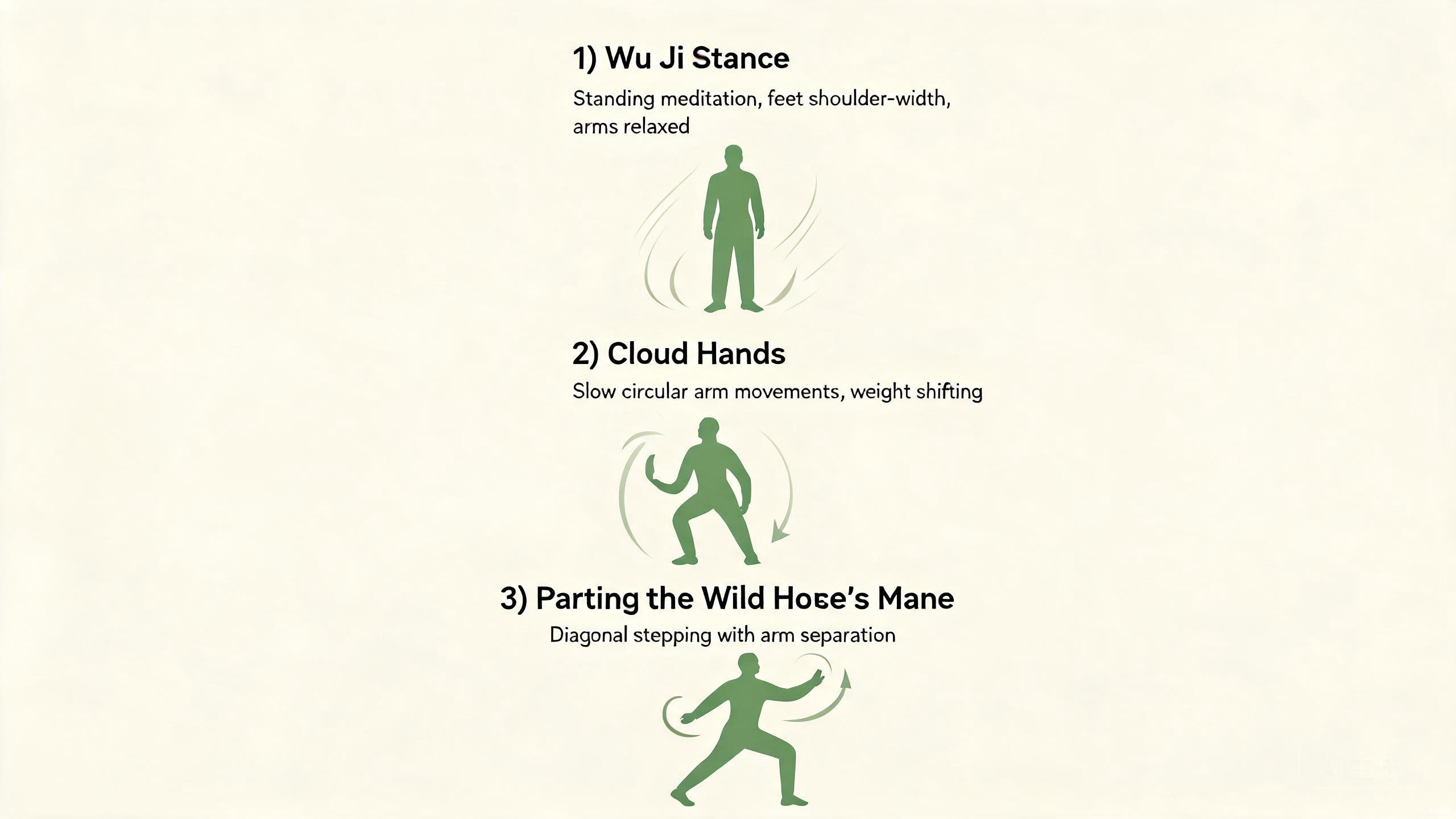
Key Takeaways
- Tai chi and qigong are mind-body practices that combine slow movement, regulated breathing, and focused attention — addressing mental health through the body, not just the mind.
- Tai chi calms anxiety by activating the parasympathetic nervous system; Ba Duan Jin supports depression by regulating organ-emotion connections.
- Zhan Zhuang (standing meditation) builds psychological resilience through sustained, gentle physical effort.
- Evening qigong prepares the body for sleep by drawing energy downward and quieting the mind.
- Research shows tai chi improves attention, memory, and executive function in both healthy adults and those with cognitive decline.
- These practices are complementary — they support but do not replace professional mental health care.
This article is for wellness education only and is not medical advice. Tai chi and qigong are complementary mind-body practices and are not a replacement for professional mental health treatment. If you experience persistent anxiety, depression, or other mental health concerns, consult a qualified healthcare or mental health professional. If you are in crisis, contact your local emergency services immediately.
Modern mental health care is increasingly recognizing what Traditional Chinese Medicine has known for centuries: the body and mind are not separate. Anxiety lives in the tight chest and clenched jaw. Depression manifests as heavy limbs and shallow breath. Stress shows up as a racing heart and tense shoulders. Talk therapy and medication address the mind and its chemistry, but they do not always reach the physical dimension of emotional distress — the patterns of tension, breath, and energy that the body holds.
This is precisely where tai chi and qigong excel. These ancient Chinese movement practices work through the body to regulate the mind, using slow, flowing movements, deep breathing, and focused attention to shift the nervous system, release stored tension, and restore the smooth flow of qi. If you are new to these practices, our tai chi basics guide and five animal qigong guide provide excellent starting points.
The TCM Theory Behind Movement and Mental Health
In TCM theory, the connection between movement and mental health rests on several key principles:
- Qi flows with movement. The classical text states: "Where there is flow, there is no pain; where there is no flow, there is pain." Emotional distress — particularly the stuck, heavy feeling of depression or the tight, knotted sensation of anxiety — is often understood as qi stagnation. Gentle, flowing movement is the primary remedy.
- Emotions reside in the organs. As explored in our TCM emotional wellness guide, each emotion corresponds to a specific organ: anger to the Liver, joy (excess) to the Heart, worry to the Spleen, grief to the Lungs, and fear to the Kidneys. Tai chi and qigong movements are designed to regulate the qi of these organs, thereby addressing the emotional patterns associated with them.
- The breath regulates the spirit. The slow, deep breathing that accompanies tai chi and qigong directly calms the shen (spirit) by activating the parasympathetic nervous system. Our TCM breathing techniques guide covers this in detail.
- Stillness in motion. The unique quality of tai chi is that it cultivates mental stillness within physical movement. The mind is fully present with each movement, each weight shift, each breath — leaving no room for rumination, worry, or anxious projection into the future.
1. Tai Chi for Anxiety
Scientific basis: Multiple clinical trials have demonstrated that regular tai chi practice significantly reduces anxiety symptoms. A meta-analysis of randomized controlled trials found that tai chi was as effective as standard exercise and some forms of cognitive behavioral therapy in reducing anxiety. The mechanism involves activation of the parasympathetic nervous system (the "rest and digest" branch), measurable reductions in cortisol and inflammatory markers, improved heart rate variability (a key indicator of nervous system flexibility), and the meditative quality of the practice itself, which trains the mind to stay present rather than projecting into future worries.
How tai chi works for anxiety: Anxiety is characterized by a nervous system stuck in sympathetic overdrive — the fight-or-flight response that cannot switch off. Tai chi directly counteracts this. The slow movements require balance and attention, which forces the brain to shift from the default mode network (responsible for rumination and worry) to the present-focused sensorimotor network. The deep, rhythmic breathing stimulates the vagus nerve, which is the primary brake on the sympathetic nervous system. And the gentle weight shifting grounds the body, literally and energetically, drawing attention away from the racing mind and into the feet.
Specific practice method:
- Frequency: Practice 20 to 30 minutes, 3 to 5 times per week. Most studies showing anxiety reduction used this dosage.
- Form: A short form is sufficient. The beginning movements of any tai chi style — Yang, Sun, or Chen — are appropriate. See our tai chi basics guide for the fundamental postures and movements.
- Breathing: Coordinate each movement with slow abdominal breathing. Inhale on opening or rising movements; exhale on closing or descending movements.
- Mental focus: Keep your attention on the physical sensations of the practice — the weight in your feet, the movement of your arms, the feeling of the breath. When anxiety pulls your mind away, gently return to the body.
- Timing: Morning practice is ideal for setting a calm baseline for the day. If anxiety peaks in the afternoon, a short 10-minute session at that time can reset the nervous system.
Precautions: Tai chi is one of the safest forms of exercise, but if you have severe anxiety or panic disorder, start very gradually. Some people find that the slowness of tai chi initially increases awareness of internal sensations, which can feel uncomfortable for those with high interoceptive anxiety. If this occurs, practice with eyes open, focus on the external environment, and keep sessions short (5 to 10 minutes) until you feel comfortable.
A 2019 meta-analysis published in BMC Complementary Medicine and Therapies reviewed 13 randomized controlled trials and found that tai chi significantly reduced anxiety symptoms compared to wait-list controls, with effects comparable to standard exercise and cognitive behavioral therapy. Benefits were typically seen after 8 to 12 weeks of regular practice.
2. Ba Duan Jin for Depression
Scientific basis: Ba Duan Jin (Eight Brocades) is one of the most widely practiced qigong forms in the world, and it has accumulated a significant body of research supporting its use for depression. Studies in China and internationally have shown that regular practice of Ba Duan Jin reduces depressive symptoms, improves quality of life, and even shows changes in brain activity patterns associated with mood regulation. For a complete movement guide, see our Eight Brocades guide.
How Ba Duan Jin works for depression: In TCM theory, depression often involves Liver qi stagnation — a pattern where the smooth flow of energy is blocked, leading to a sense of being stuck, heavy, and unmotivated. Each of the eight movements in Ba Duan Jin targets a specific organ system and its associated emotional quality:
| Movement | Organ Targeted | Emotional Effect |
|---|---|---|
| 1. Two Hands Hold up the Sky | Triple Burner, Lungs | Opens the chest, releases constriction, eases feelings of being overwhelmed |
| 2. Draw the Bow on Both Sides | Lungs, Liver | Releases chest tension, moves stagnant Liver qi, reduces frustration |
| 3. Separate Heaven and Earth | Spleen, Stomach | Regulates the middle, eases worry and overthinking, improves digestion |
| 4. Wise Owl Gazes Backward | Neck, Liver | Releases neck tension (where Liver qi stagnation accumulates), improves circulation to the head |
| 5. Sway the Tail to Calm Fire | Heart, Kidneys | Clears Heart fire (agitation, restlessness), connects Heart and Kidneys |
| 6. Two Hands Hold the Feet | Kidneys | Strengthens the Kidneys (root of willpower), builds energy and motivation |
| 7. Clench Fists and Glare | Liver, Whole Body | Releases stored anger and frustration, builds internal power |
| 8. Bouncing on the Heels | All Meridians | Harmonizes the entire body, leaves a feeling of lightness and clarity |
Specific practice method: Practice the complete set of eight movements daily, ideally in the morning. Each movement is repeated 6 to 8 times. The entire sequence takes 10 to 15 minutes. Focus on the physical sensations and the breath rather than trying to "fix" your mood. The movements work on the organs, and the organs regulate the emotions — trust the process.
Precautions: If depression is severe, the idea of practicing any form of exercise can feel overwhelming. Start with just one or two movements — "Two Hands Hold up the Sky" is an excellent single movement for depression because it opens the chest and creates a sense of expansion. Build gradually. If you have thoughts of self-harm, seek immediate professional help — qigong is supportive but not a substitute for crisis intervention.
3. Zhan Zhuang for Stress Management
Scientific basis: Zhan Zhuang (standing like a tree) is a form of standing meditation that is deceptively simple: you stand in a single posture for extended periods, holding the arms as if embracing a large tree. Despite its apparent stillness, it is one of the most physically and mentally demanding qigong practices. Research on Zhan Zhuang is emerging, with studies showing improvements in stress markers, autonomic nervous system balance, and mental resilience. The practice is increasingly used in sports psychology and military training to build psychological toughness.
How Zhan Zhuang works for stress: Stress management is not just about relaxation — it is about building the capacity to remain calm under pressure. Zhan Zhuang trains this capacity directly. Standing in a static posture requires sustained physical effort, which builds leg strength and core stability. At the same time, the mind must remain calm and present despite the growing physical discomfort. This combination — effort without agitation, discomfort without panic — is the essence of psychological resilience. Over time, practitioners develop the ability to face stressful situations with the same grounded, centered quality they cultivate in standing practice.
Specific practice method:
- Stand with feet shoulder-width apart, knees slightly bent (never locked).
- Let the arms rise to chest height as if holding a large ball, with the hands about one foot apart, palms facing the body. The elbows should be lower than the wrists.
- Tuck the chin slightly, lengthen the spine, and relax the shoulders down.
- Breathe naturally through the nose, with attention resting lightly on the lower abdomen.
- Beginners: Start with 5 minutes and build to 15 to 20 minutes over several weeks. The arms will ache, tremble, and feel heavy — this is normal and is part of the training.
- Maintain a calm, accepting attitude toward whatever sensations arise. The practice is not about enduring suffering but about learning to remain steady in the face of challenge.
Precautions: If you have knee, hip, or lower back problems, keep the knee bend very slight and limit standing time. Never push through sharp joint pain. If you feel dizzy or lightheaded, sit down immediately. Zhan Zhuang can temporarily raise blood pressure — if you have uncontrolled hypertension, consult your doctor before practicing.
4. Qigong for Insomnia
Scientific basis: Qigong has been shown in multiple studies to improve sleep quality, reduce sleep-onset latency, and decrease the use of sleep medication. The mechanism is similar to that of tai chi for anxiety — parasympathetic activation, cortisol reduction, and the calming of mental activity — but with specific practices designed for the evening transition into sleep. For related practices, see our qigong for sleep guide.
How qigong works for insomnia: In TCM theory, insomnia is primarily a problem of yang that cannot descend — energy and heat remain trapped in the upper body and head, keeping the mind active and the spirit restless. Evening qigong practices address this by drawing energy downward, cooling the head, and anchoring the spirit. The slow, repetitive movements also give the busy mind something to focus on, breaking the cycle of rumination that prevents sleep.
Specific practice method — Evening Wind-Down Routine:
- Time: Practice 20 to 30 minutes before your intended sleep time, after dimming the lights and putting away screens.
- Gentle shaking (3 minutes): Stand with feet shoulder-width apart. Let the whole body relax and begin to shake gently from the knees, letting the arms, shoulders, and head bounce naturally. This releases the day's accumulated tension and stimulates the meridians.
- Slow arm circles (3 minutes): Raise the arms slowly overhead on an inhalation, then let them float down on an exhalation. Repeat 8 to 10 times. This opens the chest, regulates the breath, and begins to draw energy downward.
- Standing meditation (5 minutes): Stand in the Zhan Zhuang posture described above, but with the arms held lower (at waist height, as if resting on a table). Keep the attention on the lower abdomen and the soles of the feet. This is the core of the practice — drawing all energy downward and inward.
- Foot rubbing (3 minutes): Sit down. Rub the palms together until warm, then massage the soles of the feet, especially the Yongquan (KD1) point. This is the most direct way to ground excess yang energy before sleep.
- Lie down and breathe: Transition to bed. Lie on your back and practice abdominal breathing for 5 minutes, then allow yourself to drift into sleep.
Precautions: Evening qigong should be gentle and calming — never vigorous or energizing. Avoid practices that raise energy to the head (like arm raises above the shoulders held for long periods). If any practice makes you feel more awake rather than calmer, discontinue it and focus on the gentler elements. Pair with a calming tea from our herbal tea for anxiety guide for a complete wind-down ritual.
5. Tai Chi for Cognitive Function
Scientific basis: The cognitive benefits of tai chi are among the most well-documented in the research literature. Multiple large-scale studies have shown that regular tai chi practice improves attention, processing speed, executive function, and memory in both healthy older adults and those with mild cognitive impairment. A landmark study published in the Journal of the American Geriatrics Society found that tai chi practice was associated with increased brain volume in older adults — suggesting that it may actually slow or reverse age-related brain atrophy.
How tai chi works for cognition: Several mechanisms are thought to contribute:
- Cardiovascular benefit: Tai chi provides mild aerobic exercise, which improves blood flow to the brain and supports the growth of new blood vessels.
- Mind-body integration: The complex, coordinated movements require the brain to plan, execute, and adjust motor patterns in real time — providing a rich cognitive workout that engages multiple brain regions simultaneously.
- Meditative quality: The focused attention required during practice trains concentration and working memory. Regular meditative practice has been shown to increase gray matter density in brain regions associated with attention and emotional regulation.
- Stress reduction: Chronic stress and elevated cortisol are known to impair memory and cognitive function. By reducing stress, tai chi protects the brain from the damaging effects of prolonged cortisol exposure.
- Social engagement: Group tai chi practice provides social interaction, which is itself a protective factor against cognitive decline.
Specific practice method:
- Frequency: 2 to 3 sessions per week, 30 to 45 minutes each. Most cognitive studies used this protocol.
- Form: Any traditional tai chi form is beneficial. For cognitive purposes, forms with more complex choreography may provide greater cognitive challenge, but even simplified short forms show benefits.
- Mental engagement: To maximize cognitive benefit, practice with full mental engagement — memorize the sequence, focus on precise transitions between movements, and be aware of weight distribution and body alignment. "Going through the motions" without attention provides far less cognitive benefit.
- Progressive challenge: As you become familiar with a form, learn new movements or a longer sequence to continually challenge the brain. The novelty of new motor patterns is a key driver of neuroplasticity.
- Combine with meditation: Sitting meditation before or after tai chi practice enhances the cognitive benefits by training sustained attention in a different modality.
Precautions: Tai chi is safe for all ages and fitness levels, including older adults with mild cognitive impairment. However, if you have significant balance issues, practice near a wall or chair for support, and consider learning from a qualified instructor who can modify movements as needed.
Summary: Which Practice for Which Need
| Mental Health Goal | Recommended Practice | Frequency | Time of Day |
|---|---|---|---|
| Anxiety reduction | Tai chi (short form) | 3–5x/week, 20–30 min | Morning or afternoon |
| Depression support | Ba Duan Jin (Eight Brocades) | Daily, 10–15 min | Morning |
| Stress resilience | Zhan Zhuang (standing meditation) | 3–4x/week, 10–20 min | Morning or afternoon |
| Insomnia | Evening qigong wind-down | Nightly, 15–20 min | Before bed |
| Cognitive function | Tai chi (full form) | 2–3x/week, 30–45 min | Morning |
Integrating Movement with Other TCM Practices
Tai chi and qigong work best as part of an integrated TCM wellness routine. Consider these combinations:
- Movement + Breathing: The breathing techniques in our guide are the internal engine of tai chi and qigong. Practice abdominal breathing while moving to deepen the effect.
- Movement + Tea: A cup of chrysanthemum tea after morning tai chi extends the calming, heat-clearing effect of the practice.
- Movement + Meditation: A short session of sitting meditation after tai chi — when the body is warm and the qi is circulating — is the traditional Chinese sequence and produces a uniquely deep state of calm.
- Movement + Acupressure: Press Shenmen (HT7) for anxiety or Taichong (LR3) for frustration before or after practice to enhance the emotional balancing effect.
- Explore more forms: Beyond tai chi and Ba Duan Jin, explore Five Animal Qigong for a playful, emotionally expressive practice, and qigong for stress for targeted routines.
Frequently Asked Questions
Do I need a teacher to start tai chi or qigong?
While it is possible to learn the basics from books, videos, and online guides (including ours), learning from a qualified teacher is highly recommended, especially in the beginning. A teacher can correct your posture, ensure you are breathing correctly, and help you understand the internal principles that make these practices effective. If you cannot access a teacher, start with simple, widely-practiced forms like Ba Duan Jin, which are relatively easy to learn safely on your own. Once you understand the basic principles, home practice becomes very productive.
How long does it take to feel mental health benefits from tai chi?
Most people feel calmer and more centered immediately after a single session. However, lasting mental health benefits — reduced anxiety, improved mood, better sleep, enhanced resilience — typically emerge after 4 to 8 weeks of regular practice. Clinical studies generally use 8 to 12 week protocols and show significant improvements by the end. The key is consistency: 20 minutes three times a week for 8 weeks will produce far better results than sporadic longer sessions. Think of it as training your nervous system, which requires repetition to create lasting change.
Can I practice tai chi if I have physical limitations?
Absolutely. Tai chi and qigong are among the most adaptable forms of exercise. If standing is difficult, many forms can be practiced seated. If you have limited mobility in the shoulders or knees, movements can be modified to a smaller range of motion. The internal principles — relaxed attention, deep breathing, mental presence — are more important than the external form. Even gentle arm movements combined with breathing, done while sitting in a chair, can provide significant mental health benefits. Consult with a qualified instructor who has experience adapting practices for different abilities.
Is qigong or tai chi better for mental health?
Both are excellent for mental health, and they work through similar mechanisms. The main difference is that qigong tends to be simpler and more repetitive, making it easier to learn and practice at home — ideal for beginners and for specific purposes like insomnia or stress. Tai chi is a more complex martial art with a longer learning curve, but its greater complexity provides more cognitive challenge and may offer greater benefits for cognitive function and long-term engagement. Many practitioners eventually do both — qigong for daily maintenance and tai chi for deeper cultivation. There is no wrong choice; the best practice is the one you will do consistently.
The Bottom Line
Tai chi and qigong offer something that few other mental health interventions can: a way to work through the body to reach the mind. By combining slow, mindful movement with deep breathing and present-focused attention, these practices address the physical dimension of emotional distress — the tension, shallow breathing, and nervous system dysregulation that underlie anxiety, depression, stress, and insomnia. They are not a replacement for professional care, but they are one of the most accessible, evidence-supported, and side-effect-free complementary practices available. Start where you are. Ten minutes of Ba Duan Jin in the morning, five minutes of standing meditation at lunch, a gentle evening wind-down before bed — these small, consistent practices can, over weeks and months, transform not just how you feel but how you relate to your own mind and body.
This article is for educational and informational purposes only and is not a substitute for professional medical advice, diagnosis, or treatment. Tai chi and qigong are complementary wellness practices and are not intended to diagnose, treat, cure, or prevent any disease. Always consult a qualified healthcare or mental health professional before beginning any new exercise program, especially if you have a medical condition, injury, or mental health disorder. If you are experiencing a mental health crisis, contact your local emergency services or a crisis hotline immediately. Read our full disclaimer →