Key Takeaways
- TCM views skin beauty as a reflection of internal health — the principle of "inner health reflects outer beauty" means nourishing qi, blood, and yin is the foundation of radiant skin.
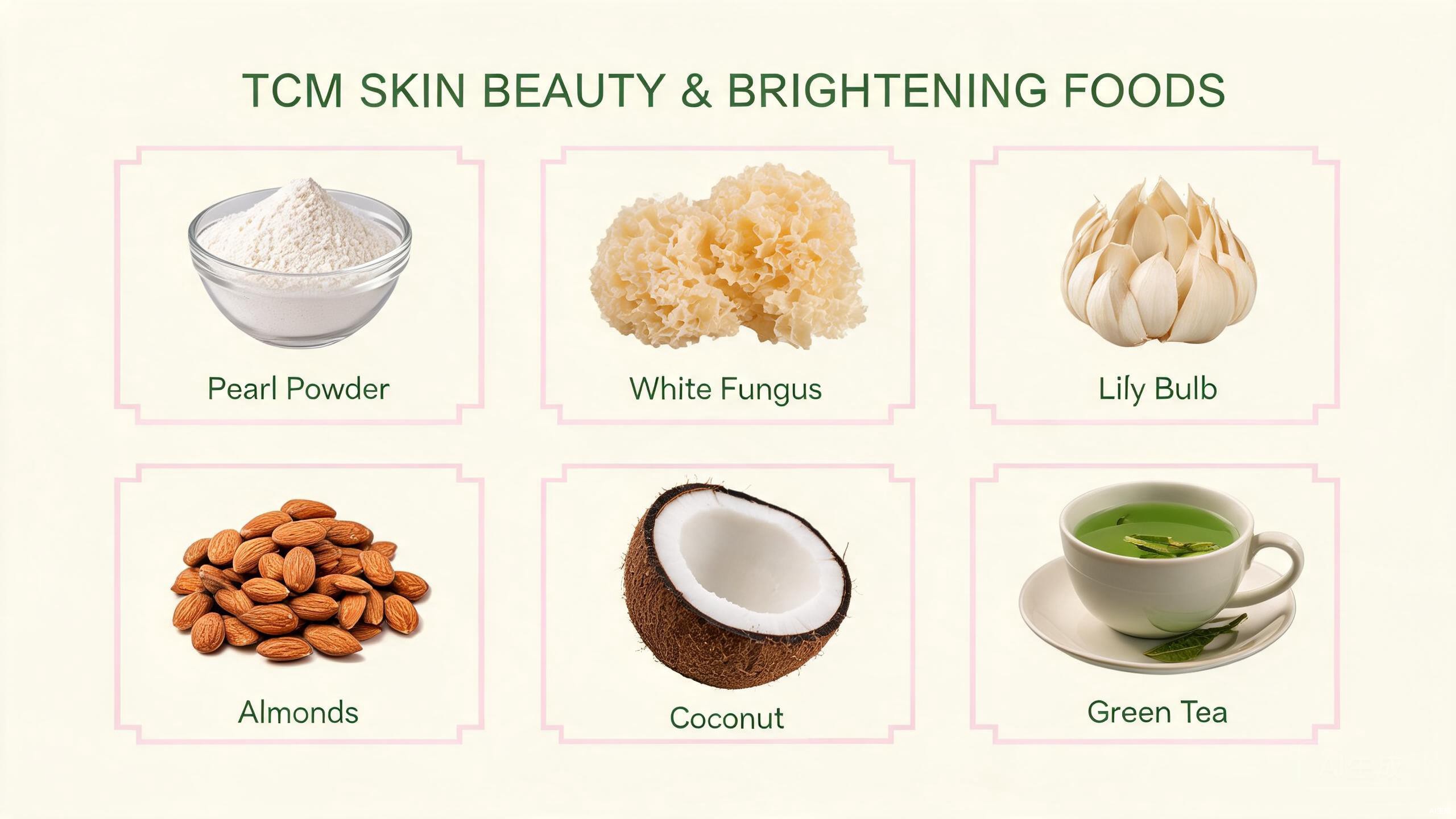
- Five everyday foods — white fungus, lily bulb, coix seed, green tea, and goji berries — are traditionally used to support skin luminosity and a healthy complexion.
- White fungus (snow fungus) is prized in TCM for its yin-nourishing, lung-moistening properties that are said to translate directly into hydrated, supple skin.
- External applications such as herbal face masks complement internal nourishment — TCM beauty is always a two-pronged approach of feeding the body and caring for the skin.
- These are traditional wellness practices, not medical treatments for skin conditions. Always consult a dermatologist for skin concerns.
This article is for educational purposes only and is not medical advice. The foods, teas, and practices described here are traditional wellness practices rooted in Chinese culture. They are not a substitute for professional dermatological care or medical treatment. Never stop, adjust, or replace prescribed medication or skincare treatments based on information in this article. If you have a skin condition such as acne, eczema, melasma, or hyperpigmentation, work closely with a dermatologist or healthcare provider. Some foods and herbs may interact with medications or cause allergic reactions — always inform your doctor about everything you consume. These statements have not been evaluated by the FDA and are not intended to diagnose, treat, cure, or prevent any disease.
A reader recently shared that after years of trying expensive creams and serums with limited results, a friend recommended white fungus soup (银耳羹, yin er geng) — a traditional Chinese dessert said to support skin radiance from within. Skeptical but curious, they asked us: "Is there real TCM wisdom behind the idea that you can eat your way to better skin?" The answer is yes — TCM has a rich, centuries-old tradition of viewing beauty as something that begins inside the body, not on its surface.
If you are new to TCM concepts, our introduction to Traditional Chinese Medicine provides helpful background before diving in.
How TCM Views Skin Beauty
In Traditional Chinese Medicine, the skin is not seen as an isolated organ. It is viewed as a living mirror of what is happening inside the body — specifically, the state of your qi (vital energy), blood, yin, and the health of your internal organs. This is the principle often summarized as "inner health reflects outer beauty" (内有则外显, nei you ze wai xian). A dull complexion, dryness, dark spots, or uneven tone are not seen as surface problems to be covered up. They are seen as signals that something inside needs nourishment or rebalancing.
Several key TCM concepts are central to understanding skin beauty:
- Qi and blood nourish the skin. In TCM, blood carries nourishment to every part of the body, including the skin. When qi and blood are abundant and flowing freely, the complexion is said to be rosy, luminous, and full. When they are deficient or stagnant, the skin may appear pale, sallow, or dull. To understand this concept more deeply, see our guide on qi, blood, and body fluids in TCM.
- Yin provides moisture and suppleness. Yin is the cooling, moistening, nurturing aspect of the body. When yin is sufficient, the skin is hydrated, soft, and elastic. When yin is deficient — often from overwork, lack of sleep, or aging — the skin becomes dry, thin, and prone to fine lines.
- The Lung governs the skin. In TCM theory, the Lung organ system is said to "rule the skin and body hair." This means the health of the Lung directly influences the skin's appearance. When Lung qi is strong and Lung yin is moist, the skin is resilient and glowing. Foods that nourish Lung yin — like white fungus and lily bulb — are therefore central to TCM beauty practices.
- The Liver ensures smooth flow. The Liver is responsible for the smooth flow of qi and blood throughout the body. When Liver qi is stagnant — often from stress or emotional frustration — circulation to the skin can be impaired, leading to dullness, dark spots, or breakouts. The Liver also stores blood, which nourishes the skin during rest.
- The Spleen transforms and transports. The Spleen is responsible for extracting nutrients from food and converting them into qi and blood. If the Spleen is weak, the body cannot produce enough blood to nourish the skin, no matter how much you eat. Dampness from a weak Spleen can also manifest as puffiness or a greasy complexion.
This interconnected view means that TCM skin beauty is never just about one food or one cream. It is about supporting the whole system. To learn more about how these organs work together, see our guide on Zang-Fu organs in TCM.
It is also important to understand the TCM concept of "whitening" (美白, mei bai). In the TCM and East Asian wellness context, "skin whitening" does not mean changing your natural skin tone or bleaching the skin. It refers to achieving a bright, even, luminous complexion — reducing dullness, dark spots, and uneven tone so that the skin looks clear and radiant. This is achieved through nourishment and balance, not through harsh chemicals. The goal is healthy, glowing skin, whatever your natural tone may be.
Five Everyday TCM Foods for Skin Beauty
The following five foods are staples of East Asian kitchens and are deeply embedded in TCM beauty traditions. Each is traditionally used to support skin radiance when enjoyed as part of a balanced lifestyle. They are not medicines, and they are not a replacement for professional skincare or dermatological treatment.
1. White Fungus (银耳, Yin Er)
TCM nature: Sweet, neutral. Enters: Lung and Stomach channels.
White fungus, also known as snow fungus or silver ear mushroom, is perhaps the single most celebrated food in TCM for skin beauty. It is traditionally classified as neutral and sweet, with a primary action of nourishing yin and moistening the Lung. Because the Lung "rules the skin" in TCM theory, foods that moisten Lung yin are believed to directly translate into hydrated, supple, plump skin. White fungus contains plant-based polysaccharides that have attracted modern research interest for their hydrating properties. Many Chinese families cook it as a slow-simmered sweet soup, often with rock sugar, goji berries, and dates.
How to prepare: Soak 10 to 15 grams of dried white fungus in warm water for 30 minutes until it expands and softens. Trim the hard yellow base and tear into small pieces. Simmer in 4 cups of water for 1 to 2 hours on low heat until the liquid becomes thick and gelatinous. Add a small handful of goji berries and a piece of rock sugar in the last 10 minutes. Enjoy warm, 2 to 3 times per week.
Caution: White fungus is generally safe as a food. Avoid if you have a cold with heavy phlegm. Consult your doctor if you are pregnant, nursing, or taking blood-thinning medication, as white fungus may have mild blood-thinning effects.
2. Lily Bulb (百合, Bai He)
TCM nature: Sweet, slightly bitter, slightly cold. Enters: Lung and Heart channels.
Lily bulb — the edible bulb of certain lily species, not the ornamental flower — is a cherished TCM food for clearing heat and nourishing Lung yin. In TCM, "heat" in the body can manifest as redness, inflammation, or a flushed complexion. Lily bulb's cooling, moistening nature is traditionally used to clear this heat and restore a calm, even skin tone. It is also said to calm the Heart and ease anxiety, and because stress and poor sleep are major contributors to dull skin, this calming effect is considered part of its beauty benefit. Lily bulb is commonly cooked in soups, congee (rice porridge), or stir-fried with celery.
How to prepare: Rinse 20 to 30 grams of dried lily bulb and soak for 20 minutes. Add to a pot with 1 cup of rice and 6 cups of water to make lily bulb congee. Simmer on low heat for 40 minutes, stirring occasionally, until the porridge is thick and the lily petals are soft. Sweeten lightly with honey (after cooling slightly) or enjoy savory with a pinch of salt. Eat 1 to 2 times per week.
Caution: Because lily bulb is slightly cold, avoid consuming large amounts if you have a weak, cold digestion with loose stools. Consult your healthcare provider if you are pregnant or taking medication.
3. Coix Seed / Job's Tears (薏米, Yi Yi Ren)
TCM nature: Sweet, bland, slightly cool. Enters: Spleen, Lung, and Kidney channels.
Coix seed, also known as Job's tears or Chinese pearl barley, is one of the most versatile foods in TCM. Its primary traditional action is to "drain dampness" — a TCM concept that refers to helping the body eliminate excess fluid and metabolic waste. In the context of skin beauty, dampness is associated with puffiness, a greasy or heavy complexion, and dullness. By promoting the healthy elimination of dampness, coix seed is traditionally said to "brighten the skin" and support a clear, light, even complexion. It is also used in external applications — finely ground coix seed powder is a classic ingredient in traditional Chinese herbal face masks.
How to prepare: Dry-roast 1 cup of coix seed in a pan over medium heat for 10 to 15 minutes until fragrant and lightly golden (this reduces its cold nature and improves digestibility). Rinse and cook with 6 cups of water for 40 minutes to make a light tea or porridge. Drink the liquid as a tea, 1 cup daily. Alternatively, add cooked coix seed to soups and stews.
Caution: Coix seed is generally safe as a food. However, raw (unroasted) coix seed in very large amounts has been associated with uterine stimulation in traditional texts. Pregnant women should consult their doctor before consuming coix seed regularly. For more everyday kitchen remedies, see our everyday TCM kitchen remedies guide.
4. Green Tea (绿茶, Lu Cha)
TCM nature: Bitter, sweet, cool. Enters: Heart, Lung, and Stomach channels.
Green tea is one of the most universally consumed beverages in the world, and its place in TCM beauty traditions is well established. In TCM, green tea is classified as cooling and is traditionally used to "clear heat and resolve toxins." From a modern perspective, green tea is rich in catechins (particularly EGCG) and other polyphenols that are widely studied for their antioxidant properties. In TCM skin beauty, green tea is valued both as a daily beverage that supports internal heat-clearing and as an external application — cooled green tea can be used as a facial rinse or compress. The combination of internal cooling and external antioxidant support makes green tea a two-pronged beauty ally.
How to prepare: Steep 1 to 2 teaspoons of loose-leaf green tea in 8 oz of water at 75 to 80°C (do not use boiling water, which makes the tea bitter) for 2 to 3 minutes. Drink 1 to 3 cups daily. For an external compress, brew a stronger cup, let it cool completely, soak cotton pads, and place over the face for 10 minutes. For more on safe tea practices, see our chrysanthemum tea guide which covers general tea brewing principles, and our herbal tea safety guide.
Caution: Green tea contains caffeine. Avoid drinking large amounts in the evening if you are sensitive to caffeine. Avoid on an empty stomach, which can cause nausea. Consult your doctor if you take blood thinners or have iron-deficiency anemia, as green tea may affect iron absorption.
5. Goji Berries (枸杞, Gou Qi)
TCM nature: Sweet, neutral. Enters: Liver and Kidney channels.
Goji berries, also known as wolfberries, are one of the most recognizable TCM foods in the West. In TCM, they are traditionally used to nourish Liver blood and Kidney yin — two of the most important resources for skin health. Liver blood nourishes the skin directly (giving it color and vitality), while Kidney yin provides the body's deepest reservoir of moisture and essence. Goji berries are also said to "brighten the eyes and improve vision," and their deep red-orange color reflects their rich content of beta-carotene, zeaxanthin, and vitamin C. For skin beauty, goji berries are traditionally associated with a bright, rosy, even complexion. They are incredibly versatile — added to teas, soups, congee, and eaten by the handful as a snack.
How to prepare: Rinse 1 tablespoon of dried goji berries and add them to hot water as a simple tea (steep 5 minutes), or add to white fungus soup, congee, or chicken soup in the last 10 minutes of cooking. Eat 1 to 2 tablespoons daily. They can also be soaked overnight and blended into smoothies.
Caution: Goji berries are generally safe as a food. They may interact with blood-thinning medications (such as warfarin). Consult your healthcare provider if you take such medications or if you are pregnant.
Comparison of the Five Foods
| Food | TCM Nature | Traditional Use for Skin | Preparation | Typical Frequency |
|---|---|---|---|---|
| White Fungus (Yin Er) | Sweet, neutral | Nourish yin, moisten lung and skin | Slow-simmer as sweet soup | 2–3 times weekly |
| Lily Bulb (Bai He) | Sweet, slightly bitter, slightly cold | Clear heat, nourish lung yin for skin glow | Cook in congee or soup | 1–2 times weekly |
| Coix Seed (Yi Yi Ren) | Sweet, bland, slightly cool | Drain dampness, brighten skin | Roast and cook as tea or porridge | 1 cup daily |
| Green Tea (Lu Cha) | Bitter, sweet, cool | Clear heat, antioxidant support | Steep as tea; use as compress | 1–3 cups daily |
| Goji Berries (Gou Qi) | Sweet, neutral | Nourish liver blood, brighten complexion | Steep in tea, add to soups | 1–2 tablespoons daily |
How to Prepare the Classic White Fungus Beauty Soup
Among the five foods above, white fungus soup is the recipe most readers ask about. Here is a traditional step-by-step method for making the classic TCM beauty soup at home.
- Select quality white fungus. Choose dried white fungus that is pale yellowish-white (not bleached pure white) with a slight natural sheen. Avoid any with a strong chemical smell. Organic or pesticide-free sources are best.
- Soak thoroughly. Place 10 to 15 grams of dried white fungus in a bowl of warm water. Let it soak for at least 30 minutes, or until it has expanded to several times its dry size and feels soft and gelatinous.
- Trim and tear. Remove the tough, yellowish base at the bottom of the fungus — this part will not soften properly. Tear the fungus into small, bite-sized pieces by hand. Tearing (rather than cutting) helps it release its gelatinous texture during cooking.
- Simmer slowly. Place the torn white fungus in a pot with 4 cups of fresh water. Bring to a gentle boil, then reduce to the lowest possible heat. Simmer uncovered for 1 to 2 hours. The key is patience — the long, slow simmer is what extracts the polysaccharides and creates the thick, silky texture. Stir occasionally and add more water if needed.
- Add supporting ingredients. In the last 15 minutes, add 1 tablespoon of goji berries, 3 to 4 red dates (jujubes, pitted and torn open), and a small piece of rock sugar to taste. The dates add blood-nourishing sweetness, and the goji berries add liver-blood support.
- Serve and enjoy. The soup is ready when the liquid is thick and gelatinous and the white fungus is tender and translucent. Serve warm. Store leftovers in the refrigerator for up to 2 days.
For the best texture, use a clay pot or ceramic pot for simmering. Metal pots can sometimes give the soup a slight metallic taste. If you are short on time, a slow cooker set to low for 4 hours also produces excellent results. Avoid adding the goji berries too early — they become mushy and lose their color with prolonged cooking.
External Application: TCM Herbal Face Masks
TCM beauty is always a two-pronged approach: nourish from within and care for the surface. While the foods above work internally, TCM also has a long tradition of external applications — particularly herbal face masks made from finely ground food and herb powders. These are simple to make at home and can be a relaxing weekly self-care ritual.
Here are three classic TCM-inspired face mask recipes:
- Coix Seed Brightening Mask: Mix 1 tablespoon of finely ground coix seed powder with enough warm water or honey to form a smooth paste. Apply to clean skin, avoiding the eye area. Leave for 15 minutes, then rinse with lukewarm water. Traditionally used to support an even, bright complexion.
- Green Tea Antioxidant Mask: Mix 1 tablespoon of matcha or finely ground green tea powder with 1 teaspoon of honey and enough warm water to form a paste. Apply for 15 minutes and rinse. The catechins in green tea provide topical antioxidant support.
- White Fungus Hydration Mask: Use the cooled, gelatinous liquid from white fungus soup as a hydrating facial compress. Sook cotton pads in the liquid and place on the face for 10 to 15 minutes. Traditionally used to support skin hydration and suppleness.
Important: Always do a patch test on the inside of your wrist before applying any mask to your face. Discontinue immediately if you experience redness, itching, or irritation. Do not use herbal masks on broken or inflamed skin. If you have a skin condition, consult a dermatologist before trying any new topical application.
Lifestyle Tips from a TCM Perspective
TCM is a whole-person system. Foods and external applications work best when combined with supportive daily habits. The following areas are emphasized again and again in classical TCM texts for skin beauty:
- Sleep — the ultimate beauty treatment. In TCM, the hours between 11 PM and 3 AM are associated with the Liver and Gallbladder, the organs responsible for detoxification and blood storage. Blood is said to "return to the Liver" during deep sleep, where it is cleansed and replenished. Consistently sleeping during this window is considered one of the most powerful beauty practices in TCM. A warm ginger foot soak before bed can help draw energy downward and encourage deep rest.
- Emotional balance. The Liver ensures the smooth flow of qi. Chronic stress, anger, and frustration cause Liver qi to stagnate, which can impair circulation to the skin and contribute to dullness and dark spots. Practices such as mindful breathing and gentle movement help qi flow smoothly. See our meditation guide for practical starting points.
- Hydration and warm foods. TCM encourages drinking warm water and eating cooked, warm foods rather than ice-cold drinks and raw foods, which are said to weaken the Spleen and create dampness. A strong Spleen produces abundant qi and blood, which directly nourish the skin.
- Sun protection. While TCM texts predate modern UV science, the principle of protecting the skin from excessive "heat and fire" from the sun is consistent with TCM's emphasis on preventing heat accumulation. Use sunscreen daily and wear protective clothing.
When to See a Dermatologist
This cannot be emphasized enough: the foods, teas, and practices in this article are complementary wellness traditions, not medical treatments. You should see a dermatologist or healthcare provider if you experience any of the following:
- Sudden or severe acne, rashes, or skin inflammation
- Dark spots or pigmentation changes that are new, growing, or changing in appearance
- Persistent dryness, itching, redness, or flaking that does not improve
- Any mole or skin lesion that changes in size, shape, or color
- Skin conditions such as eczema, psoriasis, rosacea, or melasma that require medical management
If you are currently using prescribed skincare medications (such as retinoids, hydroquinone, or antibiotics), do not stop or adjust your treatment based on anything you read here. Speak with your dermatologist before adding any new herbs, teas, or topical applications to your routine, as interactions are possible.
The Bottom Line
Traditional Chinese Medicine offers a gentle, food-based tradition for supporting skin beauty from the inside out. White fungus, lily bulb, coix seed, green tea, and goji berries are five everyday foods that generations of East Asian families have enjoyed as part of a balanced approach to radiant skin. The core TCM principle is simple but profound: nourish the body within, and the skin will reflect that health without. Paired with adequate sleep, emotional balance, sun protection, and external care, these simple practices form a whole-person approach to natural beauty.
But they are traditions — not treatments, and not a replacement for dermatological care. If you have a skin condition or concern, your most important step is to work with a qualified dermatologist. Use these traditional practices only as complementary habits, with your doctor's knowledge and guidance.
This article shares traditional wellness practices for educational purposes only. It is not a substitute for medical advice, diagnosis, or treatment. The foods and teas described here are not intended to treat, cure, or prevent any disease or skin condition. If you have a skin condition or take medication, consult your dermatologist or healthcare provider before making any changes. These statements have not been evaluated by the FDA. Never stop or adjust prescribed medication or skincare treatments without your doctor's explicit guidance.