Key Takeaways
- In TCM, postpartum lactation is viewed through the production of qi and blood and the smooth flow of liver qi — milk is seen as a transformation of the mother's blood.
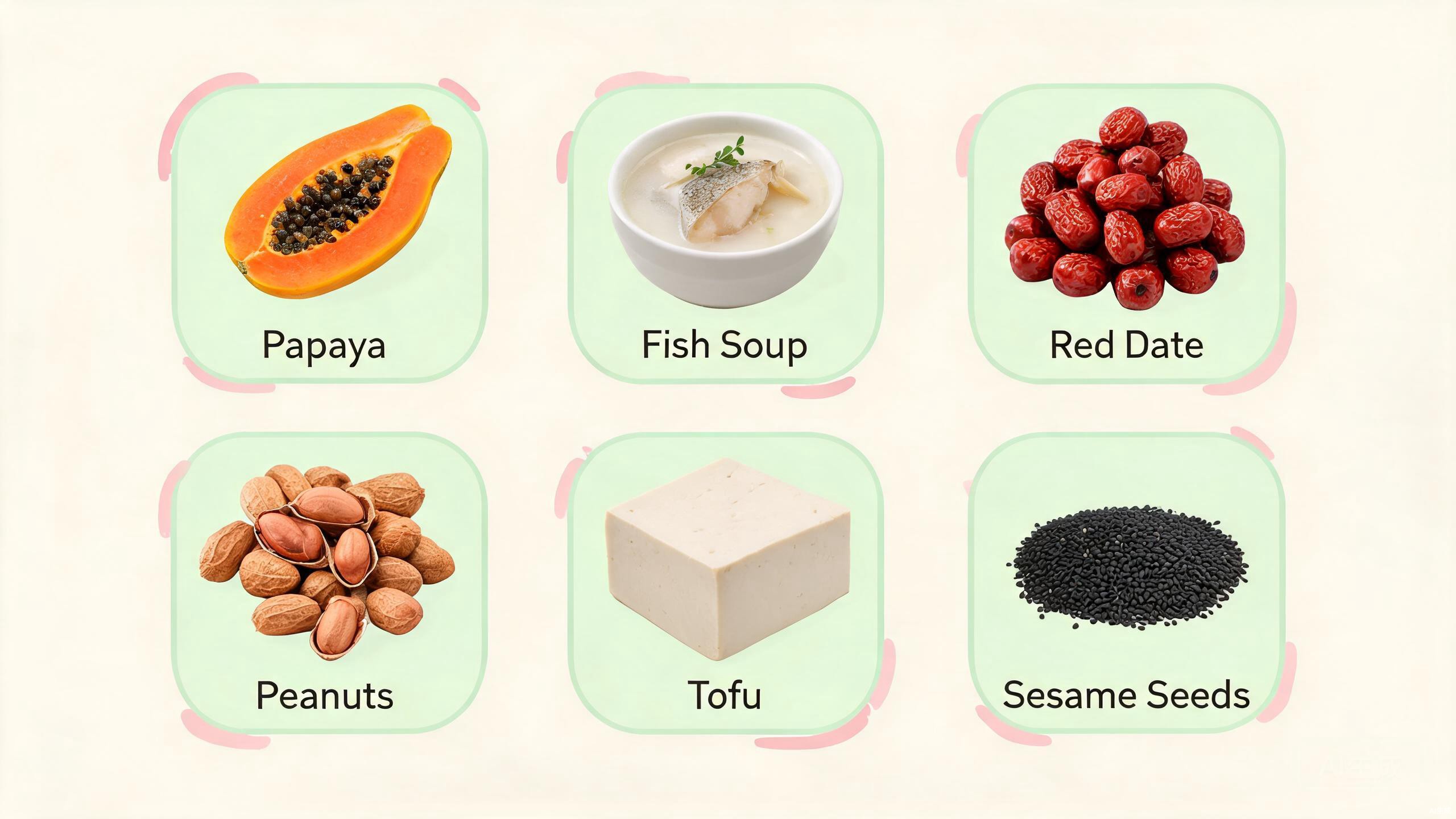
- Five traditional foods — papaya fish soup, red date and longan tea, pig trotter soup, fenugreek, and black sesame soup — are used to nourish blood and support milk flow.
- Postpartum recovery in TCM emphasizes warmth, rest, nourishing foods, and emotional well-being during the first month ("sitting the month," zuo yue zi).
- Milk supply depends on many factors — feeding frequency, hydration, rest, and overall health — not food alone.
- These are traditional wellness practices, not medical treatments. Always consult your lactation consultant or healthcare provider for personalized support.
This article is for educational purposes only and is not medical advice. The foods, teas, and practices described here are traditional wellness practices rooted in Chinese culture. They are not a substitute for professional lactation support or medical care. Milk supply is a complex matter that depends on many factors, and low supply can sometimes signal an underlying issue that requires professional attention. Always consult your lactation consultant or healthcare provider before adding new foods or herbs to your postpartum routine, especially while breastfeeding. If your baby is not gaining weight, has fewer than 6 wet diapers per day after the first week, or if you experience pain, engorgement, fever, or signs of mastitis, seek professional help promptly. These statements have not been evaluated by the FDA and are not intended to diagnose, treat, cure, or prevent any disease.
The weeks after childbirth are a time of profound change. Your body is recovering, your hormones are shifting, and you are learning to feed a new little person. In many cultures, this period is treated with deep respect and careful nourishment. Traditional Chinese Medicine has a rich tradition of postpartum care — centered on the concept of "sitting the month" (坐月子, zuo yue zi), a period of rest, warmth, and nourishing foods designed to help the mother recover and establish a healthy milk supply.
The foods below have been prepared by generations of Chinese mothers and grandmothers as part of this postpartum tradition. They are not medicines and not a replacement for professional lactation support, but they are warm, nourishing, and rooted in centuries of cultural wisdom. If you are concerned about your milk supply, your first and most important step is to consult your lactation consultant or healthcare provider.
If you are new to TCM concepts, our introduction to Traditional Chinese Medicine is a helpful starting point before diving in.
How TCM Views Postpartum Lactation
TCM views breast milk as a transformation of the mother's blood, produced and delivered through the actions of qi. This is why the two organ systems most central to lactation in TCM are the Spleen (which produces qi and blood from food) and the Liver (which stores blood and ensures the smooth flow of qi). When the Spleen is strong and the Liver's qi flows freely, blood is abundant and milk flows smoothly. When either is deficient or stagnant, milk supply may be affected.
This understanding leads to two key principles in the TCM approach to lactation support:
- Nourish blood and qi. Childbirth involves significant blood loss and energy expenditure. TCM sees the postpartum body as deficient in both qi and blood, and the first priority is to rebuild these reserves through warm, nourishing foods. This is why so many traditional postpartum recipes are soups and porridges — they are easy to digest and the Spleen can transform them efficiently into qi and blood. For more on this, see our guide to qi, blood, and body fluids.
- Ensure the smooth flow of liver qi. Stress, frustration, and emotional turmoil are said to cause "liver qi stagnation," which can impede the flow of milk. This is why emotional support and rest are considered as important as food in the postpartum period. A mother who is relaxed, supported, and well-rested is, in TCM terms, more likely to have smooth-flowing qi and milk.
Common TCM patterns associated with lactation concerns include:
- Qi and Blood Deficiency — low milk volume, fatigue, pale complexion, dizziness. The most common pattern, reflecting the physical toll of birth.
- Liver Qi Stagnation — milk that is present but does not flow easily, breast fullness or distension, emotional tension, irritability. Often linked to stress or lack of support.
- Combined Deficiency and Stagnation — a mix of both patterns, common in the real world, requiring both nourishing and flow-promoting foods.
Understanding these patterns helps explain why TCM recommends different foods for different situations. To learn more about the organs involved, see our guide to the Zang-Fu organ systems, and for the broader framework, see our guide to yin and yang.
Five Traditional TCM Foods for Postpartum Lactation
The following five foods and recipes are staples of Chinese postpartum cuisine. Each has a place in TCM tradition as a food that may support postpartum recovery and milk flow when enjoyed as part of a balanced, warm, nourishing diet. They are not medicines, and they are not a replacement for professional lactation support.
1. Papaya Fish Soup (木瓜鱼汤, Mu Gua Yu Tang)
TCM nature: Sweet, neutral (papaya); sweet, warm (fish). Enters: Spleen, Stomach, and Liver channels.
Papaya fish soup is perhaps the single most famous TCM postpartum lactation recipe. In TCM, papaya (the green, unripe variety is traditionally used) is said to "dredge the milk channels" and promote the flow of milk, while fish — especially carp or catfish — is a blood-nourishing protein that helps rebuild the mother's reserves. The combination is warm, hydrating, and easy to digest, making it an ideal postpartum food. The soup is also rich in fluid, which supports hydration — a practical factor in milk production. This soup is served throughout the postpartum month in many Chinese households.
How to prepare: Cut a half-ripe papaya into chunks. Pan-fry one whole fish (carp or catfish, about 1 pound) briefly in a little ginger and oil until lightly golden. Transfer to a pot, add the papaya, 4 to 6 cups of water, a few slices of ginger, and a handful of red dates. Simmer for 1 to 1.5 hours until the broth is milky and rich. Add salt to taste. Drink the broth and eat the fish and papaya. Enjoy 1 bowl daily during the postpartum period.
Caution: Ensure the fish is fresh and fully cooked. If you have a fish allergy, omit entirely and substitute with a different protein. Consult your healthcare provider if you have any dietary restrictions.
2. Red Date and Longan Tea (红枣桂圆茶, Hong Zao Gui Yuan Cha)
TCM nature: Sweet, warm (red dates); sweet, warm (longan). Enters: Spleen, Heart, and Liver channels.
Red dates (jujubes) and longan (dried longan fruit) are two of the most beloved qi-and-blood tonics in TCM. Together, they make a sweet, warming tea that is a postpartum staple. Red dates are traditionally used to "tonify the spleen and nourish blood," while longan is used to "nourish the heart and spleen and calm the spirit." For a postpartum mother who is fatigued, blood-deficient, and emotionally tender, this tea addresses both the physical and emotional aspects of recovery. It is gentle, caffeine-free, and can be sipped throughout the day.
How to prepare: Rinse 6 to 8 dried red dates (pitted) and 1 tablespoon of dried longan flesh. Place in a pot with 4 cups of water. Bring to a boil, then simmer gently for 20 to 30 minutes. Add a small amount of goji berries in the last 5 minutes. Strain or drink as is. Sweeten lightly with rock sugar if desired, though the dates and longan are naturally sweet. Drink 1 to 2 cups per day, warm.
Caution: Red dates and longan are warming. If you feel overheated, have night sweats, or are recovering from a fever, reduce the amount or consult your healthcare provider. For general tea safety, see our herbal tea safety guide.
3. Pig Trotter Soup (猪蹄汤, Zhu Ti Tang)
TCM nature: Sweet, neutral. Enters: Stomach and Kidney channels.
Pig trotter soup is one of the oldest and most traditional postpartum lactation recipes in Chinese culture. In TCM, pig trotters are said to "nourish blood and promote lactation" (下奶, xia nai). The rationale is both energetic and practical: the trotters are rich in collagen and gelatin, which, when simmered for hours, create a rich, nourishing broth that is easy to digest and deeply hydrating. This recipe is often combined with other lactation-supporting ingredients such as peanuts, Chinese yam, or Tongcao (rice paper plant pith, a traditional herb). The long, slow simmering is key — it extracts the nourishing compounds and creates a broth that the Spleen can easily transform into qi and blood.
How to prepare: Blanch 1 to 2 pig trotters (cut into pieces by your butcher) in boiling water for 5 minutes, then drain and rinse. Place in a clean pot with 8 cups of water, a handful of peanuts (soaked), a few slices of ginger, and 6 red dates. Bring to a boil, then simmer gently for 2 to 3 hours until the meat is very tender and the broth is rich and slightly gelatinous. Skim excess fat from the surface. Add salt to taste. Drink 1 bowl daily during the postpartum period.
Caution: Pig trotter soup is rich and fatty. If you have digestive sensitivity or gallbladder issues, enjoy a smaller portion and skim the fat thoroughly. If you follow a vegetarian diet, this recipe can be replaced with the black sesame soup below.
4. Fenugreek (葫芦巴, Hu Lu Ba)
TCM nature: Bitter, warm. Enters: Kidney and Liver channels.
Fenugreek is a fascinating food because it bridges TCM and Western herbalism. In TCM, fenugreek seeds are traditionally used to "warm the kidneys" and "support lactation." In Western herbal traditions, fenugreek has been one of the most widely used herbs for milk supply for centuries. This cross-cultural convergence is notable. Fenugreek is most commonly taken as a tea or in food. It has a distinctive maple-like aroma and a slightly bitter, nutty flavor. In TCM, its warming nature makes it suited to the postpartum body, which is considered cold and deficient.
How to prepare: Lightly toast 1 teaspoon of fenugreek seeds in a dry pan until fragrant (1 to 2 minutes). Crush lightly. Steep in 8 oz of hot water for 10 minutes, strain, and drink warm. Add a little honey to balance the bitterness. Alternatively, add 1 teaspoon of whole fenugreek seeds to soups or stews during cooking. Start with 1 cup of tea per day and observe how you respond.
Caution: Fenugreek is not appropriate for everyone. It may affect blood sugar levels, and some women report digestive upset or a maple-like odor in sweat and urine. If you have diabetes, hypoglycemia, or take medication that affects blood sugar, consult your healthcare provider before using fenugreek. Always consult your lactation consultant or healthcare provider before adding fenugreek or any new herb to your postpartum routine.
5. Black Sesame Soup (黑芝麻糊, Hei Zhi Ma Hu)
TCM nature: Sweet, neutral. Enters: Liver and Kidney channels.
Black sesame soup is a smooth, warm, sweet pudding-like dish that is both a daily dessert and a postpartum tonic in Chinese culture. In TCM, black sesame is traditionally used to "nourish blood and kidney" and is one of the key "black foods" associated with kidney health. For postpartum recovery, it addresses the blood deficiency that follows childbirth and supports the kidneys, which TCM sees as central to reproductive and postpartum health. The soup is also rich in healthy oils, calcium, and iron in modern nutritional terms, which supports postpartum recovery. It is warming, easy to digest, and comforting — an ideal postpartum food.
How to prepare: Dry-toast 1/2 cup of black sesame seeds in a pan over low heat until fragrant (2 to 3 minutes). Grind to a fine paste in a blender or with a mortar and pestle. Mix the paste with 1 cup of water and 1 tablespoon of rice flour (or glutinous rice flour) to thicken. Heat in a small saucepan over low heat, stirring constantly, until it thickens to a pudding-like consistency (3 to 5 minutes). Sweeten with a little rock sugar or honey. Enjoy 1 small bowl daily, warm.
Caution: Black sesame is a food and generally safe. If you have a sesame allergy, avoid entirely. Because it is oily and moistening, reduce the amount if you have loose stools.
Comparison of the Five Foods
| Food | TCM Nature | Traditional Use | Preparation | Typical Frequency |
|---|---|---|---|---|
| Papaya Fish Soup (Mu Gua Yu Tang) | Sweet, neutral/warm | Nourish blood, promote milk flow | Simmer papaya and fish for 1–1.5 hours | 1 bowl daily |
| Red Date and Longan Tea (Hong Zao Gui Yuan Cha) | Sweet, warm | Tonify qi and blood, calm spirit | Simmer dates and longan for 20–30 min | 1–2 cups daily |
| Pig Trotter Soup (Zhu Ti Tang) | Sweet, neutral | Nourish blood, promote lactation | Simmer trotters with peanuts for 2–3 hours | 1 bowl daily |
| Fenugreek (Hu Lu Ba) | Bitter, warm | Warm kidneys, support lactation | Toast and steep seeds as tea | 1 cup daily |
| Black Sesame Soup (Hei Zhi Ma Hu) | Sweet, neutral | Nourish blood and kidney | Toast, grind, cook into warm pudding | 1 small bowl daily |
How to Make the Classic Papaya Fish Soup
Among the five foods above, papaya fish soup is the recipe most readers ask about. It is the signature TCM postpartum lactation soup. Here is a traditional step-by-step method for making it at home.
- Choose your ingredients. You will need a half-ripe papaya (firm but fragrant), one whole fish (carp or catfish, about 1 pound), 6 to 8 dried red dates (pitted), 4 to 5 slices of fresh ginger, and 4 to 6 cups of water.
- Prepare the papaya. Peel and seed the papaya, then cut it into large chunks. Half-ripe papaya is traditional because it holds its shape in the soup.
- Prepare the fish. Clean the fish and pat dry. Score the sides lightly with a knife. This helps the flavors infuse.
- Pan-fry the fish. Heat a little oil in a pan with 2 slices of ginger. Pan-fry the fish on both sides until lightly golden (2 to 3 minutes per side). This step reduces the "fishy" smell and helps the broth turn milky white.
- Combine in a pot. Transfer the fish to a clean pot. Add the papaya chunks, red dates, remaining ginger slices, and water. Bring to a boil.
- Simmer slowly. Reduce the heat to low and simmer gently for 1 to 1.5 hours. The broth will turn milky and rich, and the papaya will soften. Do not boil vigorously, or the fish will fall apart.
- Season and serve. Add a pinch of salt to taste. Strain the broth if you prefer, or serve with the fish and papaya. Drink the broth warm. The papaya and fish can be eaten for their nourishing protein.
This soup is best made fresh and enjoyed warm. The milky, slightly sweet broth is comforting on its own. For more simple kitchen remedies, see our everyday TCM kitchen remedies guide.
Postpartum Self-Care Tips from a TCM Perspective
TCM is a whole-person system. Foods work best when combined with supportive daily habits. The postpartum period — traditionally the first 30 to 40 days — is considered a critical window for recovery in TCM. The following four areas are emphasized again and again in classical TCM texts for postpartum wellness:
- Stay warm and avoid cold. TCM considers the postpartum body "open" and vulnerable to cold. The traditional practice of "sitting the month" emphasizes warmth: warm food and drinks, warm clothing (especially covering the lower back, abdomen, and feet), and avoiding cold drafts, cold water, and air conditioning directly on the body. A warm ginger foot soak is a traditional way to support warmth and circulation.
- Rest deeply and accept help. The postpartum period is not the time to "bounce back" quickly. TCM views rest as the foundation of recovery — the body needs time to rebuild qi and blood. In the traditional practice, the mother is cared for by family, with meals and household tasks handled by others. Accept all the help you can. Rest when the baby rests. See our meditation guide for gentle practices that can support emotional balance during this intense period.
- Eat warm, cooked, nourishing foods. Cold, raw, and icy foods are avoided in the postpartum period in TCM, as they are said to "injure the spleen" and impede the production of qi and blood. Favor warm soups, stews, porridges, and cooked vegetables. The five foods above all fit this principle. Hydration is also essential for milk production — sip warm water, red date tea, or mild soups throughout the day.
- Protect your emotional well-being. In TCM, emotional health and milk flow are directly linked through the Liver's role in ensuring the smooth flow of qi. Stress, frustration, sadness, and lack of support can all contribute to "liver qi stagnation" and affect milk flow. Prioritize emotional support, communicate openly with your partner and family, and do not hesitate to seek professional support for postpartum mood concerns. Postpartum depression and anxiety are real and treatable — speak with your healthcare provider if you are struggling. See our herbal tea for anxiety guide for gentle complementary practices.
When to Seek Professional Help
This cannot be emphasized enough: the foods and practices in this article are traditional wellness support, not medical treatment. Milk supply is a complex matter, and concerns should always be addressed with a qualified professional. Contact your lactation consultant or healthcare provider promptly if you experience any of the following:
- Your baby is not gaining weight or has fewer than 6 wet diapers per day after the first week
- Your baby seems consistently hungry, fussy, or unsatisfied after feeds
- You experience breast pain, engorgement, or a hard, red, tender area (possible mastitis)
- You develop a fever, chills, or flu-like symptoms
- You feel persistently sad, anxious, overwhelmed, or unable to cope (possible postpartum mood disorder)
- You have any concerns about your baby's feeding, weight, or well-being
A lactation consultant can help with latch, positioning, feeding frequency, and supply assessment. Your healthcare provider can evaluate for underlying medical issues. TCM foods can sit alongside — never in place of — professional lactation and medical care.
The Bottom Line
Traditional Chinese Medicine offers a warm, nourishing tradition for supporting postpartum recovery and lactation. Papaya fish soup, red date and longan tea, pig trotter soup, fenugreek, and black sesame soup are five traditional foods that generations of Chinese mothers have enjoyed during the postpartum period. Paired with warmth, rest, emotional support, and hydration, these simple practices form a whole-person approach to postpartum wellness.
But they are traditions — not treatments, and not a replacement for professional care. If you are concerned about your milk supply or your postpartum recovery, your most important step is to consult your lactation consultant or healthcare provider. Use these traditional practices only as complementary habits, alongside professional guidance.
This article shares traditional wellness practices for educational purposes only. It is not a substitute for medical advice, diagnosis, or treatment. The foods and practices described here are not intended to treat, cure, or prevent any disease and are not a substitute for professional lactation support. Always consult your lactation consultant or healthcare provider before adding new foods or herbs to your postpartum routine, especially while breastfeeding. If you have concerns about your milk supply, your baby's health, or your own well-being, seek professional help promptly. These statements have not been evaluated by the FDA.