Key Takeaways
- In TCM, men's vitality is closely linked to the Kidney organ system — specifically kidney essence (jing) and kidney yang, the "root of life" governing energy, stamina, and resilience.
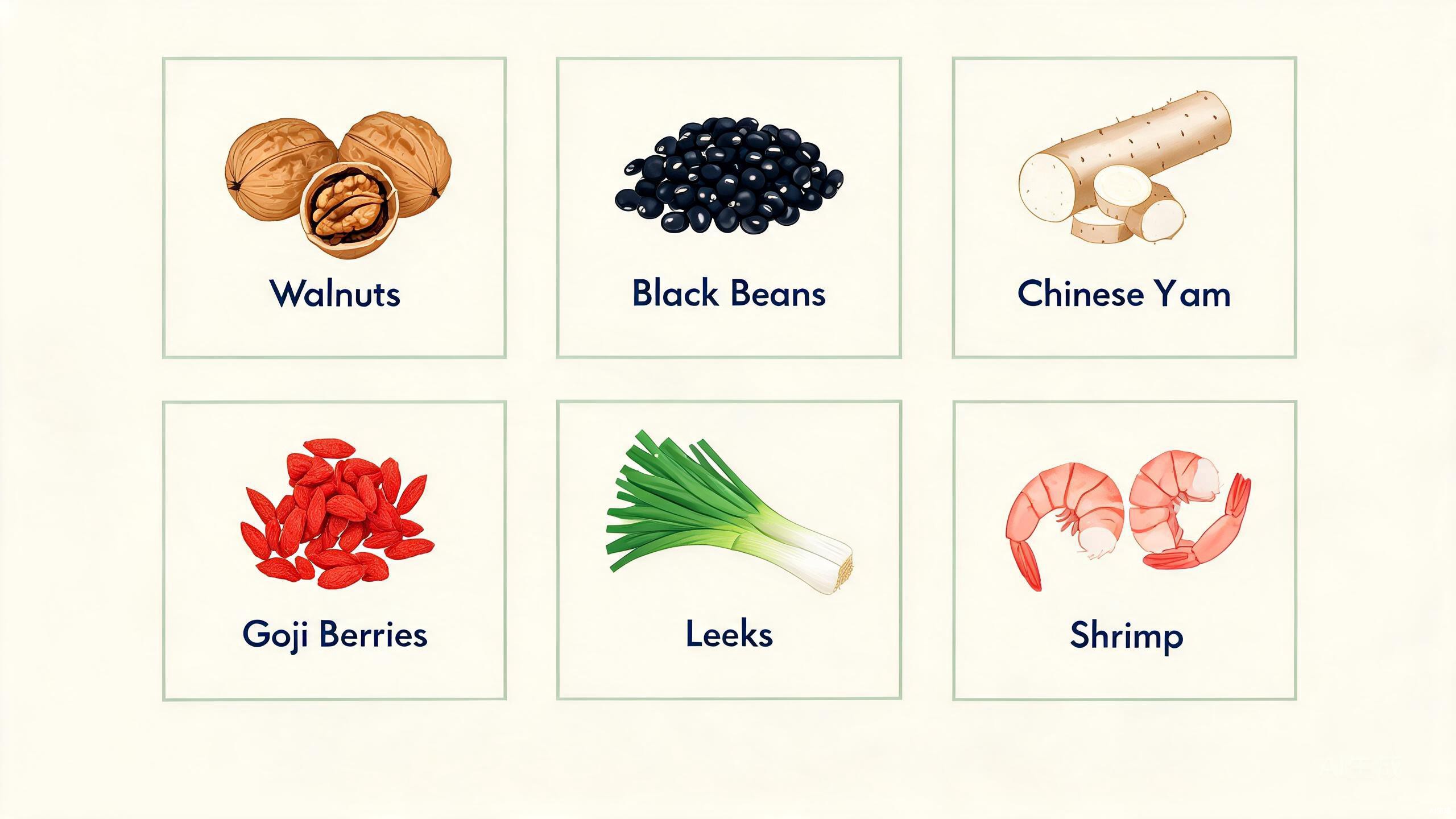
- Five everyday foods — walnuts, black beans, shrimp, Chinese yam, and goji berries — are traditionally used to support kidney wellness and overall vitality.
- Warming foods like walnuts and shrimp support kidney yang; nourishing foods like black beans and goji berries support kidney yin and essence.
- Lifestyle factors — stress management, restful sleep, and moderate exercise — are considered just as important as food in the TCM approach to vitality.
- These are traditional wellness practices, not a treatment for any medical condition. Always consult your healthcare provider for health concerns.
This article is for educational purposes only and is not medical advice. The foods, teas, and practices described here are traditional wellness practices rooted in Chinese culture. They are not a substitute for professional medical care, diagnosis, or treatment. The term "vitality" in this article refers to traditional TCM concepts of general energy and wellness, not to the treatment of any specific medical condition such as erectile dysfunction, low testosterone, or infertility. Never stop, delay, or replace prescribed treatment based on information in this article. If you have a health concern, consult a qualified healthcare provider. Some foods and herbs may interact with medications — always inform your doctor about everything you consume. These statements have not been evaluated by the FDA and are not intended to diagnose, treat, cure, or prevent any disease.
Feeling a dip in energy as the years pass is something many men experience. The demands of work, family, and an always-on lifestyle can leave you running on empty. Long before energy drinks and supplements, Traditional Chinese Medicine (TCM) developed a sophisticated understanding of men's vitality — one rooted in the concept of the Kidneys as the "root of life."
In TCM, vitality is not about a quick boost. It is about nourishing and conserving the body's deepest reserves. The foods below have been enjoyed for generations as part of a balanced lifestyle to support kidney wellness and, in turn, sustained energy and stamina. They are not medicines and not a treatment for any medical condition, but they are simple, nourishing additions to a wellness routine.
If you are new to TCM concepts, our introduction to Traditional Chinese Medicine is a helpful starting point before diving in.
How TCM Views Men's Vitality
At the heart of the TCM approach to men's vitality is the Kidney organ system. This may seem surprising if you think of the kidneys only as the organs that filter blood. In TCM, the Kidney system encompasses a much broader set of functions — it is considered the storehouse of essence (精, jing) and the source of the body's foundational warmth, known as kidney yang (肾阳).
Kidney essence (jing) is the deep, constitutional reserve you are born with and that you slowly draw down over a lifetime. It governs growth, reproduction, bone health, brain function, and aging. Think of it as a savings account: you cannot easily add to it, but you can spend it wisely through good habits and nourishing foods. TCM traditionally associates a natural decline in kidney essence with the aging process in men.
Kidney yang is the warming, activating aspect of the Kidney system. It is the "fire" that powers metabolism, libido, motivation, and physical stamina. When kidney yang is well supported, a person feels warm, energetic, and resilient. When it is depleted — through overwork, chronic stress, poor sleep, or excessive cold exposure — a person may feel fatigued, cold, and low in drive.
TCM also recognizes kidney yin (肾阴), the cooling, moistening, resting aspect. Kidney yin and kidney yang are interdependent, like two sides of a coin. The balance of yin and yang is central to TCM, and vitality depends on both being adequately nourished. This is why the foods below include both warming (yang-supporting) and nourishing (yin-supporting) options.
Common TCM patterns associated with low vitality in men include:
- Kidney Yang Deficiency — cold hands and feet, low back and knee soreness, fatigue, low motivation, preference for warmth. Often linked to overwork, chronic stress, or excessive cold exposure.
- Kidney Yin Deficiency — night sweats, dry mouth, restlessness, lower back ache with a feeling of heat. Often associated with overwork without adequate rest, or aging.
- Kidney Essence Deficiency — general decline in energy, weaker memory, hair changes, lower back and knee weakness. Associated with the natural aging process or chronic depletion.
- Spleen and Kidney Deficiency — fatigue after eating, loose stools, cold limbs, low stamina. Reflects the connection between digestion (Spleen) and the foundational reserves (Kidney).
Understanding these patterns helps explain why TCM recommends different foods for different situations. To learn more about how TCM understands the organs, see our guide to the Zang-Fu organ systems, and for the broader framework, see our Five Elements guide.
Five Everyday TCM Foods for Men's Vitality
The following five foods are staples of East Asian kitchens. Each has a place in TCM tradition as a food that may support kidney wellness and overall vitality when enjoyed as part of a balanced lifestyle. They are not medicines, and they are not a treatment for any medical condition.
1. Walnuts (核桃, He Tao)
TCM nature: Sweet, warm. Enters: Kidney, Lung, and Large Intestine channels.
Walnuts are one of the most important vitality foods in TCM. They are traditionally used to "warm and tonify kidney yang" and to "nourish the brain" — a connection rooted in the TCM belief that the brain is the "sea of marrow" and is nourished by kidney essence. Walnuts are also traditionally said to support the lower back and knees, the body areas most associated with the Kidney system. In modern nutrition, walnuts are valued for their omega-3 fatty acids, which aligns with their traditional use as a brain and vitality food. TCM recommends eating a small handful daily, not large amounts.
How to prepare: Eat 5 to 8 walnuts per day as a snack, or chop and stir into oatmeal, congee, or yogurt. A traditional recipe is walnut and black sesame congee: cook rice porridge with a handful of chopped walnuts and a tablespoon of ground black sesame. Lightly toasting the walnuts enhances their flavor and digestibility.
Caution: Walnuts are warming and oily. Reduce the amount if you have loose stools, active acne, or a tendency to feel overheated. If you have a nut allergy, avoid entirely.
2. Black Beans (黑豆, Hei Dou)
TCM nature: Sweet, neutral. Enters: Kidney and Spleen channels.
In TCM, there is a principle that "black foods enter the Kidney." Black beans are one of the most accessible examples. They are traditionally used to "nourish the kidney" and "support vitality" and are valued as a gentle, everyday food for sustained energy. Unlike the warming walnuts, black beans are neutral in temperature, making them suitable for regular use by most people. They are also rich in protein, fiber, and minerals in modern nutritional terms, which supports their role as a stamina-building staple. Many Chinese families cook black beans into soups and porridges, often combined with a small amount of meat or bone for a nourishing broth.
How to prepare: Soak 1 cup of dried black beans overnight, then simmer for 1 to 2 hours until tender. Add to soups, stews, or congee. A simple vitality soup: black beans, a handful of goji berries, a few slices of ginger, and a bone-in chicken piece, simmered for 2 hours. Black beans can also be sprouted or cooked into a savory side dish. Enjoy several times per week.
Caution: Black beans are a food and generally safe. If you have digestive sensitivity, soak and cook them thoroughly, as undercooked beans can cause bloating.
3. Shrimp (虾, Xia)
TCM nature: Sweet, warm. Enters: Kidney and Liver channels.
Shrimp is one of the most prized warming foods in TCM for supporting kidney yang. It is traditionally used to "tonify kidney yang" and "support vitality and stamina." Because it is warm in nature, shrimp is chosen for the Kidney Yang Deficiency pattern — the person who feels cold, tired, and low in drive. Shrimp is also traditionally associated with supporting the lower back and legs. In coastal regions of China, shrimp is a regular part of the diet, not a special-occasion food, and is often paired with warming ingredients like ginger and wine.
How to prepare: Stir-fry shrimp with ginger, garlic, and a splash of cooking wine. Another traditional preparation is shrimp cooked with Chinese chives (jiu cai), another warming vegetable. A simple daily-friendly approach: 4 to 6 ounces of shrimp, 2 to 3 times per week, cooked with ginger. Avoid deep-fried or heavily breaded preparations, which TCM considers harder to digest.
Caution: If you have a shellfish allergy, avoid shrimp entirely. If you have gout or high uric acid, consult your doctor, as shrimp is moderately high in purines. If you have high cholesterol, enjoy in moderation and follow your doctor's dietary guidance.
4. Chinese Yam (山药, Shan Yao)
TCM nature: Sweet, neutral. Enters: Spleen, Lung, and Kidney channels.
Chinese yam (also called dioscorea or shan yao) is one of the most gentle and versatile tonic foods in TCM. It is traditionally used to "tonify the spleen, nourish the lung, and support the kidney" — making it a rare food that benefits three major organ systems at once. For men's vitality, its kidney-supporting and spleen-strengthening actions are most relevant. Because the Spleen produces qi and blood that the Kidney then draws on, supporting digestion is a key part of supporting vitality. Chinese yam is neutral and gentle, suitable for daily use by almost everyone. It is one of the few tonic foods that TCM considers safe for long-term consumption without risk of "over-tonifying."
How to prepare: Peel and slice fresh Chinese yam (the long, tan-skinned tuber found in Asian markets), then stir-fry with a little oil, or boil into soups and congee. It has a mild, slightly sticky texture when cooked. Another option: buy dried Chinese yam slices and simmer them into tea or porridge. Enjoy 3 to 4 times per week. Note: raw Chinese yam can cause skin irritation in some people; wear gloves when peeling.
Caution: Chinese yam is a food and very safe. If you have diabetes, note that it contains carbohydrates and monitor your blood sugar accordingly. A small number of people experience skin irritation from the raw yam's sap; this is harmless and resolves with cooking.
5. Goji Berries (枸杞, Gou Qi Zi)
TCM nature: Sweet, neutral. Enters: Liver and Kidney channels.
Goji berries round out this list as the quintessential nourishing food in TCM. They are traditionally used to "nourish liver and kidney yin" and "support essence" — addressing both the Kidney Yin Deficiency and Kidney Essence Deficiency patterns. While walnuts and shrimp warm and activate (kidney yang), goji berries cool and nourish (kidney yin). This makes goji berries the balancing partner in a vitality diet: they provide the moistening, resting counterpart to the warming, activating foods. Goji berries are also traditionally associated with supporting the eyes, reflecting the liver-kidney connection to vision. For overall vitality, a small daily amount is the traditional approach.
How to prepare: Rinse 1 tablespoon of dried goji berries and add them to hot water as tea (steep 5 to 8 minutes), or stir into congee, soup, or oatmeal just before serving. They can be combined with the walnuts, black beans, or Chinese yam above for a nourishing porridge. A small handful (10 to 15 grams) per day is a traditional amount.
Caution: Goji berries are generally safe as a food. If you take blood-thinning medication (such as warfarin), consult your doctor, as goji may interact with these drugs. Avoid large amounts if you have a fever or active infection. See our herbal tea safety guide for general guidance.
Comparison of the Five Foods
| Food | TCM Nature | Traditional Use | Preparation | Typical Frequency |
|---|---|---|---|---|
| Walnuts (He Tao) | Sweet, warm | Warm and tonify kidney yang, nourish brain | Snack, stir into porridge | 5–8 nuts daily |
| Black Beans (Hei Dou) | Sweet, neutral | Nourish kidney, support vitality | Soak, simmer in soups and stews | Several times weekly |
| Shrimp (Xia) | Sweet, warm | Tonify kidney yang, support stamina | Stir-fry with ginger | 2–3 times weekly |
| Chinese Yam (Shan Yao) | Sweet, neutral | Tonify spleen and kidney, gentle tonic | Stir-fry, boil in soup or congee | 3–4 times weekly |
| Goji Berries (Gou Qi Zi) | Sweet, neutral | Nourish liver and kidney yin, support essence | Steep in tea, add to porridge | 1 small handful daily |
A Simple Kidney-Nourishing Porridge
Among the five foods above, the combination of walnuts, black beans, goji berries, and Chinese yam makes a classic TCM vitality porridge. Here is a simple, traditional method for making it at home.
- Soak the beans. Soak 1/2 cup of dried black beans in water overnight (8 hours). Drain and rinse.
- Prepare the base. In a pot, combine 1 cup of rinsed white or brown rice, the soaked black beans, and 6 cups of water. Bring to a boil, then reduce to a low simmer.
- Add the yam. Peel and dice 1 cup of fresh Chinese yam (wear gloves if your skin is sensitive). Add to the pot after the first 30 minutes of simmering.
- Simmer slowly. Cover partially and simmer for 1 to 1.5 hours, stirring occasionally, until the rice and beans are soft and the porridge is thick and creamy. Add more water if needed.
- Add walnuts and goji. In the last 10 minutes, stir in 1/4 cup of chopped walnuts and 1 tablespoon of goji berries. This preserves their delicate nutrients.
- Season lightly. Add a pinch of salt to taste. Some traditions add a drizzle of sesame oil or a slice of ginger during cooking for warmth and digestion.
- Enjoy warm. Serve in bowls. This porridge makes a nourishing breakfast or a light dinner. The batch can be stored in the refrigerator for 2 to 3 days and reheated.
This porridge is gentle enough for daily use but rich enough that a bowl every 1 to 2 days is a sustainable habit. For more simple kitchen remedies, see our everyday TCM kitchen remedies guide.
Lifestyle Tips from a TCM Perspective
TCM is a whole-person system. Foods work best when combined with supportive daily habits. In fact, TCM texts often emphasize that lifestyle is more important than food for preserving kidney essence and kidney yang. The following four areas are emphasized again and again in classical TCM for men's vitality:
- Manage stress and conserve energy. In TCM, chronic stress, overwork, and excessive mental strain are said to "consume kidney essence." The modern always-on lifestyle is particularly depleting. Building in genuine rest, setting boundaries, and learning to pace yourself are all considered vital. Practices such as mindful breathing and journaling help qi flow smoothly. See our herbal tea for anxiety guide and our meditation guide for practical starting points.
- Protect your sleep. TCM associates the hours between 11 PM and 3 AM with Liver and Gallbladder recovery, and deep nighttime rest with kidney essence restoration. Staying up late is said to be one of the fastest ways to deplete vitality. Prioritizing sleep during these hours is considered essential. A warm ginger foot soak before bed is a traditional way to draw energy down and encourage deep rest.
- Exercise moderately, not excessively. TCM values consistency over intensity. Tai chi, qigong, walking, and swimming are all excellent. The key is gentle, regular movement that keeps qi and blood flowing without exhausting the body. Excessive, punishing workouts are considered depleting rather than nourishing. Aim for movement that leaves you energized, not wiped out.
- Stay warm, especially the lower back and feet. The Kidney system is located in the lower back, and TCM considers cold a major enemy of kidney yang. Keeping your lower back, abdomen, and feet warm — especially in cold weather — is a simple but powerful practice. Avoid sitting on cold surfaces, and consider a warm foot soak in the evening.
For more on how TCM understands the body's energy systems, see our guide to qi, blood, and body fluids.
Important: Wellness Support, Not Medical Treatment
This point cannot be emphasized enough. The foods and practices in this article are traditional wellness support, not medical treatment. The TCM concept of "vitality" refers to general energy, stamina, and resilience — it is not a diagnosis, and these foods are not a treatment for any specific medical condition.
You should consult a qualified healthcare provider if you experience any of the following:
- Persistent fatigue that does not improve with rest and good habits
- Erectile dysfunction, low libido, or other sexual health concerns
- Symptoms of low testosterone (as diagnosed by a doctor through testing)
- Fertility concerns or difficulty conceiving
- Unexplained weight changes, mood changes, or sleep disturbances
- Any new, persistent, or worsening symptoms
These could be signs of an underlying medical condition that requires proper evaluation and treatment. TCM wellness foods can sit alongside — never in place of — professional medical care. If you take any medication, especially blood thinners or hormone therapy, speak with your doctor before adding new foods or herbs to your routine.
The Bottom Line
Traditional Chinese Medicine offers a gentle, food-based tradition for supporting men's vitality. Walnuts, black beans, shrimp, Chinese yam, and goji berries are five everyday foods that generations of East Asian families have enjoyed as part of a balanced lifestyle. Paired with stress management, restful sleep, moderate exercise, and warmth, these simple practices form a whole-person approach to sustained energy and stamina.
But they are traditions — not treatments, and not a replacement for medical care. If you have a health concern, your most important step is to consult a qualified healthcare provider. Use these traditional practices only as complementary wellness habits, alongside your doctor's guidance.
This article shares traditional wellness practices for educational purposes only. It is not a substitute for medical advice, diagnosis, or treatment. The foods and practices described here are not intended to treat, cure, or prevent any disease, including but not limited to erectile dysfunction, low testosterone, or infertility. If you have a health concern or take medication, consult your healthcare provider before making any changes. These statements have not been evaluated by the FDA. Never stop or adjust prescribed treatment without your doctor's explicit guidance.