Key Takeaways
- TCM views swelling as dampness accumulation (水湿停聚) and pain as qi-blood stagnation (气血瘀滞) — understanding the pattern helps guide food and remedy choices.
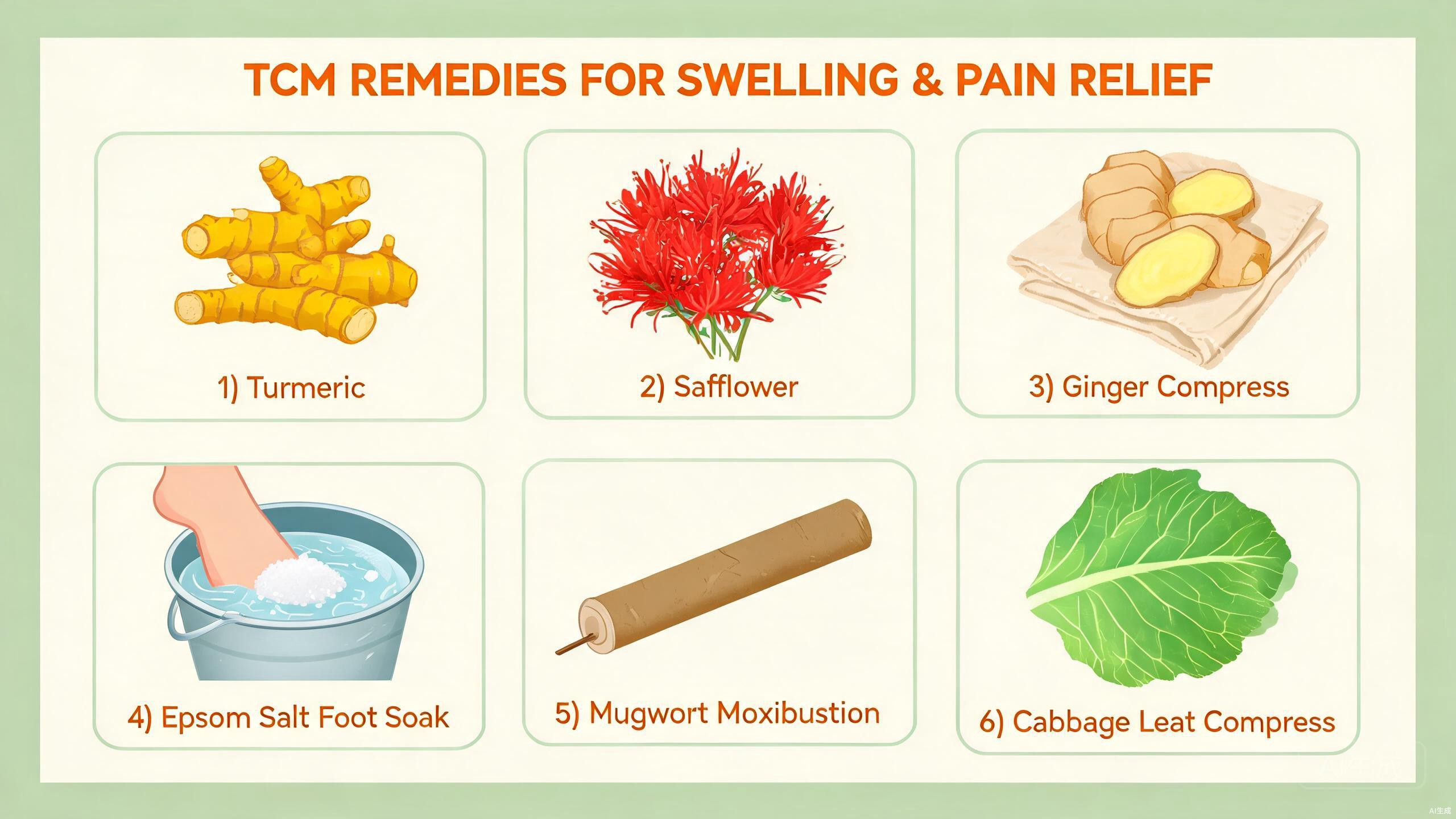
- Five everyday foods and remedies — coix seed, winter melon, red bean, safflower tea, and ginger compress — are traditionally used to support the body's natural fluid balance and circulation.
- Coix seed, winter melon, and red bean form a classic TCM trio for "draining dampness" — supporting the body's natural elimination of excess fluid.
- Safflower tea and ginger compress address pain and swelling from a qi-blood circulation perspective — one internal, one external.
- Swelling and pain can be symptoms of serious medical conditions. These are traditional wellness practices, not a replacement for medical evaluation and treatment.
This article is for educational purposes only and is not medical advice. The foods, teas, and practices described here are traditional wellness practices rooted in Chinese culture. They are not a substitute for professional medical care. Swelling and pain can be symptoms of serious medical conditions — including infections, blood clots, heart failure, kidney disease, fractures, and autoimmune disorders — that require proper diagnosis and treatment. Never stop, adjust, or replace prescribed medication based on information in this article. Safflower, one of the remedies discussed, is strictly contraindicated during pregnancy. Some foods and herbs may interact with medications — always inform your doctor about everything you consume. These statements have not been evaluated by the FDA and are not intended to diagnose, treat, cure, or prevent any disease.
A reader wrote to us after experiencing persistent ankle swelling following a minor sprain. Weeks after the injury had "healed," the ankle remained puffy and achy, especially by the end of the day. A friend recommended a traditional Chinese remedy: coix seed and red bean soup (薏米赤小豆汤, yi mi chi xiao dou tang). Curious, they asked us: "Does TCM have a different way of understanding swelling? And are there everyday foods that might help?" The answer is yes. TCM has a sophisticated framework for understanding why fluid accumulates in the body and why pain lingers — and a rich tradition of using simple kitchen foods to support the body's natural processes.
If you are new to TCM concepts, our introduction to Traditional Chinese Medicine provides helpful background before diving in.
How TCM Views Swelling and Pain
In Traditional Chinese Medicine, swelling and pain are not viewed as isolated problems. They are seen as signs that the body's internal systems for fluid management and circulation are not functioning optimally. TCM has two core concepts that are essential for understanding this:
- Swelling as dampness accumulation (水湿停聚, shui shi ting ju). In TCM, "dampness" is a concept that refers to excess fluid or metabolic waste that the body has not been able to properly process and eliminate. The Spleen is responsible for "transforming and transporting" fluids — taking what the body needs and sending the rest to be eliminated through urination and sweating. When the Spleen is weak or overburdened (by poor diet, overwork, or damp environments), fluids begin to accumulate, leading to swelling, puffiness, heaviness, and a feeling of being "waterlogged." This is particularly common in the lower body — ankles, legs, and feet — because gravity causes dampness to settle downward. To understand the fluid systems in TCM more deeply, see our guide on qi, blood, and body fluids.
- Pain as qi-blood stagnation (气血瘀滞, qi xue yu zhi). One of the most famous sayings in all of TCM is: "Where there is no flow, there is pain; where there is flow, there is no pain" (不通则痛, tong bu ze tong). This means that pain is fundamentally a problem of circulation. When qi and blood flow freely, tissues are nourished and waste is removed. When flow is blocked — by injury, cold, emotional stress, or stagnation — pressure builds up, nutrients cannot reach the area, and waste products accumulate. The result is pain. This is why TCM approaches to pain almost always involve "invigorating" or "moving" qi and blood, rather than simply numbing the sensation.
Within this framework, TCM identifies several specific patterns of swelling and pain:
- Damp accumulation. The most common pattern for general swelling. Signs include puffy, heavy limbs, a feeling of sluggishness, abdominal bloating, and sometimes a thick tongue coating. The approach is to "drain dampness" and strengthen the Spleen with foods like coix seed, winter melon, and red bean.
- Blood stasis. Swelling and pain from injury or trauma — a sprained ankle, a bruise, or post-surgical swelling. The injured area may appear dark, purple, or bruised. The pain is typically fixed, sharp, and worse with pressure. The approach is to "invigorate blood and dissolve stasis" with herbs like safflower.
- Heat toxicity (热毒, re du). Swelling that is red, hot, and inflamed — such as an infected wound or an acute gout flare. This pattern requires "clearing heat and resolving toxicity," which is a different approach from the damp-draining foods on this list. Heat-type swelling should always be evaluated by a medical professional, as it may indicate infection.
- Cold-damp accumulation. Swelling and pain that feel worse in cold or damp weather, often seen in chronic joint discomfort. The area may feel cold to the touch. The approach is to "warm the channels and disperse cold" — this is where the ginger compress comes in.
This pattern-based thinking means that TCM does not have a single "swelling remedy." A practitioner would first determine the pattern — is it damp? Is it blood stasis? Is it heat? Is it cold? — and then choose foods and practices accordingly. The five foods below are primarily associated with the damp accumulation and blood stasis patterns.
Five Everyday TCM Foods and Remedies for Swelling and Pain
The following five foods and remedies are staples of East Asian kitchens and traditional medicine cabinets. The first three — coix seed, winter melon, and red bean — work internally to support the body's natural fluid management. The fourth — safflower tea — works internally to support blood circulation. The fifth — ginger compress — is an external application. All are not medicines and are not a replacement for medical evaluation.
1. Coix Seed / Job's Tears (薏米, Yi Yi Ren)
TCM nature: Sweet, bland, slightly cool. Enters: Spleen, Lung, and Kidney channels.
Coix seed is the single most important food in TCM for "draining dampness" and supporting the body's natural fluid balance. Its bland flavor and slightly cool nature are traditionally associated with promoting urination and helping the Spleen process and eliminate excess fluid. For the pattern of damp accumulation — with its characteristic puffiness, heaviness, and water retention — coix seed is the first food a TCM practitioner would typically recommend. It is also said to "clear heat" and "support the Spleen," making it useful for dampness that is complicated by mild heat. Coix seed is widely consumed as tea, porridge, and in soups throughout East Asia, particularly during humid summer months.
How to prepare: Dry-roast 1 cup of coix seed in a pan over medium heat for 10 to 15 minutes until fragrant and lightly golden (roasting reduces its cold nature and improves digestibility). Rinse and cook with 6 cups of water for 40 to 50 minutes. Drink the liquid as a tea, 1 to 2 cups daily. Alternatively, combine with red bean (see below) for a classic damp-draining duo. For more everyday kitchen remedies, see our everyday TCM kitchen remedies guide.
Caution: Coix seed is generally safe as a food. Raw (unroasted) coix seed in very large amounts has been associated with uterine stimulation in traditional texts. Pregnant women should consult their doctor before consuming coix seed regularly.
2. Winter Melon (冬瓜, Dong Gua)
TCM nature: Sweet, bland, cool. Enters: Lung, Spleen, and Bladder channels.
Winter melon — a large, mild-flavored gourd that is a staple of Chinese cuisine — is one of the most effective TCM foods for promoting urination and reducing water retention. Its traditional actions include "promoting urination," "reducing swelling," and "clearing heat." Because it is both cooling and fluid-moving, winter melon is particularly well-suited for swelling that occurs in hot, humid weather or swelling accompanied by a feeling of internal heat. The peel of the winter melon is considered even more potent for reducing swelling than the flesh — in TCM, the peel (冬瓜皮, dong gua pi) is sometimes used separately as a medicinal tea. Winter melon is also very low in calories and high in water content, making it a gentle, everyday food.
How to prepare: Cut 2 cups of winter melon (with the peel if possible) into chunks. Simmer in 4 cups of water with a small piece of ginger for 20 minutes. Add a pinch of salt and enjoy as a light soup. Alternatively, boil the winter melon peel alone in 2 cups of water for 15 minutes and drink as a tea. Consume 2 to 3 times per week.
Caution: Winter melon is generally safe as a food. Because it is cool in nature and promotes urination, avoid consuming very large amounts if you have cold, weak digestion with loose stools, or if you take diuretic medication. Consult your doctor if you have kidney conditions.
3. Red Bean / Adzuki Bean (赤小豆, Chi Xiao Dou)
TCM nature: Sweet, sour, neutral. Enters: Heart and Small Intestine channels.
Red bean — specifically the small, slender variety known in TCM as chi xiao dou (not the rounder adzuki bean used in sweet red bean paste) — is a powerhouse for draining dampness and reducing swelling. Its traditional actions include "promoting urination," "reducing swelling," and "draining dampness." Red bean and coix seed are traditionally paired together as one of the most famous damp-draining combinations in all of TCM. The red color is also associated with the Heart channel in TCM Five Element theory, and red bean is said to support the movement of blood as well as fluids. For lower body swelling — ankle puffiness, leg heaviness, and general water retention — red bean is one of the most widely recommended everyday foods.
How to prepare: Soak 1/2 cup of red beans overnight. Drain and rinse. Simmer in 4 cups of water for 1 hour until the beans are soft and the liquid is dark. Drink the liquid as a tea, 1 to 2 cups daily. For the classic combination, cook red bean and coix seed together in equal parts. Do not add sugar — in TCM, sweetness can increase dampness. Add a small pinch of salt instead.
Caution: Red beans are generally safe as a food. If you take diuretic medication, consult your doctor before consuming large amounts regularly, as the combined effect on urination may be significant. As with all beans, soaking and thorough cooking helps reduce bloating.
4. Safflower Tea (红花茶, Hong Hua Cha)
TCM nature: Acrid, warm. Enters: Heart and Liver channels.
While the first three foods address swelling from a dampness perspective, safflower addresses pain and swelling from a blood circulation perspective. Safflower is one of TCM's most important blood-invigorating herbs, traditionally used to "invigorate blood, dissolve stasis, and relieve pain." For the pattern of blood stasis — swelling and pain from injury, trauma, or chronic stagnation — safflower is the go-to remedy. The deep red color of the flowers reflects their traditional association with blood. Safflower tea is a simple way to incorporate this herb internally, though it is also commonly used in TCM as a soaked oil or wash for external application on bruised or injured areas. The connection to our hawthorn tea guide is worth noting: both safflower and hawthorn are blood-invigorating, but hawthorn is milder and also aids digestion, while safflower is more specifically targeted at stasis and pain.
How to prepare: Steep a small pinch (1 to 2 grams) of dried safflower petals in 8 oz of hot water (90°C) for 5 minutes. Drink as a light tea, no more than 1 cup per day, and not every day. For external use, see the safflower foot soak method below. For more on safe tea practices, see our herbal tea safety guide.
Caution: Safflower is strictly contraindicated during pregnancy. It invigorates blood and may stimulate uterine contractions. Do not use if you are pregnant, trying to conceive, or breastfeeding. Avoid if you take blood-thinning medications (such as warfarin, aspirin, or clopidogrel) or have a bleeding disorder. Do not use if you have heavy menstrual bleeding. Consult your healthcare provider before using safflower in any form.
5. Ginger Compress (生姜外敷, Sheng Jiang Wai Fu)
TCM nature: Acrid, warm. Enters: Lung, Spleen, and Stomach channels.
While the other four approaches work internally, the ginger compress is a traditional TCM external application. Fresh ginger is classified as acrid and warm in TCM, and its traditional actions include "warming the channels," "dispersing cold," and "promoting circulation." For the pattern of cold-damp accumulation — swelling and pain that feel worse in cold or damp weather, often in the joints — a warm ginger compress applied externally is a classic TCM home remedy. The warmth penetrates the skin, helps dilate local blood vessels, and supports the movement of qi and blood through the affected area. This is consistent with the TCM principle of "warming to move" — cold causes contraction and stagnation, while warmth promotes flow.
How to prepare: Grate a 2-inch piece of fresh ginger. Wrap the grated ginger in a clean cotton cloth or cheesecloth to form a small pouch. Warm the pouch in a steamer or microwave (10 to 15 seconds — test the temperature on your wrist first to make sure it is warm but not burning). Apply the warm ginger pouch to the swollen or painful area for 15 to 20 minutes. Re-warm as needed. Use 1 to 2 times daily.
Caution: Do not use a ginger compress on swelling that is red, hot, or inflamed — the warming nature of ginger may worsen heat patterns. Never apply to broken skin, open wounds, or areas of infection. Always test the temperature before applying to avoid burns. If you have sensitive skin, do a patch test first. Discontinue if you experience redness, burning, or irritation. For general warming and circulation support, a ginger foot soak is a gentler alternative.
Comparison of the Five Foods and Remedies
| Food/Remedy | TCM Nature | Traditional Use | Preparation | Key Precaution |
|---|---|---|---|---|
| Coix Seed (Yi Yi Ren) | Sweet, bland, slightly cool | Drain dampness, reduce swelling | Roast and cook as tea or porridge | Avoid large amounts in pregnancy |
| Winter Melon (Dong Gua) | Sweet, bland, cool | Promote urination, reduce water retention | Simmer as soup; boil peel as tea | Avoid if cold, weak digestion |
| Red Bean (Chi Xiao Dou) | Sweet, sour, neutral | Drain dampness, reduce swelling | Soak and simmer as tea | Consult doctor if on diuretics |
| Safflower Tea (Hong Hua) | Acrid, warm | Invigorate blood, relieve pain | Steep small amount as tea | Strictly avoid in pregnancy |
| Ginger Compress (Sheng Jiang) | Acrid, warm | Warm channels, reduce cold-type swelling | Grate, wrap, warm, apply externally | Not for hot, inflamed, or broken skin |
How to Make the Classic Coix Seed and Red Bean Damp-Draining Soup
Among the five foods above, the coix seed and red bean combination (薏米赤小豆汤, yi mi chi xiao dou tang) is the recipe most readers ask about. It is one of the most widely consumed TCM home remedies in China. Here is a traditional step-by-step method.
- Select the right beans. Use chi xiao dou (赤小豆) — the small, slender, dark red bean used in TCM — not the rounder adzuki bean used in Japanese sweets. They look similar but have different properties in TCM theory. Source from a reputable Chinese herbal supplier or Asian grocery store.
- Roast the coix seed. Dry-roast 1/2 cup of coix seed in a pan over medium heat for 10 to 15 minutes, stirring constantly, until fragrant and lightly golden. This step is important — roasting reduces the cold nature of coix seed, making it gentler on the digestion and more effective for dampness.
- Soak the red beans. Soak 1/2 cup of red beans in water overnight (at least 8 hours). Drain and rinse before cooking. Soaking helps them cook evenly and reduces compounds that can cause bloating.
- Cook together. Combine the roasted coix seed and soaked red beans in a pot with 6 cups of water. Bring to a boil, then reduce to low heat. Simmer for 1 to 1.5 hours until the beans are soft and the liquid has reduced to about 4 cups. The liquid will be a deep reddish-brown color.
- Do not add sugar. In TCM, excessive sweetness can actually increase dampness. If you need flavor, add a small pinch of salt instead. The traditional version is deliberately bland — this is a wellness tea, not a dessert.
- Drink the liquid. Strain the liquid and drink 1 to 2 cups per day. The cooked beans and coix seed can be eaten as well — they are nutritious and high in fiber. Store the liquid in the refrigerator for up to 2 days.
This remedy is most effective when consumed consistently over 1 to 2 weeks, rather than as a one-time drink. However, it should not be consumed indefinitely — once the dampness pattern has improved (reduced swelling, lighter feeling in the limbs), reduce frequency to 2 to 3 times per week. If you have chronic swelling, the underlying cause must be evaluated by a healthcare provider. This soup is a supportive wellness food, not a medical treatment.
When to See a Doctor
This is the most important section of this article. The foods, teas, and practices described here are complementary wellness traditions, not medical treatments. Swelling and pain can be symptoms of serious, even life-threatening medical conditions. You should seek medical attention promptly if you experience any of the following:
- Sudden swelling in one leg or arm, especially if accompanied by pain, warmth, or redness — this can indicate a blood clot (deep vein thrombosis), which is a medical emergency
- Swelling accompanied by shortness of breath, chest pain, or difficulty breathing — this can indicate heart failure or a pulmonary embolism
- Swelling that is red, hot, and painful — this can indicate an infection (cellulitis) that requires antibiotics
- Facial swelling, especially around the eyes or lips, particularly if it occurs suddenly — this can indicate an allergic reaction
- Swelling accompanied by fever, chills, or feeling generally unwell
- Persistent or worsening swelling that does not improve with rest and elevation
- Swelling after an injury that is severe, deforms the area, or prevents you from bearing weight — this may indicate a fracture or serious soft tissue injury
- Severe, sudden, or unusual pain of any kind — pain is your body's alarm system and should never be ignored
Common medical causes of swelling include heart failure, kidney disease, liver disease, venous insufficiency, blood clots, infections, lymphedema, medication side effects, thyroid disorders, and pregnancy-related conditions. These require proper medical diagnosis and treatment. If you are currently taking prescribed diuretics, blood pressure medication, or pain medication, do not stop, skip, or adjust your dosage based on anything you read here. Speak with your doctor before adding any new herbs, teas, or remedies to your routine, as interactions are possible — particularly with safflower and blood-thinning medications.
The Bottom Line
Traditional Chinese Medicine offers a thoughtful framework for understanding swelling and pain — one that looks at fluid balance, circulation, and the body's patterns of imbalance rather than simply masking symptoms. Coix seed, winter melon, and red bean are three everyday foods traditionally used to "drain dampness" and support the body's natural fluid management. Safflower tea invigorates blood circulation to address pain from stagnation. The ginger compress is a traditional external application for cold-type swelling and discomfort. Together, these five approaches reflect TCM's core principle: support the body's natural processes, address the underlying pattern, and use both internal and external methods in concert.
But these are traditions — not treatments, and not a replacement for medical care. Swelling and pain can signal serious medical conditions that require prompt professional evaluation. Safflower in particular carries serious safety precautions, especially during pregnancy. If you are experiencing swelling or pain, your most important step is to work with a qualified healthcare provider to identify the cause. Use these traditional practices only as complementary habits, with your doctor's knowledge and guidance.
This article shares traditional wellness practices for educational purposes only. It is not a substitute for medical advice, diagnosis, or treatment. The foods, teas, and remedies described here are not intended to treat, cure, or prevent any disease. Safflower is strictly contraindicated during pregnancy. Swelling and pain can be symptoms of serious medical conditions — if you experience sudden, severe, or persistent swelling or pain, seek medical attention immediately. If you take any medication — especially diuretics or blood thinners — consult your healthcare provider before making any changes. These statements have not been evaluated by the FDA. Never stop or adjust prescribed medication without your doctor's explicit guidance.