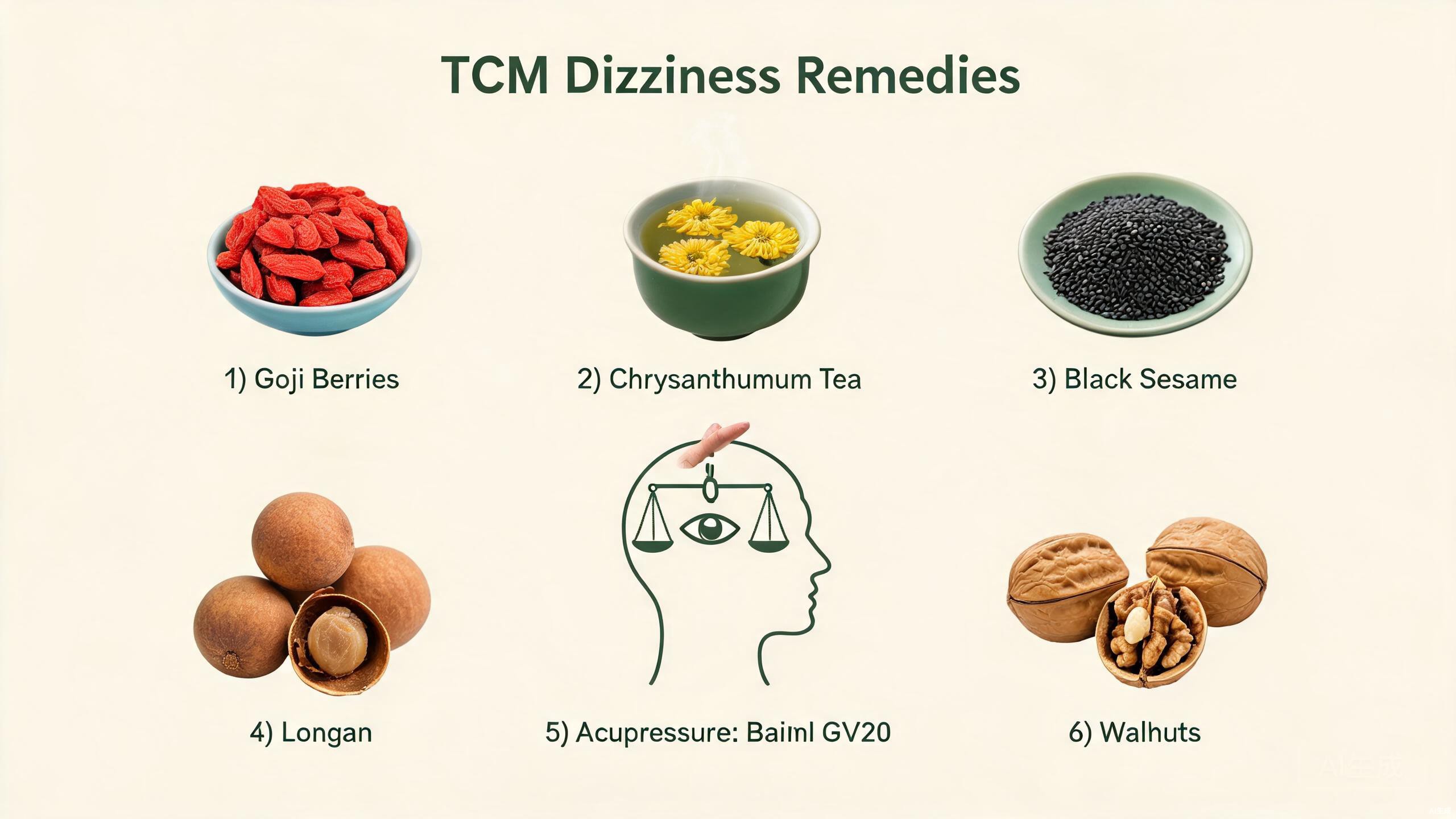
Key Takeaways
- TCM views dizziness through four main patterns: liver yang rising, qi and blood deficiency, phlegm-dampness obstructing, and kidney essence deficiency — each requiring different foods.
- Gastrodia chicken stew is the premier TCM remedy for liver yang dizziness, traditionally used to calm wind and anchor rising energy.
- Goji and chrysanthemum tea nourishes liver and kidney yin while clearing heat — ideal for stress-related dizziness.
- Walnut black sesame paste is traditionally used to replenish kidney essence for dizziness accompanied by memory fog and fatigue.
- All ingredients are available from Amazon, iHerb, or well-stocked supermarkets; none require a prescription.
This article is for wellness education only and is not medical advice, diagnosis, or treatment. Dizziness can sometimes signal a serious condition. The food therapy practices described are complementary wellness approaches, not a replacement for professional care. If you experience sudden, severe, or persistent dizziness, consult your healthcare provider. Read our full disclaimer →
Dizziness is one of the most common reasons people visit a doctor, and one of the most frustrating to manage. It can feel like spinning, lightheadedness, unsteadiness, or a foggy head — and the cause is often unclear. Traditional Chinese Medicine (TCM) approaches dizziness not as a single symptom to suppress, but as a signal of internal imbalance that points to a specific pattern.
In TCM theory, the head is nourished by clear qi and blood rising upward, and by kidney essence filling the brain. When this upward nourishment is disrupted — by liver energy surging upward, by insufficient qi and blood, by phlegm blocking the middle, or by depleted kidney essence — dizziness results. The five remedies below match each pattern with foods that are traditionally used to restore balance. All ingredients are available from Amazon, iHerb, or a well-stocked grocery store.
How TCM Views Dizziness
TCM identifies four primary patterns associated with dizziness. Understanding which pattern matches your experience is key to choosing the right food therapy.
- Liver Yang Rising (Gan Yang Shang Kang) — the most common pattern. Stress, anger, or yin deficiency allows liver yang to surge upward to the head. Signs: dizziness with a feeling of fullness in the head, irritability, headache, red face, ringing in the ears (tinnitus), and bitter taste. Often triggered or worsened by emotional stress.
- Qi and Blood Deficiency (Qi Xue Liang Xu) — insufficient nourishment reaches the head. Signs: dizziness when standing up quickly, lightheadedness, pale complexion, fatigue, blurred vision, palpitations, and poor sleep. Often seen in people who are overworked, undernourished, or recovering from illness.
- Phlegm-Dampness Obstructing the Middle (Tan Zhuo Zhong Zu) — sluggish digestion produces dampness and phlegm that block the clear yang from rising. Signs: dizziness with a heavy feeling in the head, nausea, chest oppression, poor appetite, and sticky or greasy feeling. Often worse after eating rich or greasy foods.
- Kidney Essence Deficiency (Shen Jing Bu Zu) — the deepest pattern. Kidney essence naturally declines with age or chronic overwork. Signs: chronic dizziness, forgetfulness, weak knees and lower back, ringing in the ears, premature graying, and fatigue. Slow onset and gradual worsening.
If you are new to TCM concepts, our guide to yin and yang and guide to zang-fu organs provide helpful background.
5 Food Therapy Remedies for Dizziness
Each remedy below is matched to a specific pattern. Choose the one that best fits your symptoms, and remember that consistency over one to two weeks is more important than a single serving.
1. Gastrodia Chicken Stew (Tian Ma Dun Ji)
Best for: Liver yang rising pattern (dizziness with irritability, headache, tinnitus)
TCM nature and flavor: Gastrodia (tian ma): sweet, neutral. Enters the Liver channel. Chicken: sweet, warm. Enters the Spleen and Stomach channels.
Traditional use: Gastrodia is considered the most important herb in TCM for calming liver wind and anchoring rising yang. It is traditionally used for dizziness, vertigo, and headaches associated with liver yang rising. Combined with chicken in a slow stew, it becomes a nourishing food therapy that both calms the liver and supports the body's overall strength. This is one of the most famous TCM food therapy recipes, served in households across China for generations.
How to make: Soak 15 to 20 grams of dried gastrodia slices in water for 30 minutes. Place in a pot with 2 chicken thighs (bone-in), 6 cups of water, 3 slices of fresh ginger, and a pinch of salt. Bring to a boil, skim any foam, then simmer on low for 90 minutes. Eat the chicken and drink the broth. Serve 2 to 3 times per week for two weeks.
Precautions: Gastrodia is generally safe in food amounts. Avoid if you have a yin deficiency with severe dryness. Dried gastrodia slices are available from Amazon and iHerb — look for firm, translucent slices.
Search for "dried gastrodia slices" or "tian ma slices" on Amazon or iHerb. Quality slices are firm, slightly translucent, and pale. Avoid soft, crumbly, or moldy pieces. Store in an airtight jar in a cool, dry place for up to one year.
2. Goji and Chrysanthemum Tea
Best for: Liver yang rising and liver-kidney yin deficiency (dizziness with dry eyes, stress, screen fatigue)
TCM nature and flavor: Goji (gou qi zi): sweet, neutral. Enters the Liver and Kidney channels. Chrysanthemum (ju hua): sweet, bitter, slightly cold. Enters the Liver and Lung channels.
Traditional use: This is one of the most popular TCM tea combinations. Goji nourishes liver blood and kidney yin — the deep reserves that keep liver yang from rising. Chrysanthemum clears heat from the liver and calms the head. Together, they address both the root (yin deficiency) and the branch (rising yang) of stress-related dizziness. This tea is also valued for supporting eye health, which is closely linked to the liver in TCM theory.
How to make: Combine 1 tablespoon of dried goji berries with 5 to 8 dried chrysanthemum flowers. Steep in 10 oz of hot water (90°C) for 5 to 7 minutes. Drink 1 to 2 cups daily. The goji berries can be eaten after steeping. See our goji tea guide and chrysanthemum tea guide for detailed brewing instructions.
Precautions: Safe for daily use. Avoid if you have diarrhea or a spleen deficiency with cold signs (loose stools, cold hands and feet, pale tongue). Both ingredients are widely available from Amazon, iHerb, and most health food stores.
3. Astragalus and Red Date Tea
Best for: Qi and blood deficiency pattern (dizziness on standing, fatigue, pale complexion)
TCM nature and flavor: Astragalus (huang qi): sweet, slightly warm. Enters the Spleen and Lung channels. Red date (hong zao): sweet, warm. Enters the Spleen and Stomach channels.
Traditional use: When dizziness comes from insufficient qi and blood reaching the head, the remedy is to build rather than calm. Astragalus is the premier qi-tonifying herb in TCM, traditionally used to lift energy upward and strengthen the spleen's ability to produce blood. Red dates nourish blood and add natural sweetness. Together, they form a gentle daily tonic that may support the energy and nourishment needed to keep the head clear and steady.
How to make: Simmer 10 to 15 grams of dried astragalus slices with 5 pitted dried red dates in 12 oz of water for 20 minutes. Strain and drink warm, once daily in the morning. See our astragalus tea guide for full instructions.
Precautions: Stop astragalus during any acute illness (cold, flu, fever). Avoid if you tend to feel hot, have night sweats, or a red tongue with little coating (yin deficiency with heat). Both ingredients are available from Amazon and iHerb.
4. Coix Seed and Red Bean Porridge
Best for: Phlegm-dampness pattern (dizziness with heavy head, nausea, poor appetite)
TCM nature and flavor: Coix seed (yi yi ren / Job's tears): sweet, bland, slightly cool. Enters the Spleen, Lung, and Kidney channels. Red bean (adzuki, chi xiao dou): sweet, sour, neutral. Enters the Heart and Small Intestine channels.
Traditional use: When dampness and phlegm block the middle, the clear yang cannot rise to nourish the head, causing a heavy, foggy dizziness. Coix seed is one of TCM's most important dampness-draining foods, traditionally used to strengthen the spleen and promote the elimination of excess fluid. Adzuki beans complement this by supporting fluid metabolism. Together, they form a porridge that is traditionally used to clear dampness, lighten the head, and restore digestive function.
How to make: Soak 1/2 cup of dried coix seed and 1/2 cup of dried adzuki beans for 4 hours (or overnight). Combine with 6 cups of water, bring to a boil, then simmer for 60 to 90 minutes until soft. Eat 1 bowl per day, preferably in the morning. Add a small amount of brown sugar if desired. See our congee guide for porridge-making techniques.
Precautions: Coix seed is slightly cooling; avoid in large amounts during pregnancy. Both ingredients are available from Amazon, iHerb, and most supermarkets (adzuki beans are often in the baking or international aisle).
5. Walnut Black Sesame Paste
Best for: Kidney essence deficiency pattern (chronic dizziness, memory fog, weak lower back)
TCM nature and flavor: Walnut (he tao): sweet, warm. Enters the Kidney, Lung, and Large Intestine channels. Black sesame (hei zhi ma): sweet, neutral. Enters the Kidney and Liver channels.
Traditional use: In TCM, the kidneys store essence (jing), which nourishes the brain. When kidney essence is depleted — through age, overwork, or chronic stress — dizziness, forgetfulness, and weakness result. Walnuts are traditionally used to tonify kidney yang and support brain function. Black sesame nourishes kidney yin and liver blood. Ground together into a paste, they form a deeply restorative food that is traditionally used for chronic dizziness, premature graying, and lower back weakness.
How to make: Lightly toast 1/2 cup of walnuts and 1/2 cup of black sesame seeds in a dry pan until fragrant (2 to 3 minutes). Grind in a food processor or with a mortar and pestle until it forms a paste. Add 1 tablespoon of honey and a pinch of salt. Store in a jar. Eat 1 tablespoon per day, mixed into warm water, oatmeal, or congee.
Precautions: Walnuts and sesame are safe for regular use. If you have a nut allergy, consult your healthcare provider. Black sesame seeds are available from Amazon, iHerb, and most supermarkets.
Matching the Remedy to Your Pattern
| If Your Dizziness Features... | TCM Pattern | Best Remedy | Frequency |
|---|---|---|---|
| Irritability, headache, tinnitus, red face | Liver Yang Rising | Gastrodia Chicken Stew | 2 to 3 times per week |
| Stress, dry eyes, screen fatigue, mild dizziness | Liver-Kidney Yin Def. | Goji & Chrysanthemum Tea | Daily, 1 to 2 cups |
| Lightheaded on standing, pale, tired | Qi & Blood Deficiency | Astragalus & Red Date Tea | Daily, morning |
| Heavy head, nausea, poor appetite, foggy | Phlegm-Dampness | Coix Seed & Red Bean Porridge | Daily, morning |
| Chronic, memory fog, weak back, tinnitus | Kidney Essence Def. | Walnut Black Sesame Paste | Daily, 1 tablespoon |
| Stress-related with both heat and deficiency | Mixed Liver Yang + Yin Def. | Goji & Chrysanthemum + Gastrodia Stew | Rotate daily |
Lifestyle Practices for Balance
Food therapy works best when supported by daily habits. TCM offers several principles for managing dizziness:
- Protect your sleep. In TCM, the liver regenerates between 11 p.m. and 3 a.m. Poor sleep directly feeds liver yang rising. Aim to sleep before 11 p.m. See our best TCM teas for sleep guide.
- Manage stress before it accumulates. Suppressed frustration is the leading cause of liver yang rising. Daily qigong, walking, or simply 10 minutes of deep breathing can help. See our qigong for stress guide.
- Eat regular, warm meals. Irregular eating weakens the spleen, producing dampness that can fog the head. Avoid skipping meals and eating cold, raw food in excess. Our congee guide offers warming, easy-to-digest options.
- Stand up slowly. If your dizziness is worse on standing (qi-blood deficiency), rise gradually and pause for a moment before walking.
- Stay hydrated. Dehydration worsens all patterns of dizziness. Sip warm water throughout the day rather than large amounts at once.
Precautions and When to Seek Help
Dizziness can sometimes be a sign of a serious condition. TCM food therapy is complementary, not a substitute for medical evaluation.
- Seek immediate care if dizziness is sudden and severe, or accompanied by difficulty speaking, weakness or numbness in the face or limbs, vision changes, chest pain, fainting, or difficulty walking. These may indicate a stroke or other emergency.
- See your doctor if dizziness is persistent, recurrent, or interferes with daily life. It may be related to inner ear problems, blood pressure issues, anemia, medication side effects, or other conditions that need proper diagnosis.
- Medication interactions. If you take blood pressure medication, blood thinners, or sedatives, consult your healthcare provider before using gastrodia or astragalus regularly.
- Not a substitute. These food therapy practices are educational and traditional. Always work with your healthcare provider for ongoing or concerning symptoms.
For related topics, see our guides on TCM for headache and TCM for a calm mind and brain.
Frequently Asked Questions
Can TCM help with dizziness?
TCM food therapy and lifestyle practices are traditionally used to support balance and clarity. Different remedies are matched to different patterns, such as liver yang rising or qi-blood deficiency. These practices are complementary and not a replacement for medical evaluation, especially if dizziness is persistent or severe.
What is liver yang rising in TCM?
Liver yang rising is a TCM pattern in which stress, frustration, or yin deficiency allows liver energy to surge upward toward the head. This may produce dizziness, headaches, irritability, ringing in the ears, and a red face. Cooling and anchoring foods like goji and chrysanthemum tea are traditionally used to support this pattern.
Where can I buy gastrodia (tian ma)?
Dried gastrodia slices (tian ma) are available from online retailers such as Amazon and iHerb, as well as Chinese herb shops. Look for firm, translucent slices without mold. Store in an airtight container in a cool, dry place for up to one year.
When is dizziness a medical emergency?
Seek immediate medical attention if dizziness is accompanied by severe headache, difficulty speaking, weakness or numbness in the face or limbs, vision changes, chest pain, fainting, or difficulty walking. These may be signs of a stroke, heart condition, or other serious issue requiring urgent care.
The Bottom Line
TCM offers a nuanced, pattern-based approach to dizziness that goes far beyond treating it as a single symptom. By identifying whether your dizziness stems from liver yang rising, qi and blood deficiency, phlegm-dampness, or kidney essence depletion, you can choose foods that work with your body's specific needs. Gastrodia chicken stew anchors rising liver yang, goji and chrysanthemum tea nourishes yin and clears heat, astragalus and red date tea builds qi and blood, coix seed and red bean porridge drains dampness, and walnut black sesame paste replenishes kidney essence. All ingredients are accessible from Amazon, iHerb, or your local grocery store. Pair your chosen remedy with good sleep, stress management, and regular warm meals, and give your body two to three weeks to respond. And always partner with your healthcare provider, especially for persistent or severe dizziness.
This article is for educational and informational purposes only and is not a substitute for professional medical advice, diagnosis, or treatment. These statements have not been evaluated by the FDA. Always consult a qualified healthcare provider before beginning any new wellness practice, especially if you are pregnant, nursing, taking medication, or have a medical condition. Read our full disclaimer →