Key Takeaways
- TCM views elevated cholesterol through the lens of phlegm-dampness (Tan Shi) and blood stasis (Yu Xue) — patterns linked to diet, digestion, and metabolism.
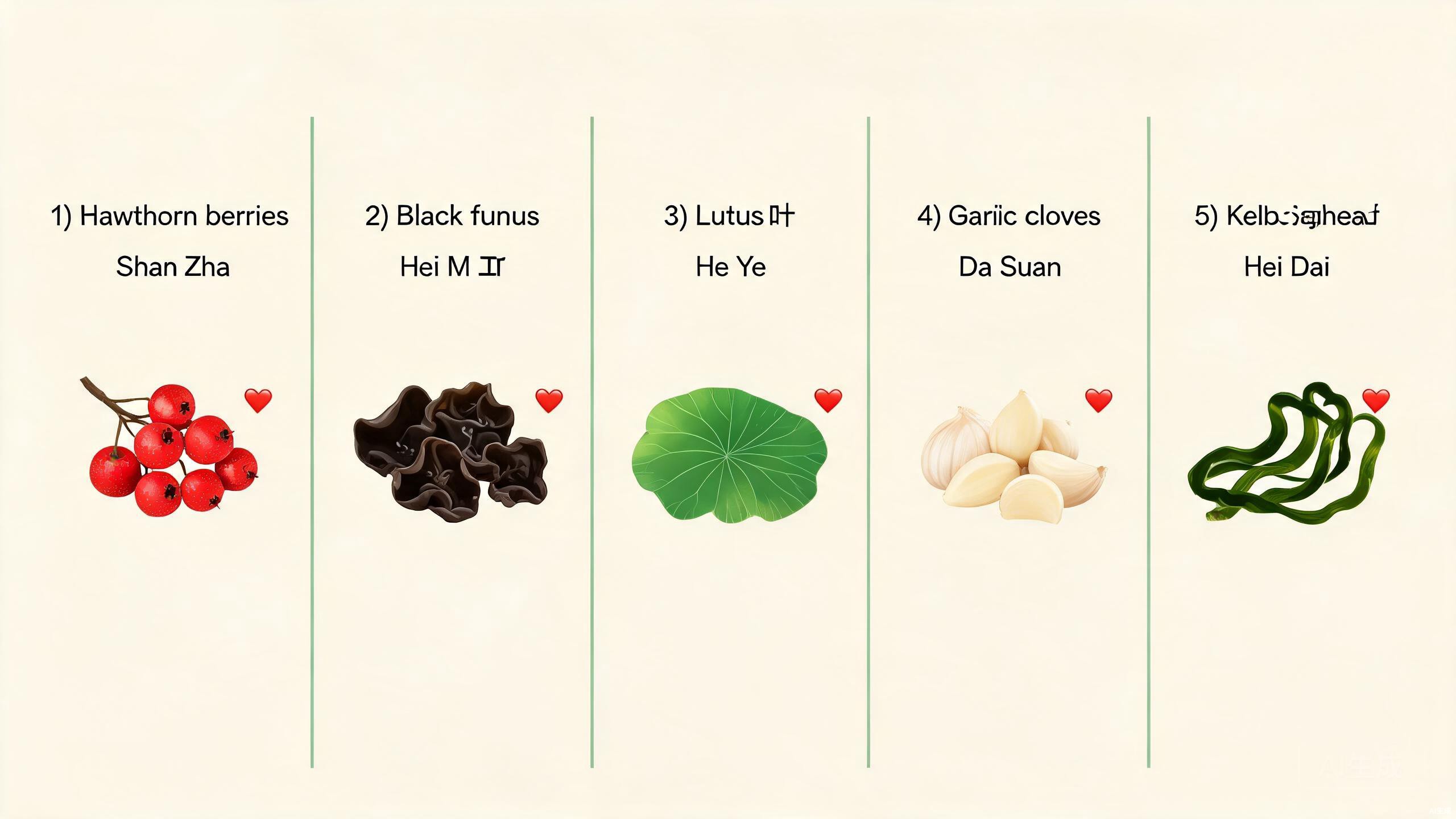
- Five everyday foods — hawthorn, black fungus, lotus leaf, garlic, and kelp — are traditionally used to support healthy cholesterol and circulation.
- Hawthorn is the single most referenced everyday food in TCM for cardiovascular wellness; learn how to brew it properly.
- TCM diet principles emphasize whole foods, minimal greasy and sweet items, and plenty of fiber — aligning with modern dietary guidance.
- These are traditional wellness practices, not a replacement for prescribed cholesterol medication. Always consult your doctor.
This article is for educational purposes only and is not medical advice. The foods and practices described here are traditional wellness practices rooted in Chinese culture. They are not a substitute for professional medical care or prescribed cholesterol-lowering medication such as statins. Never stop, adjust, or replace prescribed medication based on information in this article. If you have high cholesterol or any cardiovascular condition, work closely with your healthcare provider on a comprehensive management plan. Some foods may interact with medications — always inform your doctor about everything you consume. These statements have not been evaluated by the FDA and are not intended to diagnose, treat, cure, or prevent any disease.
When people think of cholesterol management, they usually think of statins, dietary fat, and lab numbers. Traditional Chinese Medicine (TCM) offers a different and complementary perspective — one that has been developed over thousands of years of observation. Rather than focusing on a single molecule, TCM looks at how the body processes, transports, and clears substances, and how diet and digestion shape overall cardiovascular wellness.
In TCM, the foods described below are not medicines. They are ordinary kitchen ingredients that generations of East Asian families have enjoyed as part of a balanced, whole-food diet. If you are new to TCM concepts, our introduction to Traditional Chinese Medicine provides helpful background.
How TCM Views Cholesterol
Classical TCM texts do not contain the word "cholesterol," but they describe a cluster of conditions that align closely with what modern medicine associates with elevated blood lipids — a feeling of heaviness, chest oppression, sluggishness, sticky or greasy coating on the tongue, and a tendency toward weight gain. TCM explains these signs through two interrelated concepts:
- Phlegm-Dampness (痰湿, Tan Shi): In TCM, "dampness" describes a state where the body's fluids become thick, sticky, and sluggish. This is often linked to a diet high in greasy, sweet, or heavily processed foods, and to a digestive system (the Spleen) that is too weak to process them efficiently. Over time, dampness can condense into "phlegm" — a TCM term that includes not just respiratory mucus but any thick, sticky substance that accumulates in the body, including what we might associate with blood lipids.
- Blood Stasis (瘀血, Yu Xue): When dampness and phlegm persist, they can slow the flow of qi and blood, leading to stagnation. Blood stasis in TCM is associated with fixed pain, dark or purple complexion, and a sense of congestion in the chest. This concept overlaps with the modern understanding of how plaque buildup affects circulation.
The root, in TCM theory, often lies in Spleen deficiency. The Spleen (in TCM, not the anatomical organ) is responsible for transforming food into usable energy and transporting fluids. When the Spleen is weakened by poor diet, overthinking, or irregular eating, it fails to process fats and sweets properly, producing dampness and phlegm instead. This is why TCM approaches to cholesterol focus not just on what to eat, but on strengthening digestion and resolving dampness.
To understand the foundational concepts behind this, see our guides on qi, blood, and body fluids and the Five Elements theory.
Five Everyday TCM Foods for Cholesterol Support
The following five foods are staples of East Asian kitchens. Each has a place in TCM tradition as a food that may support healthy cholesterol and circulation when enjoyed as part of a balanced lifestyle. They are not medicines, and they are not a replacement for prescribed treatment.
1. Hawthorn (山楂, Shan Zha)
TCM nature: Sour, sweet, slightly warm. Enters: Spleen, Stomach, and Liver channels.
Hawthorn is the single most important food-as-medicine item in TCM for cardiovascular wellness. It is traditionally used to "transform food stagnation" — particularly the stagnation caused by rich, greasy, or heavy meals. It is also said to "invigorate blood circulation" and "resolve stasis," making it the go-to everyday food for concerns related to blood lipids and circulation. In Chinese households, hawthorn is consumed as tea, candied snacks, and as an ingredient in soups and congee.
How to prepare: Simmer 10 to 15 grams of dried hawthorn slices in 10 oz of water for 10 minutes. See the step-by-step guide below and our complete hawthorn tea guide.
Caution: Hawthorn may interact with heart medications and statins. If you take any prescription medication, consult your healthcare provider before regular use. Avoid on an empty stomach if you have gastric ulcers.
2. Black Fungus (黑木耳, Hei Mu Er)
TCM nature: Sweet, neutral. Enters: Stomach and Large Intestine channels.
Black fungus, also known as wood ear mushroom, is a common ingredient in Chinese cooking — found in stir-fries, soups, and cold salads. In TCM, it is traditionally said to "soften hardness" and "invigorate blood," and is sometimes nicknamed the "vascular scavenger" (血管清道夫) in Chinese folk tradition for its long-standing association with cardiovascular wellness. It is also a rich source of dietary fiber, which modern nutrition recognizes as important for digestive health.
How to prepare: Soak dried black fungus in warm water for 20 to 30 minutes until expanded. Rinse thoroughly. Stir-fry with garlic and vegetables, or add to soups. Always cook black fungus thoroughly before eating.
Caution: Generally safe as a food. Avoid eating raw or undercooked. If you take blood thinners, consult your doctor, as black fungus may have mild blood-invigorating properties in TCM theory.
3. Lotus Leaf (荷叶, He Ye)
TCM nature: Bitter, astringent, neutral. Enters: Spleen and Stomach channels.
Lotus leaf is a classic TCM tea ingredient, especially popular in summer. It is traditionally used to "clear summer heat," "resolve dampness," and "raise the clear yang." In the context of cholesterol support, its dampness-resolving properties are key — it helps the body process and clear the thick, sticky substances that TCM associates with elevated lipids. Lotus leaf tea is light, refreshing, and mildly astringent.
How to prepare: Steep 1 dried lotus leaf (or 3 to 5 grams of cut leaf pieces) in 10 oz of hot water for 8 minutes. Can also be used to wrap rice or congee for steaming, infusing the food with its subtle flavor.
Caution: Generally safe as a tea. Avoid if you have a cold constitution with loose stools. For more dampness-resolving foods, see our dampness-removing foods guide.
4. Garlic (大蒜, Da Suan)
TCM nature: Acrid, warm. Enters: Spleen, Stomach, and Lung channels.
Garlic is one of the most universally recognized functional foods, valued in both Eastern and Western traditions. In TCM, it is classified as warming and acrid, traditionally used to "warm the middle" (support digestion) and "transform stagnation." It is an everyday seasoning in virtually all Chinese savory cooking. Modern research has shown interest in garlic's allicin content for various cardiovascular properties.
How to prepare: Use liberally in daily cooking — minced in stir-fries, crushed in soups, or roasted whole. For tea, crush 2 to 3 cloves and simmer in water for 5 minutes with a slice of ginger.
Caution: Garlic is generally safe as a food. Large amounts may irritate the stomach. If you take blood thinners, consult your doctor, as garlic may have mild blood-thinning properties.
5. Kelp / Seaweed (海带, Hai Dai)
TCM nature: Salty, cold. Enters: Liver, Stomach, and Kidney channels.
Kelp and other seaweeds are dietary staples in coastal China, Japan, and Korea. In TCM, they are traditionally used to "soften hardness" and "resolve phlegm," which aligns with their traditional use in supporting the body's management of thick, sticky substances. Kelp is also a natural source of iodine, fiber, and various minerals. It is most commonly used in soups, especially paired with tofu or bone broth.
How to prepare: Soak dried kelp in water for 30 minutes, then cut into strips. Simmer in soups for 20 to 30 minutes. Kelp pairs well with tofu, pork bone broth (see our TCM bone broth guide), and root vegetables.
Caution: Avoid excess if you have a thyroid condition or are sensitive to iodine. Consult your doctor if you take thyroid medication.
Comparison of the Five Foods
| Food | TCM Nature | Traditional Use | Preparation | Typical Frequency |
|---|---|---|---|---|
| Hawthorn (Shan Zha) | Sour, sweet, slightly warm | Aid digestion, invigorate blood | Simmer as tea | 1 cup daily |
| Black Fungus (Hei Mu Er) | Sweet, neutral | Soften hardness, invigorate blood | Stir-fry or soup | 2–3 times weekly |
| Lotus Leaf (He Ye) | Bitter, astringent, neutral | Clear heat, resolve dampness | Steep as tea | 1–2 cups daily |
| Garlic (Da Suan) | Acrid, warm | Warm middle, transform stagnation | Cooking or tea | Daily as seasoning |
| Kelp (Hai Dai) | Salty, cold | Soften hardness, resolve phlegm | Soup or stew | 1–2 times weekly |
How to Make Hawthorn Tea
Hawthorn tea is the most commonly prepared beverage among the five foods above. Here is a traditional step-by-step method.
- Source quality hawthorn. Purchase dried hawthorn slices (山楂片) from a reputable herbal supplier or Asian grocery. Look for slices that are a deep reddish-brown, with a clean, slightly sour aroma. Avoid any with signs of mold or excessive dust.
- Rinse briefly. Place 10 to 15 grams (about 8 to 10 slices) in a strainer and rinse under cool water for a few seconds to remove surface dust.
- Optional: Lightly toast. In a dry pan over low heat, toast the rinsed slices for 1 to 2 minutes until fragrant. This traditional step enhances the flavor and is said to warm the hawthorn's nature slightly, making it gentler on the stomach.
- Simmer gently. Place the hawthorn slices in a small pot with 10 oz of water. Bring to a gentle boil, then immediately reduce heat and simmer for 8 to 10 minutes. Do not boil vigorously — this can make the tea overly astringent.
- Strain and serve. Pour through a strainer into a cup. The tea will be a deep amber-red with a tart, fruity flavor.
- Optional additions. For a balanced flavor, add 2 to 3 goji berries or a small piece of rock sugar (bing tang). Avoid regular white sugar. Some families add a thin slice of fresh ginger to make the tea more warming.
- Drink warm. Enjoy 1 cup per day, ideally after meals (hawthorn is traditionally used to support digestion of rich foods). Drink warm, not scalding.
Hawthorn tea is naturally tart. If you find it too sour, try blending it with a small amount of dried lotus leaf or a couple of red dates for natural sweetness and balance. For more on tea safety and sourcing, see our herbal tea safety guide.
TCM Diet Principles for Healthy Lipids
In TCM, no single food works in isolation. The overall dietary pattern matters most. The following principles are emphasized in classical TCM texts and align closely with modern cardiovascular dietary guidance:
- Minimize greasy, fatty, and fried foods. TCM considers these the primary source of "dampness" and "phlegm." Choose steaming, boiling, and light stir-frying over deep-frying. Favor plant-based fats from nuts and seeds over animal fats.
- Limit sweets and refined carbohydrates. In TCM, excessive sweets weaken the Spleen and generate dampness. This aligns with modern understanding that refined sugars can affect triglyceride levels.
- Eat plenty of fiber-rich foods. Whole grains, beans, vegetables, and seaweeds support healthy digestion and help the body process and clear substances efficiently. Congee (rice porridge) with mung beans is a classic example — see our mung bean congee guide and general congee guide.
- Eat warm, cooked foods. TCM generally recommends cooked over raw foods, especially for those with weak digestion. Warm, easily digestible meals lighten the workload on the Spleen.
- Manage weight holistically. In TCM, excess weight is often seen as an accumulation of dampness. A balanced diet with regular movement is the traditional approach. See our TCM for weight management guide for more.
When to See a Doctor
The foods and practices in this article are complementary wellness traditions, not medical treatments. You should see a healthcare provider promptly if you experience any of the following:
- A cholesterol panel that your doctor has flagged as outside healthy ranges
- Chest pain, pressure, or tightness
- Shortness of breath, especially with exertion
- Sudden dizziness, weakness, or numbness
- Pain in the legs when walking that eases with rest
- A family history of early heart disease or stroke
If you are currently taking statins or any cholesterol-lowering medication, do not stop, skip, or adjust your dosage based on anything you read here. Speak with your doctor before adding any new herbs, teas, or concentrated foods to your routine, as interactions are possible. Hawthorn, garlic, and black fungus, in particular, may have properties that interact with certain medications.
The Bottom Line
Traditional Chinese Medicine offers a food-based tradition for supporting healthy cholesterol and cardiovascular wellness. Hawthorn, black fungus, lotus leaf, garlic, and kelp are five everyday foods that generations of East Asian families have enjoyed as part of a balanced, whole-food diet. Paired with the dietary principles of minimizing greasy and sweet foods, eating plenty of fiber, and supporting healthy digestion, these simple practices form a whole-person approach to wellness.
But they are traditions — not treatments, and not a replacement for medical care. If you have high cholesterol or any cardiovascular concern, your most important step is to work with a qualified healthcare provider. Use these traditional practices only as complementary dietary habits, with your doctor's knowledge and guidance.
This article shares traditional wellness practices for educational purposes only. It is not a substitute for medical advice, diagnosis, or treatment. The foods described here are not intended to treat, cure, or prevent any disease. If you have high cholesterol or take medication such as statins, consult your healthcare provider before making any dietary changes. These statements have not been evaluated by the FDA. Never stop or adjust prescribed medication without your doctor's explicit guidance.