Key Takeaways
- TCM views weight not as a calorie math problem but as a reflection of constitution balance — particularly the strength of the Spleen and the presence of dampness.
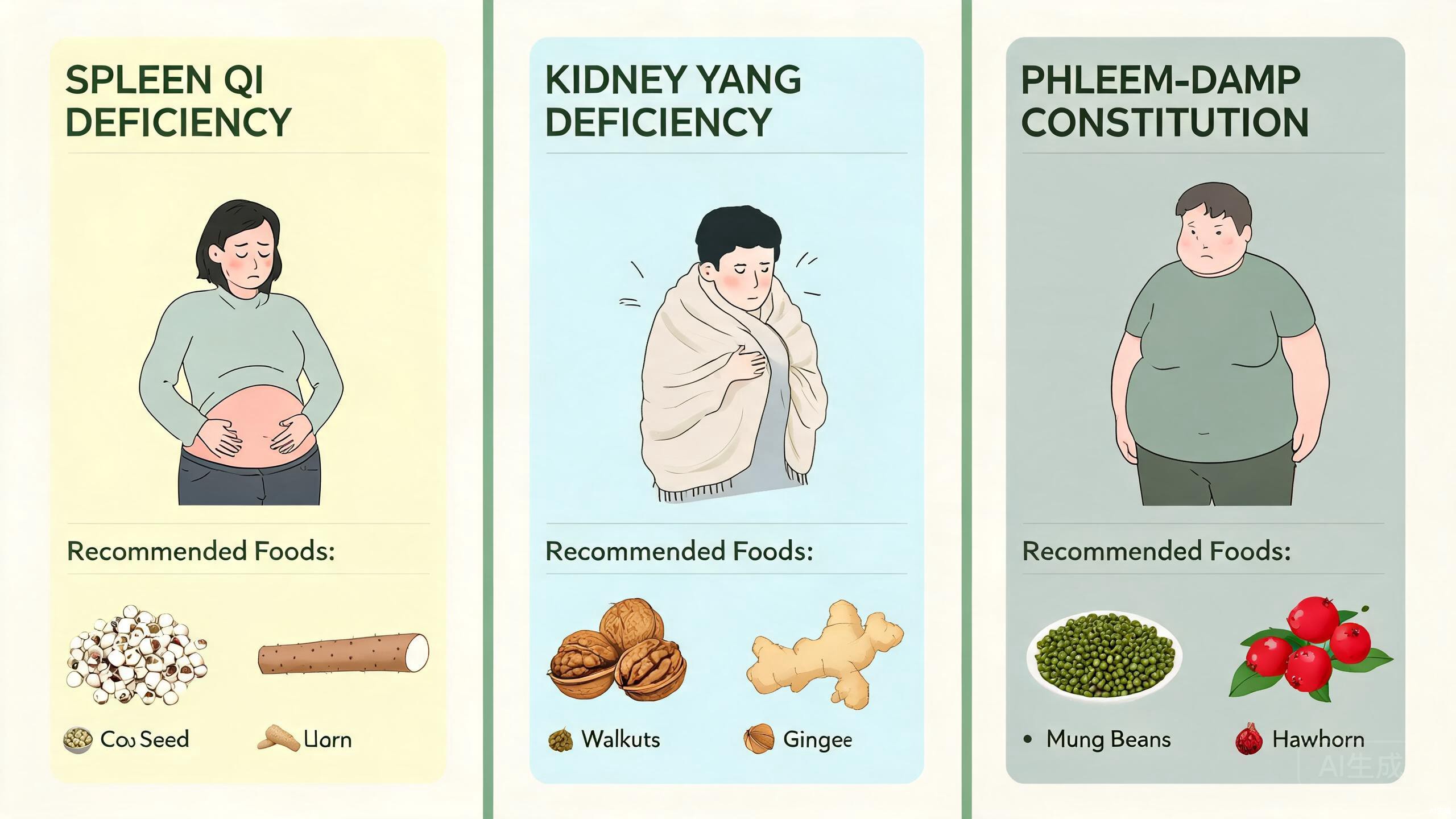
- Three body types most often linked to weight concerns are Spleen Qi deficiency, Kidney Yang deficiency, and Phlegm-Damp constitution.
- Foods traditionally used to support metabolism include coix seed, winter melon, hawthorn, tangerine peel, and mung bean.
- Three acupressure points — SP6, ST36, and ST25 — may support digestion and fluid metabolism when used regularly.
- TCM does not recommend crash dieting, ice-cold drinks, or extreme exercise; sustainable balance is the goal.
This article is for wellness education only and is not medical advice. The information here has not been evaluated by the U.S. Food and Drug Administration and is not intended to diagnose, treat, cure, or prevent any disease. TCM dietary and lifestyle practices are complementary and not a replacement for professional medical care. If you have a weight-related health condition, take medication, or are pregnant, consult your healthcare provider before making changes to your diet or starting any new wellness routine.
Modern weight loss advice often centers on counting calories, cutting macros, and burning more than you consume. Traditional Chinese Medicine (TCM) takes a fundamentally different view. Rather than treating the body as a furnace that simply needs less fuel, TCM asks why the body is holding onto weight in the first place. Is the digestive system too weak to transform food properly? Is internal cold slowing metabolism? Has dampness accumulated from poor diet and stress?
If you are new to these concepts, our introduction to TCM provides a helpful foundation. In TCM theory, weight management is less about restriction and more about restoring the body's natural ability to transform, transport, and eliminate. When the Spleen and Kidney systems function well, the body tends to find its own balance — including a healthier weight.
How TCM Views Weight
In TCM theory, the Spleen (in TCM terms, not the anatomical organ) is the central organ of digestion and transformation. It takes in food and drink, extracts the nutritive essence, and transports it throughout the body. When the Spleen functions well, energy is produced efficiently and fluids are metabolized properly. When the Spleen is weak or overburdened, two things tend to happen: the body produces less usable energy, and unmetabolized fluids accumulate as dampness.
This combination — Spleen deficiency with dampness accumulation — is considered the core pattern behind most weight concerns in TCM. Dampness is a concept that describes heavy, sluggish, sticky pathology. It can manifest as actual fluid retention, a feeling of heaviness, foggy thinking, or the accumulation of what TCM calls "phlegm-damp" in the tissues.
Three constitutional patterns are most commonly associated with weight management challenges:
- Spleen Qi Deficiency — the digestive engine is weak, leading to fatigue, bloating, and fluid accumulation.
- Kidney Yang Deficiency — the body's internal "fire" is low, slowing metabolism and causing coldness and water retention.
- Phlegm-Damp Constitution — dampness has thickened into phlegm, often from long-term dietary and lifestyle imbalances.
Understanding which pattern fits your body is the first step. Our guide to the nine TCM body types offers a deeper look, and our comparison of hot vs. cold constitutions helps clarify the temperature dimension.
TCM Body Types and Weight
Each of the three weight-related constitutions has distinct symptoms, dietary needs, and supportive acupressure points. Identifying your pattern helps you choose foods and practices that work with your body rather than against it.
1. Spleen Qi Deficiency (Pi Qi Xu)
Common signs: Fatigue after eating, bloating, loose stools, weak appetite, pale complexion, easy weight gain from small portions, feeling heavy and sluggish.
This is the most common pattern behind weight concerns. The Spleen is too weak to properly transform food and transport fluids, so even modest meals can lead to accumulation. People with this pattern often feel that they gain weight easily but struggle to find the energy for intense exercise.
Dietary support: Focus on warm, cooked, easily digestible foods. Congee (rice porridge), steamed root vegetables, squash, and small amounts of lean protein are ideal. Avoid raw foods, cold drinks, and excessive dairy, which further weaken the Spleen. Foods that boost qi — such as yam, lotus seed, and red dates — are traditionally recommended.
Supportive acupoint: ST36 (Zusanli) — the most important point for strengthening Spleen qi and supporting overall digestion.
2. Kidney Yang Deficiency (Shen Yang Xu)
Common signs: Cold hands and feet, lower back and knee soreness, frequent clear urination, edema (especially in the lower body), low motivation, slow metabolism, weight gain that feels "puffy."
Kidney Yang is often described as the body's internal fire — the warming, activating force that powers metabolism. When this fire is low, fluids are not vaporized and circulated properly, leading to water retention and a sense of cold heaviness. Weight gain in this pattern often has a distinctly puffy, fluid-heavy quality.
Dietary support: Emphasize warming foods: ginger, cinnamon, lamb (in moderation), walnuts, chestnuts, leeks, and black sesame. Avoid cold, raw, and excessively sweet foods. Warming soups and stews cooked slowly are far better than salads and smoothies for this constitution.
Supportive acupoint: SP6 (Sanyinjiao) — the meeting point of three yin channels, traditionally used to support the Spleen, Liver, and Kidney systems together.
3. Phlegm-Damp Constitution (Tan Shi Zhi)
Common signs: Heaviness in the body, oily skin, a feeling of phlegm in the throat, sticky or greasy sensation, abdominal fullness, sluggishness, weight that feels dense and stubborn.
This pattern often develops over years of eating greasy, sweet, or heavily processed foods, combined with insufficient movement. Dampness thickens into phlegm, which TCM describes as sticky, stubborn pathology that is difficult to resolve. People with this constitution often feel stuck — physically and mentally.
Dietary support: Focus on foods that resolve dampness: coix seed (yi yi ren), winter melon, radish, celery, and green tea. Avoid sweets, fried foods, dairy, and alcohol. Light, bitter, and aromatic foods help cut through dampness.
Supportive acupoint: ST25 (Tianshu) — located on the abdomen, traditionally used to regulate the intestines and support the transformation of dampness.
TCM Weight Loss Foods
Certain foods are traditionally valued in TCM for supporting the transformation of dampness, strengthening the Spleen, and promoting healthy fluid metabolism. These are not "fat-burning" foods in the Western sense — they are foods that help the body function more efficiently.
- Coix Seed (Yi Yi Ren) — Perhaps the most important food for dampness in TCM. It strengthens the Spleen, promotes urination, and resolves dampness. Often cooked into congee or soups.
- Winter Melon (Dong Gua) — A cooling, low-calorie vegetable that promotes fluid metabolism. Traditionally used in soups to reduce edema and clear heat.
- Hawthorn (Shan Zha) — A small red fruit traditionally used to support the digestion of fats and meats. It is sour, slightly warm, and may help with the feeling of fullness after rich meals. See our hawthorn tea guide.
- Tangerine Peel (Chen Pi) — Aged citrus peel that moves qi, reduces bloating, and resolves dampness. A pinch added to tea or soup aids digestion. See our tangerine peel tea guide.
- Mung Bean (Lu Dou) — A cooling bean that clears heat and detoxifies. Mung bean congee is a summer staple that may support fluid metabolism. See our mung bean congee guide.
TCM Weight Loss Teas
Simple herbal teas are one of the easiest ways to incorporate TCM principles into a daily routine. The three teas below are the most traditionally associated with metabolism support and dampness resolution.
Hawthorn Tea (Shan Zha Cha)
Best for: Sluggish digestion after rich meals, feeling of fullness, fat digestion support
Hawthorn is sour and slightly warm, entering the Spleen, Stomach, and Liver channels. It is the classic TCM herb for supporting the digestion of fats and meats. Brew 5 to 10 grams of dried hawthorn slices in hot water for 8 to 10 minutes. Drink after meals. Note: Hawthorn is not recommended during pregnancy.
Tangerine Peel Tea (Chen Pi Cha)
Best for: Bloating, abdominal fullness, sticky phlegm, qi stagnation
Aged tangerine peel (chen pi) is warm, aromatic, and bitter — ideal for moving stagnant qi and resolving dampness. Brew 3 to 5 grams of aged peel in hot water for 5 minutes. The aroma alone is uplifting. This is an excellent tea to sip slowly after meals.
Lotus Leaf Tea (He Ye Cha)
Best for: Summer dampness, feeling heavy and puffy, general metabolism support
Lotus leaf is a classic TCM herb for clearing summer heat and resolving dampness. It is light, slightly bitter, and has been traditionally used in weight management formulas for centuries. Brew 3 to 6 grams of dried lotus leaf in hot water for 5 to 7 minutes. Best consumed between meals.
Acupressure Points for Metabolism
Three acupressure points are most commonly used to support digestion, fluid metabolism, and overall energy. Apply gentle, steady pressure for 1 to 2 minutes on each point, once or twice daily.
SP6 — Sanyinjiao (Three Yin Crossing)
Location: On the inner side of the lower leg, about four finger-widths above the inner ankle bone, just behind the shin bone.
This is the meeting point of the Spleen, Liver, and Kidney channels. It is one of the most versatile points in TCM — traditionally used to strengthen the Spleen, support fluid metabolism, and harmonize the lower body. For a detailed guide, see our SP6 acupressure guide. Note: Do not use SP6 during pregnancy.
ST36 — Zusanli (Leg Three Miles)
Location: About four finger-widths below the kneecap, one finger-width to the outside of the shin bone.
ST36 is arguably the most important point for overall vitality in the entire TCM system. It strengthens the Spleen and Stomach, supports digestion, builds qi, and is traditionally used for fatigue, weak digestion, and low energy. For full instructions, see our ST36 acupressure guide.
ST25 — Tianshu (Heaven's Pivot)
Location: On the abdomen, two finger-widths to either side of the navel.
ST25 is the front-mu point of the Large Intestine and is traditionally used to regulate intestinal function, reduce abdominal fullness, and support the transformation of dampness. Gentle circular pressure on both sides simultaneously may help with bloating and sluggish elimination.
Lifestyle Recommendations
Food and acupressure are only part of the picture. TCM places equal emphasis on daily rhythms and habits.
- Eat at regular times. The Spleen functions best with predictable meals. Skipping breakfast, eating late at night, or grazing constantly disrupts the digestive rhythm. Aim for three meals at consistent times, with lunch as the largest.
- Chew thoroughly. In TCM, digestion begins in the mouth. Thorough chewing reduces the burden on the Spleen and helps the body extract more nutrition from less food.
- Move gently but consistently. TCM favors moderate, sustained movement over exhausting workouts. Walking, qigong, and tai chi support qi circulation without depleting it. Intense exercise on an already weak system can worsen deficiency.
- Manage emotions. Worry and overthinking directly weaken the Spleen in TCM theory. Chronic stress can be a significant contributor to digestive sluggishness and weight concerns.
- Sleep before midnight. The TCM organ clock assigns the Gallbladder and Liver to late-night hours. Resting during these times supports the body's natural cleansing and metabolic cycles.
Comparison of the Three Weight-Related Body Types
| Constitution | Key Symptoms | Recommended Foods | Recommended Tea | Key Acupoint |
|---|---|---|---|---|
| Spleen Qi Deficiency | Fatigue after eating, bloating, loose stools, easy weight gain | Congee, yam, lotus seed, steamed vegetables | Ginger + red date tea | ST36 (Zusanli) |
| Kidney Yang Deficiency | Cold limbs, lower back soreness, puffy edema, slow metabolism | Ginger, cinnamon, walnuts, lamb, black sesame | Cinnamon + ginger tea | SP6 (Sanyinjiao) |
| Phlegm-Damp Constitution | Heaviness, oily skin, sticky phlegm, stubborn dense weight | Coix seed, winter melon, radish, celery | Hawthorn or lotus leaf tea | ST25 (Tianshu) |
What TCM Does NOT Recommend
Just as important as what TCM recommends is what it cautions against. Several popular weight loss strategies are considered harmful in TCM theory:
- Crash dieting and severe calorie restriction. Cutting food drastically weakens the Spleen and depletes qi and blood. In TCM, this often leads to a cycle where the body becomes more efficient at storing weight because it perceives scarcity.
- Ice-cold drinks and raw food diets. Cold injures the Spleen. TCM consistently recommends warm, cooked foods and beverages for anyone with digestive weakness or dampness — which includes most people concerned about weight.
- Extreme exercise. While movement is essential, exhausting the body with intense daily workouts can deplete qi and worsen deficiency patterns. TCM favors sustainable, moderate activity.
- Laxative and purging "detox" teas. Harsh purgatives may produce temporary weight loss (mostly water) but damage the Spleen and intestines over time, often leading to rebound weight gain.
- Skip-meal fasting for Spleen-deficient types. Intermittent fasting can work for some constitutions, but for those with Spleen Qi deficiency, missing meals often worsens fatigue and digestive weakness.
The Bottom Line
TCM for weight loss is not about quick results or dramatic restriction. It is about understanding your body type, supporting the organs responsible for transformation and elimination, and removing the dietary and lifestyle habits that create dampness and sluggishness. By strengthening the Spleen, warming the Kidney Yang, and resolving phlegm-damp — with the right foods, teas, acupressure, and daily rhythms — the body is supported in finding its own healthy balance. The result is not a number on a scale, but a body that feels lighter, more energetic, and more capable of sustaining that feeling over time.