Key Takeaways
- In TCM, the skin is a mirror of internal organ health — clear skin begins with internal balance, not just topical care.
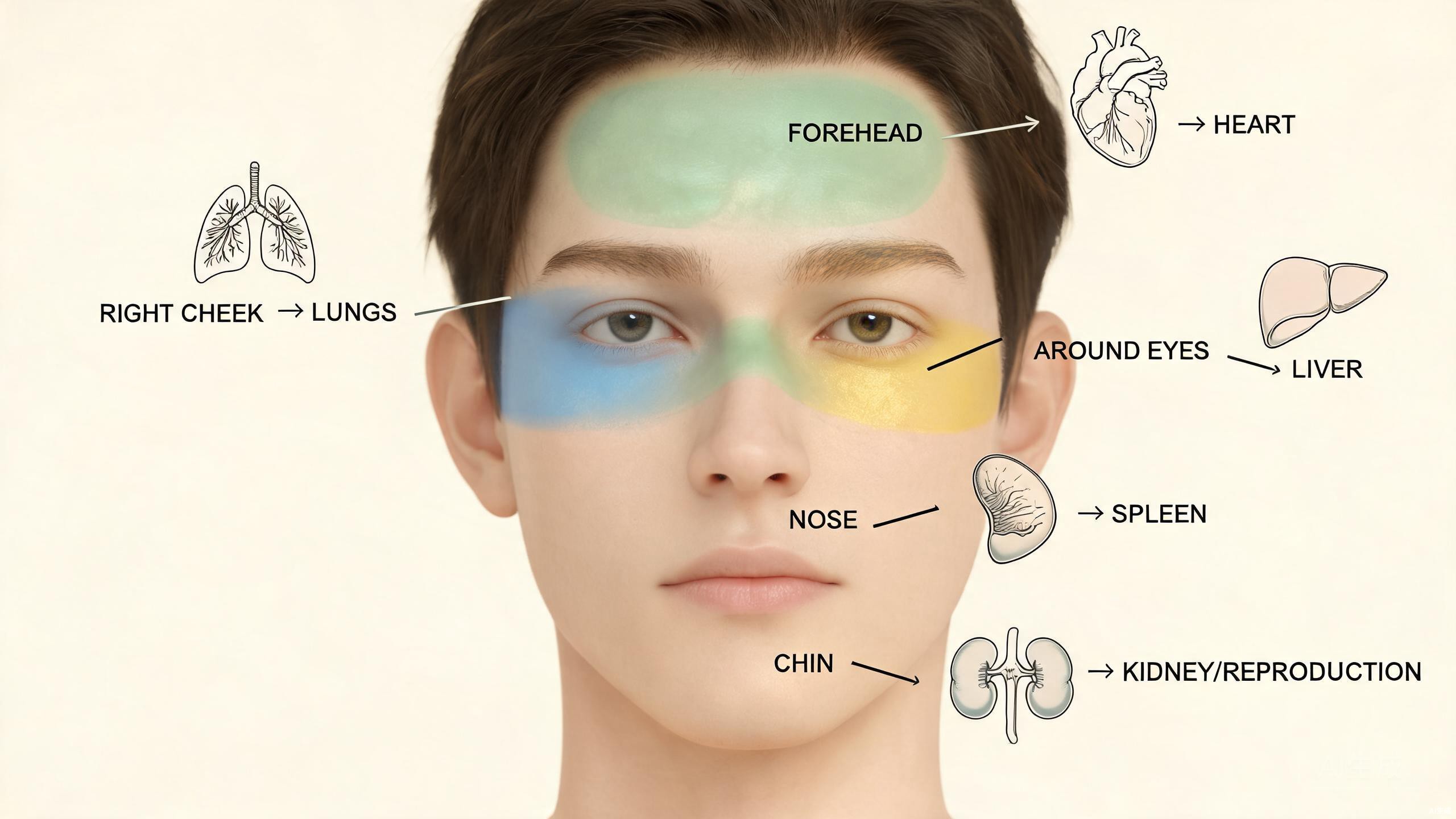
- TCM face mapping links specific facial zones to specific organs: forehead to the heart, cheeks to the lungs and liver, nose to the spleen, and chin to the kidneys.
- Common skin issues like acne, dryness, and dullness are interpreted as patterns such as heat, dampness, blood deficiency, or qi deficiency.
- TCM skin foods — including lily bulb, snow fungus, goji berries, mung beans, and lotus seeds — may support skin from the inside out.
- Gua sha, gentle teas, and lifestyle adjustments work together as a holistic approach. Always consult a healthcare provider for persistent skin conditions.
This article is for wellness education only and is not medical advice. The information here has not been evaluated by the U.S. Food and Drug Administration and is not intended to diagnose, treat, cure, or prevent any disease. If you have a persistent or severe skin condition, consult a qualified dermatologist or healthcare provider. Some herbs and foods may interact with medications or may not be suitable during pregnancy.
Walk into any beauty store and you will find shelves of creams, serums, and masks promising flawless skin. Yet Traditional Chinese Medicine (TCM) has always taken a fundamentally different approach: the skin is not a surface to be fixed from the outside, but a mirror that reflects the health of your internal organs. When the body is in balance — when qi flows smoothly, blood is abundant, and heat and dampness are kept in check — the skin naturally tends toward clarity and radiance.
This philosophy is captured in the TCM principle of internal regulation for external beauty (nei tiao wai yang). Rather than asking only what to put on the skin, TCM asks what is happening inside the body that is showing up on the skin. One of the most fascinating tools for this internal assessment is TCM face mapping — the practice of reading different zones of the face to understand the health of corresponding organs.
If you are new to the foundational concepts behind this approach, our guide to zang-fu organs and guide to qi, blood, and body fluids provide helpful background.
TCM Face Mapping: Reading the Face
TCM face mapping is based on the idea that the face is richly connected to the internal organs through the meridian system. When an organ is out of balance — whether from heat, deficiency, stagnation, or dampness — signs may appear on the corresponding area of the face. This does not replace medical diagnosis, but it offers a traditional framework for understanding recurring skin concerns.

Forehead and Heart
The forehead is traditionally linked to the Heart. In TCM, the heart governs blood and houses the spirit (shen). When heart fire is excessive — often from stress, poor sleep, or overstimulation — breakouts, redness, or small blemishes may appear on the forehead. This pattern is common in people who overthink, have irregular sleep, or consume excessive spicy or heating foods.
Cheeks and Lung / Liver
The cheeks correspond to both the Lung and the Liver. The left cheek is often associated with the liver, while the right cheek relates to the lungs. Lung issues — such as weak respiratory function, allergies, or smoking — may manifest as dryness, sensitivity, or breakouts on the cheeks. Liver imbalance, often from emotional stress or poor detoxification, may show up as redness or hyperpigmentation, especially on the left side.
Nose and Spleen
The nose is linked to the Spleen, the organ responsible for digestion and transformation in TCM. When the spleen is weakened — typically from irregular eating, excessive cold or sweet foods, or worry — dampness and heat may accumulate. This often shows up as redness, enlarged pores, or acne around the nose. Supporting digestive health is traditionally considered key to improving this zone.
Chin and Kidney / Reproduction
The chin and jawline correspond to the Kidney and the reproductive system. Breakouts in this area are extremely common and are often linked to hormonal fluctuations, particularly around menstruation. In TCM terms, this reflects kidney and reproductive axis imbalance. Supporting kidney yin and managing stress are traditional approaches for this zone.
Around the Eyes and Liver
The delicate area around the eyes is connected to the Liver. Dark circles, puffiness, or dryness here may indicate liver blood deficiency or liver qi stagnation. Because the liver stores blood and ensures its smooth flow, factors like poor sleep, emotional stress, and screen fatigue — which strain the eyes — can affect this area. For puffiness specifically, see our guide on gua sha for facial puffiness.
Common Skin Conditions in TCM
TCM does not categorize skin problems by their appearance alone. Instead, it looks at the underlying pattern — the internal environment that allows the skin issue to develop. Here are four of the most common skin concerns and their traditional TCM interpretations.
Acne
In TCM, acne is most often attributed to lung heat or damp-heat. Lung heat-type acne tends to appear on the forehead and cheeks, with red, inflamed lesions. Damp-heat-type acne is often deeper, more cystic, and concentrated around the chin and jawline — reflecting digestive and hormonal involvement. Cooling and dampness-resolving foods, such as mung beans and green tea, are traditionally recommended. Our guide to dampness-removing foods and mung bean congee recipe offer practical starting points.
Dry Skin
Dry, flaky, or prematurely aging skin is typically seen as blood deficiency or yin deficiency. Blood nourishes and moistens the skin; when blood is insufficient — from poor diet, overwork, or blood loss — the skin loses its suppleness. Yin deficiency, which involves a lack of cooling and moistening fluids, produces dryness accompanied by internal heat signs like night sweats or a red tongue with little coating. Nourishing foods like lily bulb, snow fungus, and goji berries are traditionally used.
Dull Skin
A complexion that lacks radiance is often interpreted as qi deficiency or qi stagnation. When qi is deficient, the skin is not adequately energized and may look tired and pale. When qi is stagnant — often from emotional stress — circulation to the face is impaired, leading to a dull or sallow appearance. Rose tea, gentle movement, and practices that promote qi flow are traditionally recommended.
Eczema
Eczema in TCM is commonly associated with damp-heat in the acute stage and blood deficiency with wind-dryness in the chronic stage. Acute eczema presents as red, oozing, and itchy lesions — reflecting heat and dampness. Chronic eczema is dry, thickened, and itchy — reflecting underlying blood deficiency that fails to nourish the skin. The approach shifts from clearing heat and dampness in acute phases to nourishing blood and yin in chronic phases.
TCM patterns are not self-diagnosis categories. A qualified TCM practitioner considers the tongue, pulse, and full symptom picture before determining a pattern. The descriptions above are for educational understanding, not for replacing professional assessment.
TCM Skin Foods
Diet is considered one of the most powerful tools for skin health in TCM. The following foods are traditionally valued for their ability to nourish blood and yin, clear heat, and resolve dampness — all of which may support clearer, more radiant skin.
- Lily bulb (Bai He): Nourishes lung yin and clears heat. Traditionally used for dry, sensitive skin patterns. Simmer in water or congee.
- Snow fungus (Yin Er): Often called the "poor man's bird's nest," snow fungus is rich in plant-based polysaccharides and is traditionally used to nourish yin and moisten the skin. Cook in sweet soups.
- Goji berries (Gou Qi Zi): Nourish liver blood and kidney yin. Traditionally used for dull, dry skin and dark circles. Add to tea, congee, or soups.
- Mung beans (Lu Dou): Clear heat and resolve damp-toxin. Traditionally recommended for acne and inflammatory skin conditions. Cook as congee or soup.
- Lotus seeds (Lian Zi): Nourish the spleen and calm the heart. Traditionally used to support digestive health, which in turn benefits the skin. Cook in soups or congee.
For a deeper understanding of the energetic framework behind food choices, our guide to yin and yang explains how TCM classifies foods by their warming and cooling properties.
TCM Skin Teas
Simple herbal teas are one of the easiest ways to incorporate TCM skin-supportive practices into a daily routine. Three teas are especially valued:
Chrysanthemum Tea (Ju Hua)
Chrysanthemum is the premier cooling flower tea in TCM. It clears liver heat, supports eye health, and is traditionally used for red, inflamed, or stressed skin. Brew 5 to 8 dried flowers in hot water for 5 minutes. See our complete chrysanthemum tea guide for details.
Rose Tea (Mei Gui Hua)
Rose moves stagnant qi and supports blood circulation to the face. It is traditionally recommended for dull skin caused by stress and emotional tension. Brew 3 to 5 grams of dried rose buds in hot water for 5 to 7 minutes. Learn more in our rose tea guide.
Goji Tea (Gou Qi Zi)
Goji tea nourishes liver blood and kidney yin, supporting skin that is dry, dull, or showing signs of aging. Brew a tablespoon of goji berries in hot water for 8 to 10 minutes. See our goji tea guide for brewing methods and combinations.
Gua Sha for Skin Health
Gua sha is a traditional practice that involves gentle scraping of the skin with a smooth-edged tool to promote circulation, lymphatic drainage, and qi flow. When performed on the face with light pressure and a facial oil, gua sha may help reduce puffiness, improve skin tone, and support a brighter, more lifted appearance.
For skin health specifically, gua sha is traditionally used to move stagnant qi and blood in the facial meridians, which in TCM terms supports the delivery of nutrients to the skin and the removal of metabolic waste. Regular, gentle practice — even just 5 minutes a few times per week — is more beneficial than aggressive, infrequent sessions. For a complete walkthrough, see our guide to gua sha for the face.
Always use a facial oil when practicing gua sha on the face. The oil reduces friction and allows the tool to glide smoothly. Use light pressure — facial gua sha should never leave marks or bruising.
TCM Face Mapping Quick Reference Table
| Facial Zone | Corresponding Organ | Common Skin Signs | Recommended Foods |
|---|---|---|---|
| Forehead | Heart | Redness, small breakouts | Lotus seeds, red dates |
| Cheeks | Lung / Liver | Dryness, sensitivity, redness | Lily bulb, goji berries |
| Nose | Spleen | Enlarged pores, oiliness, redness | Mung beans, lotus seeds |
| Chin / Jawline | Kidney / Reproduction | Hormonal acne, cystic breakouts | Black beans, walnuts |
| Around Eyes | Liver | Dark circles, puffiness | Goji berries, chrysanthemum |
Lifestyle Tips for Glowing Skin
Beyond food and tea, TCM emphasizes lifestyle habits that protect and nourish the skin:
- Sleep before midnight. In TCM, the liver's detoxification window is traditionally associated with the hours between 11 PM and 3 AM. Sleeping during this time is considered essential for liver blood nourishment and skin repair.
- Manage emotional stress. The liver ensures the smooth flow of qi. Chronic stress, anger, and frustration cause qi stagnation, which can show up as breakouts, dullness, or hyperpigmentation. Practices like tai chi, meditation, and deep breathing help.
- Avoid excessive cold and raw foods. In TCM, the spleen prefers warmth. Too many cold or raw foods can weaken digestion, leading to dampness that may manifest on the skin. Favor warm, cooked, easily digested meals.
- Stay hydrated with warm liquids. Warm water and herbal teas support the spleen and help maintain the body's fluid balance. Ice-cold drinks are thought to impair digestive function over time.
- Protect your eyes. Since the eyes are connected to the liver, excessive screen time strains liver blood. Take regular breaks and practice eye exercises to support both eye and skin health.
The Bottom Line
TCM for skin health offers a perspective that is both ancient and remarkably modern in its holism: the skin is not an isolated surface but an expression of internal balance. By understanding TCM face mapping, recognizing common patterns behind skin issues, and incorporating skin-supportive foods, teas, and practices like gua sha, you can build a routine that works with your body rather than against it. Start with one or two changes — a daily cup of chrysanthemum tea, a weekly gua sha session, or adding mung bean congee to your diet — and observe how your skin responds over several weeks. For persistent or severe skin conditions, always work with a qualified healthcare provider alongside these supportive practices.