Key Takeaways
- Facial puffiness usually comes from fluid retention, lymphatic stagnation, sleep position, and diet — and gentle gua sha may support the body's natural drainage to reduce face swelling.
- Always begin and end with downward neck strokes to open the drainage pathways before working the face; skipping this is the most common reason people see no results.
- Use light pressure, a 15- to 45-degree angle, and generous facial oil — never scrape dry, sunburned, or inflamed skin.
- A chilled rose quartz or bian stone tool enhances the de-puffing effect and is especially useful for morning face puffiness.
- Consistency beats duration: 3 to 5 minutes most mornings produces better results than occasional long sessions.
This article is for educational and informational purposes only and is not a substitute for professional medical advice, diagnosis, or treatment. This is not medical advice. Consult your healthcare provider before beginning any new wellness practice, especially if you are pregnant, nursing, taking medication, or have a medical condition. Read our full disclaimer →
Why Does Facial Puffiness Happen?
Waking up with a puffy face — swollen cheeks, heavy under-eyes, a softened jawline — is a familiar experience. Morning face puffiness is rarely a cause for concern, but it is a sign that fluid has gathered in the facial tissues overnight.
Several factors contribute. Fluid retention is the most common, as gravity redistributes fluid toward the head when you lie flat. Lymphatic stagnation plays a role too, since the lymphatic system has no pump and relies on movement. Sleep position matters — face-down or one-sided sleeping encourages pooling — and diet contributes as well, with high sodium, alcohol, and late-night meals encouraging the body to hold water.
Gua sha for facial puffiness offers a gentle, time-honored way to encourage that fluid to drain, and it is one of the most accessible home therapy practices you can adopt.
How Gua Sha Works for Facial Puffiness
In TCM practice, puffiness is often understood as a sign of stagnation — Qi (vital energy) and Blood are not circulating freely through the facial tissues, and dampness (excess fluid) gathers where flow is sluggish. Gua sha, meaning "scrape sand," uses a smooth-edged tool glided across oiled skin to encourage movement where things have settled.
The technique promotes the circulation of Qi and Blood, releases stagnation, and supports the body's natural drainage pathways. Modern understanding complements this: the gua sha stone stimulates microcirculation, encourages lymphatic flow toward the nodes at the jaw, ears, and neck, and relaxes tense facial muscles. Because the lymphatic system has no pump, this gentle movement is one of the few ways to actively encourage lymphatic drainage face and reduce face swelling.
Choosing Your Gua Sha Tool
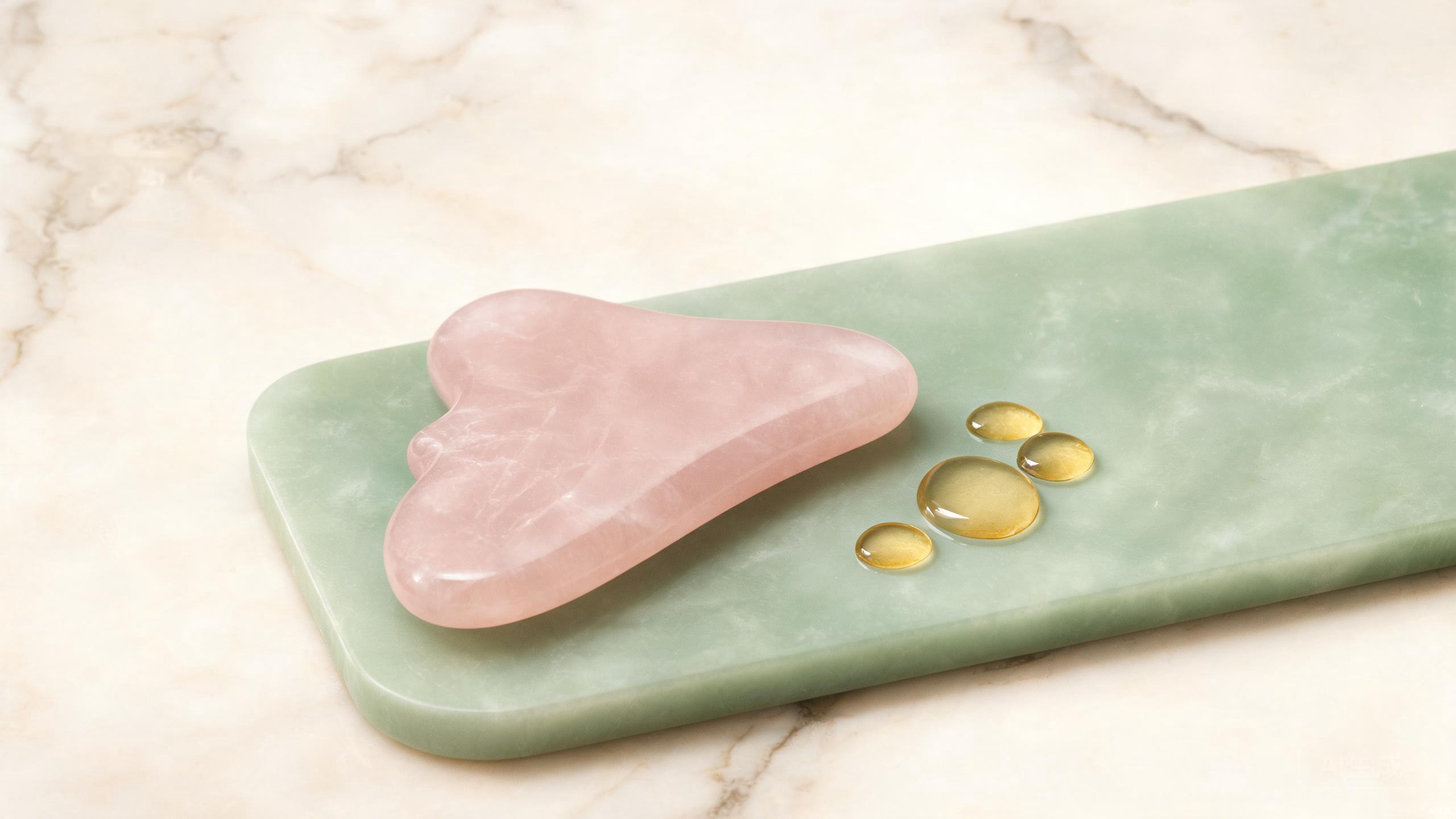
The right tool makes the practice both safer and more effective. A good facial gua sha stone is smooth, flat, with rounded edges and a shape that follows the contours of the face. The classic heart-shaped or wing-shaped stone covers most needs, with a curved edge for the jaw and cheekbone, a notched edge for the under-eye, and a pointed tip for fine detail.
Material matters too. Different stones carry different qualities, and a chilled stone is especially valuable for facial de-puffing:
| Stone | Qualities | Best For |
|---|---|---|
| Bian stone | Traditional volcanic mineral; smooth, slightly weighted, warm to the touch | All-purpose daily use; traditional practice |
| Rose quartz | Cool, smooth, holds chill well; visually appealing | Morning de-puffing; chilled use |
| Jade | Classic cool stone; smooth surface, naturally cooling | General facial use; everyday routines |
| Stainless steel | Durable, hygienic, holds temperature well | Cooling use; easy cleaning |
For de-puffing specifically, a chilled rose quartz or bian stone tool is ideal — the cool temperature helps soothe and constrict puffy tissues, while the weight aids drainage. For a deeper foundation on selecting and caring for your first tool, see our complete gua sha beginner's guide.
Place your gua sha stone in the refrigerator (never the freezer) for 10 to 15 minutes before a morning session. The cool surface helps constrict puffiness and pairs beautifully with the draining strokes below.
Step-by-Step Guide: Gua Sha for Facial Puffiness
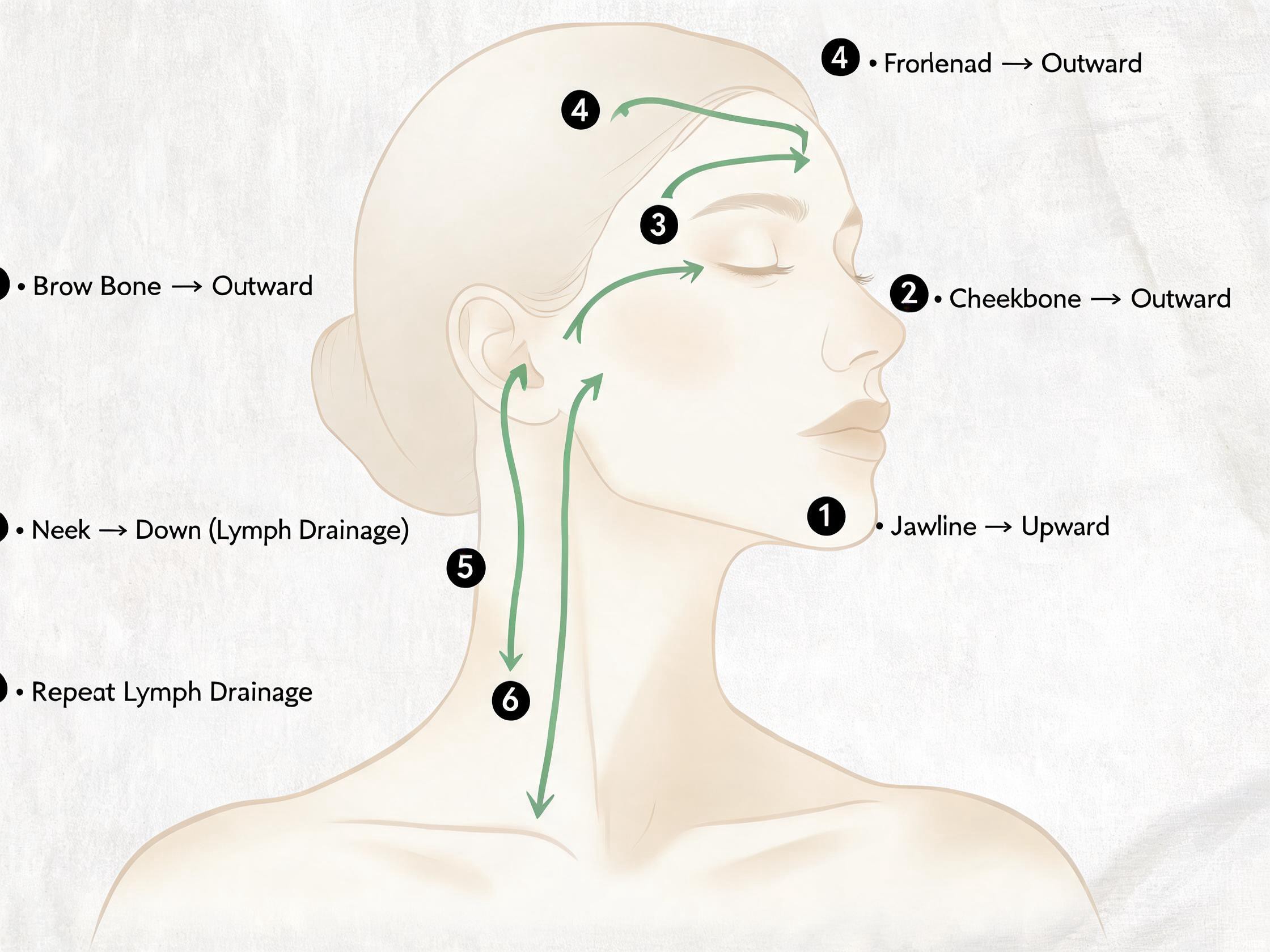
A focused de-puffing routine takes 5 to 7 minutes. Work with clean hands and a clean face, and remember the golden rule: strokes move outward and downward toward the lymph nodes, never inward.
Step 1: Prep
Cleanse your face, then apply 5 to 8 drops of a lightweight, non-comedogenic oil — jojoba or squalane are ideal — and spread it evenly. The skin should feel slippery, never tacky; add a drop if the tool drags.
Step 2: Neck Drainage
Non-negotiable. Using the long edge, stroke downward from the jaw along the side of the neck to the collarbone with light pressure. Repeat 5 to 7 times per side. This opens the drainage pathways so facial fluid has somewhere to go.
Step 3: Jawline
Place the curved edge at the center of the chin. Stroke outward along the jawline toward the earlobe, then sweep down the neck. Repeat 5 to 7 times per side to relieve jaw tension and define the contour.
Step 4: Cheeks
Place the tool at the side of the nostril. Stroke outward across the cheek toward the ear, following the cheekbone, then sweep down the neck. Repeat 5 to 7 times per side; this fluid-heavy area often softens immediately.
Step 5: Under-Eye
Use the smallest, lightest edge and the gentlest pressure — the tool's own weight is almost enough. Stroke from the inner corner outward to the temple, 3 to 5 times per side. The skin here is the thinnest on the body; never press hard.
Step 6: Forehead
Place the flat edge between the brows. Stroke outward to the temple, then repeat in parallel rows up the forehead, always center to temple. Repeat 5 to 7 times to ease overnight tension.
Step 7: Finish
Repeat the neck drainage from Step 2 — downward strokes to the collarbone, 5 to 7 times per side — to clear everything mobilized. Always begin and end with the neck. Clean your tool, pat it dry, and apply moisturizer.
Best Time to Do Facial Gua Sha
Morning is ideal for gua sha for facial puffiness. Overnight fluid pooling is the leading cause of morning face puffiness, and a brief routine upon waking helps move that fluid along — a chilled tool enhances the effect.
Evening practice releases tension as a calming wind-down, but is less targeted for puffiness. For the broader set of facial gua sha techniques, a consistent rhythm matters more than the exact hour.
Tips for Best Results
- Hydrate: drinking water helps the lymphatic system flush what gua sha mobilizes.
- Stay consistent: 3 to 5 minutes most mornings outperforms occasional long sessions.
- Keep pressure light: heavy pressure irritates the thin facial skin and can worsen puffiness.
- Chill your tool: a stone from the refrigerator for 10 to 15 minutes adds a soothing, de-puffing effect.
- Pair with neck and shoulder work: neck tension often restricts facial drainage, so gua sha for neck and shoulders complements your routine.
Precautions
Do not practice facial gua sha over active acne, broken skin, open wounds, sunburn, rashes, cold sores, or any area of inflammation. Wait 2 to 4 weeks after Botox or fillers, and consult your injector first. Do not scrape over the thyroid on the front of the neck — work the sides only. This is not medical advice. Consult your healthcare provider.
- Pregnancy: gentle facial gua sha is generally fine, but use light pressure and consult your healthcare provider first.
- Sun protection: the skin may be more sensitive after a session, so apply sunscreen if heading outdoors.
- Hygiene: clean your tool after every use.
- When to seek care: if puffiness is sudden, severe, one-sided, painful, or accompanied by other concerns, consult a qualified healthcare provider, as this may signal an underlying condition.
Frequently Asked Questions
How long does it take to see results from gua sha for facial puffiness?
Most people notice a visible reduction immediately after the first session, as the strokes encourage pooled fluid to drain. For sustained results, 2 to 4 weeks of regular morning practice is typical — a brief daily routine outperforms occasional long sessions.
Which gua sha stone is best for reducing facial puffiness?
A chilled rose quartz stone is ideal because it holds cool temperatures well, soothing and constricting puffy tissues. Bian stone is the traditional choice for everyday use. Either way, ensure a smooth surface with rounded edges and pair it with a lightweight facial oil.
Can I do facial gua sha every day for puffiness?
Yes, for most people a brief 3- to 5-minute daily morning routine is well tolerated. Use light pressure, a 15- to 45-degree angle, and generous oil. If your skin becomes sensitive or irritated, reduce to 3 to 4 times per week.
Should I do gua sha for puffiness in the morning or evening?
Morning is best, since overnight fluid pooling from lying flat is the main cause of morning puffiness. A chilled tool upon waking helps move that fluid along. Evening practice supports relaxation but is less targeted for fluid.
This article is for educational and informational purposes only and is not a substitute for professional medical advice, diagnosis, or treatment. Always consult a qualified healthcare provider before beginning any new wellness practice, especially if you are pregnant, nursing, taking medication, or have a medical condition. Read our full disclaimer →