Key Takeaways
- TCM explains joint pain through Bi syndrome (painful obstruction), caused by wind, cold, dampness, or heat invading the meridians and blocking the flow of qi and blood.
- The core principle is bu tong ze tong — "where there is no flow, there is pain." Restoring circulation is the primary goal.
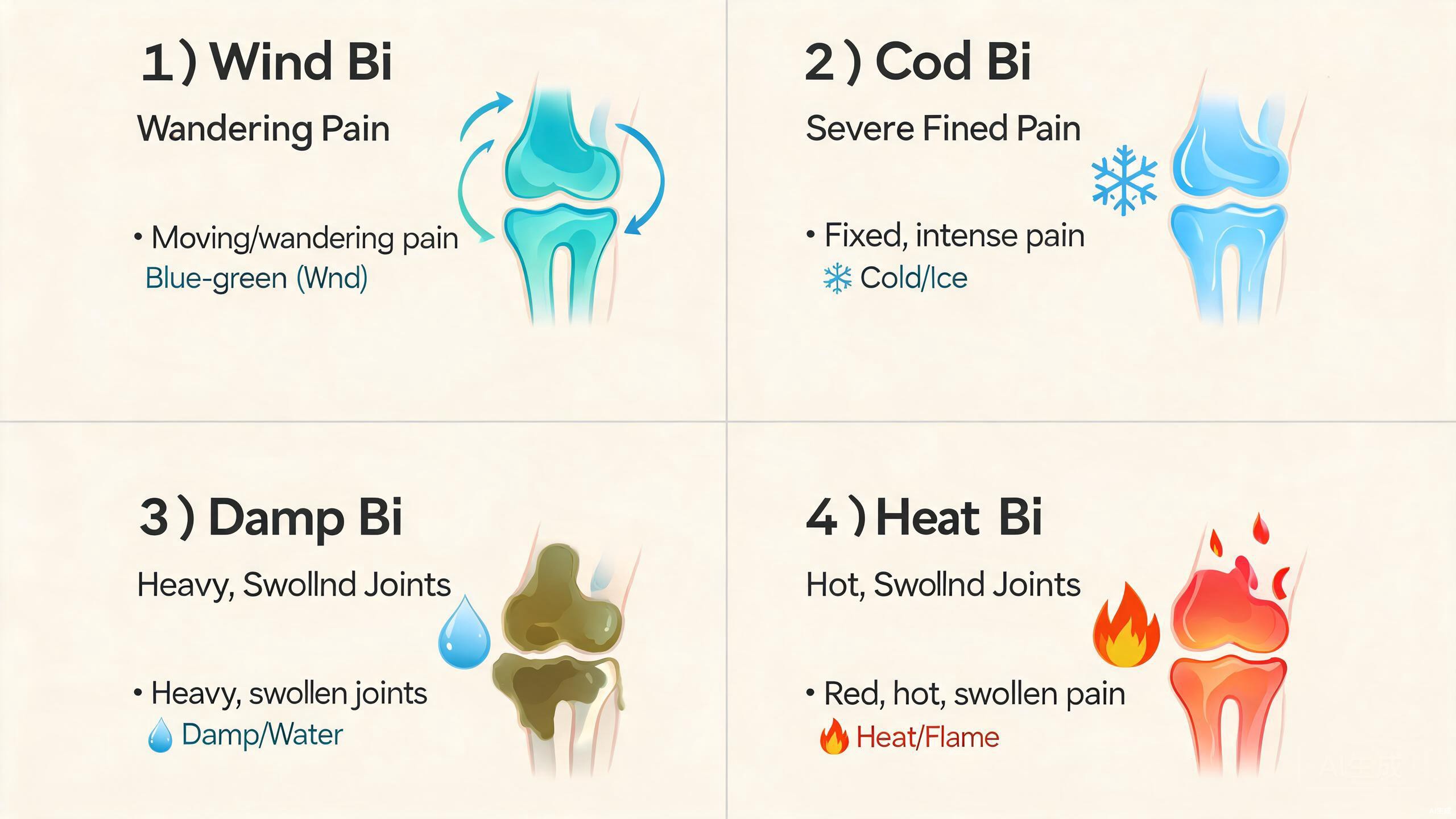
- Different types of Bi produce different pain patterns: wind causes wandering pain, cold causes fixed severe pain, damp causes heavy swelling, and heat causes red inflammation.
- TCM remedies include herbal teas, acupressure, moxibustion, ginger foot soaks, and anti-inflammatory foods — each matched to the specific type of Bi.
- Gentle movement practices like Ba Duan Jin and Tai Chi may support joint mobility. Always consult a healthcare provider for persistent or severe pain.
This article is for wellness education only and is not medical advice. The information here has not been evaluated by the U.S. Food and Drug Administration and is not intended to diagnose, treat, cure, or prevent any disease. If you experience persistent, severe, or worsening joint pain, consult a qualified healthcare provider. Some herbs and practices may not be suitable for everyone, particularly during pregnancy or with certain medical conditions.
Joint pain is one of the most common chronic complaints worldwide, affecting knees, hips, shoulders, fingers, and the spine. While conventional medicine typically addresses joint pain with anti-inflammatory drugs and physical therapy, Traditional Chinese Medicine (TCM) offers a complementary framework that has been refined over thousands of years. At its heart is a simple but profound principle: where there is no flow, there is pain (bu tong ze tong).
This principle, first articulated in the Huangdi Neijing (Yellow Emperor's Inner Canon) over two thousand years ago, holds that pain arises when the smooth circulation of qi and blood is obstructed. The question then becomes: what causes the obstruction? TCM's answer is Bi syndrome — a classification system that identifies whether the blockage is driven by wind, cold, dampness, or heat, each producing a distinct pattern of joint pain.
How TCM Views Joint Pain: Bi Syndrome
The classic TCM text states: "When wind, cold, and dampness combine and attack the body, they form Bi syndrome." These external pathogenic factors invade the body through the skin and meridians, particularly when the body's defensive qi is weakened. Once inside, they obstruct the flow of qi and blood in the joints and surrounding tissues, causing pain, stiffness, and restricted movement.

Wind Bi (Feng Bi) — Wandering Pain
Wind Bi is characterized by pain that wanders from joint to joint. One day the shoulder hurts, the next day the knee, then the wrist. This migratory quality reflects the nature of wind itself — moving, shifting, and changeable. The pain tends to come and go, and the joints may feel stiff but without significant swelling. Wind Bi is often the initial stage of joint pain, when external wind has just invaded the superficial meridians.
Cold Bi (Han Bi) — Fixed Severe Pain
Cold Bi produces pain that is fixed in location and severe in intensity. The affected joint feels cold to the touch, and the pain worsens dramatically with cold weather or cold environments. Warmth brings relief. Stiffness is pronounced, and movement is restricted. In TCM theory, cold causes contraction — it constricts the meridians and blood vessels, intensifying the obstruction. This is the type of joint pain that feels "frozen" and locked.
Damp Bi (Shi Bi) — Heavy, Swelling Pain
Damp Bi is marked by a sensation of heaviness, aching, and swelling in the affected joints. The pain is persistent and tends to worsen in damp, humid, or rainy weather. The joints may feel puffy, and the surrounding muscles often ache with a deep, dull quality. Dampness is sticky and lingering in nature, which means Damp Bi tends to be chronic and slow to resolve. It commonly affects the lower body — knees, ankles, and lower back.
Heat Bi (Re Bi) — Red, Hot, Swollen Pain
Heat Bi presents with joints that are red, hot, swollen, and painful to the touch. The pain is burning in quality and may be accompanied by fever, thirst, and a rapid pulse. Heat Bi often develops when wind, cold, or dampness has lingered in the body long enough to transform into heat, or when there is an acute inflammatory flare. This pattern corresponds closely to what Western medicine describes as acute inflammatory arthritis or gout.
In practice, Bi syndrome often involves a combination of factors. For example, wind-cold-damp Bi is the most common presentation in chronic joint pain. A qualified TCM practitioner assesses the full picture — including tongue and pulse diagnosis — to determine the dominant pattern and tailor the approach accordingly.
TCM Remedies for Joint Pain
TCM offers a range of remedies that are matched to the specific type of Bi. The following practices are traditionally used to promote circulation, dispel pathogenic factors, and support joint health. For related pain relief guides, see our articles on acupressure for back pain and acupressure for neck and shoulder pain.
Herbal Teas
Three teas are especially valued for joint support:
- Safflower tea (Hong Hua): Safflower is one of the most important blood-invigorating herbs in TCM. It promotes blood circulation and dispels blood stasis, making it traditionally used for fixed, stabbing pain (cold Bi or blood stasis patterns). Brew 3 to 5 grams of dried safflower in hot water for 5 minutes. See our safflower tea guide for details. Note: safflower is traditionally avoided during pregnancy.
- Ginger tea (Sheng Jiang): Fresh ginger warms the body, dispels cold, and promotes circulation. It is ideal for cold-type joint pain that worsens in cold weather. Slice 3 to 5 pieces of fresh ginger and simmer for 5 to 8 minutes. See our ginger tea guide for more.
- Eucommia tea (Du Zhong): Eucommia bark is a traditional kidney and liver tonic that strengthens tendons and bones. It is used for chronic joint pain associated with kidney deficiency, particularly in the lower back and knees. Simmer 5 to 10 grams of eucommia bark in water for 10 to 15 minutes.
Acupressure Points
Acupressure — the practice of applying firm, steady pressure to specific points — may help promote circulation and relieve joint discomfort. Four points are especially relevant for joint pain:
- Zusanli (ST36): Located below the knee, about four finger-widths below the kneecap. ST36 is the most widely used point for overall vitality, digestive support, and strengthening the body's resistance. It may help with knee pain and general leg weakness. See our detailed ST36 guide.
- Sanyinjiao (SP6): Located on the inner lower leg, about four finger-widths above the ankle bone. SP6 is a key point for supporting the spleen, liver, and kidney meridians. It is traditionally used for joint pain with dampness and for conditions affecting the lower body. See our SP6 guide.
- Located on the outer side of the lower leg, below the knee. GB34 is the influential point for tendons and sinews in TCM, making it particularly relevant for tendon and ligament issues around joints.
- Local ashi points: "Ashi" means "ouch" in Chinese — these are tender points directly on or near the painful joint. Applying gentle, circular pressure to ashi points may help release local tension and promote qi and blood flow. For self-care techniques, see our TCM self-massage guide.
Moxibustion for Cold-Type Pain
Moxibustion — the practice of burning dried mugwort (moxa) near acupoints — is one of the most effective TCM tools for cold-type and damp-type joint pain. The penetrating warmth of moxa is traditionally used to dispel cold, warm the meridians, and promote the flow of qi and blood. For knee pain that worsens in cold weather, moxibustion over ST36 and local points around the knee may provide notable relief.
For safety guidelines and step-by-step instructions, see our complete moxibustion guide and our article on using moxa for cold-type conditions. Moxibustion is generally not recommended for heat-type joint pain with redness and swelling.
Ginger Foot Soak for Circulation
A warm ginger foot soak is a simple, accessible home practice that may support overall circulation and relieve cold-type joint pain, especially in the lower body. Ginger's warming nature penetrates through the skin of the feet, which in TCM are considered rich in meridian connections to the entire body.
To prepare: slice a large piece of fresh ginger, simmer in a pot of water for 10 minutes, and pour into a basin. Add warm water to a comfortable temperature (about 40 to 42°C). Soak your feet for 15 to 20 minutes, ideally in the evening. See our complete ginger foot soak guide for detailed instructions and variations.
TCM Anti-Inflammatory Foods
Diet plays an important role in TCM's approach to joint pain. Foods that promote circulation, dispel dampness, and reduce inflammation are traditionally emphasized:
- Turmeric: Though best known in Ayurvedic tradition, turmeric shares a deep connection with TCM's blood-invigorating herbs. Its active compound, curcumin, is one of the most studied natural anti-inflammatory agents. In TCM terms, turmeric moves blood and dispels stasis, making it suitable for fixed, stabbing pain.
- Black beans: In TCM, black beans are associated with the kidney organ system and are traditionally used to strengthen the kidneys, support the lower back, and nourish joints. They are also rich in anthocyanins, which have anti-inflammatory properties.
- Walnuts: Walnuts are traditionally classified as a kidney tonic in TCM. They are said to warm the kidneys, strengthen the lower back, and lubricate the intestines. Their omega-3 content provides well-documented anti-inflammatory support.
- Mung beans: For heat-type joint pain, mung beans are the traditional cooling and dampness-resolving food. They help clear heat and reduce inflammation. Cook as congee or soup.
- Green tea: Green tea clears heat and contains catechins with anti-inflammatory properties. It is suitable for heat-type patterns and as a general daily beverage for joint support.
Bi Syndrome Quick Comparison Table
| Type | Symptom Characteristics | Aggravating Factors | Recommended Approaches |
|---|---|---|---|
| Wind Bi | Wandering pain, shifts between joints | Changes in weather, drafts | Safflower tea, acupressure, gentle movement |
| Cold Bi | Fixed severe pain, cold to touch, stiffness | Cold weather, cold environments | Moxibustion, ginger tea, ginger foot soak, warming foods |
| Damp Bi | Heavy aching, swelling, persistent dull pain | Damp, humid, rainy weather | Dampness-resolving foods, acupressure (SP6), gentle movement |
| Heat Bi | Red, hot, swollen, burning pain | Heat, overexertion, inflammatory flares | Mung beans, green tea, cooling foods (avoid moxibustion) |
Exercise and Movement
In TCM, complete rest is not always the best approach for joint pain. Gentle, mindful movement helps maintain the flow of qi and blood, prevents stiffness, and supports joint mobility. Two traditional practices are especially valued:
Ba Duan Jin (Eight Brocades)
Ba Duan Jin is a set of eight gentle qigong exercises that have been practiced for over 800 years. Each movement targets specific meridians and organ systems while promoting overall circulation, flexibility, and joint mobility. The movements are slow, accessible to most fitness levels, and can be practiced in as little as 10 to 15 minutes a day. For joint pain, the stretching and flowing motions help maintain range of motion without straining the joints. See our complete Ba Duan Jin guide for step-by-step instructions.
Tai Chi
Tai Chi is perhaps the most widely studied traditional exercise for joint health. Its slow, flowing movements shift weight gently from one leg to the other, building balance, leg strength, and joint stability without impact. Research has shown that regular Tai Chi practice may help reduce pain and improve function in people with knee osteoarthritis. For beginners, see our Tai Chi basics guide.
If joints are acutely inflamed (red, hot, and swollen), favor rest and cooling foods until the flare subsides. Resume gentle movement once the acute inflammation has passed. For chronic, cold-type stiffness, daily gentle practice is more beneficial than intense, infrequent exercise.
When Joint Pain Needs Medical Attention
While TCM practices may provide meaningful support for everyday joint stiffness and discomfort, certain signs warrant prompt medical evaluation:
- Sudden, severe joint pain with no clear cause, especially if accompanied by fever
- Joint pain after injury with visible deformity, inability to bear weight, or loss of range of motion
- Progressive worsening of pain, swelling, or stiffness despite self-care
- Joint pain with systemic symptoms such as unexplained weight loss, night sweats, or persistent fatigue
- Hot, red, swollen joints that develop rapidly, which may indicate infection or acute gout
For additional home-care options, cupping at home is another traditional practice that may help with muscle tension around painful joints. Always inform your healthcare provider about all herbs, teas, and practices you are using.
The Bottom Line
TCM for joint pain offers a framework that is both systematic and deeply individualized. By understanding whether your pain is driven by wind, cold, dampness, or heat, you can choose remedies and practices that address the root pattern rather than just masking symptoms. A cup of ginger tea for cold-type stiffness, a moxibustion session for a frozen shoulder, a ginger foot soak before bed, or 10 minutes of Ba Duan Jin each morning — these small, consistent practices may gradually support circulation, reduce discomfort, and improve mobility. Combined with an anti-inflammatory diet rich in warming or cooling foods matched to your pattern, and the guidance of a qualified healthcare provider, TCM offers a holistic path toward more comfortable, freely moving joints.