Key Takeaways
- TCM describes children's digestion as "spleen often insufficient" — the digestive system is immature and easily overwhelmed by overeating, rich foods, or cold foods.
- Food accumulation (shi ji) is the most common TCM pattern behind childhood bloating, bad breath, picky eating, and restless sleep.
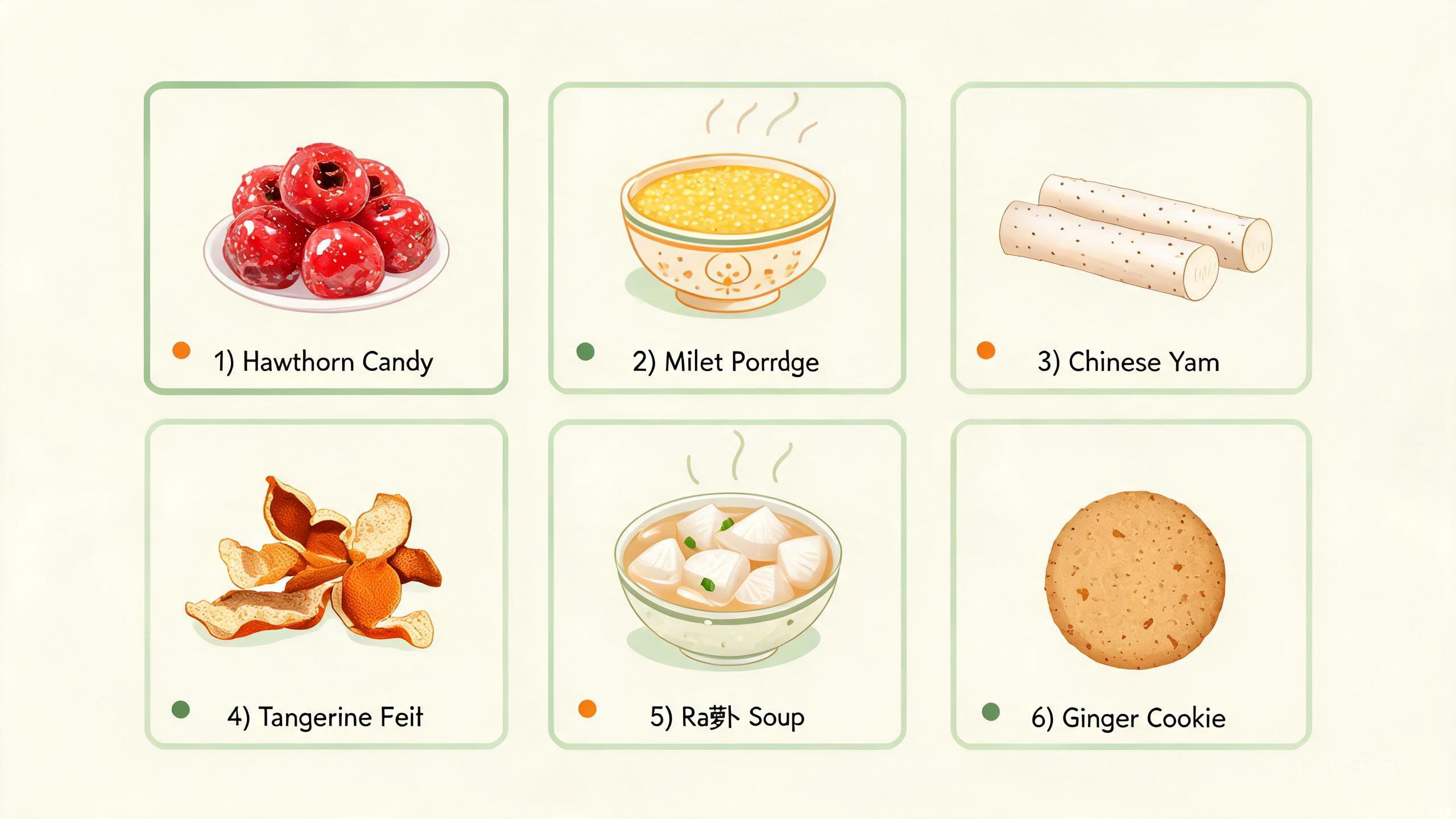
- Five gentle food remedies — from charred three immortals water to yam and millet porridge — are traditionally used to support kids' digestion.
- Never give honey to children under 12 months due to the risk of infant botulism. Always cut foods into small, age-appropriate pieces to prevent choking.
- These are traditional wellness foods, not medical treatments. Consult your pediatrician for persistent or severe symptoms.
This article is for educational purposes only and is not medical advice. The food remedies described here are traditional Chinese dietary therapy for gentle wellness support, not a replacement for professional pediatric care. Never give honey to infants under 12 months. Always consult your pediatrician before introducing new foods or herbs to your child, especially if your child has allergies, medical conditions, or takes medication. Seek immediate medical attention for severe or persistent symptoms.
Every parent knows the struggle: your child comes home from a birthday party having eaten too much cake, and by bedtime they are bloated, fussy, and complaining of a tummy ache. Or perhaps your toddler is a chronically picky eater with bad breath and restless sleep. In Traditional Chinese Medicine (TCM), these common childhood complaints are understood through a remarkably practical lens — one that views the child's digestive system as gentle, immature, and in need of warm, simple, easy-to-digest foods.
TCM food therapy for children is not about strong herbs or complex formulas. It is about gentle kitchen ingredients — grains, roots, and fruits — prepared in ways that are easy on a young digestive system. Here is a guide to understanding children's digestive issues from a TCM perspective, along with five traditional food remedies you can make at home.
How TCM Views Children's Digestion
TCM has a unique and time-tested understanding of children's bodies. Two key concepts are essential:
- "The spleen is often insufficient" (脾常不足) — In TCM, the spleen and stomach together represent the digestive system. Children's digestive organs are described as "not yet fully mature." This means they are less efficient at processing food — especially rich, heavy, cold, or raw foods — than adult digestive systems. Overeating, eating too quickly, or consuming hard-to-digest foods can easily overwhelm the young spleen.
- "Pure yang body" (纯阳之体) — Children are described as having abundant vitality and rapid growth, but their internal organs are delicate. They are energetic but vulnerable. The key TCM principle for children is protect the spleen and stomach — feed them warm, cooked, simple foods in moderate portions.
Three Common TCM Patterns in Children's Digestion
When a child's digestion is struggling, TCM typically identifies one of three patterns:
- Food Accumulation (食积 / shi ji) — Food has been eaten faster than the spleen can process it. Signs include bloating, bad breath (often described as a sour or sour-sweet smell), decreased appetite, stomachache, thick tongue coating, and restless or disturbed sleep. This is the most common pattern.
- Spleen Qi Deficiency (脾气虚) — The digestive system is chronically weak. Signs include poor appetite, fatigue after eating, loose stools, pale complexion, and a tendency to catch colds easily. This pattern may develop after repeated food accumulation or from a constitutionally weak digestive system.
- Malnutrition from Stagnation (痢积 / gan ji) — A more chronic form of food accumulation that has affected the child's growth and nutrition. Signs include thinness, developmental delay, dry hair, and chronic digestive weakness. This pattern requires professional evaluation.
TCM considers the spleen and stomach the "postnatal foundation" — the source of all energy and nourishment after birth. For children, whose bodies are growing rapidly, a healthy digestive system is considered the most important foundation for overall wellness. For more on this concept, see our guide to zang fu organs in TCM.
5 Traditional Food Remedies for Children's Digestion
The following five recipes use gentle, commonly available ingredients. Each is traditionally classified as supporting the spleen and stomach, helping to transform food accumulation, or strengthening digestive function. Always adjust portions to your child's age and appetite.
1. Charred Three Immortals Water (Jiao San Xian Shui)
Suitable age: 3 years and older (for younger children, use a very diluted version in small sips)
TCM nature and flavor: Sweet, sour, warm. Enters the Spleen, Stomach, and Liver meridians.
Traditional use: Transforms food accumulation, promotes digestion. "Three Immortals" refers to three charred (lightly roasted) ingredients: charred malt (jiao mai ya), charred hawthorn (jiao shan zha), and charred medicated leaven (jiao shen qu). The charring process is key — in TCM, lightly charring these herbs enhances their ability to break down accumulated food. This is the most famous TCM remedy for childhood food accumulation.
Ingredients:
- 10 grams charred malt (jiao mai ya)
- 10 grams charred hawthorn (jiao shan zha)
- 10 grams charred medicated leaven (jiao shen qu)
- 3 cups water
- Optional: a small amount of rock sugar or apple juice to improve taste for children
Preparation: Rinse the three charred herbs briefly. Place them in a small pot with 3 cups of water. Bring to a boil, then reduce the heat and simmer for 15 to 20 minutes. Strain the liquid. You should have about 1.5 cups of a light brown, slightly sour tea. For children, dilute with warm water if the taste is too strong, and add a small amount of rock sugar or a splash of apple juice to make it palatable. Give 2 to 4 ounces (60 to 120 ml) once daily, after a meal, for 2 to 3 days when food accumulation is suspected.
The three charred herbs are available as a pre-mixed packet called "Jiao San Xian" or "Charred Three Immortals" from Amazon, iHerb, and online TCM herb shops. You can also buy them individually: search for "charred hawthorn," "charred malt," and "shen qu" or "medicated leaven." Asian grocery stores with a traditional pharmacy section often carry them too.
Precautions: This remedy is for short-term use (2 to 3 days) when food accumulation is present, not for daily long-term use. Charred hawthorn is sour and should not be given on an empty stomach. If your child has stomach ulcers or acid reflux, consult your pediatrician before use. Do not use if your child has diarrhea without food accumulation.
2. Chinese Yam and Millet Porridge (Shan Yao Xiao Mi Zhou)
Suitable age: 1 year and older (puree or mash for younger toddlers)
TCM nature and flavor: Sweet, neutral to warm. Enters the Spleen, Stomach, Lung, and Kidney meridians.
Traditional use: Strengthens the spleen and nourishes the stomach, supports digestive function, gently tonifies qi. This is the quintessential everyday TCM porridge for children's digestive health. Chinese yam (shan yao) is one of the gentlest and most versatile tonic foods in TCM — it is neutral in nature, making it suitable for almost any constitution. Millet is warm and easy to digest, traditionally considered the most stomach-friendly grain.
Ingredients:
- 1/3 cup millet
- 50 grams fresh Chinese yam (about 2 inches), peeled and diced small (or 15 grams dried yam slices)
- 3 to 4 cups water
- Optional: a few dried red dates, pitted and chopped
Preparation: Rinse the millet. If using fresh yam, peel it and dice into very small pieces (note: fresh yam can cause skin irritation in some people, so wear gloves while peeling). Place the millet, yam, and water in a pot. Bring to a boil, then reduce to a low simmer. Cook for 25 to 30 minutes, stirring occasionally, until the porridge is soft and creamy. If using dried red dates, add them at the beginning. For younger toddlers, mash or blend the porridge to a smooth consistency. Serve warm. This porridge can be eaten daily for breakfast.
Precautions: Fresh Chinese yam can cause mild skin itching in some people during peeling — wear gloves if this is a concern. This porridge is very gentle and suitable for daily use. If your child is constipated, reduce the yam slightly, as yam can be mildly astringent. For more porridge ideas, see our congee guide and yam congee recipe.
3. Hawthorn and Malt Drink (Shan Zha Mai Ya Yin)
Suitable age: 3 years and older
TCM nature and flavor: Sour, sweet, warm. Enters the Spleen, Stomach, and Liver meridians.
Traditional use: Promotes digestion and guides out stagnant food. Hawthorn is the premier TCM herb for digesting meat and fatty foods, while malt specializes in digesting starches and grains. Together, they cover the two main categories of food accumulation. This is a simpler, milder version of the Charred Three Immortals water, using just two ingredients.
Ingredients:
- 10 grams dried hawthorn slices (shan zha)
- 10 grams dried malt (mai ya)
- 3 cups water
- Optional: rock sugar to taste
Preparation: Rinse the hawthorn and malt. Place them in a pot with the water. Bring to a boil, then simmer for 15 minutes. Strain and add rock sugar to taste if desired. The drink will be a warm reddish-pink color with a tart, fruity flavor. Give 2 to 4 ounces (60 to 120 ml) after a heavy meal, once daily, for 2 to 3 days as needed.
Dried hawthorn slices are widely available on Amazon and iHerb (search for "dried hawthorn slices" or "shan zha"). Dried malt (barley malt) is available in the baking aisle of most supermarkets or online. You can also find pre-packaged hawthorn tea bags in Asian grocery stores.
Precautions: Hawthorn is sour and should be given after meals, not on an empty stomach. It is for short-term use during episodes of overeating or food accumulation. If your child has acid reflux, consult your pediatrician. Do not use for more than 3 to 5 consecutive days without professional guidance. For more on hawthorn, see our hawthorn tea guide.
4. Radish Soup (Luo Bo Tang)
Suitable age: 1 year and older (cut radish into very small pieces for young toddlers)
TCM nature and flavor: Sweet, warm to cool. Enters the Spleen, Stomach, and Lung meridians.
Traditional use: Promotes digestion, descends stomach qi, reduces bloating and fullness. White radish (daikon) is one of the most commonly used digestive vegetables in TCM. It is traditionally said to "help the spleen transform food and guide stagnation downward." This simple soup is particularly useful when a child has overeaten and feels bloated and full.
Ingredients:
- 1 small white radish (daikon), about 300 grams
- 4 cups water or light vegetable broth
- A few slices of fresh ginger
- A pinch of salt
- Optional: a small handful of dried scallops or shrimp for flavor (for children 2 and older)
Preparation: Peel the radish and cut it into small, age-appropriate pieces. Place the radish, ginger, and water (or broth) in a pot. Bring to a boil, then reduce to a simmer. Cook for 20 to 25 minutes, until the radish is very soft and translucent. Add salt to taste. Serve the warm broth and soft radish pieces. Give a small bowl (4 to 6 ounces) with or after a meal when bloating is present.
Precautions: Radish is generally very safe. However, TCM traditionally cautions against eating large amounts of radish when taking tonic herbs like ginseng, as radish is said to "reduce" the effect of tonics. If your child is taking any TCM tonic formulas, space the radish soup at least 2 hours apart. Radish can cause increased gas in some children — start with a small portion.
5. Lotus Seed and Yam Paste (Lian Zi Shan Yao Hu)
Suitable age: 1 year and older (blend to a smooth puree for younger toddlers)
TCM nature and flavor: Sweet, neutral to warm. Enters the Spleen, Heart, and Kidney meridians.
Traditional use: Strengthens the spleen, stops diarrhea, calms the spirit. Lotus seeds are a gentle TCM food traditionally used for children with loose stools or chronic digestive weakness. Paired with Chinese yam, which also strengthens the spleen, this paste is ideal for children whose digestive systems need gentle, ongoing support — particularly those prone to loose stools or poor appetite.
Ingredients:
- 20 grams dried lotus seeds (with the bitter green core removed)
- 30 grams fresh Chinese yam, peeled and diced (or 10 grams dried yam slices)
- 1 cup water
- Optional: a small amount of rock sugar
Preparation: Soak the dried lotus seeds in warm water for 1 to 2 hours until softened. If the lotus seeds still have the green bitter core (the plumule), remove it with a toothpick — most commercially available dried lotus seeds are already cored. Place the lotus seeds, yam, and water in a pot. Bring to a boil, then simmer for 25 to 30 minutes until both ingredients are very soft. Blend or mash into a smooth paste. Add a small amount of rock sugar if desired. Serve warm, 2 to 3 tablespoons for younger children or a small bowl for older ones, once daily.
Dried lotus seeds are available on Amazon, iHerb, and Asian grocery stores (search for "dried lotus seeds"). Most are sold pre-cored. Fresh Chinese yam (also called "nagaimo" or "Chinese yam") is found in Asian grocery stores, while dried yam slices are available online. For more lotus seed recipes, see our lotus seed and lily porridge.
Precautions: This paste is gentle and suitable for regular use in children with chronic digestive weakness. If your child is constipated, lotus seeds may worsen constipation due to their astringent nature — in that case, choose radish soup or hawthorn drink instead. Always ensure the lotus seed core is removed, as it is very bitter and children will refuse the paste.
Quick Comparison of the Five Remedies
| Remedy | Suitable Age | Primary Traditional Use | Best For |
|---|---|---|---|
| Charred Three Immortals Water | 3+ years | Transform food accumulation | Acute overeating, bloating |
| Yam and Millet Porridge | 1+ years | Strengthen spleen, nourish stomach | Daily digestive support |
| Hawthorn and Malt Drink | 3+ years | Digest meat and starches | After heavy meals |
| Radish Soup | 1+ years | Reduce bloating, descend qi | Fullness and gas |
| Lotus Seed and Yam Paste | 1+ years | Strengthen spleen, stop diarrhea | Loose stools, weak digestion |
Essential Safety Tips for Children
When preparing food therapy for children, safety always comes first. The following guidelines are essential:
No honey for infants under 12 months. Honey can contain Clostridium botulinum spores that an infant's immature digestive system cannot handle, leading to infant botulism, a serious and potentially life-threatening condition. Never add honey to any food or drink for a baby under 1 year old. If you need sweetness, use a small amount of fruit puree instead.
- Prevent choking. Cut all solid foods into very small, age-appropriate pieces. Whole nuts, large chunks of radish, whole lotus seeds, and round foods like grapes are choking hazards. For children under 4, mash, puree, or finely chop all ingredients.
- Watch for allergies. Introduce new foods one at a time and watch for reactions. Wheat (in malt), nuts, and certain herbs can cause allergic reactions in sensitive children. If your child has known food allergies, check all ingredients carefully.
- Use appropriate temperatures. All TCM digestive remedies for children should be served warm, not hot or cold. Cold foods and drinks are considered hard on the young spleen in TCM.
- Keep portions small. Children's stomachs are small. A few ounces of tea or a small bowl of porridge is sufficient. Do not force a child to finish a large portion.
- Avoid strong herbs. The remedies in this article use food-grade ingredients only. Stronger TCM herbs should only be used under the guidance of a qualified practitioner who specializes in pediatrics.
Daily Habits to Support Children's Digestion
Food remedies work best when combined with healthy eating habits. TCM tradition emphasizes the following for children:
- Feed warm, cooked foods. Soups, porridges, and stews are the backbone of TCM children's nutrition. Avoid ice water, cold smoothies, excessive raw vegetables, and ice cream, especially for children with weak digestion. For more on this, see our everyday TCM kitchen remedies guide.
- Don't overfeed. TCM advises feeding children until they are about 70 to 80 percent full. Overeating is the leading cause of food accumulation. Smaller, more frequent meals are gentler on the young spleen than large meals.
- Establish regular meal times. The spleen thrives on routine. Regular meal and snack times help the digestive system function smoothly.
- Chew thoroughly. Encourage children to eat slowly and chew well. Digestion begins in the mouth.
- Avoid eating right before bed. Give at least 1 to 2 hours between the last meal and bedtime to allow for initial digestion. Eating too close to bedtime is a common cause of restless sleep in children.
- Keep the abdomen warm. In TCM, the abdomen is the center of digestion. Avoid exposing the child's belly to cold drafts, and consider a warm (not hot) water bottle on the tummy for gentle comfort when bloating is present.
When to See a Doctor
TCM food therapy is gentle complementary support. It is not a substitute for professional medical care. Contact your pediatrician promptly if your child experiences any of the following:
- Persistent or severe abdominal pain (especially if it wakes the child from sleep)
- Vomiting that lasts more than 24 hours or is accompanied by signs of dehydration
- Blood in stool or vomit
- Diarrhea lasting more than 24 to 48 hours, or accompanied by fever
- Persistent fever (especially in infants under 3 months, where any fever warrants immediate medical attention)
- Unexplained weight loss or failure to thrive
- Chronic constipation or chronic diarrhea that does not improve
- Any sign of dehydration: dry mouth, no tears when crying, sunken eyes, decreased urination
For children with chronic digestive concerns, a pediatrician or pediatric gastroenterologist should be your first resource. TCM food therapy can complement — but never replace — professional medical care. For related topics, see our guides on TCM for digestion and TCM foods for children's growth.
The Bottom Line
Children's digestion is gentle and still developing — a truth that TCM has recognized for centuries. The five remedies in this guide — charred three immortals water, yam and millet porridge, hawthorn and malt drink, radish soup, and lotus seed and yam paste — are simple, traditional kitchen recipes that use ingredients you can find at a supermarket or order online. Combined with warm, cooked foods, moderate portions, and regular meal times, these gentle practices may help soothe little tummies and support healthy digestion. But remember: when symptoms are severe or persistent, your pediatrician is always the right first call.
This article shares traditional wellness practices for educational purposes only. It is not a substitute for medical advice, diagnosis, or treatment. The foods and practices described here are not intended to treat, cure, or prevent any disease and are not a replacement for professional pediatric care. Never give honey to infants under 12 months. Always consult your pediatrician before introducing new foods or herbs to your child, especially if your child has allergies, medical conditions, or takes medication. Seek immediate medical attention for severe or persistent symptoms. These statements have not been evaluated by the FDA.