Key Takeaways
- The Six Healing Sounds (Liu Zi Jue, 六字诀) pair each of six vocalized exhalations with one of the five Yin organs and the Triple Burner to flush out stagnant heat and emotion.
- The six sounds are: Xu (Liver), He (Heart), Hu (Spleen), Si (Lung), Chui (Kidney), and Xi (Triple Burner) — each shaped by a specific mouth and tongue position.
- Each sound is practiced with a coordinating arm movement and a long, slow exhalation that physically vibrates and cools the target organ.
- The sequence follows the Five Element generating cycle: Wood, Fire, Earth, Metal, Water — nourishing each organ in its natural order.
- Daily practice of all six sounds takes 10 to 15 minutes and is best performed in the morning or at sunset.
What Are the Six Healing Sounds?
The Six Healing Sounds, known in Chinese as Liu Zi Jue (六字诀, "Six-Character Formula"), are one of the oldest and most distinctive forms of qigong. Rather than relying solely on physical movement, this practice uses the human voice itself as medicine. Each of the six sounds is a specific vocalized exhalation that resonates with and vibrates a particular internal organ, drawing out trapped heat, stagnant emotion, and congested Qi.
The practice traces its roots to the Daoist physician Tao Hongjing (456–536 CE) and was later refined during the Tang and Song dynasties. The modern standardized version was compiled by the Chinese Health Qigong Association. In TCM theory, each Yin organ is vulnerable to accumulating a specific negative emotion and a particular type of excess heat. The Six Healing Sounds provide a direct method to release that accumulation before it crystallizes into illness.
The genius of the system lies in its simplicity. You do not need to memorize complex choreography. You simply shape your mouth into a specific position, exhale a long, soft sound, and coordinate a simple arm movement. The vibration does the work. Each sound acts as a vibrational key that unlocks the organ it corresponds to.
In TCM, every Yin organ stores both a virtue and an emotion. When the organ is balanced, the virtue shines. When stagnant heat accumulates, the negative emotion dominates. The Six Healing Sounds release the excess so balance can return.
The Six Sounds and Their Organ Connections
Before practicing, it is essential to understand which sound serves which organ, what element it belongs to, and what emotion it clears. The table below summarizes the complete map.
| Sound | Organ | Element | Emotion Released | Virtue Nourished |
|---|---|---|---|---|
| Xu (嘘) | Liver | Wood | Anger, frustration | Kindness |
| He (呵) | Heart | Fire | Arrogance, agitation | Joy, respect |
| Hu (呼) | Spleen | Earth | Worry, overthinking | Trust, openness |
| Si (呬) | Lung | Metal | Grief, sadness | Courage, letting go |
| Chui (吹) | Kidney | Water | Fear, isolation | Gentleness, wisdom |
| Xi (嘻) | Triple Burner | Fire (regulating) | Stagnation, blockage | Harmony, flow |
Preparation
- Time: 10 to 15 minutes for the complete cycle.
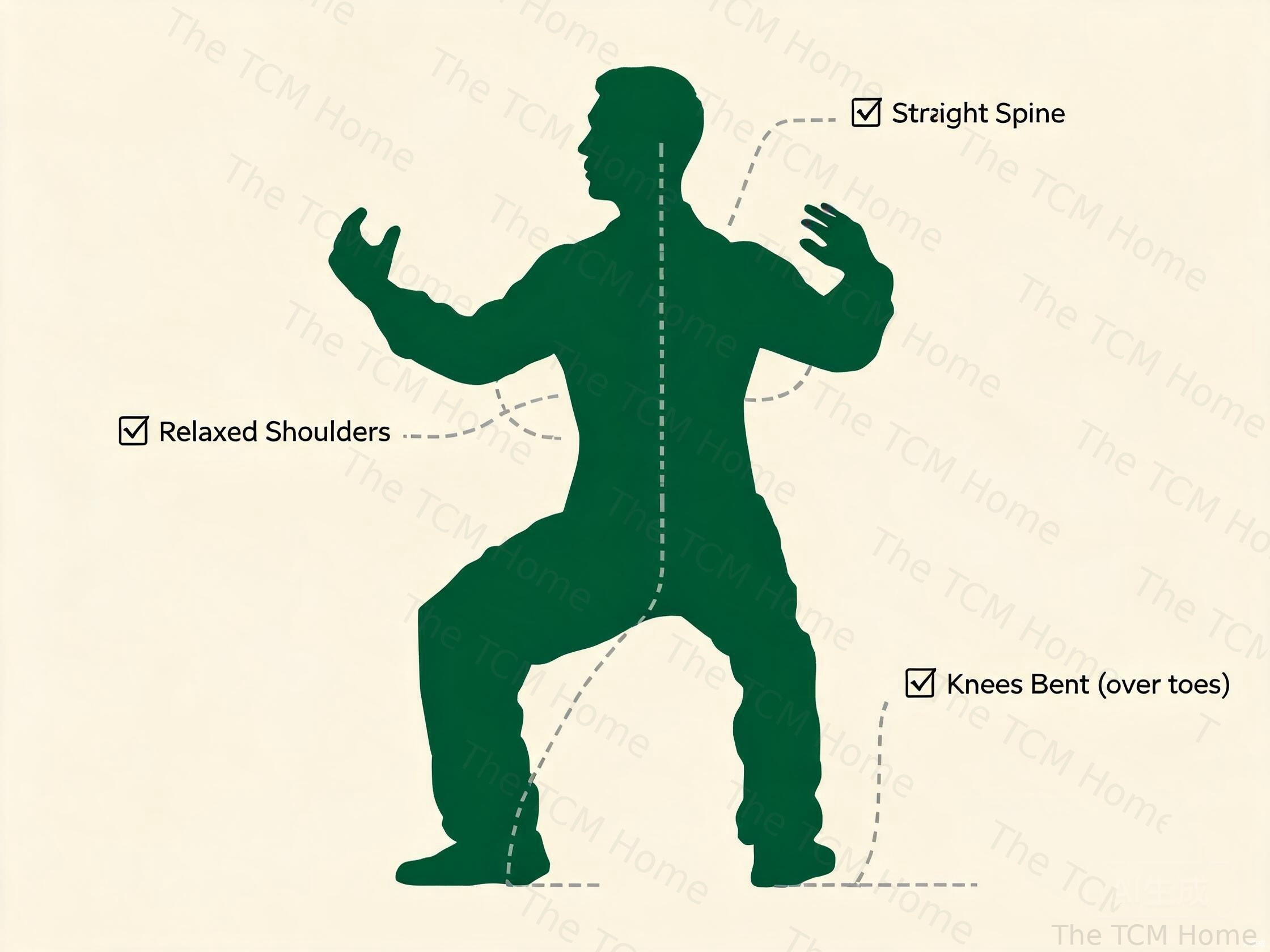
- Posture: Sit upright on the edge of a chair with feet flat on the floor, or stand with feet shoulder-width apart. The spine should be erect but relaxed.
- Location: A quiet, well-ventilated room. Fresh air is ideal because you will be exhaling deeply.
- Mindset: Before beginning, take three slow breaths. Set the intention to release whatever no longer serves you.
- Voice: The sounds are not sung loudly. They are soft, extended exhalations — barely louder than a whisper. Let the sound carry on the breath without straining.
Step-by-Step Practice for Each Sound
Practice each sound three to six times before moving to the next. The sequence follows the Five Element generating cycle, beginning with the Liver (Wood) and ending with the Triple Burner. Below is the complete guide for all six sounds.
1. Xu (嘘) — The Liver Sound
Organ: Liver | Element: Wood | Emotion: Anger, frustration
Mouth Position: Form the sound "xu" (pronounced like "shoo" but softer). The tongue is relaxed and flat, the lips rounded as if blowing out a candle, and the corners of the mouth drawn slightly outward.
Body Position: Stand or sit upright. Interlace the fingers and raise both hands overhead with palms facing up, as if lifting the sky. This opens the ribcage and stretches the sides of the body where the liver meridian runs.
Movement: Inhale deeply through the nose. As you exhale, release a long, soft "xuuuuuu" sound while slowly lowering your arms outward and down to your sides. Imagine green light — the color of the Liver and the Wood element — flowing out of the liver area beneath the right ribcage, carrying anger and heat away. After the exhalation, close your eyes briefly and imagine a cool, fresh green energy filling the liver.
Repeat: 3 to 6 times.
Practice the Liver sound when you feel irritable, frustrated, or have tension in the ribs, temples, or jaw. It is especially powerful during spring — the season of the Liver — or after a stressful, conflict-filled day.
2. He (呵) — The Heart Sound
Organ: Heart | Element: Fire | Emotion: Arrogance, agitation, excess joy
Mouth Position: Form the sound "he" (pronounced like "huh" with an open mouth). The mouth is open and wide, the tongue curled slightly downward and back. The jaw drops naturally.
Body Position: Raise both arms forward and upward to shoulder height, palms facing upward, as if receiving a gift. This opens the chest and the Heart meridian that runs along the inner arm.
Movement: Inhale through the nose. Exhale the long, soft sound "heeeeee" while slowly turning your palms downward and lowering your arms in front of the body. Visualize red light — the color of the Heart — releasing agitation and excess heat from the center of the chest. Picture the heart being bathed in a cool, calming red glow after the release.
Repeat: 3 to 6 times.
3. Hu (呼) — The Spleen Sound
Organ: Spleen | Element: Earth | Emotion: Worry, overthinking, pensiveness
Mouth Position: Form the sound "hu" (pronounced like "who"). The lips are rounded and relaxed, the tongue sits behind the lower teeth, and the exhalation is warm — like fogging a mirror.
Body Position: Place both hands on the upper abdomen, just below the ribcage, over the stomach and spleen area. This centers your awareness on the Earth organ.
Movement: Inhale through the nose. Exhale the sound "huuuuuu" while gently pressing the hands inward and downward in a slow circular motion over the abdomen. Visualize a warm yellow light — the color of the Spleen and Earth element — releasing worry and mental loops from the center of the body. Imagine the warmth settling into grounded, stable energy.
Repeat: 3 to 6 times.
4. Si (呬) — The Lung Sound
Organ: Lung | Element: Metal | Emotion: Grief, sadness, attachment
Mouth Position: Form the sound "si" (pronounced like "sss"). The teeth are gently closed, the lips parted slightly, and the tongue behind the upper teeth. The air hisses out between the teeth — like a long, slow whistle of steam.
Body Position: Raise both arms out to the sides at shoulder height, palms facing upward, forming a T-shape. This expands the entire chest and opens the Lung meridian that runs along the inner arm to the thumb.
Movement: Inhale through the nose. Exhale the long, hissing sound "sssssss" while slowly lowering your arms down to your sides. Visualize a white, misty light — the color of the Lung and Metal element — releasing grief, sadness, and old attachments from the upper chest. After the release, imagine pure white light filling the lungs with clarity and the courage to let go.
Repeat: 3 to 6 times.
5. Chui (吹) — The Kidney Sound
Organ: Kidney | Element: Water | Emotion: Fear, isolation, deep insecurity
Mouth Position: Form the sound "chui" (pronounced like "chway" but softer). The lips are rounded and pushed forward, the tongue drawn back slightly. The exhalation is cool and directed downward.
Body Position: Bend forward from the waist and reach down toward the floor with both arms, allowing the lower back — the home of the kidneys — to open and stretch. Keep the knees soft.
Movement: Inhale as you slowly rise back to standing, arms sweeping up the front of the body. Exhale the sound "chuiiiii" while bending forward again and sweeping the arms down. Visualize a deep blue or black light — the colors of the Kidney and Water element — draining fear and coldness from the lower back, down through the legs, and into the earth. Picture warm, dark blue energy replenishing the kidneys afterward.
Repeat: 3 to 6 times.
6. Xi (嘻) — The Triple Burner Sound
Organ: Triple Burner (San Jiao) | Element: Regulates all Five | Emotion: Stagnation, overall blockage
Mouth Position: Form the sound "xi" (pronounced like "shee"). The lips part in a slight smile, the tongue rests lightly behind the upper front teeth. The exhalation is light and joyful — like a quiet laugh released as breath.
Body Position: Raise both arms overhead with palms facing upward, fingers pointing toward each other. This opens the entire torso — the Three Burners (upper chest, middle abdomen, lower pelvis) — as one continuous channel.
Movement: Inhale through the nose. Exhale the sound "xiiiii" while slowly lowering your arms down the sides of your body, palms brushing the torso. Visualize a clear, multicolored light sweeping through the entire torso — from the top of the head down through the chest, abdomen, and pelvis — clearing all blockages between the three burners and restoring harmonious flow throughout the body. The feeling is light, joyful, and unburdened.
Repeat: 3 to 6 times.
The Complete Daily Practice Sequence
To practice the full routine, perform each sound three to six times in the following order. The entire sequence takes about 15 minutes.
- Prepare: Stand or sit quietly for 30 seconds. Take three deep abdominal breaths to settle.
- Liver — Xu: 3 to 6 rounds. Release anger, invite kindness.
- Heart — He: 3 to 6 rounds. Release agitation, invite joy.
- Spleen — Hu: 3 to 6 rounds. Release worry, invite trust.
- Lung — Si: 3 to 6 rounds. Release grief, invite courage.
- Kidney — Chui: 3 to 6 rounds. Release fear, invite wisdom.
- Triple Burner — Xi: 3 to 6 rounds. Harmonize the whole body.
- Close: Place both hands on the lower abdomen. Breathe naturally for one minute. Feel the body calm, clear, and balanced.
The Six Healing Sounds are most effective in the early morning, before sunrise, when the air is fresh and the body is receptive. The second-best time is at sunset, when the day's accumulated stress and emotion can be released before evening. Avoid practicing on a full stomach — wait at least one hour after eating.
How the Sounds Work: TCM and Modern Perspectives
In TCM theory, the Six Healing Sounds work through the principle of vibrational resonance. Each organ has a natural frequency, and the specific mouth shape of each sound creates a vibration that travels through the body's fascia, fluids, and connective tissue to reach its target organ. The long exhalation also serves to expel the stagnant heat (Re) that TCM identifies as the root of many internal disorders. Excess heat trapped in an organ generates its corresponding negative emotion — anger in the liver, agitation in the heart, worry in the spleen, grief in the lungs, and fear in the kidneys. By physically vibrating and cooling the organ, the sound breaks the cycle.
From a modern physiological standpoint, the extended exhalations activate the vagus nerve and parasympathetic nervous system, lowering heart rate and cortisol. The deep diaphragmatic breathing that accompanies each sound improves lymphatic circulation and oxygen exchange. The visualization and intention components engage the relaxation response. Together, these mechanisms explain why practitioners consistently report feeling lighter, calmer, and more emotionally clear after a single session.
Common Mistakes and How to Avoid Them
- Forcing the sound: The sounds should be soft and natural, never strained or shouted. If your throat feels tired, you are using too much force.
- Rushing the exhalation: The exhale should be long and slow — at least 5 to 8 seconds. If you run out of breath quickly, take a deeper inhale first.
- Skipping the visualization: The mind's intention (Yi) directs the Qi. Without the color and organ visualization, the practice loses much of its power. Always pair the sound with the mental image.
- Practicing on a full stomach: The deep breathing and forward bending (especially for the Kidney sound) are uncomfortable after a large meal. Wait at least one hour.
- Ignoring the order: The sequence follows the generating cycle of the Five Elements. Practicing out of order can create internal imbalance. Always go Liver, Heart, Spleen, Lung, Kidney, Triple Burner.
Who Should Practice the Six Healing Sounds
This practice is suitable for nearly everyone. It is especially beneficial for people who carry chronic emotional patterns — persistent anger, anxiety, worry, grief, or fear — that have begun to manifest as physical symptoms. Because the practice is gentle and can be done seated, it is accessible to older adults, those recovering from illness, and anyone with limited mobility. The sounds require no equipment and can be practiced almost anywhere, making them an ideal daily self-care tool.
Frequently Asked Questions
Do the Six Healing Sounds require singing or musical ability?
No. The Six Healing Sounds are not sung musically. They are produced as soft, extended exhalations shaped by specific mouth and tongue positions. Anyone can produce them regardless of musical ability. The sound should be quiet, gentle, and barely audible — like a long sigh shaped into a particular vowel or consonant. The vibration, not the pitch or melody, is what matters.
What is the correct order to practice the Six Healing Sounds?
The traditional sequence follows the Five Element generating cycle: Liver (Xu), Heart (He), Spleen (Hu), Lung (Si), Kidney (Chui), and finally the Triple Burner (Xi). This order moves from Wood to Fire to Earth to Metal to Water, supporting each organ's natural nourishing relationship with the next. The Triple Burner sound comes last because it harmonizes and integrates the work of all five organs.
Can I practice the Six Healing Sounds if I have a sore throat?
If your throat is sore or you have laryngitis, it is best to rest the voice and practice the sounds silently — visualizing the exhalation and mouth shape without producing audible sound. The intention and breathing pattern still benefit the organs. Resume audible practice once your throat has healed. Never force sound through a painful throat.
How long should I practice the Six Healing Sounds each day?
A complete cycle of all six sounds takes 10 to 15 minutes. Three to six repetitions of each sound per session is standard for daily practice. Beginners may start with just one or two sounds — typically the Liver (Xu) or Lung (Si) sound — and gradually add the others as they become comfortable with the technique. Consistency matters more than duration; 10 minutes every day is far more valuable than an hour once a week.
This article is for educational purposes only and does not constitute medical advice. Educational content only. Not medical advice. While the Six Healing Sounds are generally safe, individuals with respiratory conditions, recent abdominal surgery, or serious cardiovascular disease should consult a qualified healthcare provider before beginning. Never substitute qigong for professional medical treatment of diagnosed conditions.
Related Guides
Qigong for Stress Relief: 10-Min Reset
A 10-minute qigong routine with five movements to relieve stress, soothe the liver, open the chest, and calm the nervous system.
Eight Brocades Qigong: Complete Guide
The complete guide to all eight Ba Duan Jin movements for comprehensive health and vitality.
Standing Meditation (Zhan Zhuang)
The hidden power of stillness — how standing meditation builds internal Qi and structural strength.
TCM Liver Soothing Tea
Traditional Chinese herbal tea formulas to soothe the liver, calm the mind, and release emotional tension.