Key Takeaways
- In TCM, wei qi (defensive qi) is the body's immune system, circulating on the surface to protect against external pathogens like wind, cold, and dampness.
- Moxibustion on Zusanli (ST36) is the most important immunity-building practice in TCM, strengthening wei qi and enhancing the body's natural defense mechanisms.
- Guanyuan (CV4) complements Zusanli by tonifying kidney yang, which is the root of the body's overall vitality and resistance.
- Research suggests moxibustion may influence immune cell activity, including white blood cells and natural killer cells, supporting its traditional use for immune support.
- A preventive protocol of 2 to 3 sessions per week, increased during cold and flu season, provides the best immune-supporting results.
Wei Qi: The TCM Concept of Immunity
In Traditional Chinese Medicine, the body's immune system is understood through the concept of wei qi, or defensive qi. Wei qi is a specific type of qi that circulates just beneath the skin and in the spaces between the muscles, forming a protective shield against external pathogenic factors such as wind, cold, heat, and dampness. It is the TCM equivalent of the body's first line of immune defense.
Wei qi is derived from the food we eat, transformed by the spleen and stomach, and then distributed throughout the body by the lungs. It is closely connected to the lung system, which governs the skin and the body's surface. When wei qi is strong, pathogens are repelled at the surface and cannot penetrate deeper into the body. When wei qi is weak, the body becomes susceptible to frequent colds, respiratory infections, and other illnesses.
Several factors can weaken wei qi: poor digestion (which reduces the production of qi from food), insufficient sleep, excessive stress, overwork, and chronic illness. Strengthening wei qi is therefore a primary goal of preventive TCM, and moxibustion is one of the most effective tools for this purpose.
Why Zusanli Is the Immunity Point
Zusanli (ST36) is the most important acupoint in all of TCM for building immunity and maintaining health. Its name means leg three miles, a reference to the energizing effect of stimulating this point, which was said to enable a person to walk three more miles when fatigued. The point has been used for over 2,000 years as a primary tool for disease prevention and longevity.
Zusanli (ST36) - The Longevity and Immunity Point
Location: About four finger-widths below the kneecap, one finger-width to the outside of the shinbone. There is often a slight depression and mild tenderness when the point is pressed.
Benefits: Zusanli is the most powerful point for strengthening spleen qi, which is the source of wei qi. By tonifying the spleen, Zusanli directly enhances the body's ability to produce defensive qi. It also strengthens the overall energy, improves digestion, enhances nutrient absorption, and supports the body's natural healing capacity. In ancient China, the practice of moxibustion on Zusanli was a well-known longevity practice. The famous physician Sun Simiao (581 to 682 CE) recommended regular moxa on Zusanli for disease prevention, and this practice has been continuously used for over 1,400 years.
Duration: 5 to 10 minutes per leg.
Guanyuan (CV4) - The Kidney Yang Root
Location: On the midline of the lower abdomen, three finger-widths below the navel.
Benefits: While Zusanli builds the source of wei qi through the spleen, Guanyuan addresses the root of the body's overall vitality by tonifying kidney yang. The kidneys are the root of all yang in the body, including the yang that powers wei qi circulation. When kidney yang is strong, the body's overall resistance is enhanced. Moxibustion on Guanyuan complements the effect of Zusanli by addressing both the source (kidney) and the production (spleen) of defensive qi.
Duration: 10 to 15 minutes.
Research on Moxibustion and Immunity
Modern research has begun to investigate the effects of moxibustion on the immune system, and the findings are supportive of its traditional use for immune enhancement. While research is ongoing and more large-scale studies are needed, several mechanisms have been identified.
Immune Cell Activity
Studies have shown that moxibustion on Zusanli (ST36) may increase the activity of various immune cells. Research has observed increases in white blood cell counts, enhanced phagocytic activity (the ability of immune cells to engulf and destroy pathogens), and increased natural killer (NK) cell activity following moxibustion treatment. NK cells are a critical component of the innate immune system and are particularly important for fighting viral infections and tumor surveillance.
Cytokine Modulation
Moxibustion has been shown to influence the production of cytokines, which are signaling molecules that regulate immune responses. Some studies suggest that moxibustion can help balance pro-inflammatory and anti-inflammatory cytokines, potentially supporting a more regulated and effective immune response. This immunomodulatory effect may help explain why moxibustion is used for both immune deficiency (frequent colds) and inflammatory conditions in TCM practice.
Local and Systemic Effects
The heat from moxibustion produces both local and systemic effects. Locally, the warmth increases blood flow to the treated area, bringing more immune cells to the region. Systemically, the stimulation of specific acupoints like Zusanli appears to trigger nervous system reflexes that influence immune organ function, including the spleen, lymph nodes, and bone marrow.
While the existing research is encouraging, it is important to note that moxibustion should be viewed as a complementary immune-support practice, not a replacement for medical treatment. The immune system is complex and multifactorial, and moxibustion works best as part of a comprehensive approach including proper nutrition, adequate sleep, stress management, and regular exercise. Always consult your healthcare provider for medical concerns.
The Preventive Moxibustion Protocol
Building immunity with moxibustion is a preventive practice, meaning it is done regularly over time rather than only when you feel ill. The goal is to maintain strong wei qi so that the body can resist pathogens before they take hold.
Basic Immunity Protocol
Points: Zusanli (ST36) on both legs and Guanyuan (CV4) on the lower abdomen.
Frequency: 2 to 3 times per week for general immune maintenance.
Duration: 5 to 10 minutes on each Zusanli (both legs) and 10 to 15 minutes on Guanyuan. Total session time: approximately 20 to 30 minutes.
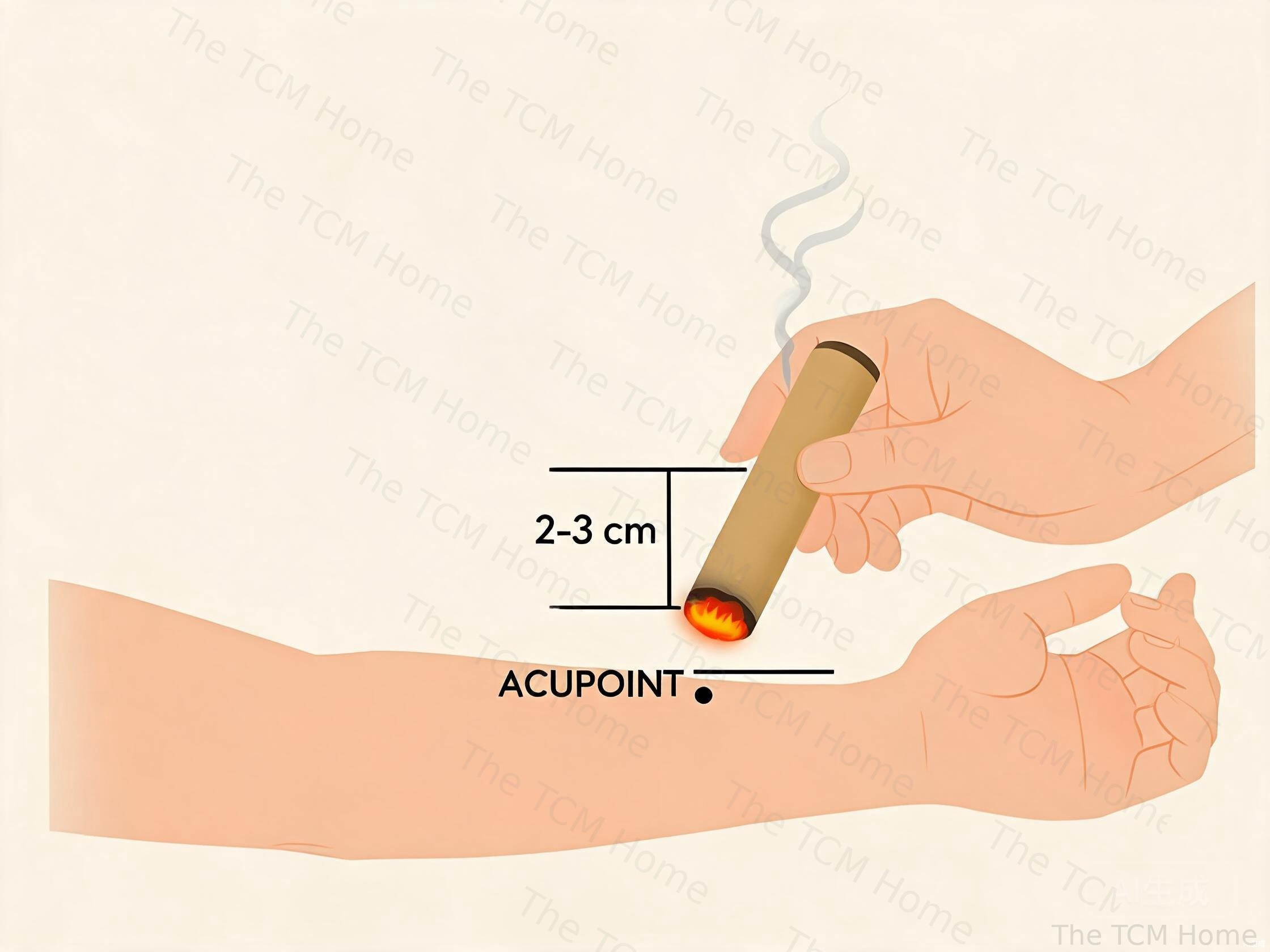
Technique: Use a moxa stick with sparrow-pecking or circular motions. Maintain 2 to 3 cm distance from the skin. Ensure the skin becomes warm and pink, never red-hot.
Enhanced Protocol for Cold and Flu Season
During autumn and winter, when respiratory infections are most common, increase the frequency to 3 to 4 times per week. Add the following point:
Dazhui (GV14): Located below the spinous process of the seventh cervical vertebra, at the base of the neck where the shoulders begin. This point is the meeting point of all yang meridians and is traditionally used to expel wind and cold and strengthen the body's surface defenses. Moxa for 5 to 10 minutes. This point requires a partner or a moxa box for treatment.
Acute Exposure Protocol
If you have been exposed to someone who is ill, or if you feel the very early signs of a cold (slight chill, scratchy throat), moxa Zusanli daily for 5 to 7 days. This may provide a temporary immune boost. However, if a full fever develops, stop moxibustion immediately, as moxa is contraindicated during fever.
Never use moxibustion during an active fever or acute infection with heat signs. Moxibustion is a warming therapy and will worsen heat conditions. If you develop a fever, sore throat with swelling, or any sign of active infection, discontinue moxibustion and seek appropriate medical care. Moxibustion is for prevention and immune building, not for treating active illness.
Seasonal Timing for Immunity Moxibustion
In TCM, the changing of seasons is a critical time for immune health. The body must adapt to new environmental conditions, and this adaptation period is when wei qi is most vulnerable. Moxibustion during seasonal transitions helps the body adjust and maintain its defensive capacity.
Autumn (Preparation for Cold Season)
Autumn is the most important season for immunity moxibustion. The weather begins to cool, and the body must prepare for the cold months ahead. In TCM theory, the lungs are associated with autumn and are the organ most closely connected to wei qi. Strengthening the body's defenses in autumn, before cold and flu season peaks, is a classic preventive strategy. Begin regular moxibustion on Zusanli and Guanyuan in early autumn and continue through the winter.
Late Winter (Preparation for Spring)
In late winter, the body's stored energy is at its lowest, and the first spring winds can carry pathogens. A brief course of moxibustion in late winter helps replenish the body's reserves and prepare the immune system for the seasonal transition.
The Solar Term Tradition
In traditional practice, moxibustion on specific days was believed to be especially effective. The most famous is moxibustion on Zusanli during the solar terms of Chushu (End of Heat, around August 23) and Lidong (Start of Winter, around November 7). These days mark seasonal transitions and are considered ideal times to begin or intensify preventive moxibustion.
Complementary Immune Practices
Moxibustion is most effective for immunity when combined with other immune-supporting practices. Wei qi depends on adequate nutrition, rest, and overall vitality.
Diet for Wei Qi
Since wei qi is produced from food by the spleen, a healthy diet is fundamental. Emphasize warm, cooked, easily digestible foods. Include immune-supporting ingredients such as astragalus (huang qi), which can be added to soups, Chinese dates, ginger, and goji berries. A simple daily congee with a few slices of astragalus and Chinese dates is a traditional immune-supporting breakfast. Avoid excessive cold, raw, and greasy foods that burden the spleen.
Sleep and Rest
In TCM, wei qi circulates more deeply during sleep, moving inward to rest and restore the internal organs. Chronic sleep deprivation weakens wei qi and increases susceptibility to illness. Aim for 7 to 8 hours of sleep, ideally going to bed before 11 PM, which in the TCM body clock is the time when the gallbladder meridian is most active and the body begins its restorative cycle.
Gentle Exercise
Qigong and tai chi are ideal exercises for supporting wei qi. These gentle movement practices promote the smooth flow of qi and blood, strengthen the lungs (which govern wei qi), and reduce stress without depleting the body's energy. Even 15 minutes of daily qigong practice complements moxibustion and enhances its immune-building effects.
The most effective immunity-building routine combines: (1) moxibustion on Zusanli and Guanyuan 2 to 3 times per week, (2) daily consumption of warm, nourishing foods including congee with astragalus, (3) 7 to 8 hours of sleep with an early bedtime, (4) 15 minutes of daily qigong or gentle exercise, (5) stress management through meditation or breathing exercises. This multi-layered approach addresses immunity from every angle and is far more effective than moxibustion alone.
Building Long-Term Immune Resilience
Immunity is not built overnight. Wei qi reflects the cumulative state of your digestion, sleep, stress levels, and overall vitality. Moxibustion on Zusanli is a long-term investment in your immune health, not a quick fix. Consistent practice over weeks and months gradually strengthens the body's defenses.
Many people who begin regular moxibustion report fewer colds, faster recovery when they do get sick, and an overall sense of increased vitality and resistance. This aligns with the ancient TCM principle that the best medicine is preventive, and that maintaining strong wei qi through regular self-care is the foundation of long-term health. By making moxibustion on Zusanli a regular part of your wellness routine, you are following a practice that has sustained human health for over two millennia.
Frequently Asked Questions
Does moxibustion actually boost the immune system?
Yes, research suggests that moxibustion can influence immune function. Studies have shown that moxibustion on Zusanli (ST36) may increase white blood cell counts, enhance natural killer cell activity, and modulate inflammatory cytokines. In TCM theory, moxibustion strengthens wei qi (defensive qi), which circulates on the body's surface and protects against external pathogens. Regular moxibustion on Zusanli is one of the oldest documented preventive health practices in Chinese medicine.
How often should I do moxibustion for immunity?
For general immune support, moxa Zusanli (ST36) and Guanyuan (CV4) 2 to 3 times per week. During cold and flu season (autumn and winter), increase to 3 to 4 times per week. For acute prevention when exposed to illness, daily moxibustion for 5 to 7 days can provide a temporary boost. Each point should be treated for 5 to 10 minutes per side.
When is the best time of year for immunity moxibustion?
The best times for preventive immunity moxibustion are during seasonal transitions, especially in autumn before the cold and flu season begins, and in late winter before spring. In TCM theory, these are times when the body's defensive qi is most vulnerable to seasonal pathogens. The traditional practice of moxa on Zusanli during the solar terms of Chushu (End of Heat) and Lidong (Start of Winter) is especially valued.
Can moxibustion prevent colds and flu?
While no therapy can guarantee prevention of illness, regular moxibustion on Zusanli (ST36) is traditionally used to strengthen the body's resistance to external pathogens. By boosting wei qi, the body's first line of immune defense, moxibustion may reduce the frequency and severity of colds. It is best used as part of a comprehensive immune-support strategy including proper diet, adequate sleep, and stress management.
This article is for educational and informational purposes only and is not a substitute for professional medical advice, diagnosis, or treatment. Always consult a qualified healthcare provider before beginning any new wellness practice, especially if you are pregnant, nursing, taking medication, or have a medical condition. Read our full disclaimer →