Key Takeaways
- Moxibustion is a heat therapy that carries a real risk of burns and fire if not performed correctly. Proper distance, continuous movement, and constant monitoring are the three essential safety rules.
- Key contraindications include pregnancy (especially abdominal points), fever, heat-pattern conditions, yin deficiency, sensitive or numb skin, and the face and head area.
- Always use moxa in a well-ventilated space and keep a dish of water or sand nearby for extinguishing. Never leave burning moxa unattended.
- Perform a skin sensitivity test before your first session, and never exceed 20 to 30 minutes of total treatment time per session.
- Stop immediately if you experience dizziness, nausea, palpitations, or excessive heat, and consult a practitioner if symptoms persist.
Why Safety Matters in Moxibustion
Moxibustion involves the controlled burning of mugwort (Artemisia vulgaris) to deliver therapeutic heat to the body. While this ancient therapy is generally safe when practiced correctly, it carries inherent risks that every home practitioner must understand and respect. The most common risks are burns, fire hazards, and adverse reactions from treating inappropriate conditions. This comprehensive safety guide covers everything you need to know to practice moxibustion safely at home.
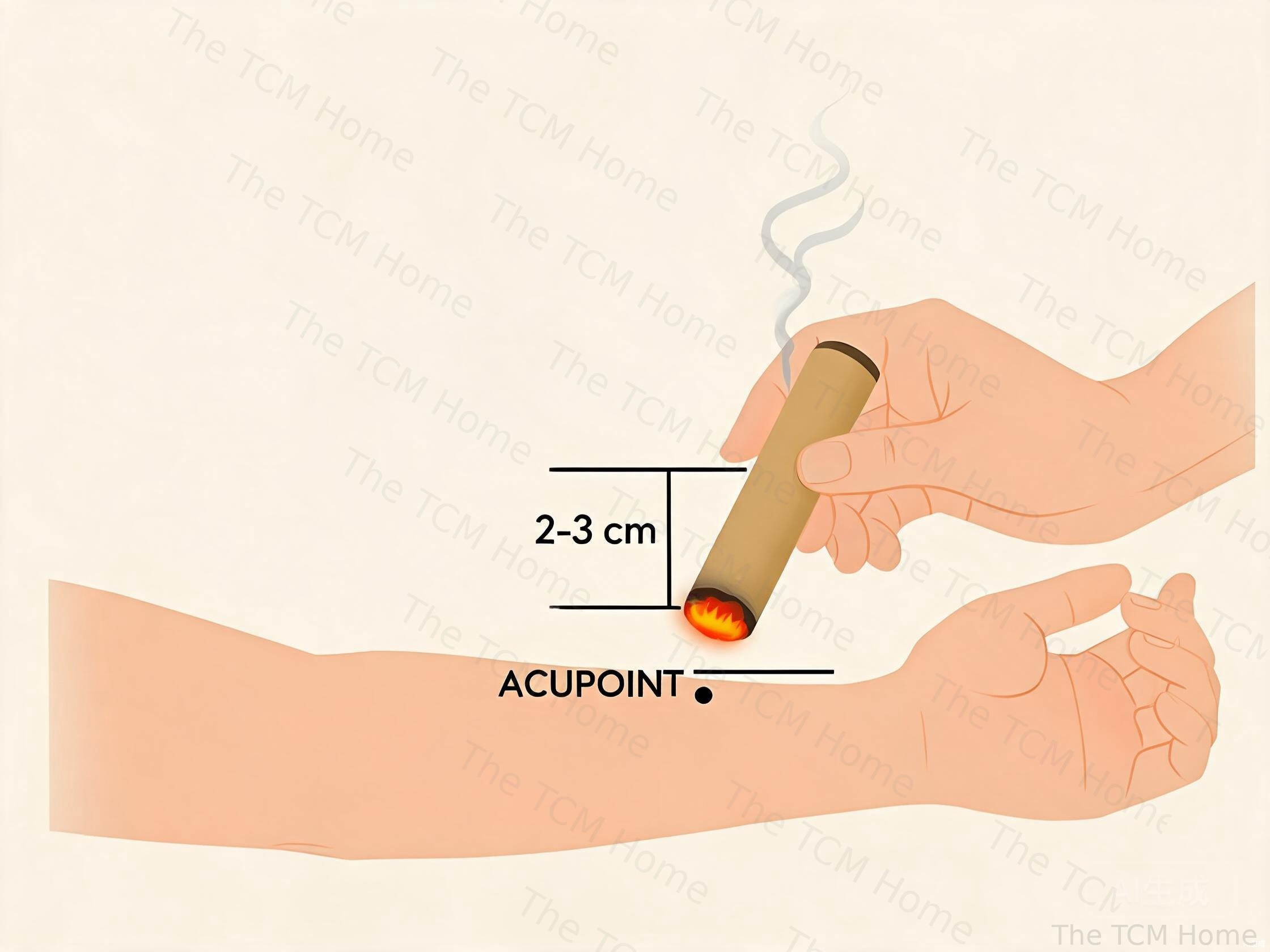
Safety is not an afterthought in moxibustion; it is the foundation of effective practice. A burn or adverse reaction can undermine trust in the therapy and cause unnecessary suffering. By following the guidelines in this guide, you can enjoy the benefits of moxibustion while minimizing all risks.
Burn Prevention: The Three Essential Rules
Burns are the most common injury associated with moxibustion. Fortunately, they are almost entirely preventable when you follow three fundamental rules.
Rule 1: Maintain Proper Distance
Always hold the burning moxa stick at least 2 to 3 cm (about one inch) above the skin. The exact distance depends on your sensitivity and the intensity of the burning moxa. The correct distance produces a pleasant, penetrating warmth, not a sharp or painful heat. If the heat feels sharp, stinging, or uncomfortably hot, you are too close. Increase the distance immediately.
For beginners, start at 3 cm and gradually decrease the distance as you become more comfortable and attuned to the sensation. Remember that heat accumulates over time, so a distance that feels comfortable at the start of a session may become too hot after several minutes.
Rule 2: Keep the Moxa Moving
Never hold the moxa stick still in one position. Always move it in slow circles, figure-eight patterns, or up-and-down pecking motions. Continuous movement prevents heat from accumulating on a single spot, which is the primary cause of localized burns. The sparrow-pecking technique (rhythmic up-and-down movement) is the safest and most commonly recommended method for beginners.
Rule 3: Monitor the Skin Constantly
Check the skin every minute or two during treatment. The skin should become warm and pink (flushed), which indicates healthy vasodilation and increased circulation. If the skin becomes bright red, feels hot to the touch, or shows any sign of blistering, remove the moxa immediately. Blistering indicates a second-degree burn and requires first aid.
If a burn occurs, immediately cool the area with cool running water for 10 to 15 minutes. Do not apply ice directly to the skin. If a blister forms, do not pop it. Cover the area with a clean, dry dressing. If the burn is larger than a coin, appears deep, or shows signs of infection, seek medical attention. Never apply moxa to the same area again until it is fully healed.
Skin Sensitivity Test
Before your first moxibustion session, perform a simple sensitivity test to determine how your skin responds to moxa heat. This is especially important for people with sensitive skin, older adults, and anyone with reduced sensation.
Hold a lit moxa stick about 4 cm above the inside of your forearm for 2 minutes, moving in small circles. Note how the skin looks and feels afterward. The skin should be warm and lightly pink. If it becomes very red, feels hot after removal, or shows any irritation, your skin is sensitive to moxa heat, and you should use a greater distance, shorter duration, and smokeless moxa (which produces gentler heat) for your treatments.
Complete List of Contraindications
Moxibustion is a warming therapy, and it is only appropriate for cold and deficiency patterns. Using moxibustion on the wrong conditions can worsen symptoms and cause harm. The following are the most important contraindications.
Absolute Contraindications
- Fever: Never use moxibustion when you have a fever or any acute inflammatory condition with heat signs. Moxa adds heat to an already overheated body.
- Pregnancy: Moxibustion on the lower abdomen, lower back, and sacral points is contraindicated during pregnancy because it can stimulate uterine contractions. Certain points like Guanyuan (CV4), Sanyinjiao (SP6), and Ciliao (BL32) should never be moxaed during pregnancy. Some specific points may be used by trained practitioners for breech presentation, but self-treatment during pregnancy is not recommended.
- Heat patterns: Any condition characterized by heat signs, including red swollen joints, burning pain, acid regurgitation, skin inflammation, red eyes, and a red tongue with yellow coating, is worsened by moxibustion.
- Yin deficiency with empty heat: People with night sweats, hot flashes, a red tongue with little or no coating, and a feeling of heat in the palms, soles, and chest have yin deficiency. Moxibustion further depletes yin and worsens these symptoms.
Relative Contraindications and Precautions
- Sensitive skin: Use extra caution. Increase the distance to 4 cm, reduce session duration, and consider smokeless moxa.
- Numbness or neuropathy: If you cannot feel heat properly in an area (such as diabetic neuropathy), do not apply moxibustion there, as you cannot accurately judge the heat level and burns may occur without your awareness.
- Facial and head area: Avoid moxibustion on the face and head due to the risk of smoke irritation to the eyes and respiratory tract, and the sensitivity of facial skin.
- Hypertension: Use caution with moxibustion if you have uncontrolled high blood pressure. Some points, particularly those on the upper body, can temporarily raise blood pressure. Consult a practitioner.
- Bleeding disorders: Use caution with any form of direct moxibustion if you have a bleeding disorder or take blood-thinning medication.
- Open wounds or skin lesions: Never apply moxibustion to broken skin, rashes, wounds, or areas of infection.
Ventilation and Smoke Management
Traditional moxa produces significant smoke, which has a characteristic herbal odor. While some practitioners believe the smoke has therapeutic properties, it can be problematic in enclosed spaces and for people with respiratory conditions.
Ventilation Rules
- Always use moxa in a well-ventilated room. Open at least one window or use an exhaust fan.
- Do not use moxa in a small enclosed bathroom or closet-like space.
- If anyone in the household has asthma, allergies, or respiratory sensitivity, use smokeless moxa instead of traditional moxa.
- Consider using a moxa smoke purifier, which is a small air filter designed to capture moxa smoke particles.
- Pregnant women and young children should not be in the same room during moxibustion due to smoke exposure.
Smokeless Moxa Alternative
Smokeless moxa is made from carbonized mugwort and produces minimal smoke and odor. It is an excellent alternative for indoor use and for those sensitive to smoke. While some practitioners debate whether smokeless moxa is as therapeutically effective, it provides excellent warming benefits and is widely used in modern clinical settings. For safety and convenience at home, smokeless moxa is often the better choice.
Proper Technique and Session Duration
Following proper technique guidelines ensures both safety and effectiveness.
Session Duration Limits
- Maximum 20 to 30 minutes total per session, including all points treated.
- Maximum 5 to 15 minutes per individual acupoint.
- Maximum 2 to 3 sessions per week for general wellness.
- For acute conditions, daily sessions for 7 to 10 days maximum, then reduce frequency.
Timing Precautions
- Do not moxa on an empty stomach or immediately after a large meal. Wait 30 to 60 minutes after eating.
- Do not moxa when extremely fatigued, emotionally distressed, or under the influence of alcohol.
- Do not moxa immediately before or after bathing, as the skin's sensitivity to heat changes.
- Avoid moxibustion late at night, as the stimulating warmth can interfere with sleep.
Fire Safety
Moxibustion involves open flame and burning material. Fire safety is an essential part of moxibustion practice.
- Always have a dish of water or sand nearby for extinguishing moxa. A ceramic saucer works well.
- Never leave burning moxa unattended. If you need to step away, extinguish it first.
- Keep moxa away from flammable materials including paper, fabric, curtains, and bedding.
- Ensure ash is fully extinguished before disposal. Hot ash can smolder and ignite.
- Use a moxa box with a metal mesh for hands-free treatment, as it contains the burning moxa safely.
- Do not fall asleep during moxibustion. Set an alarm if you tend to get drowsy.
When to Stop: Warning Signs
Certain symptoms during or after moxibustion indicate that you should stop immediately. These are signs that the treatment is too intense, too frequent, or inappropriate for your condition.
Dizziness, nausea, or vomiting; palpitations or racing heart; excessive sweating; shortness of breath; feeling of overwhelming heat or restlessness; headache; skin becoming red-hot, blistered, or painful; or any unusual or alarming sensation. Extinguish the moxa, drink warm water, lie down, and rest. If symptoms do not resolve quickly or are severe, seek medical attention.
Signs of Over-Treatment
If you moxa too frequently or for too long, you may develop signs of excessive heat accumulation: dry mouth, thirst, restlessness, insomnia, irritability, constipation, or a feeling of heat that persists between sessions. If you notice any of these, reduce the frequency and duration of your sessions, drink more fluids, and allow your body to rest.
Special Considerations for Different Populations
- Older adults: Skin becomes thinner and more sensitive with age. Use greater distance, shorter sessions, and consider smokeless moxa. Always test sensitivity first.
- Children: Moxibustion on children should only be done under professional guidance. Children's skin is more sensitive, and they may not communicate discomfort clearly.
- People with diabetes: Diabetic neuropathy can reduce sensation in the extremities, making it impossible to judge heat levels accurately. Do not apply moxibustion to areas with reduced sensation.
- People on medication: Consult your healthcare provider before starting moxibustion if you take any regular medication, especially blood thinners or immunosuppressants.
Building a Safe Practice
Safety in moxibustion comes from knowledge, preparation, and attentive practice. Before each session, take a moment to review your setup: Is the room ventilated? Is water nearby? Are you treating the right points for your condition? Is the skin intact and healthy? Are you free from contraindications? A few seconds of preparation prevents most accidents.
Start conservatively. Use shorter sessions, greater distances, and fewer points than you think you need. Build up gradually as you gain experience and understanding. Remember that moxibustion is a powerful therapy, and more is not always better. Consistency and proper technique produce better results than intense or prolonged sessions.
Frequently Asked Questions
How do I prevent burns during moxibustion?
To prevent burns, always hold the moxa stick at least 2 to 3 cm from the skin and keep it moving in circular or pecking motions. Never hold the stick still in one position. Check the skin frequently, it should become warm and pink, never red-hot or blistered. Keep a dish of water nearby for extinguishing, and if the heat becomes uncomfortable, increase the distance or pause the treatment.
Is moxibustion safe during pregnancy?
Moxibustion on certain points, especially those on the lower abdomen and lower back such as Guanyuan (CV4), Sanyinjiao (SP6), and points on the sacrum, is contraindicated during pregnancy because they can stimulate uterine contractions. Always consult a qualified TCM practitioner before using moxibustion during pregnancy. Some specific points may be used therapeutically under professional supervision, but self-treatment during pregnancy is not recommended.
Can moxibustion smoke be harmful?
Traditional moxa smoke is generally considered safe in well-ventilated spaces, but it can be irritating to people with asthma, allergies, or respiratory sensitivity. Always use moxa in a well-ventilated room with a window open or exhaust fan running. Smokeless moxa is a good alternative for those with respiratory concerns. If you experience coughing, wheezing, or throat irritation, switch to smokeless moxa or discontinue use.
How do I know when to stop a moxibustion session?
Stop immediately if you experience dizziness, nausea, palpitations, excessive sweating, shortness of breath, or a feeling of overwhelming heat. These symptoms may indicate the treatment is too intense or inappropriate for your condition. Extinguish the moxa, drink warm water, and rest. If symptoms persist, seek medical attention. Also stop if the skin becomes red-hot, blistered, or painful.
This article is for educational and informational purposes only and is not a substitute for professional medical advice, diagnosis, or treatment. Always consult a qualified healthcare provider before beginning any new wellness practice, especially if you are pregnant, nursing, taking medication, or have a medical condition. Read our full disclaimer →