Key Takeaways
- In TCM, the spleen and stomach are the root of postnatal qi, and cold in the middle jiao impairs their ability to transform and transport food, causing bloating, loose stools, and fatigue.
- Moxibustion on Zhongwan (CV12), Zusanli (ST36), and Shenque (CV8) directly warms the spleen and stomach, restores digestive fire, and improves nutrient absorption.
- A typical digestive moxibustion session lasts 20 to 30 minutes total, treating each point for 5 to 15 minutes, performed 2 to 3 times per week for chronic conditions.
- Combining moxibustion with warm, cooked, easily digestible foods amplifies results significantly, especially congee, ginger tea, and root vegetables.
- Moxibustion is contraindicated for heat-type digestive disorders such as stomach fire, acid regurgitation, or burning epigastric pain, and should not be used during fever or pregnancy without guidance.
The Spleen and Stomach in TCM Digestive Theory
In Traditional Chinese Medicine, the spleen and stomach together form the central axis of the body's digestive system. The stomach receives and ripens food, while the spleen transforms the digested food into qi and blood and transports these nutrients throughout the body. This partnership is often called the root of postnatal qi, meaning it is the primary source of energy produced after birth through eating and drinking.
The spleen and stomach are associated with the earth element and the middle jiao, or middle burner. Their healthy function depends on warmth. In TCM theory, the spleen is described as liking dryness and disliking dampness, while the stomach likes moisture and dislikes dryness. When cold invades the middle jiao, or when spleen yang is deficient and cannot generate sufficient internal warmth, the entire digestive process slows down. Food sits in the stomach without being properly transformed, leading to a cluster of uncomfortable symptoms that modern practitioners frequently encounter.
Signs Your Digestion May Have Spleen Cold
Cold in the spleen and stomach produces a characteristic pattern of symptoms. Recognizing these signs helps you determine whether moxibustion is an appropriate therapy for your digestive concerns. The hallmark of spleen cold is that symptoms worsen with cold foods and drinks and improve with warmth.
Common Symptoms of Spleen Cold
- Bloating and fullness after eating, especially after cold or raw foods
- Loose stools or chronic diarrhea, sometimes with undigested food visible
- A cold feeling in the abdomen, particularly around the navel and upper abdomen
- Poor appetite or feeling full after eating small amounts
- Fatigue and heaviness, especially after meals
- Flatulence that is worse in cold weather or after cold drinks
- A pale tongue with a white, sometimes thick coating
- A weak or slow pulse, particularly in the right middle position
If your digestive symptoms are relieved by drinking warm water, using a heating pad on your abdomen, or eating warm cooked foods, there is almost certainly a cold component to your condition. This is the primary indication for moxibustion therapy on the digestive system.
Key Acupoints for Digestive Moxibustion
Three acupoints form the foundation of moxibustion treatment for digestive complaints. Each addresses a slightly different aspect of spleen and stomach function, and together they create a comprehensive warming treatment for the entire middle jiao.
Zhongwan (CV12) - The Stomach Front Point
Location: On the midline of the abdomen, halfway between the navel and the lower border of the sternum (the xiphoid process). You can find it by placing four fingers together below the sternum; the point is at the lower edge of your hand span.
Benefits: Zhongwan is the front mu point of the stomach and the influential point of all fu organs. It is the single most important point for treating stomach disorders. Moxibustion here warms the stomach, harmonizes the middle jiao, reduces bloating, relieves nausea, and improves overall digestive capacity. It is particularly effective for cold-type stomach pain and for people who feel uncomfortably full after eating small amounts.
Duration: 10 to 15 minutes per session.
Zusanli (ST36) - The Spleen and Stomach Tonic
Location: About four finger-widths below the kneecap, one finger-width to the outside of the shinbone. You can confirm the point by feeling for a slight depression in the muscle, and it is often slightly tender when pressed.
Benefits: Zusanli is the most widely used point in all of TCM for strengthening the spleen and stomach. It tonifies spleen qi, resolves dampness, improves appetite, enhances nutrient absorption, and boosts overall energy. Ancient texts describe regular moxibustion on Zusanli as a longevity practice because it supports the foundation of postnatal qi. For digestive issues, it works synergistically with Zhongwan to treat both the stomach and spleen simultaneously.
Duration: 5 to 10 minutes per leg.
Shenque (CV8) - The Navel Warming Point
Location: At the exact center of the navel (belly button).
Benefits: Shenque is a powerful point for warming the core and restoring spleen yang. It is particularly effective for abdominal coldness, chronic diarrhea, and digestive weakness accompanied by a cold sensation in the lower abdomen. The traditional method is salt-separated moxibustion, where the navel is filled with fine sea salt and a moxa cone is placed on top. For home use, holding a moxa stick above the navel is a simpler and equally warming alternative.
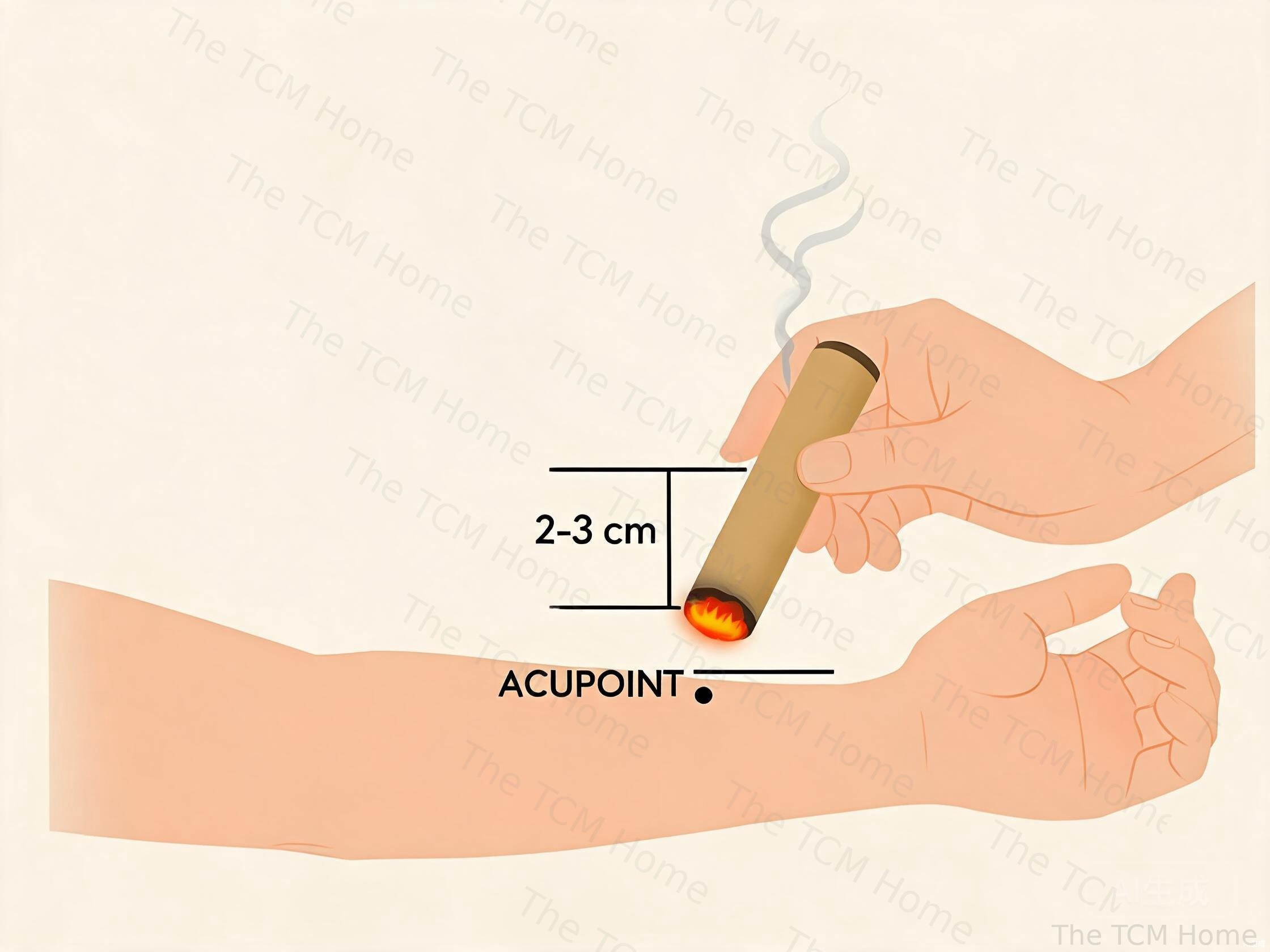
Caution: Never apply direct moxa cones to the navel without a salt barrier. For beginners, the moxa stick method held 2 to 3 cm above the navel is the safest approach.
Duration: 10 to 15 minutes per session.
Moxibustion Technique for Digestion
The goal of digestive moxibustion is deep, penetrating warmth that reaches the internal organs. The moxa stick (cigar) method is the most practical and controllable approach for home use.
Step-by-Step Session Guide
1. Prepare: Wait at least 30 minutes after eating a light meal. Do not moxa on an empty stomach or immediately after a heavy meal. Have a moxa stick, a lighter, a small dish of water for extinguishing, and a comfortable place to sit or lie down.
2. Light the moxa stick: Hold the flame to the tip until it glows red evenly. Blow gently to ensure the entire tip is lit. The glowing ember should produce a steady, gentle heat.
3. Treat Zhongwan (CV12): Lying on your back, hold the moxa stick 2 to 3 cm above the point, halfway between your navel and sternum. Use a gentle sparrow-pecking motion (moving the stick up and down rhythmically) or slow circular motions. Continue for 10 to 15 minutes until the skin is warm and flushed pink. The warmth should feel like it is penetrating deep into your abdomen.
4. Treat Shenque (CV8): Move the moxa stick to above your navel and continue for 10 to 15 minutes. You should feel a deep, spreading warmth radiating through your lower abdomen.
5. Treat Zusanli (ST36): Sit up or have a partner help. Apply moxa to Zusanli on both legs, 5 to 10 minutes per side. This point is on the leg and is easier to reach when sitting.
6. Extinguish: Press the burning tip firmly into the ceramic dish to smother it, or dip it in water. Ensure it is fully extinguished before setting it down.
Always maintain at least 2 cm between the burning moxa and your skin. Never hold the stick still in one position, as this can cause burns. If the heat becomes painful, increase the distance or pause. Have water nearby for extinguishing. Never leave burning moxa unattended. Do not use moxibustion if you are pregnant, have a fever, or have heat-type digestive symptoms such as burning pain, acid regurgitation, or a red tongue with yellow coating.
Session Length and Frequency
For digestive moxibustion, consistency matters more than the length of any single session. A well-structured treatment plan produces the best results.
For Acute Digestive Upset
If you have sudden onset of bloating, cold abdominal pain, or loose stools after exposure to cold or eating cold foods, moxa daily for 5 to 7 consecutive days. Each session should treat all three points (Zhongwan, Shenque, Zusanli) for a total of about 25 to 30 minutes. Most acute cold-type digestive episodes respond within the first 2 to 3 sessions.
For Chronic Spleen Cold
For long-standing digestive weakness with chronic bloating, loose stools, and fatigue, moxa 2 to 3 times per week for 2 to 4 weeks. After symptoms improve, reduce to once or twice per week for maintenance. Chronic conditions require patience, as the underlying spleen yang deficiency developed over months or years and will not resolve overnight.
For Preventive Care
Once your digestion has stabilized, a weekly moxibustion session on Zusanli and Zhongwan helps maintain spleen warmth and prevent relapse, especially during cold seasons or when traveling. This aligns with the ancient TCM practice of preventive moxibustion for longevity.
Warming Foods to Combine with Moxibustion
Dietary therapy is inseparable from moxibustion in TCM digestive treatment. What you eat before and after moxibustion directly affects the outcome. Cold and raw foods undermine the warming effect of moxa, while warm, cooked foods enhance it. Think of moxibustion as adding heat to a fire and food as either fuel or water for that fire.
Foods to Emphasize
- Conge (rice porridge): The most easily digested food in TCM. A warm bowl of plain rice congee in the morning gently warms the spleen and is ideal to eat before or after moxibustion.
- Ginger: Fresh ginger warms the stomach and dispels cold. A cup of ginger tea before moxibustion enhances the warming effect. Add a few slices to congee or soups.
- Sweet potato and pumpkin: Both are warm in nature and sweet in flavor, which tonifies the spleen qi. Roasted or in soups, they are excellent digestive foods.
- Lamb and beef: These warming proteins strengthen spleen yang. A lamb soup with ginger and dates is a classic TCM remedy for spleen cold.
- Fennel and cardamom: These warming spices dispel cold and regulate qi. Add them to soups or steep as tea for bloating and gas.
- Chinese dates (jujube): Sweet and warm, these nourish spleen qi and blood. Eat 3 to 5 per day or add to congee.
Foods to Avoid
- Raw vegetables and salads, especially when cold
- Ice-cold beverages and smoothies
- Excessive dairy products, which generate dampness
- Watermelon, cucumber, and other cooling fruits
- Greasy, deep-fried foods that are difficult for a weak spleen to process
The ideal routine is to drink a cup of warm ginger tea, wait 20 minutes, then perform moxibustion on Zhongwan and Zusanli, followed by a bowl of warm rice congee. This sequence warms the spleen from both the inside (food and drink) and the outside (moxa heat), creating a powerful synergistic effect.
When Moxibustion Is Not Appropriate for Digestion
It is crucial to understand that moxibustion is a warming therapy and is only appropriate for cold and deficiency patterns. If your digestive symptoms involve heat, moxibustion will make them worse. Do not use moxibustion if you have any of the following heat-type digestive conditions:
- Burning pain in the stomach or epigastric region
- Acid regurgitation or acid reflux with a burning sensation
- A red tongue with a yellow coating
- Constipation with dry, hard stools
- Extreme thirst with a preference for cold drinks
- Foul-smelling belching or bad breath with heat signs
Additionally, avoid moxibustion during pregnancy, especially on abdominal points, and during episodes of fever or acute infection. If you are unsure whether your digestive symptoms are cold or heat in nature, consult a qualified TCM practitioner for proper diagnosis before beginning self-treatment.
What to Expect During Treatment
During a digestive moxibustion session, you should feel a pleasant, penetrating warmth that spreads through your abdomen. Some people report hearing their stomach gurgle as qi begins to move. After the session, you may notice a reduction in bloating, a feeling of warmth in the abdomen, improved appetite, and a sense of relaxation.
Over the course of several sessions, most people with cold-type digestive issues notice progressively fewer symptoms. Stools become more formed, bloating after meals decreases, energy after eating improves, and the cold sensation in the abdomen diminishes. If after two weeks of consistent treatment you notice no improvement, or if symptoms worsen, discontinue moxibustion and consult a healthcare provider, as there may be underlying conditions requiring medical attention.
Frequently Asked Questions
Which moxa points are best for improving digestion?
The three primary acupoints for digestive moxibustion are Zhongwan (CV12), located halfway between the navel and sternum, which warms the stomach; Zusanli (ST36), below the knee, which strengthens the spleen; and Shenque (CV8), at the navel, which warms the core. Moxa all three in sequence for a comprehensive digestive treatment.
How long should I moxa for digestive problems?
For each acupoint, apply moxibustion for 5 to 15 minutes. A typical session treating Zhongwan, Zusanli, and Shenque takes about 20 to 30 minutes total. For acute digestive upset, moxa daily for 5 to 7 days. For chronic spleen cold, 2 to 3 sessions per week for 2 to 4 weeks is recommended.
Can moxibustion help with bloating and gas?
Yes, if the bloating and gas are caused by spleen cold or cold-damp accumulation, moxibustion on Zhongwan (CV12) and Zusanli (ST36) can be very effective. The warming heat helps restore the spleen's transformative function, reducing dampness and gas. However, if bloating is accompanied by heat signs such as burning pain or acid regurgitation, moxibustion may not be appropriate.
What foods should I eat while doing moxibustion for digestion?
Emphasize warm, cooked, easily digestible foods such as congee, soups, and stews. Include warming ingredients like ginger, fennel, cardamom, pumpkin, sweet potato, and lamb. Avoid cold raw foods, ice-cold beverages, excessive dairy, and greasy fried foods. Drinking ginger tea or a bowl of warm rice congee before moxibustion can enhance the warming effect.
This article is for educational and informational purposes only and is not a substitute for professional medical advice, diagnosis, or treatment. Always consult a qualified healthcare provider before beginning any new wellness practice, especially if you are pregnant, nursing, taking medication, or have a medical condition. Read our full disclaimer →