Key Takeaways
- TCM views water retention through patterns of spleen deficiency with dampness, kidney yang decline, lung failing to disperse, and qi stagnation with dampness — each requiring different foods.
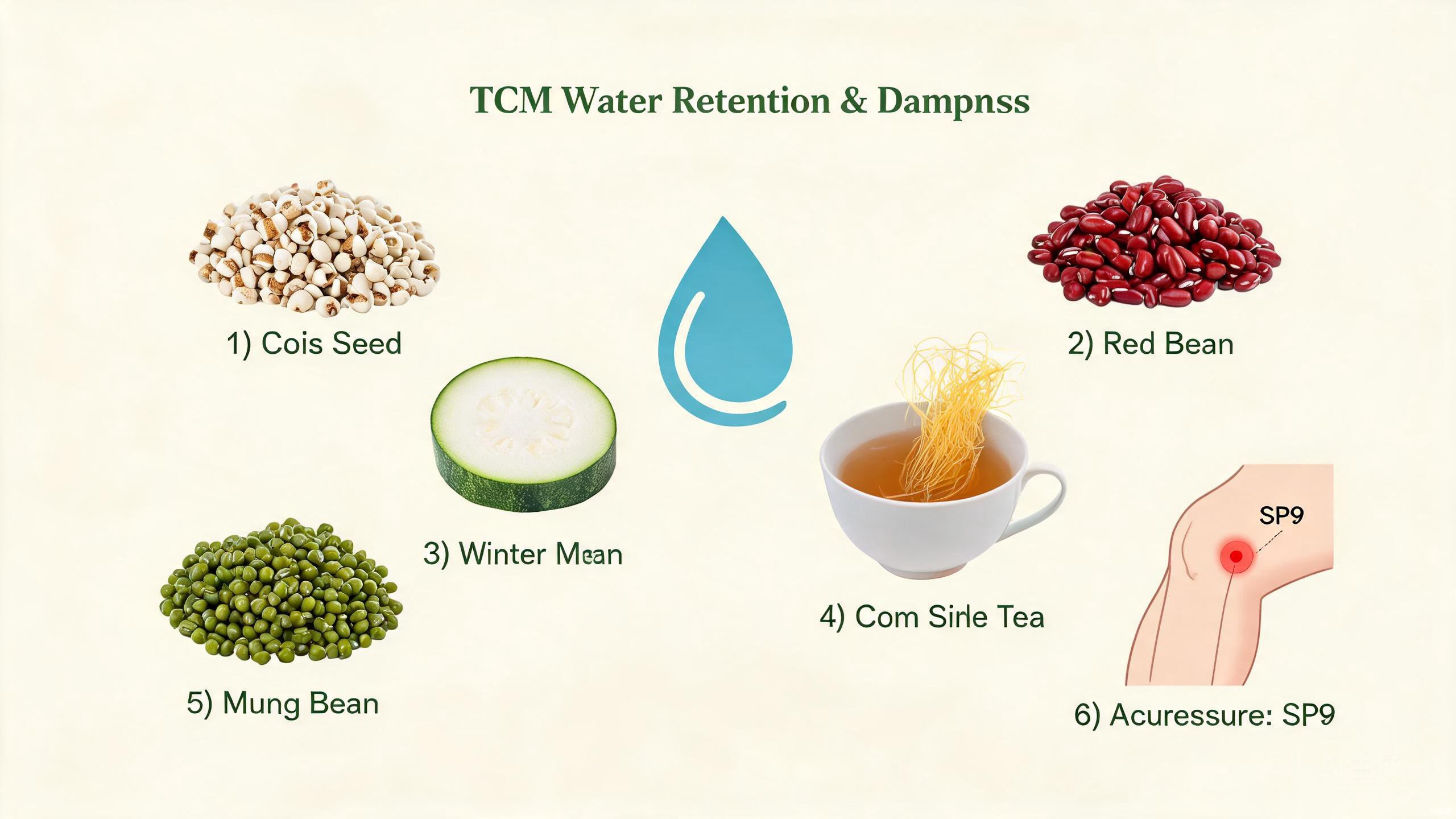
- Coix seed and adzuki bean porridge is the most popular TCM food therapy for draining dampness and supporting the spleen.
- Corn silk tea is a gentle, traditional diuretic that may support fluid elimination.
- Winter melon soup clears heat and promotes urination — ideal for puffiness with a warm constitution.
- All ingredients are available at supermarkets, Asian markets, Amazon, or iHerb; no special herb shop required.
This article is for wellness education only and is not medical advice, diagnosis, or treatment. Water retention can sometimes signal heart, kidney, or vascular conditions. The food therapy practices described are complementary wellness approaches, not a replacement for professional care. If you experience sudden, severe, or persistent edema, consult your healthcare provider. Read our full disclaimer →
Water retention — the feeling of puffiness, heaviness, and swelling, especially in the legs, ankles, hands, or face — is a common complaint. While many factors can contribute, from salt intake to hormonal changes, Traditional Chinese Medicine (TCM) offers a unique perspective: fluid balance is managed by a team of organs, and when one is underperforming, fluid accumulates.
In TCM theory, the spleen transforms and transports fluids, the kidney manages water metabolism through its yang (warming) energy, and the lung regulates the upper body's fluid distribution through breathing. When any of these systems is weak or blocked, dampness — the TCM term for sluggish, heavy fluid accumulation — results. The five remedies below use foods traditionally valued for draining dampness, strengthening the spleen, and supporting healthy fluid metabolism. All ingredients are available from grocery stores, Amazon, or iHerb.
How TCM Views Water Retention
TCM identifies four primary patterns associated with water retention and edema. Understanding which pattern fits your situation helps you choose the right food therapy.
- Spleen Deficiency with Dampness (Pi Xu Shi Sheng) — the most common pattern. A weak spleen cannot properly transform and transport fluids, causing them to accumulate. Signs: puffiness, especially in the face and limbs, feeling of heaviness, fatigue after eating, poor appetite, bloating, and loose stools. Often worsened by cold, raw foods and overthinking.
- Kidney Yang Decline (Shen Yang Xu Shuai) — the kidneys lack the warming energy needed to manage water metabolism. Signs: swelling in the lower body (legs and ankles), cold hands and feet, lower back soreness, frequent urination (especially at night), fatigue, and a pale complexion. Often seen in older adults or after chronic illness.
- Lung Failing to Disperse and Descend (Fei Shi Xuan Jiang) — the lung cannot properly distribute and lower fluids. Signs: swelling that begins in the upper body or face (especially eyelids), sometimes after a cold, with a feeling of chest fullness, cough, or shortness of breath. Often acute onset.
- Qi Stagnation with Dampness Obstruction (Qi Zhi Shi Zu) — emotional stress causes qi to stagnate, which blocks fluid movement. Signs: swelling that comes and goes with stress, a feeling of tightness or distension, mood swings, and breast tenderness. Often related to the menstrual cycle.
For background on TCM organ theory, see our guide to zang-fu organs. For a related topic, see our dampness-removing foods guide.
5 Food Therapy Remedies for Water Retention
Each remedy below is matched to a specific pattern. Choose the one that best fits your symptoms, and use it consistently for one to two weeks.
1. Coix Seed and Adzuki Bean Porridge
Best for: Spleen deficiency with dampness (general puffiness, heaviness, fatigue)
TCM nature and flavor: Coix seed (yi yi ren / Job's tears): sweet, bland, slightly cool. Enters the Spleen, Lung, and Kidney channels. Adzuki bean (chi xiao dou): sweet, sour, neutral. Enters the Heart and Small Intestine channels.
Traditional use: This is arguably the most famous TCM food therapy combination for dampness. Coix seed is traditionally used to strengthen the spleen and drain dampness, while adzuki beans are valued for promoting urination and reducing swelling. Together, they address both the root (weak spleen) and the branch (fluid accumulation). This porridge is so popular in China that it has become a daily wellness staple for people concerned about fluid balance and weight management.
How to make: Soak 1/2 cup of dried coix seed and 1/2 cup of dried adzuki beans for 4 hours (or overnight). Combine with 6 cups of water, bring to a boil, then simmer for 60 to 90 minutes until soft. Eat 1 bowl per day, preferably in the morning. Avoid adding sugar, as sweetness can increase dampness. Coix seed and adzuki beans are available from Amazon, iHerb, and most supermarkets (check the international or health food aisle).
Precautions: Coix seed is slightly cooling and traditionally avoided in large amounts during pregnancy. If you have a very cold constitution, add a few slices of fresh ginger to the cooking water to balance the cooling nature.
Coix seed and adzuki bean porridge is one of the most widely shared TCM food therapy recipes. Its simplicity — just two ingredients and water — makes it accessible to anyone. For variety, you can add a small amount of brown rice or Chinese yam.
2. Winter Melon Soup
Best for: Water retention with heat signs (puffiness with thirst, warm constitution, summer swelling)
TCM nature and flavor: Sweet, mild, cool. Enters the Lung, Spleen, and Stomach channels.
Traditional use: Winter melon (dong gua) is one of TCM's most valued fluid-draining and heat-clearing foods. It is traditionally used to promote urination, reduce swelling, and clear heat — making it ideal for water retention accompanied by warmth, thirst, or a tendency to feel hot. Unlike coix seed, which focuses on the spleen, winter melon also clears heat, making it suitable for damp-heat patterns.
How to make: Peel and cube 2 cups of winter melon (if unavailable, zucchini or chayote can substitute, though winter melon is preferred). Simmer with 4 cups of vegetable or chicken broth, 3 slices of ginger, and a pinch of salt for 20 minutes until the melon is translucent and tender. Eat the melon and drink the broth, 1 to 2 times per week. Winter melon is available at Asian markets and some larger supermarkets.
Precautions: Winter melon is cooling. Avoid if you have a cold constitution with diarrhea or cold extremities. If you cannot find winter melon, see our dampness-removing foods guide for alternatives.
3. Corn Silk Tea
Best for: All patterns (gentle, universal fluid support)
TCM nature and flavor: Sweet, neutral. Enters the Bladder, Liver, and Gallbladder channels.
Traditional use: Corn silk (yu mi xu) — the fine threads found inside corn husks — is one of the most accessible and gentle diuretic foods in TCM. It is traditionally used to promote urination and reduce swelling without being harsh or depleting. Its neutral nature makes it suitable for all patterns of water retention. Corn silk is also valued for supporting liver and gallbladder function, which plays a role in fluid metabolism.
How to make: Collect fresh corn silk from 2 to 3 ears of corn (or use 10 grams of dried corn silk from Amazon or iHerb). Rinse and simmer in 10 oz of water for 10 minutes. Strain and drink warm, 1 to 2 cups per day. The tea is mild and slightly sweet. For convenience, dried corn silk can be steeped like regular tea.
Precautions: Corn silk is very gentle and generally safe. If you take prescription diuretics or have kidney disease, consult your healthcare provider before using any diuretic food, as it may enhance the effect of your medication.
4. White Fish and Adzuki Bean Soup
Best for: Kidney yang decline pattern (lower body swelling, cold extremities, frequent urination)
TCM nature and flavor: White fish (cod, tilapia, or similar): sweet, warm. Enters the Spleen and Kidney channels. Adzuki bean: sweet, sour, neutral. Enters the Heart and Small Intestine channels.
Traditional use: In TCM, the classic remedy for kidney-related edema is carp and adzuki bean soup. Since carp is less common in Western markets, white fish such as cod or tilapia serves as an accessible substitute. White fish is traditionally used to nourish the spleen and kidneys and provide warming, easily digested protein. Combined with adzuki beans, which drain dampness and promote urination, this soup supports both the kidney's warming function and the elimination of excess fluid — addressing the root and branch of kidney yang decline edema.
How to make: Soak 1/3 cup of dried adzuki beans for 4 hours. Simmer with 5 cups of water and 3 slices of ginger for 40 minutes. Add 8 oz of white fish fillet (cod, tilapia, or haddock), cut into chunks. Simmer for 10 more minutes until the fish is cooked through. Add a pinch of salt. Eat the fish and beans and drink the broth, 1 to 2 times per week.
Precautions: Safe for regular use. Choose sustainably sourced fish. If you have gout or high uric acid, consult your healthcare provider, as fish contains purines.
5. Chinese Yam and Coix Seed Porridge
Best for: Spleen deficiency pattern (chronic puffiness, fatigue, loose stools, poor digestion)
TCM nature and flavor: Chinese yam (shan yao): sweet, neutral. Enters the Spleen, Lung, and Kidney channels. Coix seed: sweet, bland, slightly cool. Enters the Spleen, Lung, and Kidney channels.
Traditional use: When water retention is chronic and rooted in spleen deficiency, the remedy must both strengthen the spleen and drain the dampness. Chinese yam is one of TCM's premier spleen-tonifying foods, traditionally used to build digestive strength, support energy, and stabilize fluid metabolism. Paired with coix seed, which drains dampness, this porridge addresses the root cause of chronic fluid retention without being harsh or depleting. It is gentler than the coix and adzuki combination, making it suitable for long-term use in deficient constitutions.
How to make: Soak 1/2 cup of dried coix seed for 4 hours. Peel and dice 1 cup of fresh Chinese yam (or use 30 grams of dried yam slices from Amazon/iHerb). Combine with 1/3 cup of white rice and 6 cups of water. Bring to a boil, then simmer for 60 minutes until creamy. Eat 1 bowl per day, preferably in the morning. See our yam congee guide for more details.
Precautions: Very safe for regular use. If using dried yam slices, soak for 30 minutes before cooking. Chinese yam is available from Amazon, iHerb, and Asian markets.
Matching the Remedy to Your Pattern
| If Your Retention Features... | TCM Pattern | Best Remedy | Frequency |
|---|---|---|---|
| General puffiness, heaviness, fatigue | Spleen Def. + Dampness | Coix Seed & Adzuki Porridge | Daily, morning |
| Puffiness with thirst, warmth, summer | Damp-Heat | Winter Melon Soup | 1 to 2 times per week |
| Mild, general fluid support needed | All patterns (gentle) | Corn Silk Tea | Daily, 1 to 2 cups |
| Lower body swelling, cold extremities | Kidney Yang Decline | White Fish & Adzuki Soup | 1 to 2 times per week |
| Chronic puffiness, loose stools, weak digestion | Spleen Deficiency (chronic) | Chinese Yam & Coix Porridge | Daily, morning |
| Swelling with stress, mood swings | Qi Stagnation + Dampness | Corn Silk Tea + Coix Porridge | Rotate daily |
Lifestyle Tips for Reducing Water Retention
Food therapy works best when combined with supportive daily habits. TCM offers several practical principles:
- Eat warm, cooked foods. Cold and raw foods weaken the spleen's ability to transform fluids. Favor soups, stews, and porridges. See our congee guide for warming, easy-to-digest options.
- Reduce salt and sugar. Excess salt directly contributes to fluid retention. Excess sugar weakens the spleen and promotes dampness. Flavor food with herbs and spices instead.
- Move your body daily. In TCM, movement keeps qi and fluids circulating. Even 20 minutes of walking helps prevent stagnation. See our qigong for stress guide for gentle movement practices.
- Avoid damp environments. TCM views external dampness (humid weather, damp living spaces) as a factor that can worsen internal dampness. Use a dehumidifier if needed.
- Keep the abdomen and lower back warm. Cold on these areas weakens kidney yang and spleen function. Avoid sitting on cold surfaces, and consider a warm ginger foot soak to promote circulation.
- Manage stress. Emotional stress causes qi stagnation, which blocks fluid movement. Regular relaxation practices are essential for the qi-stagnation pattern.
Precautions and When to Seek Help
While mild water retention is common and often manageable with food therapy, edema can sometimes signal a serious condition:
- Seek prompt medical attention if swelling is sudden, severe, or affects only one limb (possible deep vein thrombosis). Also seek care if accompanied by shortness of breath, chest pain, or significant rapid weight gain (possible heart or kidney issues).
- See your doctor if edema is persistent, worsening, or accompanied by changes in urination, fatigue, or high blood pressure. These may indicate kidney, heart, liver, or thyroid conditions that need proper diagnosis.
- Medication interactions. If you take diuretics, blood pressure medication, or kidney medication, consult your healthcare provider before adding diuretic foods like corn silk or coix seed, as they may enhance medication effects.
- Pregnancy. Some fluid retention during pregnancy is normal, but sudden swelling, especially in the face or hands, should be evaluated promptly by your healthcare provider.
- Not a substitute. TCM food therapy is complementary. Always work with your healthcare provider for ongoing or concerning symptoms.
For related topics, see our guides on dampness-removing foods and TCM for digestion.
Frequently Asked Questions
Can TCM help with water retention?
TCM food therapy is traditionally used to support healthy fluid balance. Different remedies are matched to different patterns, such as spleen deficiency with dampness or kidney yang decline. These practices may complement conventional care but are not a replacement for medical evaluation, especially if edema is persistent or severe.
What is dampness in TCM?
Dampness is a TCM concept describing sluggish, heavy fluid accumulation in the body. It often results from a weak spleen that cannot properly transform and transport fluids. Signs include a feeling of heaviness, puffiness, sticky sensation, foggy thinking, and loose stools. Foods like coix seed and adzuki beans are traditionally used to drain dampness.
Is corn silk tea good for water retention?
In TCM, corn silk is traditionally used to promote urination and reduce swelling. It is a mild, gentle diuretic that may support fluid balance. Corn silk can be collected from fresh corn or purchased dried from Amazon or iHerb. Consult your healthcare provider if you take diuretic medications or have kidney issues.
When is water retention a medical concern?
Seek medical attention if water retention is sudden, severe, or affects only one limb. Also seek care if it is accompanied by shortness of breath, chest pain, or significant weight gain over a short period. These may indicate heart, kidney, or vascular issues that require prompt medical evaluation.
The Bottom Line
TCM offers a holistic, organ-system approach to water retention that addresses why fluid accumulates, not just how to remove it. By identifying whether your retention stems from spleen deficiency with dampness, kidney yang decline, lung disharmony, or qi stagnation, you can choose foods that work with your body's specific needs. Coix seed and adzuki bean porridge is the all-purpose dampness drainer, winter melon soup clears heat and promotes urination, corn silk tea offers gentle, universal fluid support, white fish and adzuki soup warms and strengthens the kidneys, and Chinese yam and coix porridge builds the spleen for chronic deficiency. All ingredients are accessible from your local grocery store, Amazon, or iHerb. Pair your chosen remedy with warm cooked meals, reduced salt and sugar, daily movement, and stress management, and give your body one to two weeks to respond. Always partner with your healthcare provider, especially for persistent, sudden, or severe edema.
This article is for educational and informational purposes only and is not a substitute for professional medical advice, diagnosis, or treatment. These statements have not been evaluated by the FDA. Always consult a qualified healthcare provider before beginning any new wellness practice, especially if you are pregnant, nursing, taking medication, or have a medical condition. Read our full disclaimer →